Ernst Ludwig Kirchner
Three Courtesans at Night


Artista
Ernst Ludwig Kirchner
1880 Aschaffenburg - Frauenkirch/Davos 1938
Ulteriori informazioni
Gercken 660 II (von II).
Mostra
Lebenslust & Totentanz, Olbricht Collection, Kunsthalle Krems, 2010, p. 184;
Aurel Scheibler Galerie, Berlin 2013.
Aurel Scheibler Galerie, Berlin 2013.
Provenienza
Dr Andreas Sturies, Düsseldorf 15 May 2004, Lot 104;
Thomas Olbricht Collection, Essen;
Van Ham, Cologne 26 September 2020, Thomas Olbricht Collection, Essen, Lot 306;
Private collection, North Rhine-Westphalia.
Thomas Olbricht Collection, Essen;
Van Ham, Cologne 26 September 2020, Thomas Olbricht Collection, Essen, Lot 306;
Private collection, North Rhine-Westphalia.
Share


Descrizione
• Dynamic composition full of action and spontaneity
• From the series of "Street Scenes", created between 1913 and 1915
• A unique print from an edition of only 3 copies
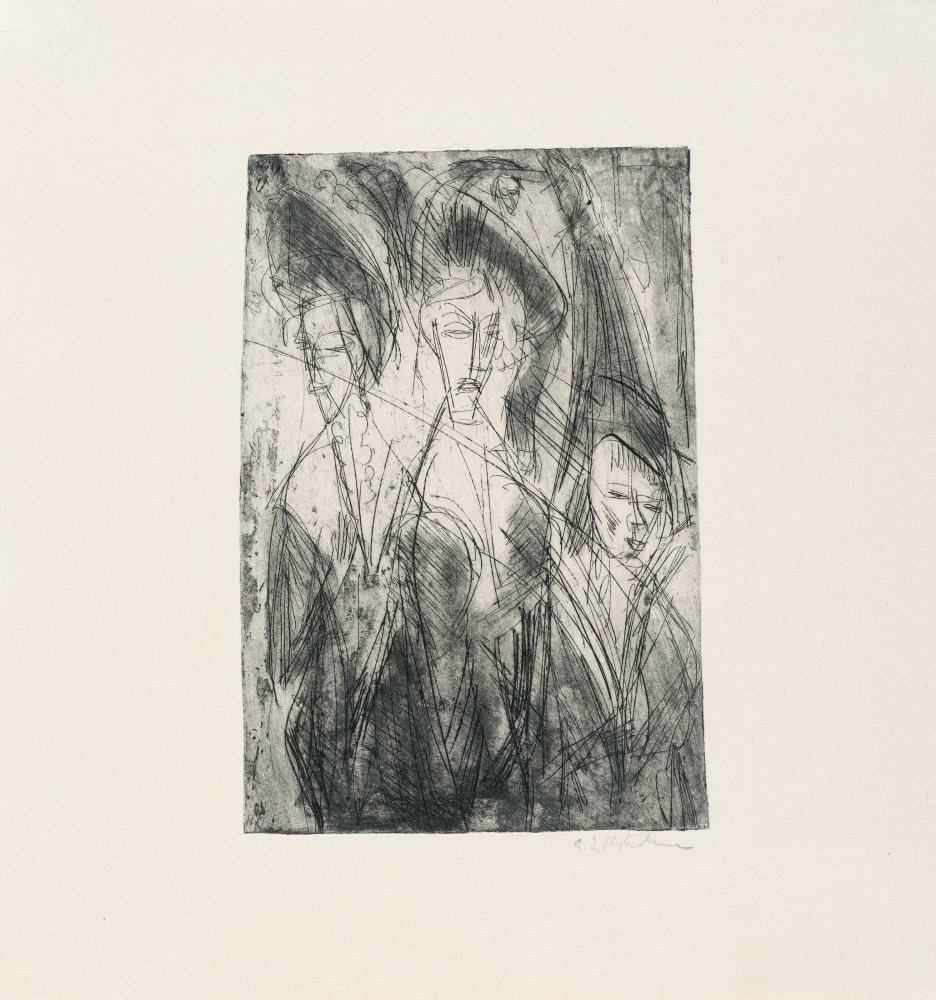
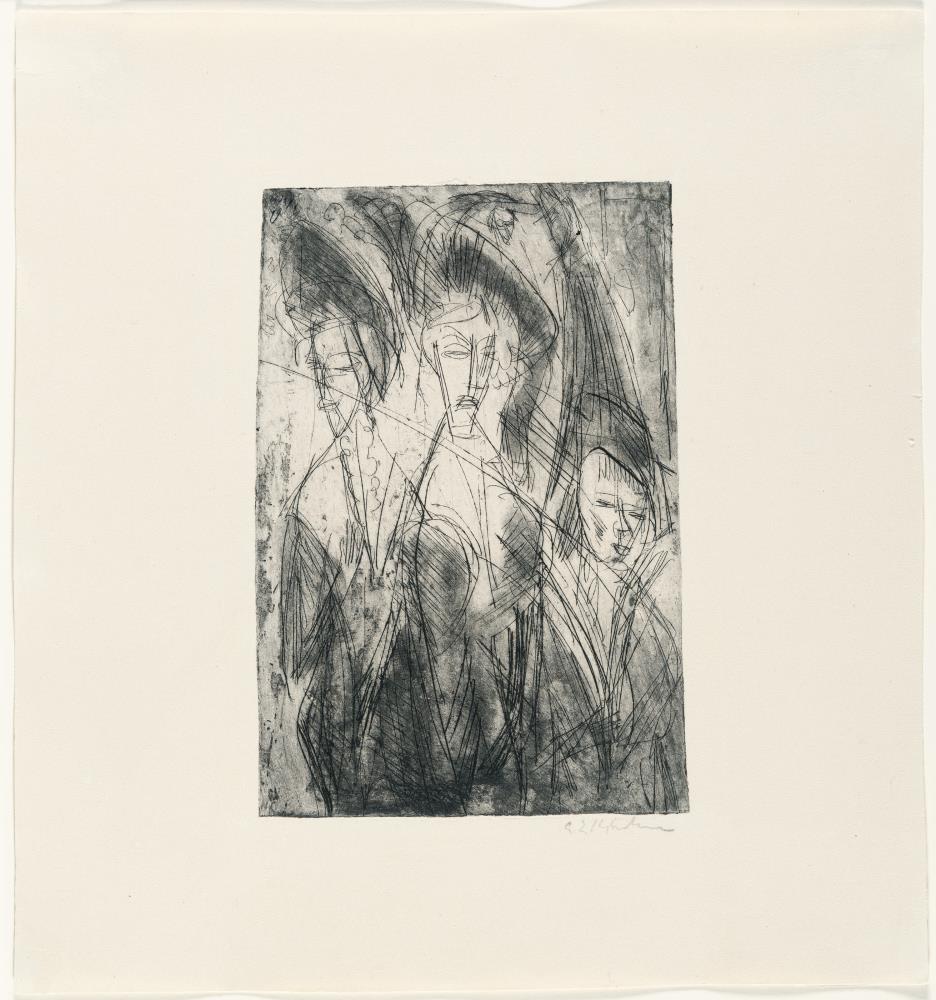
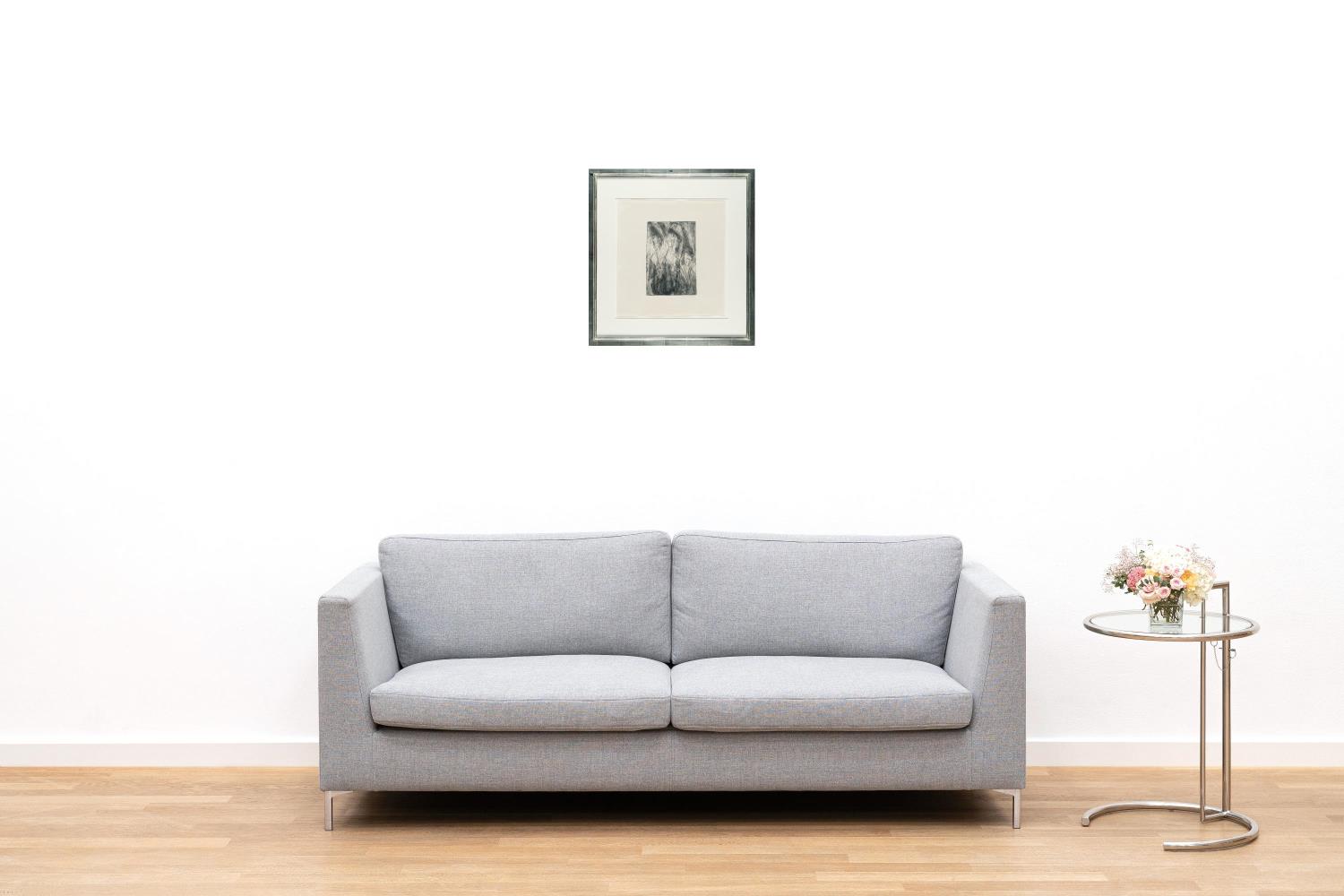
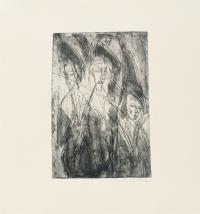
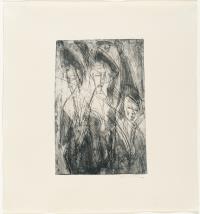
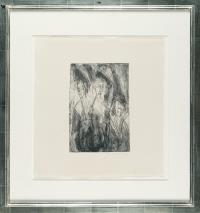
The motif of the "Kokotten" recurs frequently in Ernst Ludwig Kirchner’s work. Between 1913 and 1915, he worked on his "Street Scenes", in which he captured the pulse of Berlin through his artistic media. He depicts crowds squeezing through the Neue City West, overflowing the pavements, flooding the shopping centres. And he repeatedly depicts kokottes, who are both characters and symbols. Unlike the Tauentziengirls – today they would be the Kurfürstenstraßengirls – the kokottes promise more than mere lust. They are elegant, sophisticated, and know how to seduce men in every way. In Kirchner’s work, misogyny is always present: his kokottes are birds of prey, harbingers of doom. For him, they are not merely street figures like everyone else, but signs of impending doom. He recognises the signs of the times in the hectic city of Berlin, with all its consumerism and fast pace. Our three courtesans at night are rendered with dynamic brushstrokes. Kirchner captures the nocturnal scene of those waiting—almost lying in wait—in a sketch-like manner. The motif first appears in Kirchner’s Sketchbook 37, 1913, page 55.
• From the series of "Street Scenes", created between 1913 and 1915
• A unique print from an edition of only 3 copies
The motif of the "Kokotten" recurs frequently in Ernst Ludwig Kirchner’s work. Between 1913 and 1915, he worked on his "Street Scenes", in which he captured the pulse of Berlin through his artistic media. He depicts crowds squeezing through the Neue City West, overflowing the pavements, flooding the shopping centres. And he repeatedly depicts kokottes, who are both characters and symbols. Unlike the Tauentziengirls – today they would be the Kurfürstenstraßengirls – the kokottes promise more than mere lust. They are elegant, sophisticated, and know how to seduce men in every way. In Kirchner’s work, misogyny is always present: his kokottes are birds of prey, harbingers of doom. For him, they are not merely street figures like everyone else, but signs of impending doom. He recognises the signs of the times in the hectic city of Berlin, with all its consumerism and fast pace. Our three courtesans at night are rendered with dynamic brushstrokes. Kirchner captures the nocturnal scene of those waiting—almost lying in wait—in a sketch-like manner. The motif first appears in Kirchner’s Sketchbook 37, 1913, page 55.