Lyonel Feininger
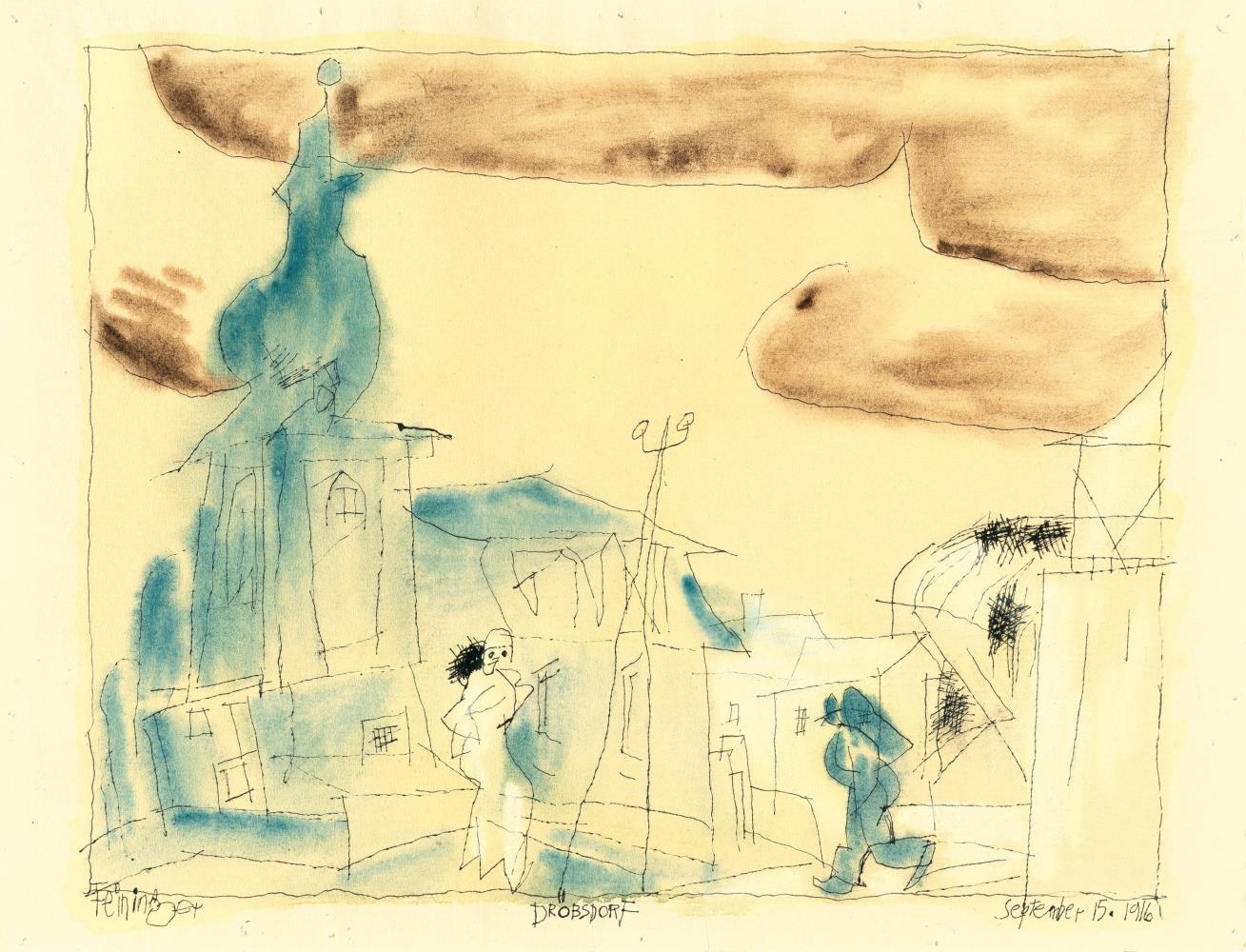
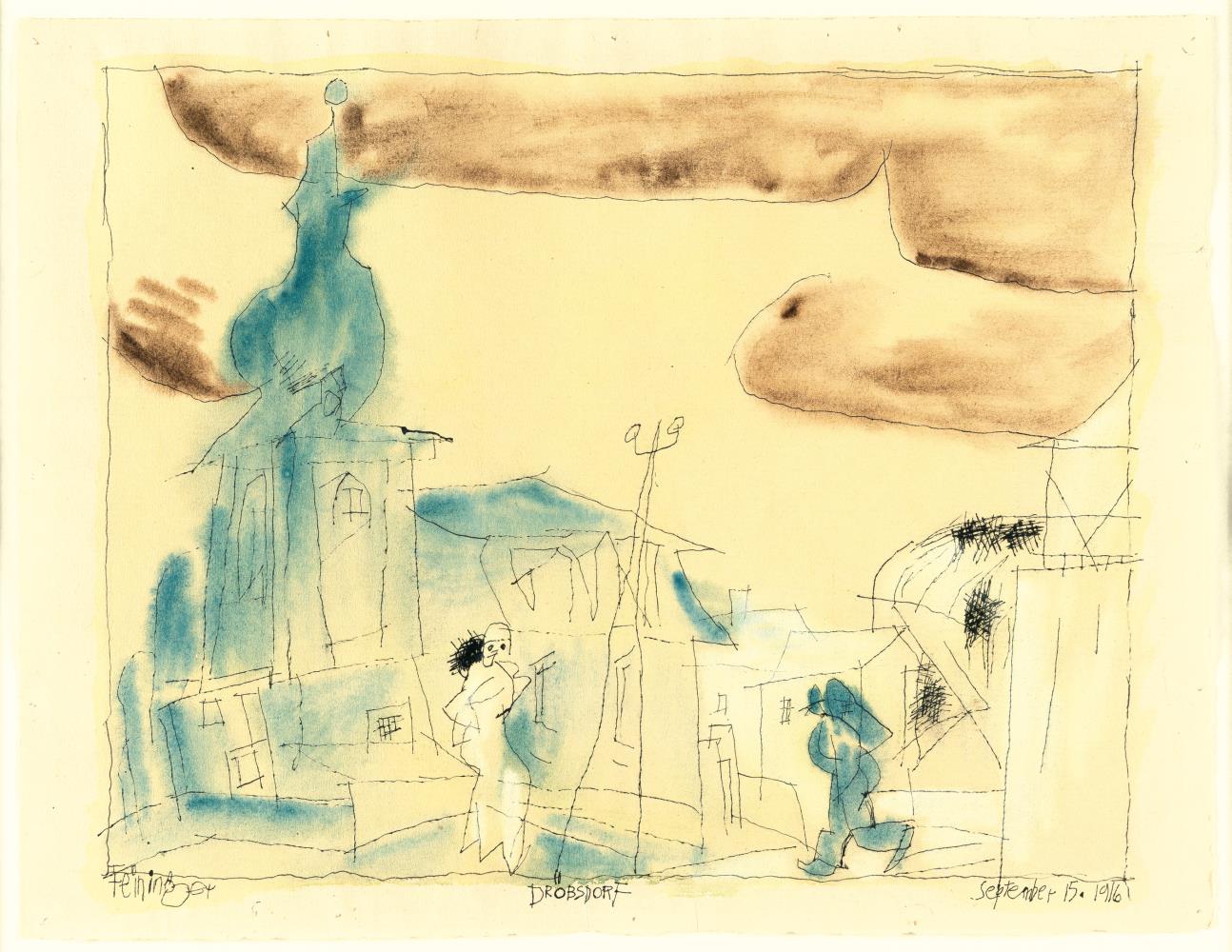
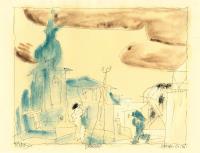
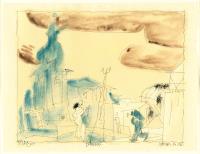
"Dröbsdorf"

Artista
Lyonel Feininger
1871 - New York - 1956
Ulteriori informazioni
Achim Moeller, Direktor des Lyonel Feininger Project LLC, New York – Berlin, hat die Echtheit dieses Werkes, das im Archiv des Lyonel Feininger Project unter der Nummer 1653-05-12-20 registriert ist, bestätigt. Mit einer Fotoexpertise vom 12.5.2020.
Mostra
Feininger in the Weimar Region, Kunsthaus Apolda Avantgarde, Apolda 1999, cat. no. 72, with colour illustration on p. 78.
Provenienza
Probably from the estate of Wilhelm Koehler (1884–1959), former director of the Weimar Art Collections;
Galerie Gerda Bassenge, Berlin, 10 November 1993, Lot 6210;
Private collection, Northern Germany, acquired from the above in 1993.
Galerie Gerda Bassenge, Berlin, 10 November 1993, Lot 6210;
Private collection, Northern Germany, acquired from the above in 1993.
Share


Descrizione
• In 1906, Feininger spent several months in Weimar with Julia Berg and produced numerous sketches of the surrounding area
• The then rural village of Tröbsdorf near Weimar served as a subject for his paintings on several occasions
• The church he discovered in 1913 later inspired him to create numerous works
In 1906, Feininger lived in Weimar for several months with the art student and his future wife, Julia Berg, exploring the surrounding area with his sketchbook and bicycle. Tröbsdorf – now a district of Weimar – which was still very rural at the beginning of the 20th century, repeatedly served as a subject of study for Feininger. The church in particular, with its characteristic Welsh dome and squat hipped roof, which Feininger discovered in 1913, fascinated the artist. He captured it in numerous watercolours and drawings in various variations over the course of decades. These works also served as preliminary studies for the two paintings of the same name from 1927 (Moeller 308, Klassik Stiftung Weimar) and 1928 (Moeller 316, Weisman Art Museum, University of Minnesota, Minneapolis), which depict the church as a crystalline, monumental cathedral.
• The then rural village of Tröbsdorf near Weimar served as a subject for his paintings on several occasions
• The church he discovered in 1913 later inspired him to create numerous works
In 1906, Feininger lived in Weimar for several months with the art student and his future wife, Julia Berg, exploring the surrounding area with his sketchbook and bicycle. Tröbsdorf – now a district of Weimar – which was still very rural at the beginning of the 20th century, repeatedly served as a subject of study for Feininger. The church in particular, with its characteristic Welsh dome and squat hipped roof, which Feininger discovered in 1913, fascinated the artist. He captured it in numerous watercolours and drawings in various variations over the course of decades. These works also served as preliminary studies for the two paintings of the same name from 1927 (Moeller 308, Klassik Stiftung Weimar) and 1928 (Moeller 316, Weisman Art Museum, University of Minnesota, Minneapolis), which depict the church as a crystalline, monumental cathedral.