Heinz Mack
Untitled
Artista
Heinz Mack
1931 Lollar/Hessen
Ulteriori informazioni
Mit einem Zertifikat von Ute Mack, Mack Foundation, Mönchengladbach, vom Mai 2026.
Provenienza
Galerie Maulberger, Munich;
Private collection, Bavaria.
Private collection, Bavaria.
Share


Descrizione
• Early, typical work from the ZERO period
• Radical reduction and focus on elementary visual phenomena
• Mack is a co-founder of the ZERO group, one of the most significant avant-garde movements of the 20th century
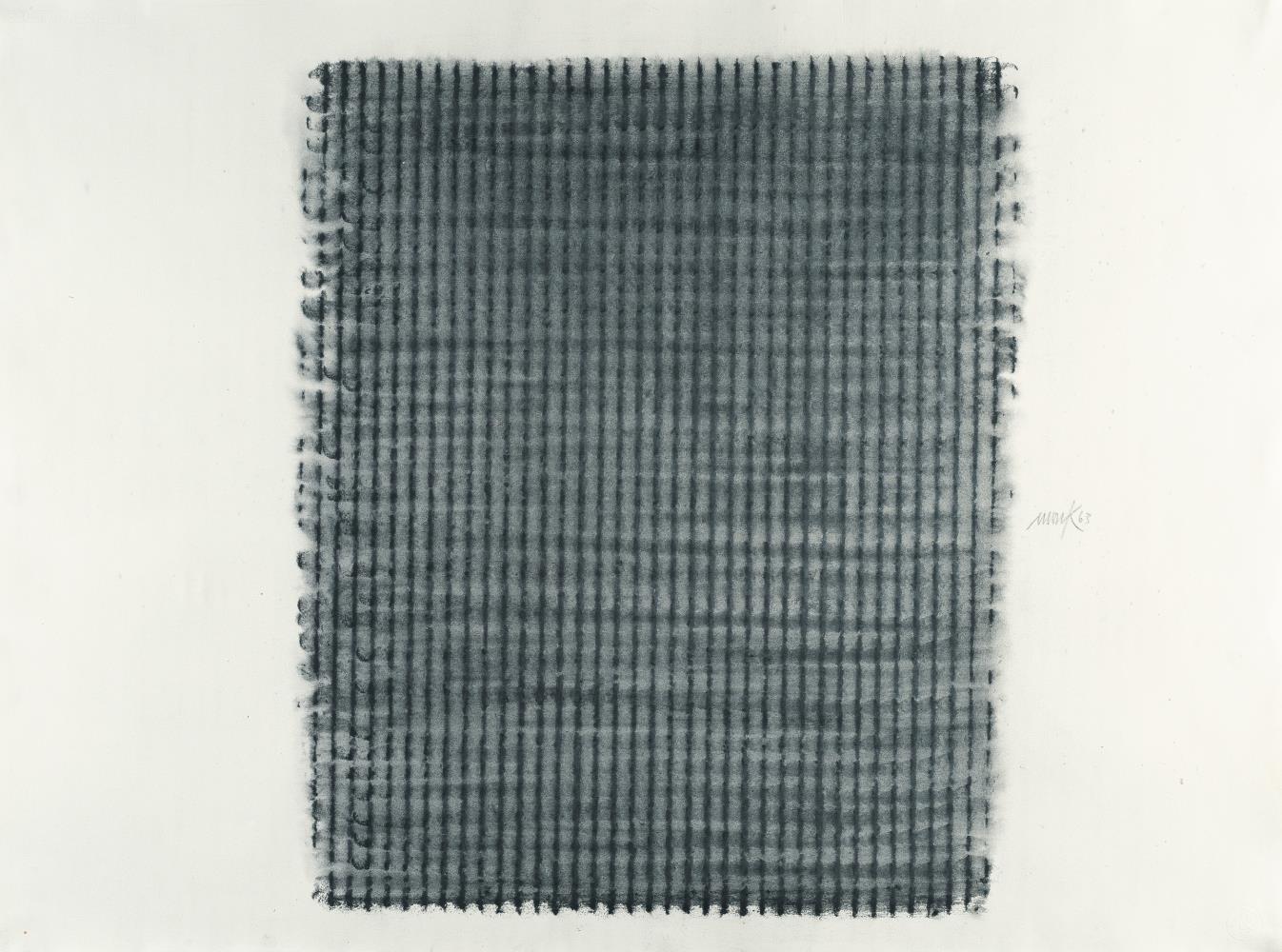
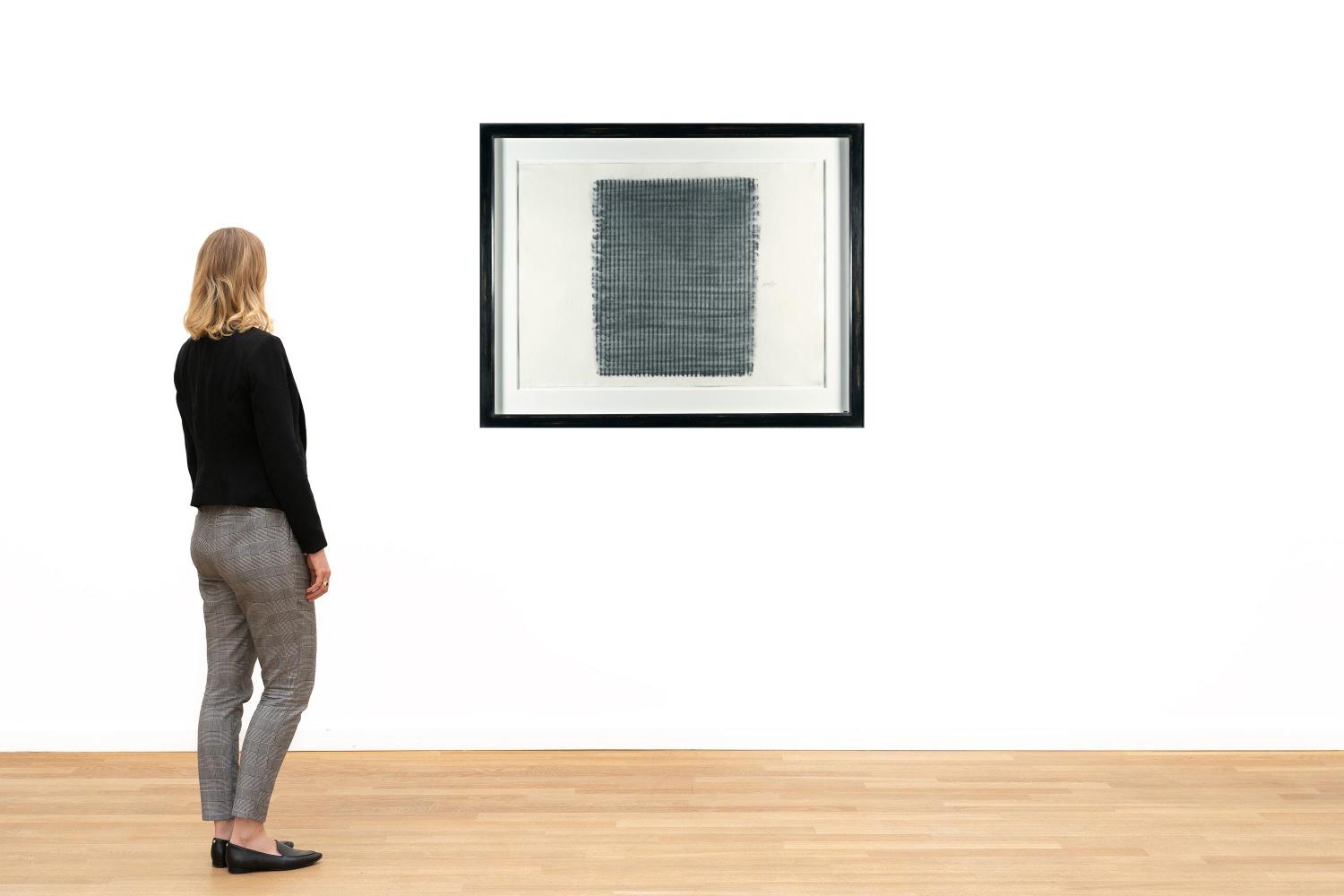
This print from 1963 was created during a pivotal phase of Heinz Mack’s career within the activities of the ZERO group, which he founded in 1957 together with Otto Piene. ZERO saw itself as a conscious new beginning following the informal painting of the post-war period – as the ‘zero hour’ of art, focusing on reduction, clarity and a turn towards light, movement and serial structures.
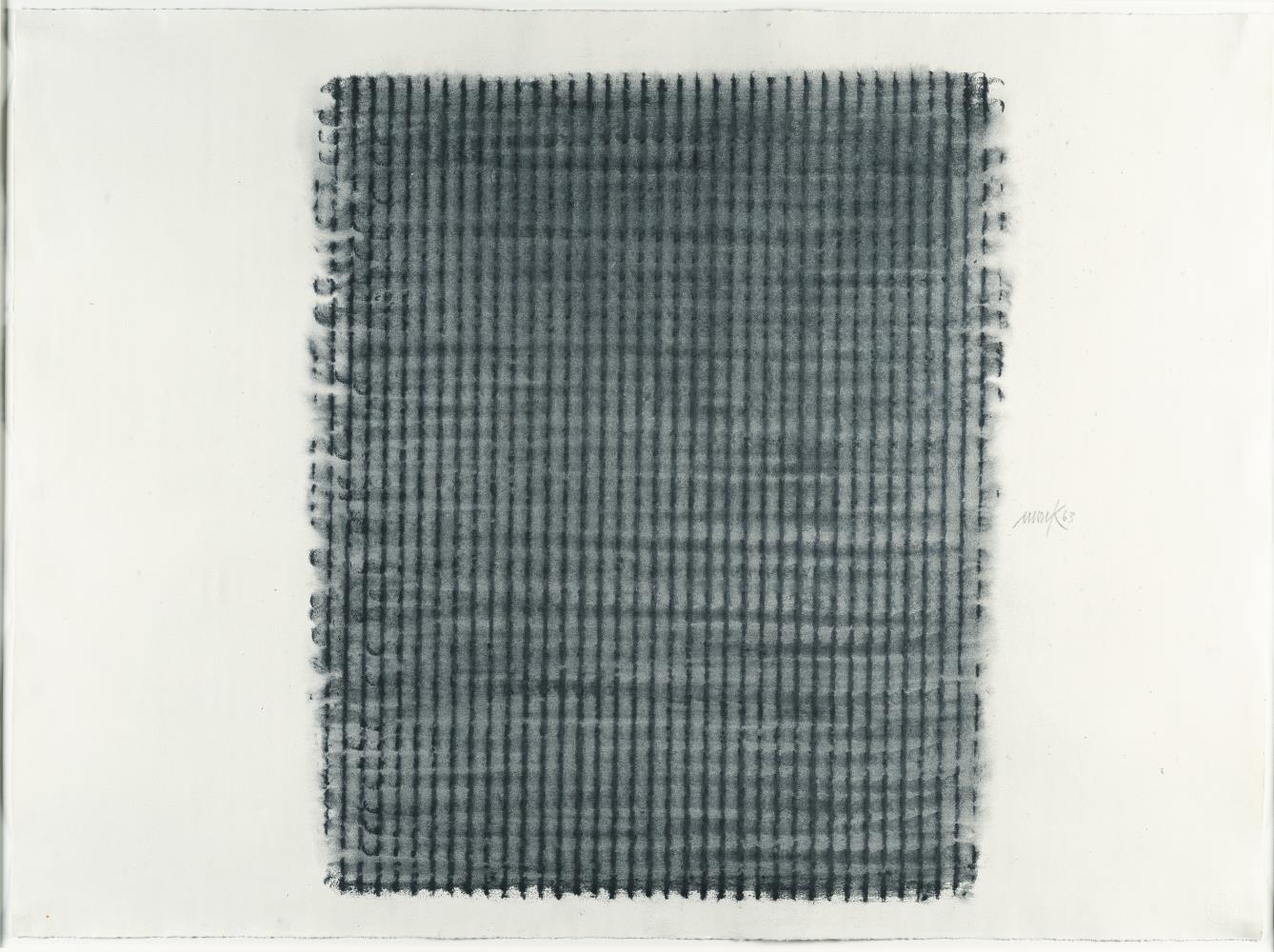
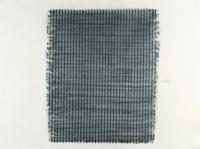
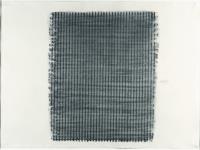
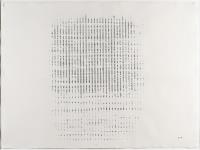
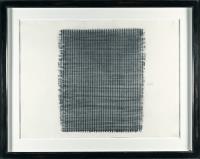
Against this backdrop, the present drawing should be read as part of a fundamental reorientation: Here, Mack explores how, using the simplest of means – line, repetition, material – a visual field can be created that no longer conveys expression in the classical sense, but rather organises perception. The grid serves not merely to impose order, but becomes a vehicle for rhythm and light. It is particularly in graphite, with its soft transitions and reflective qualities, that this exploration takes on a subtle, almost immaterial dimension.
In an art-historical context, the work stands at the intersection of the European post-war avant-garde and international movements such as Op Art and Minimal Art. Whilst in the USA at the same time the reduction to elementary forms and serial processes was being pursued, ZERO formulated its own position, one more strongly oriented towards light and immaterial phenomena. Mack’s drawing makes this approach visible in a concentrated form: it dispenses with any gesture in favour of a controlled, repeatable structure and, precisely through this, opens up a space in which seeing unfolds as a process.
Thus, the work can be understood as a striking example of that ZERO idea of no longer conceiving art as an image in the traditional sense, but as a field of energy, rhythm and light that actively involves the viewer.
• Radical reduction and focus on elementary visual phenomena
• Mack is a co-founder of the ZERO group, one of the most significant avant-garde movements of the 20th century
This print from 1963 was created during a pivotal phase of Heinz Mack’s career within the activities of the ZERO group, which he founded in 1957 together with Otto Piene. ZERO saw itself as a conscious new beginning following the informal painting of the post-war period – as the ‘zero hour’ of art, focusing on reduction, clarity and a turn towards light, movement and serial structures.
Against this backdrop, the present drawing should be read as part of a fundamental reorientation: Here, Mack explores how, using the simplest of means – line, repetition, material – a visual field can be created that no longer conveys expression in the classical sense, but rather organises perception. The grid serves not merely to impose order, but becomes a vehicle for rhythm and light. It is particularly in graphite, with its soft transitions and reflective qualities, that this exploration takes on a subtle, almost immaterial dimension.
In an art-historical context, the work stands at the intersection of the European post-war avant-garde and international movements such as Op Art and Minimal Art. Whilst in the USA at the same time the reduction to elementary forms and serial processes was being pursued, ZERO formulated its own position, one more strongly oriented towards light and immaterial phenomena. Mack’s drawing makes this approach visible in a concentrated form: it dispenses with any gesture in favour of a controlled, repeatable structure and, precisely through this, opens up a space in which seeing unfolds as a process.
Thus, the work can be understood as a striking example of that ZERO idea of no longer conceiving art as an image in the traditional sense, but as a field of energy, rhythm and light that actively involves the viewer.