Willi Baumeister
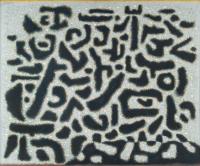
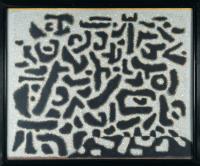
"Schwarze Bewegung mit Punkten" (Black Movement with Dots)




Artista
Willi Baumeister
1889 - Stuttgart - 1955
Ulteriori informazioni
Beye/Baumeister 1590.
Mostra
Willi Baumeister, Kleemann Galleries, New York 1956, cat. no. 17, b/w ill.
Letteratura
Grohmann, Will, Willi Baumeister. Life and Work, Cologne 1963, no. 1188, b/w ill. p. 316.
Provenienza
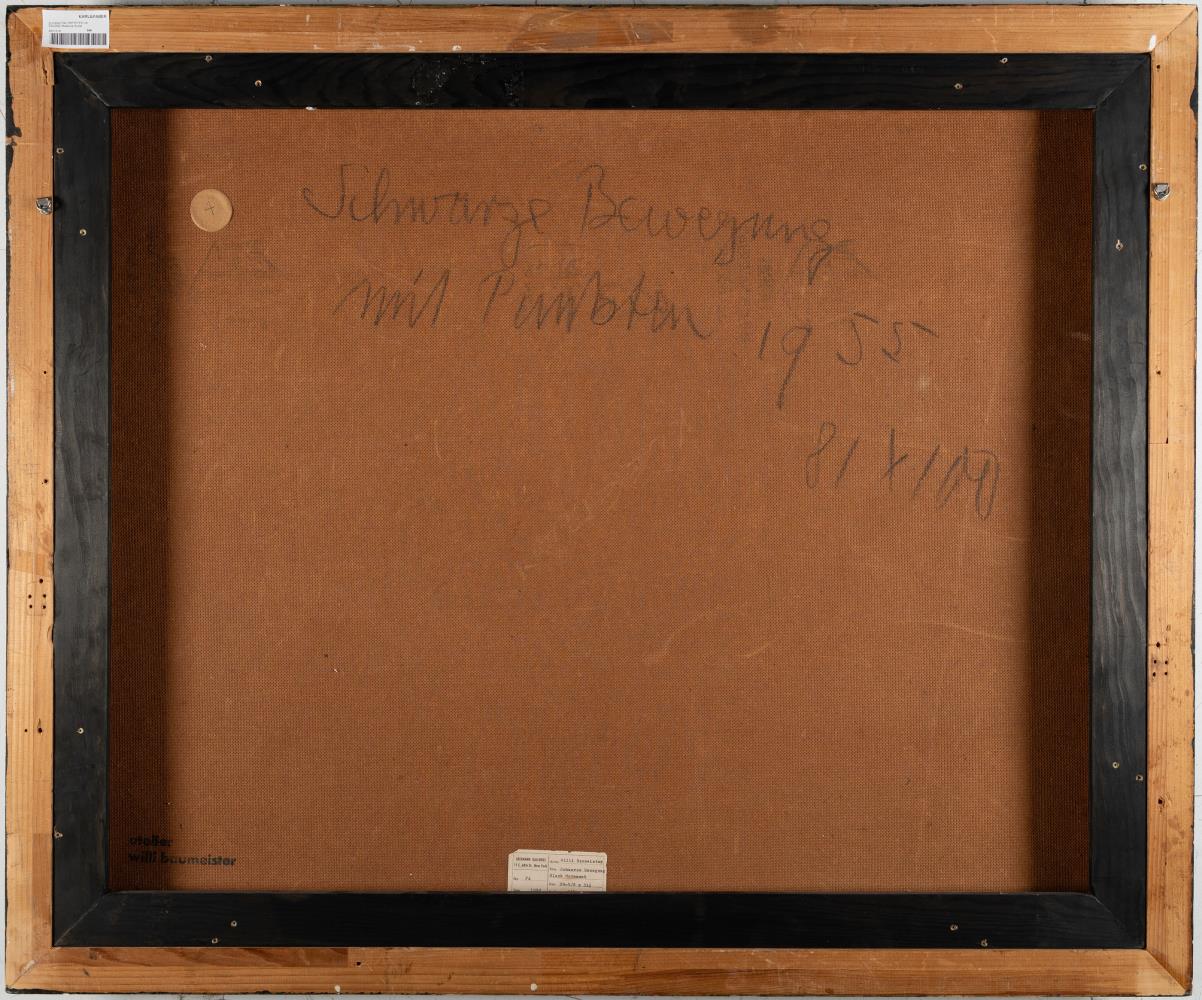
Artist’s estate, stamped ‘atelier willi baumeister’ on the reverse;
Kleemann Galleries, New York, with label on the reverse;
Stephen M. Kellen Collection, New York, acquired from the above in 1956;
Private collection, France;
Galerie Michael Haas, Berlin, 2018;
Private collection, Berlin.
Kleemann Galleries, New York, with label on the reverse;
Stephen M. Kellen Collection, New York, acquired from the above in 1956;
Private collection, France;
Galerie Michael Haas, Berlin, 2018;
Private collection, Berlin.
Share


Descrizione
• One of the final works in the artist’s extensive oeuvre
• Depth and richness of detail are achieved through minimal use of colour
• From the collection of the New York philanthropist Stephen M. Kellen
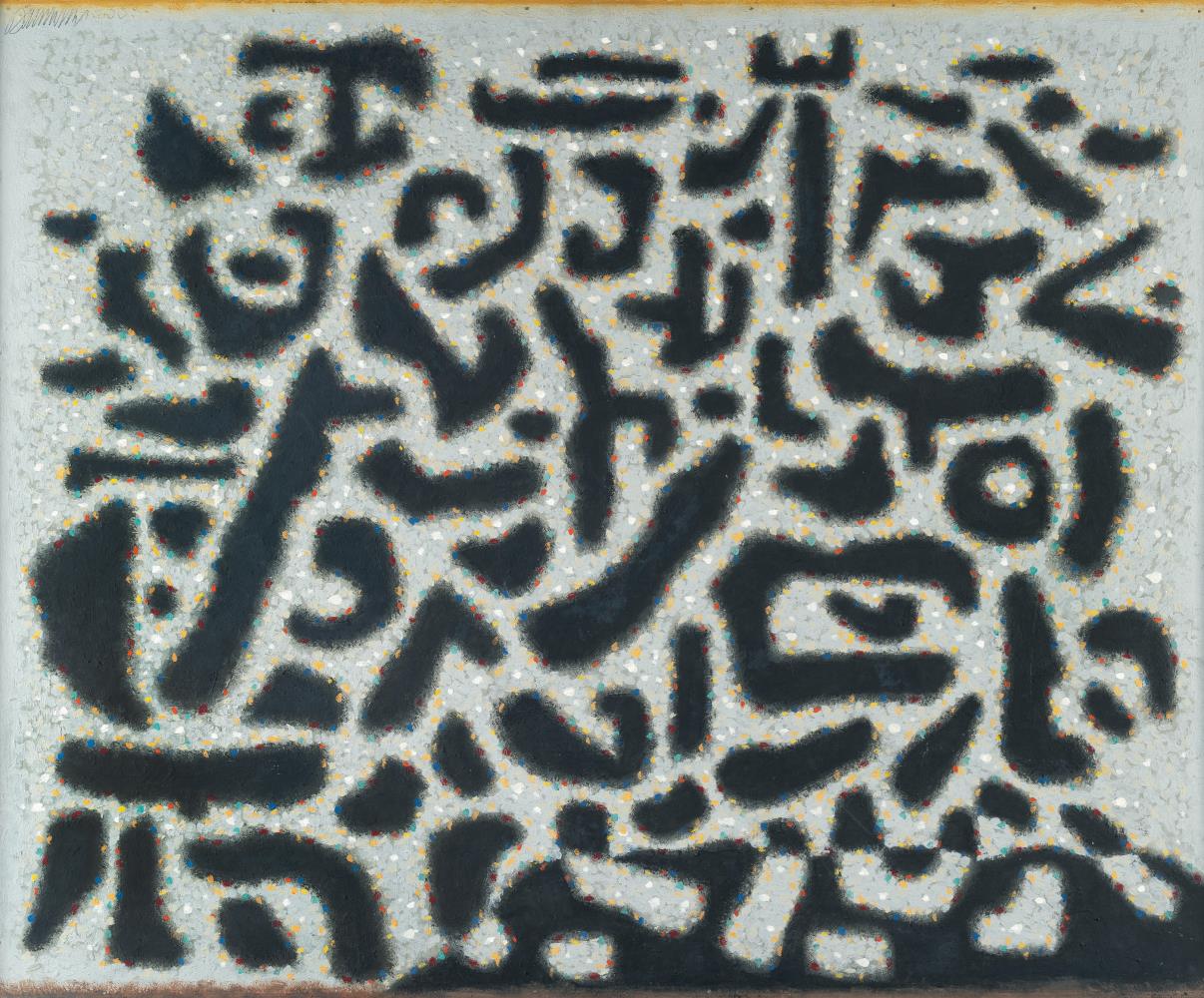
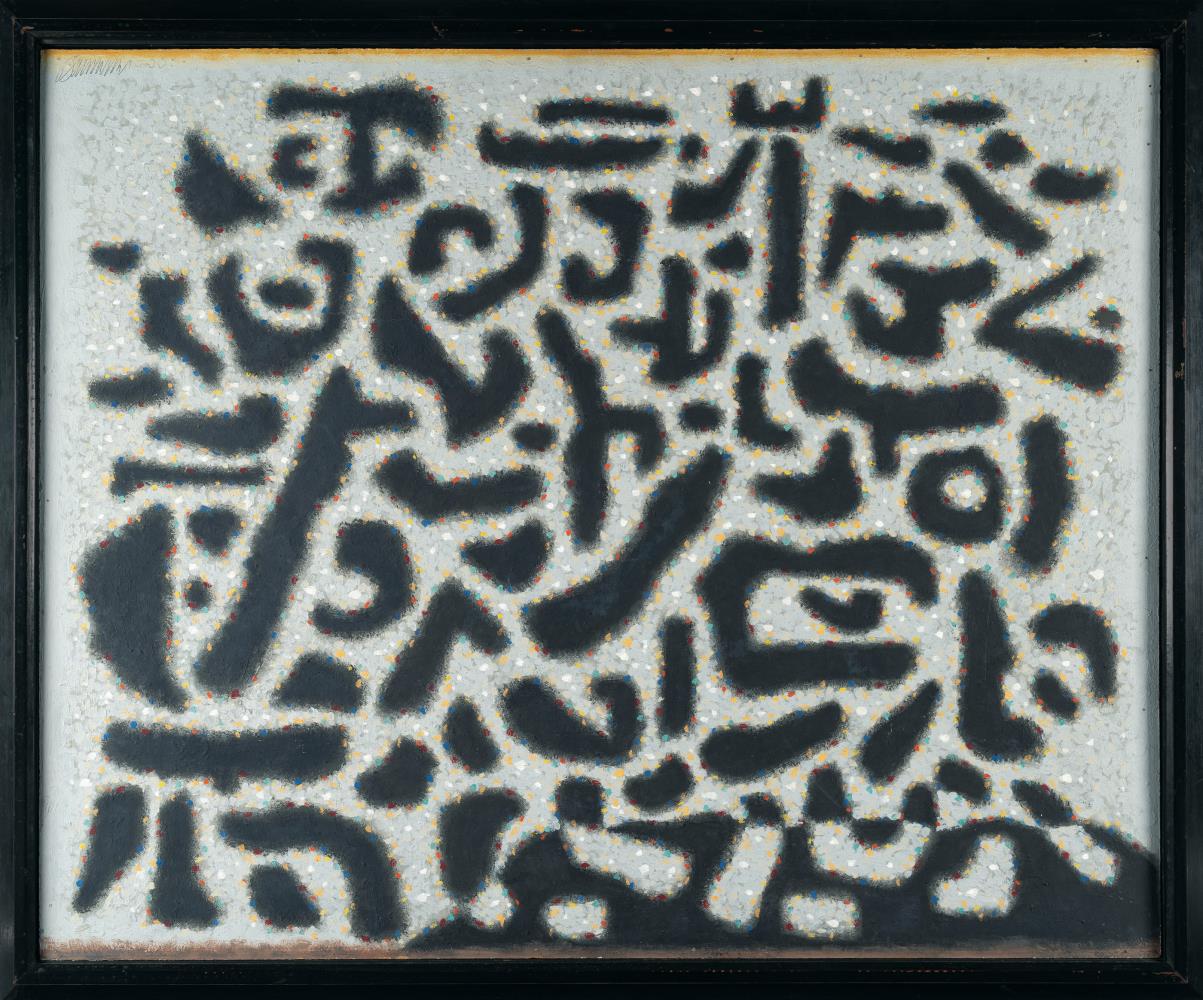
"Between heaven and earth there is chaos," remarked a viewer upon collecting the painting. What appears from a distance as a grey field full of black forms turns out, upon closer inspection, to be a detailed work full of depth. Here, no surface is painted; here, space is created; colourful dots of paint create a pull, and the once-serene picture gains dynamism.
After losing his professorship in 1933, Baumeister began to engage increasingly with floating abstract forms. The prehistoric cave paintings in the Spanish Levante and at Altamira fascinated and inspired him. Now, in 1955, the year of his death, he had brought his art to perfection. Narrow strips of colour construct a frame at the horizontal edges of the picture, defining a top and a bottom. In between lies ordered disorder, finely composed and colour-coordinated.
Thus the ad hoc classification, casually remarked in passing, holds true: between heaven and earth there is chaos. Yet the chaos in Willi Baumeister’s painting is well-ordered. It sums it up: here the artist’s oeuvre culminates in a final balancing act between the painted surface and pictorial space, between monochrome and colour, between heaven and earth.
• Depth and richness of detail are achieved through minimal use of colour
• From the collection of the New York philanthropist Stephen M. Kellen
"Between heaven and earth there is chaos," remarked a viewer upon collecting the painting. What appears from a distance as a grey field full of black forms turns out, upon closer inspection, to be a detailed work full of depth. Here, no surface is painted; here, space is created; colourful dots of paint create a pull, and the once-serene picture gains dynamism.
After losing his professorship in 1933, Baumeister began to engage increasingly with floating abstract forms. The prehistoric cave paintings in the Spanish Levante and at Altamira fascinated and inspired him. Now, in 1955, the year of his death, he had brought his art to perfection. Narrow strips of colour construct a frame at the horizontal edges of the picture, defining a top and a bottom. In between lies ordered disorder, finely composed and colour-coordinated.
Thus the ad hoc classification, casually remarked in passing, holds true: between heaven and earth there is chaos. Yet the chaos in Willi Baumeister’s painting is well-ordered. It sums it up: here the artist’s oeuvre culminates in a final balancing act between the painted surface and pictorial space, between monochrome and colour, between heaven and earth.