Karl Schmidt-Rottluff
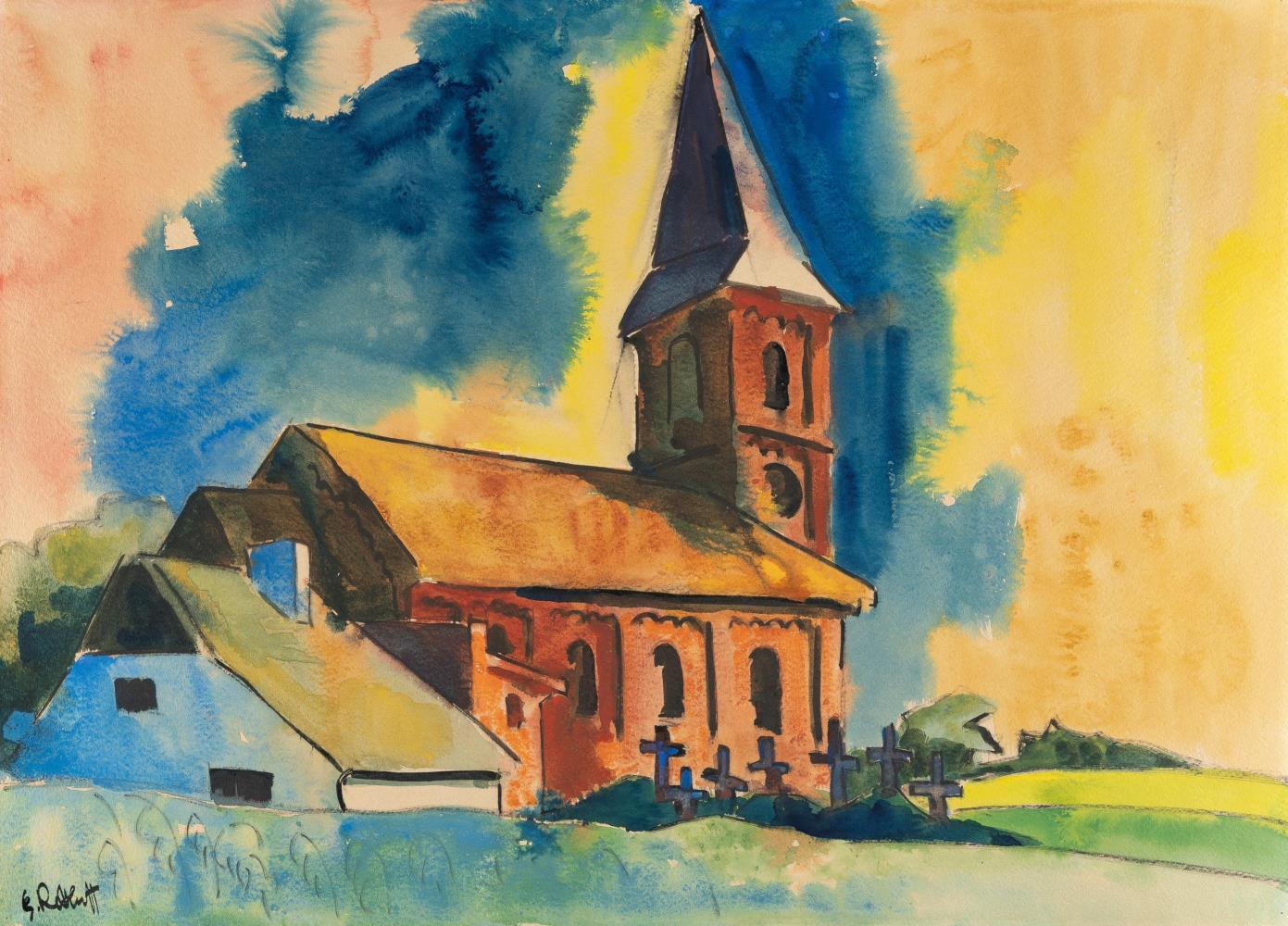
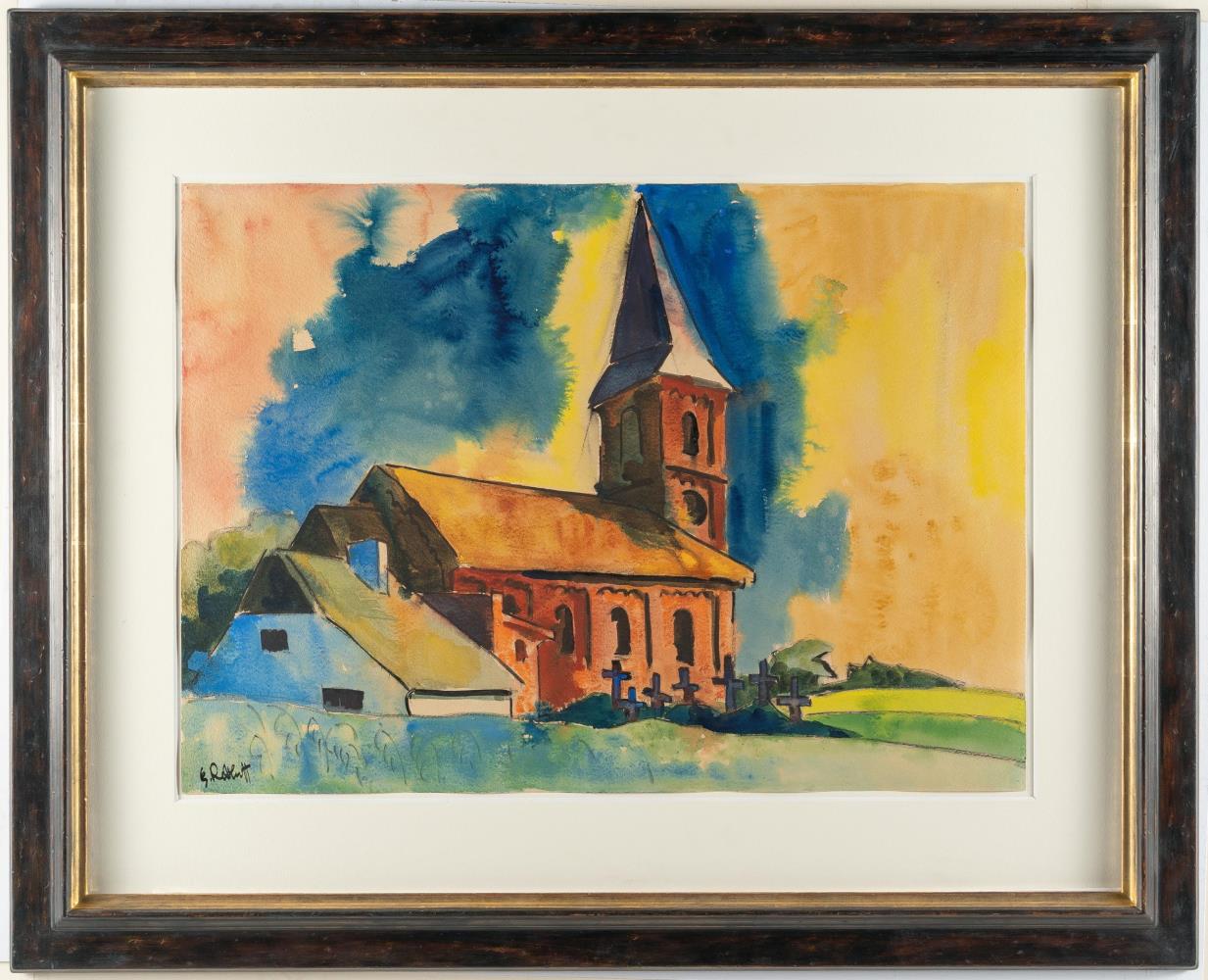
Church in Rützenhagen (Pomerania)





Artist
Karl Schmidt-Rottluff
Provenance
Stuttgarter Kunstkabinett Roman Norbert Ketterer, Stuttgart 4.5.1962, Los 445, s/w Tafel S. 262, verso auf der Rahmenrückseite mit den alten ausgeschnittenen Etiketten;
Galerie Vömel, Düsseldorf;
Privatsammlung, Norddeutschland;
Privatsammlung, Süddeutschland.
Galerie Vömel, Düsseldorf;
Privatsammlung, Norddeutschland;
Privatsammlung, Süddeutschland.
Share


Description
- Tranquility and sparseness speak from this colorful work
- Exemplary for Schmidt-Rottluff's intensive exploration of the North German coastal region
- A motif chosen by Schmidt-Rottluff around 1925
Karl Schmidt-Rottluff spent many years in Eastern Pomerania during the summer months, particularly at Lake Leba. The landscape of Rützenhagen (now Rzęsin in Polish) inspired him to create numerous works there. While motifs such as the houses of Dangast or the dunes and seascapes on the island of Rügen recur in various phases of his work, the church of Rützenhagen is a theme that Schmidt-Rottluff chose around 1925.
Many of his Pomeranian paintings, including the views of the church, radiate a special calm and sparseness. The lonely location of the church in the middle of the landscape can be interpreted as an expression of his search for a simple life close to nature, away from the hectic city.
In the execution of the present sheet, Schmidt-Rottluff transfers his expressionist formal language to a seemingly traditional motif. In doing so, he relies on bold colors and dispenses with realistic details in order to capture the inner, perceived truth of the scenery.
Watercolor plays a central role in Schmidt-Rottluff's work. In 1909, he developed his decisive contribution to the "Brücke style" in this medium, and its fluidity and lightness also became a model for the group's work in oil.
- Exemplary for Schmidt-Rottluff's intensive exploration of the North German coastal region
- A motif chosen by Schmidt-Rottluff around 1925
Karl Schmidt-Rottluff spent many years in Eastern Pomerania during the summer months, particularly at Lake Leba. The landscape of Rützenhagen (now Rzęsin in Polish) inspired him to create numerous works there. While motifs such as the houses of Dangast or the dunes and seascapes on the island of Rügen recur in various phases of his work, the church of Rützenhagen is a theme that Schmidt-Rottluff chose around 1925.
Many of his Pomeranian paintings, including the views of the church, radiate a special calm and sparseness. The lonely location of the church in the middle of the landscape can be interpreted as an expression of his search for a simple life close to nature, away from the hectic city.
In the execution of the present sheet, Schmidt-Rottluff transfers his expressionist formal language to a seemingly traditional motif. In doing so, he relies on bold colors and dispenses with realistic details in order to capture the inner, perceived truth of the scenery.
Watercolor plays a central role in Schmidt-Rottluff's work. In 1909, he developed his decisive contribution to the "Brücke style" in this medium, and its fluidity and lightness also became a model for the group's work in oil.