Emil Nolde
Dahlias and rudbeckias
Artist
Emil Nolde
Provenance
Galerie Roman Norbert Ketterer, Campione d’Italia, Kat.-Nr. 103, farb. Abb. S. 209; Privatbesitz, Süddeutschland, 1971 bei Vorgenannter erworben, durch Erbfolge an den jetzigen Besitzer.
Share


Description
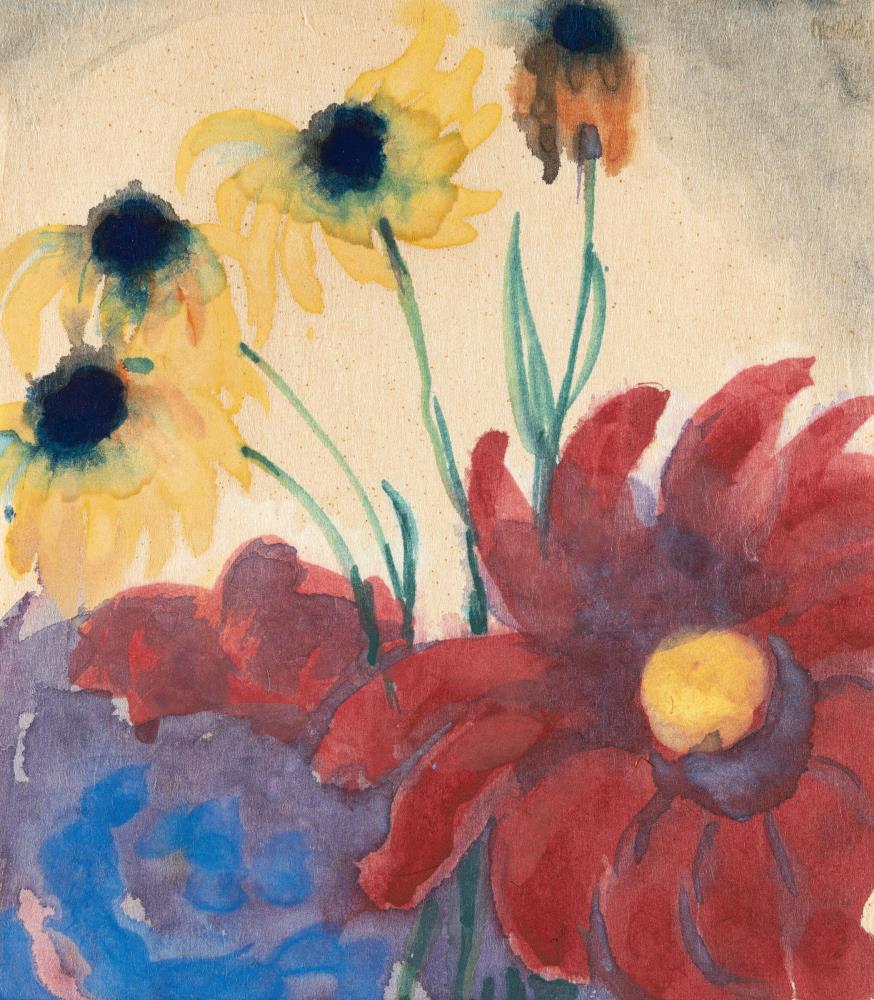
- Airily arranged blossoms in red and yellow
- Nolde captures the full splendor of his late summer garden here
- In family ownership for decades
Emil Nolde left a large number of watercolors to his posterity. Around 1918, he began to explore the world of flowers and captured his love for this subject in numerous variations. Even in his late work, he was still bursting with creative energy, telling an editor of the Berliner Zeitung in his studio in the spring of 1934: "I would like to live another fifty years to be able to paint all these pictures." (quoted from: Emil Nolde, Retrospective, Städel Museum, Frankfurt/Main/Louisiana Museum of Modern Art, Humblebaek 2014, p. 199).
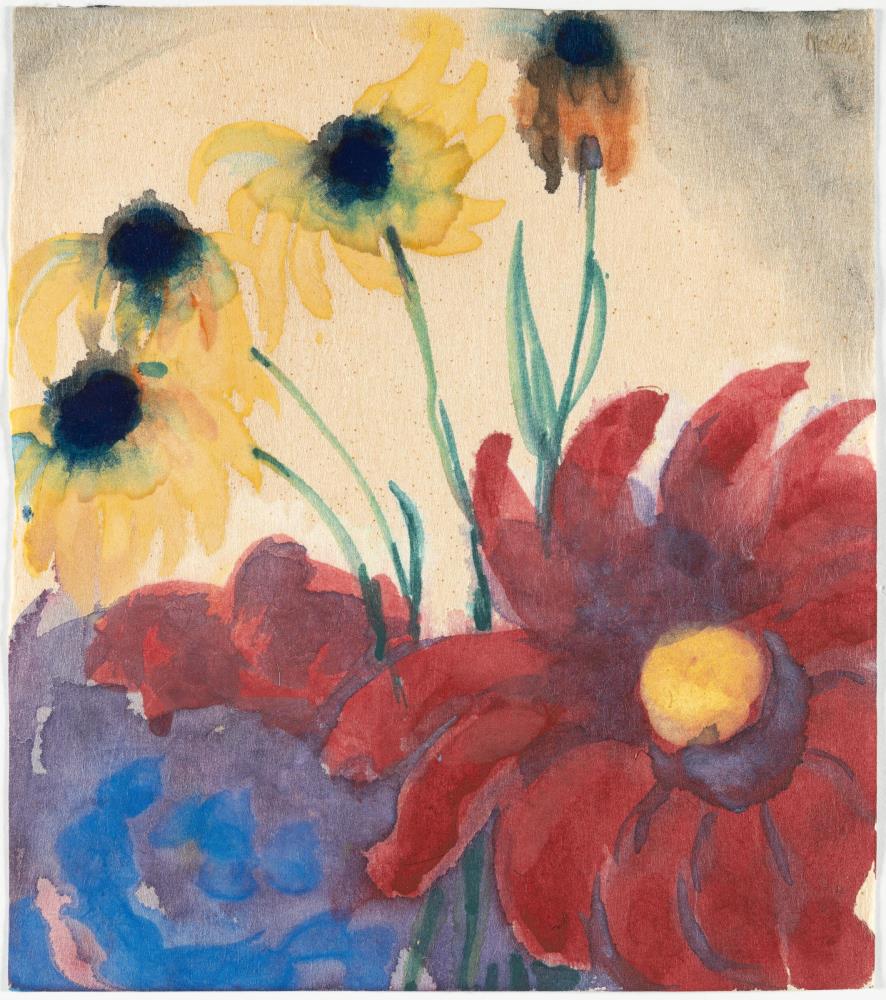
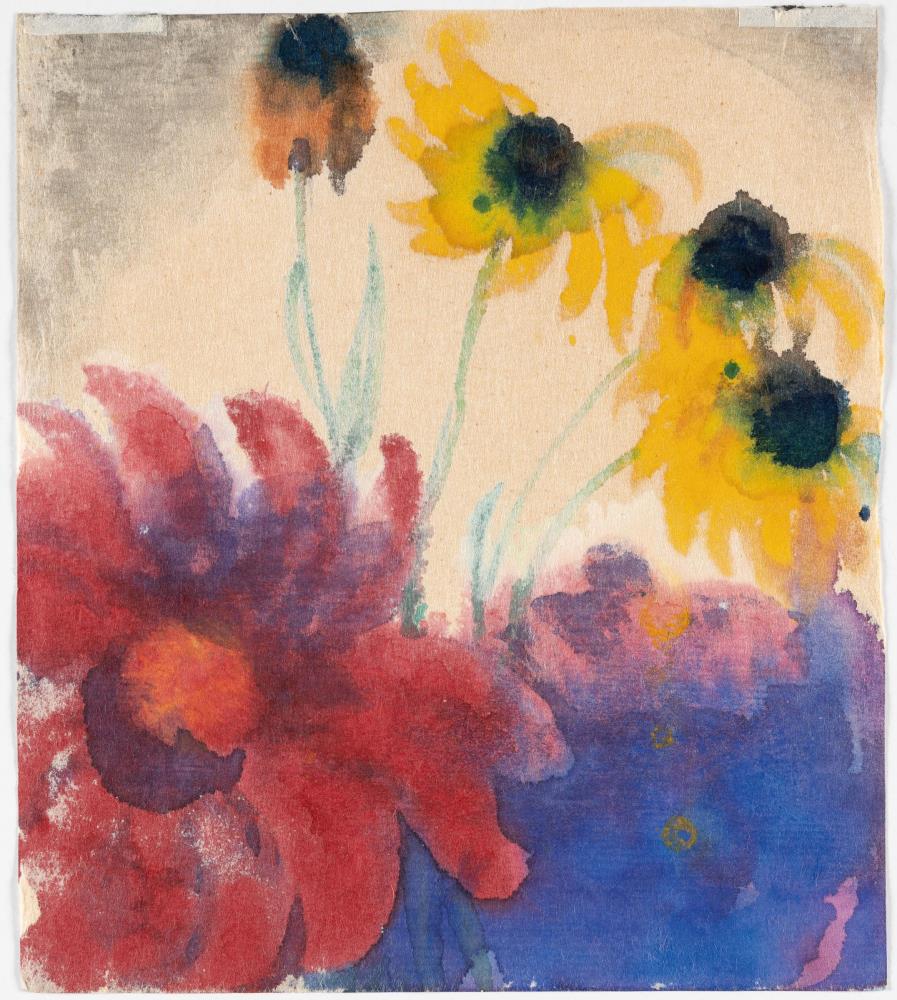
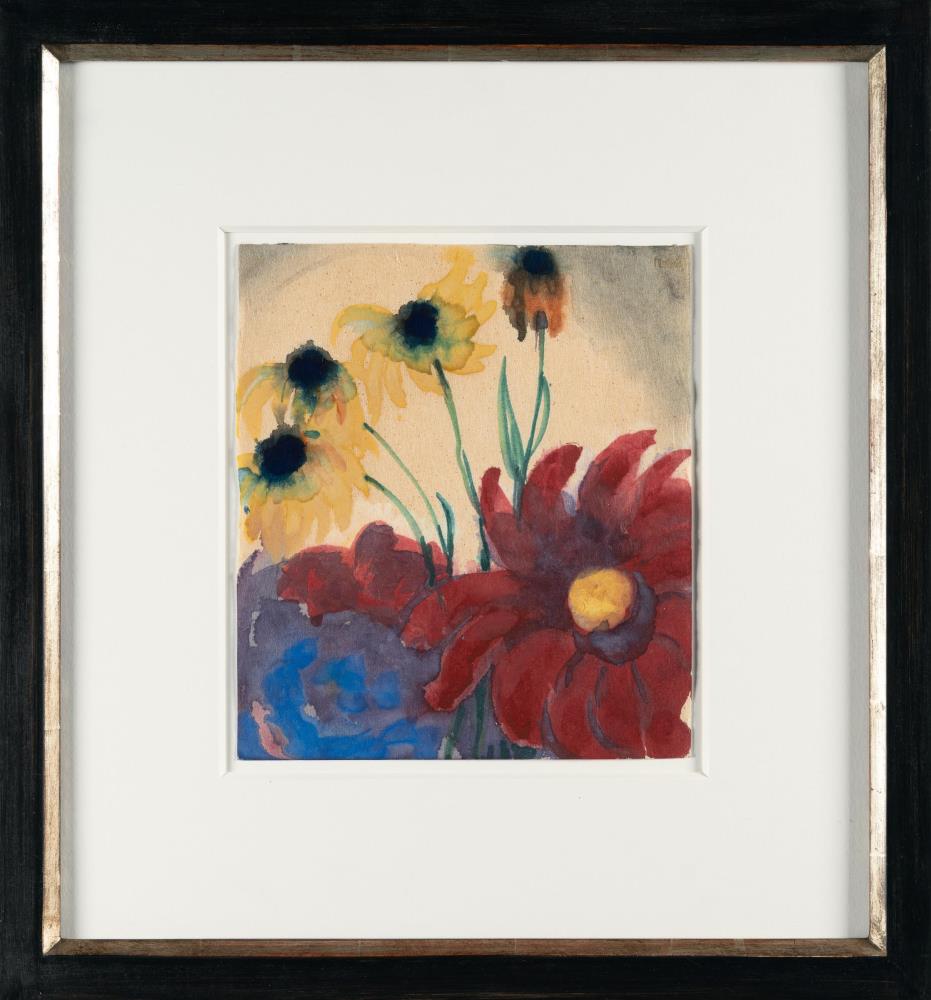
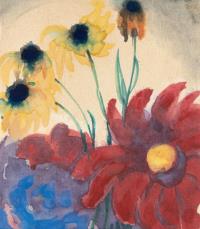
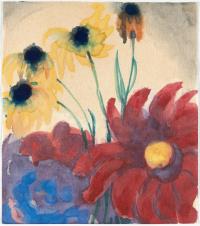
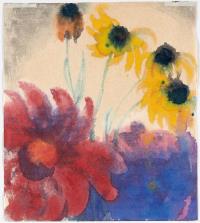
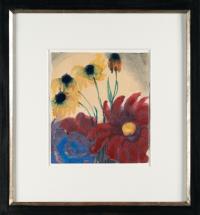
As in the present watercolor, which was created around 1935, the blossoms are mostly identifiable in close-up. Here, Nolde places red dahlias with delicate long-stemmed yellow rudbeckias against a light background. Here he executes his composition with the support of the Japanese paper moistened during the painting process and the use of thin liquid colors, thus creating random color gradients that give the whole its charm. The blue spots of color in the lower left corner remain indeterminable, but give the whole a beautiful accent.
With a photo expertise by Professor Dr. Manfred Reuther, Klockries, dated 2.11.2024.
- Nolde captures the full splendor of his late summer garden here
- In family ownership for decades
Emil Nolde left a large number of watercolors to his posterity. Around 1918, he began to explore the world of flowers and captured his love for this subject in numerous variations. Even in his late work, he was still bursting with creative energy, telling an editor of the Berliner Zeitung in his studio in the spring of 1934: "I would like to live another fifty years to be able to paint all these pictures." (quoted from: Emil Nolde, Retrospective, Städel Museum, Frankfurt/Main/Louisiana Museum of Modern Art, Humblebaek 2014, p. 199).
As in the present watercolor, which was created around 1935, the blossoms are mostly identifiable in close-up. Here, Nolde places red dahlias with delicate long-stemmed yellow rudbeckias against a light background. Here he executes his composition with the support of the Japanese paper moistened during the painting process and the use of thin liquid colors, thus creating random color gradients that give the whole its charm. The blue spots of color in the lower left corner remain indeterminable, but give the whole a beautiful accent.
With a photo expertise by Professor Dr. Manfred Reuther, Klockries, dated 2.11.2024.