Emil Nolde
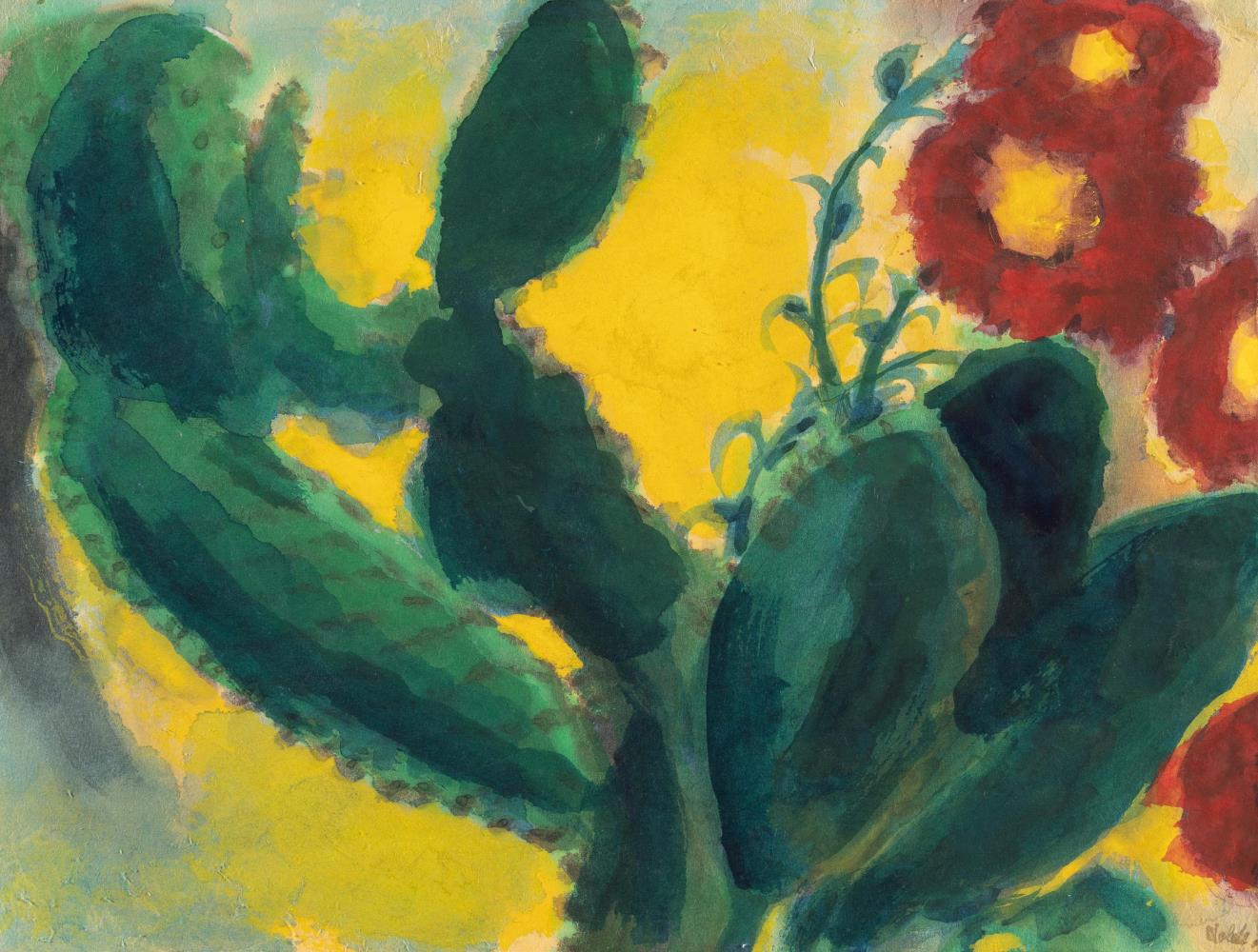
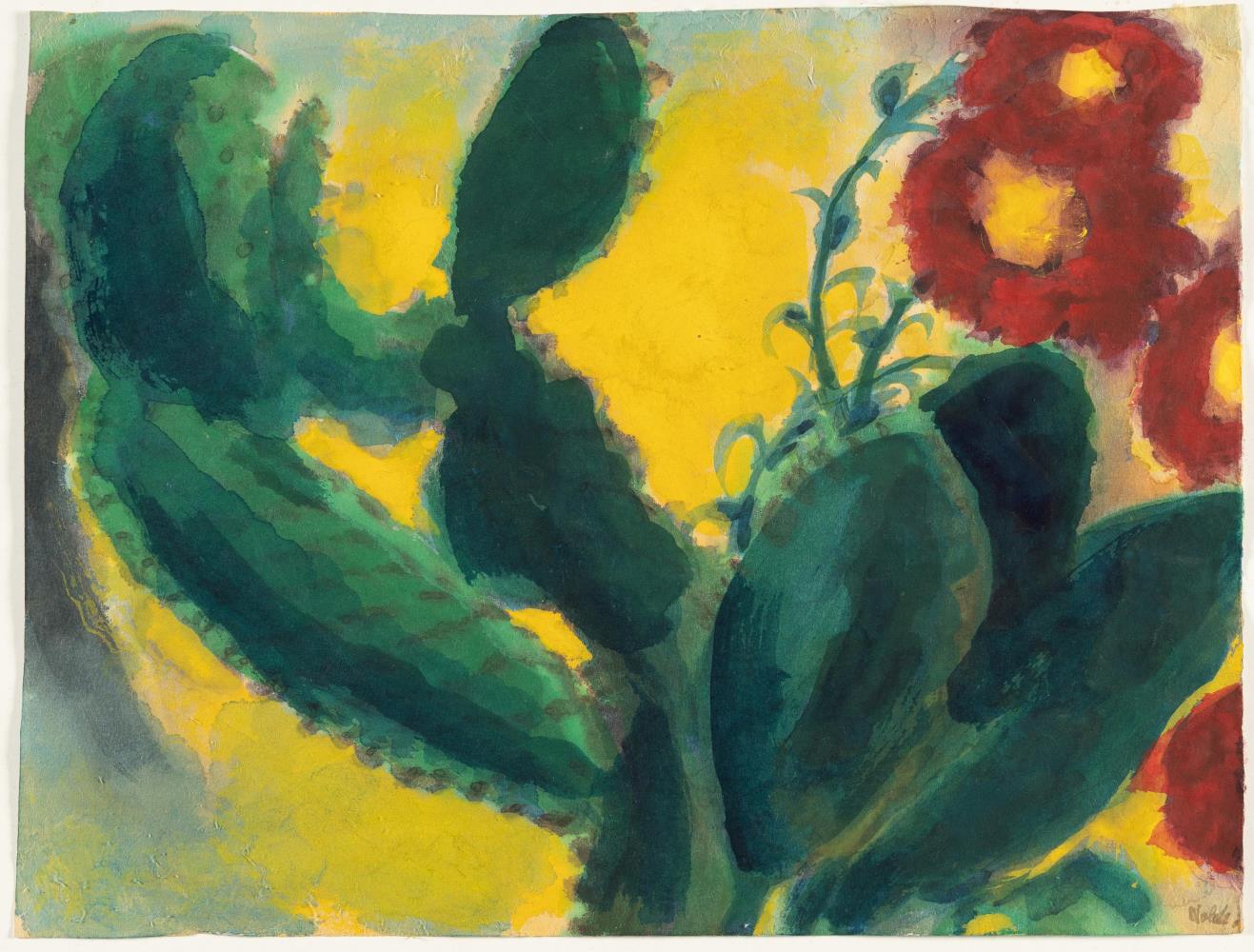
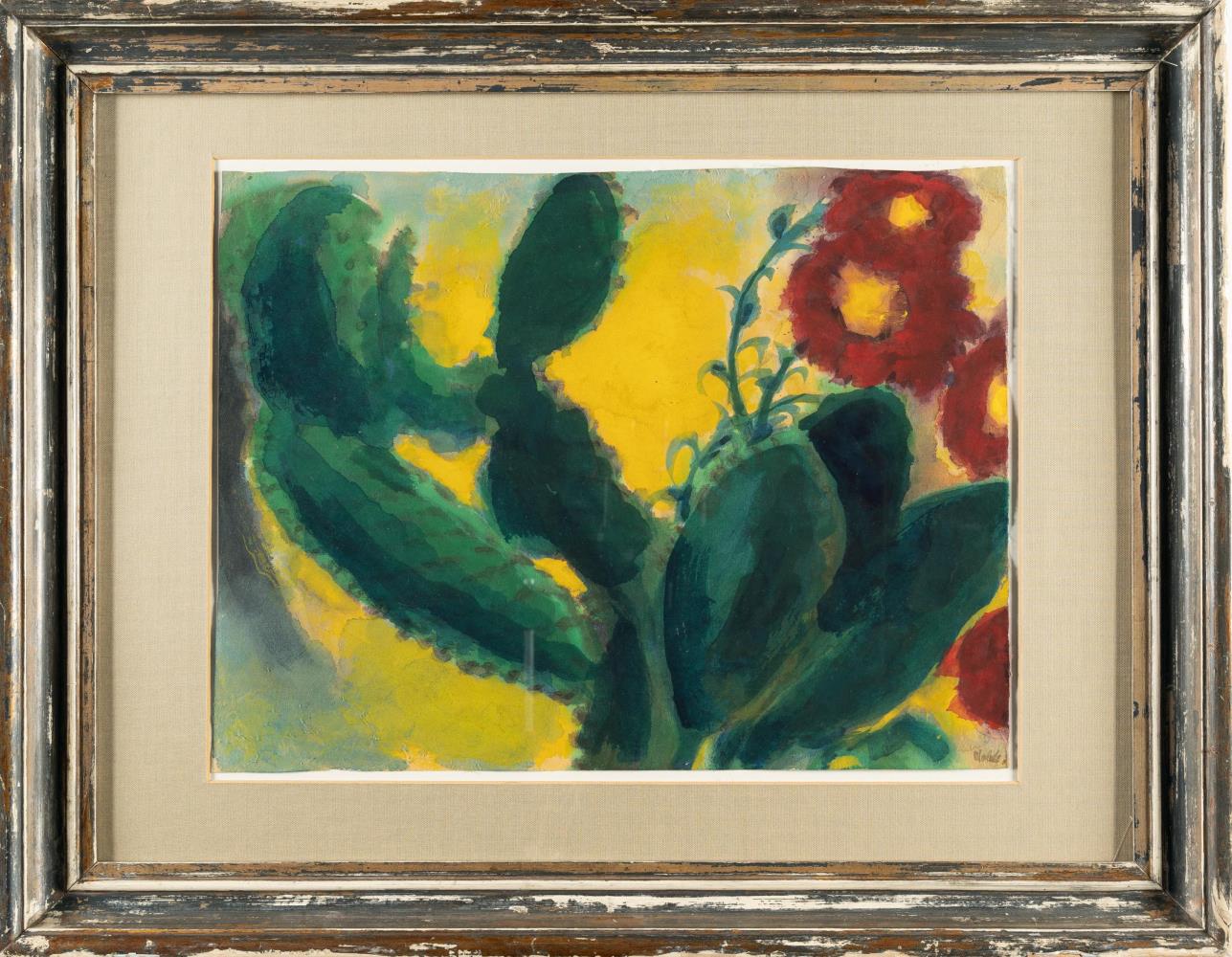
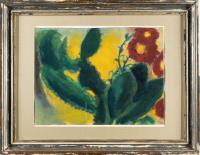
Kaktus mit roten Blüten
Artist
Emil Nolde
Additional Description
Aquarell auf Japan. (Um 1930/40). Ca. 35,5 x 47 cm. Signiert unten rechts.
Period
(1867 Nolde - Seebüll 1956)
Technique
Works on paper
Provenance
Privatbesitz, Niedersachsen.
Share


Description
- Masterpiece of watercolor art
- Powerful, emotional and partly abstract depiction
- Subjective, expressive colorfulness
Emil Nolde left a large number of watercolors to his posterity. Around 1918, he began to explore the world of plants and captured his love for this subject in numerous variations. Even in his late work, he was still bursting with creative energy.
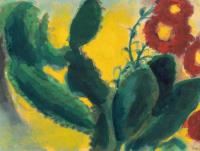
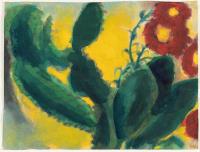
In the present sheet, Nolde depicts a cactus in close-up. It dominates the overall composition and meanders across the entire sheet with its ramifications. Nolde contrasts the green shades of the structure with its delicate spines with a bright yellow background, making the leaf glow. Only a small, delicate flower stalk with red blossoms provides a balancing counterpoint on the right-hand edge of the picture.
In Emil Nolde's work, the colors green, yellow and red stand for a powerful, emotional and partly abstract representation of nature and life, which he describes as "power" and "life". The meaning is not rigid, but results from the intense combination: green usually stands for nature, yellow for light, joy and energy and red symbolizes passion and intensity. Nolde's approach is a subjective, expressive colorfulness that is guided by feeling rather than fixed symbolism.
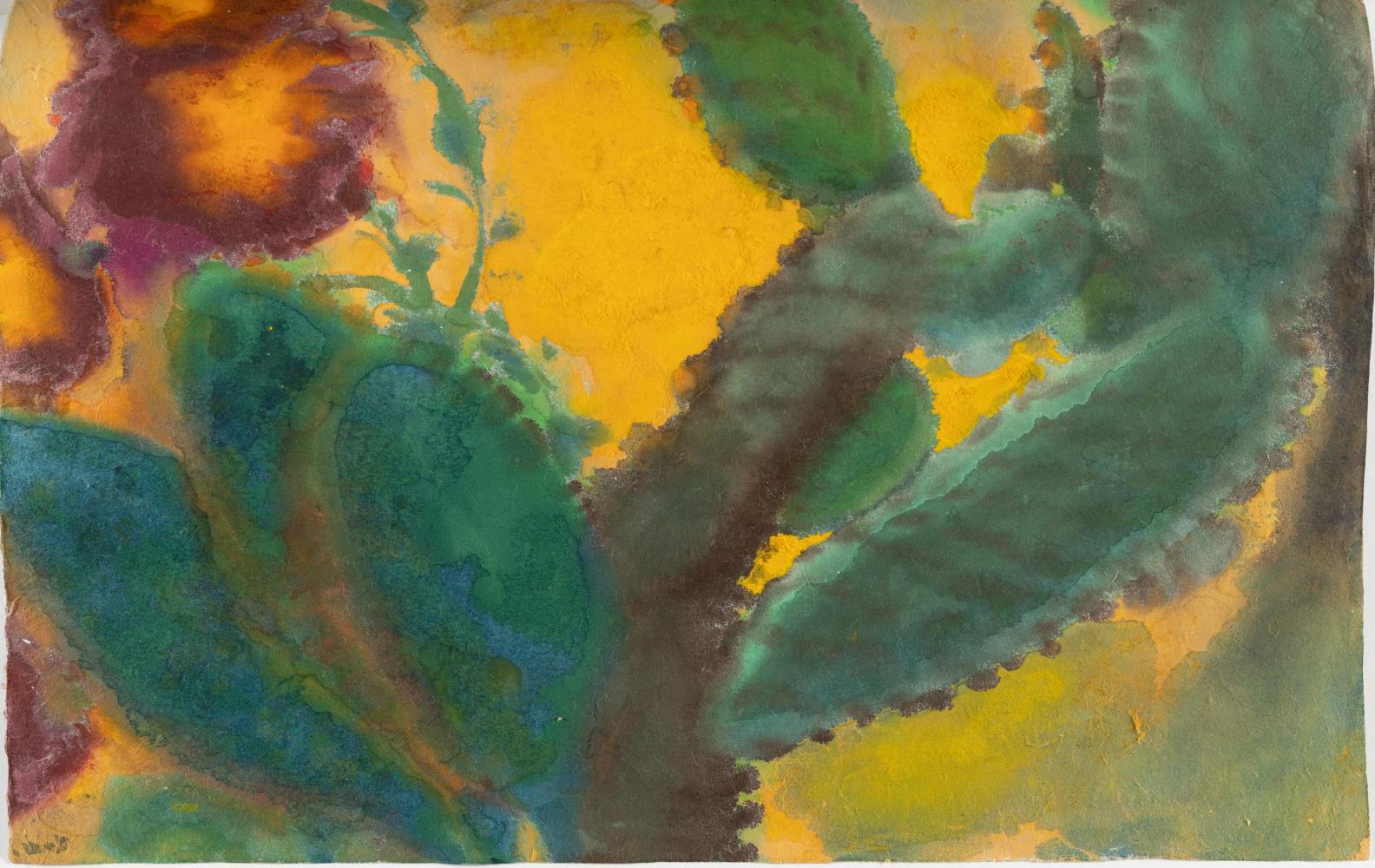
Nolde executes his composition with the support of Japanese paper moistened during the painting process and the use of thin liquid colors. This working method creates random, soft transitions and diffuse forms that lend his watercolors a special liveliness and spontaneity.
With a photo expertise by Professor Dr. Manfred Reuther, Klockries, dated 19.8.2018. The work is registered and documented in the archive of Professor Manfred Reuther under the number "Nolde A-95/2018".
- Powerful, emotional and partly abstract depiction
- Subjective, expressive colorfulness
Emil Nolde left a large number of watercolors to his posterity. Around 1918, he began to explore the world of plants and captured his love for this subject in numerous variations. Even in his late work, he was still bursting with creative energy.
In the present sheet, Nolde depicts a cactus in close-up. It dominates the overall composition and meanders across the entire sheet with its ramifications. Nolde contrasts the green shades of the structure with its delicate spines with a bright yellow background, making the leaf glow. Only a small, delicate flower stalk with red blossoms provides a balancing counterpoint on the right-hand edge of the picture.
In Emil Nolde's work, the colors green, yellow and red stand for a powerful, emotional and partly abstract representation of nature and life, which he describes as "power" and "life". The meaning is not rigid, but results from the intense combination: green usually stands for nature, yellow for light, joy and energy and red symbolizes passion and intensity. Nolde's approach is a subjective, expressive colorfulness that is guided by feeling rather than fixed symbolism.
Nolde executes his composition with the support of Japanese paper moistened during the painting process and the use of thin liquid colors. This working method creates random, soft transitions and diffuse forms that lend his watercolors a special liveliness and spontaneity.
With a photo expertise by Professor Dr. Manfred Reuther, Klockries, dated 19.8.2018. The work is registered and documented in the archive of Professor Manfred Reuther under the number "Nolde A-95/2018".