Paula Modersohn-Becker
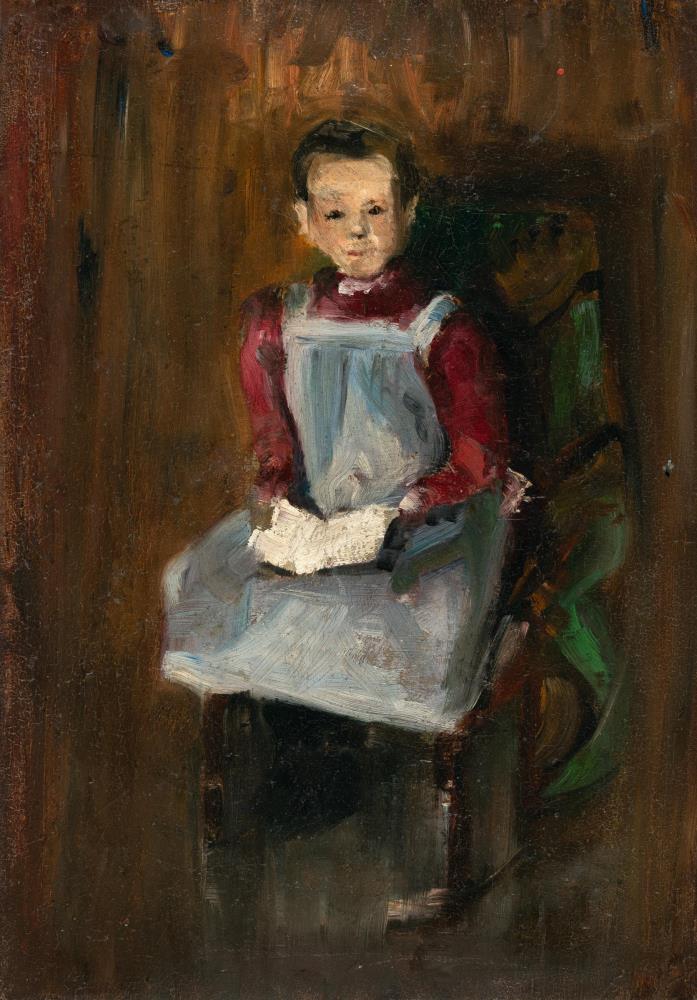
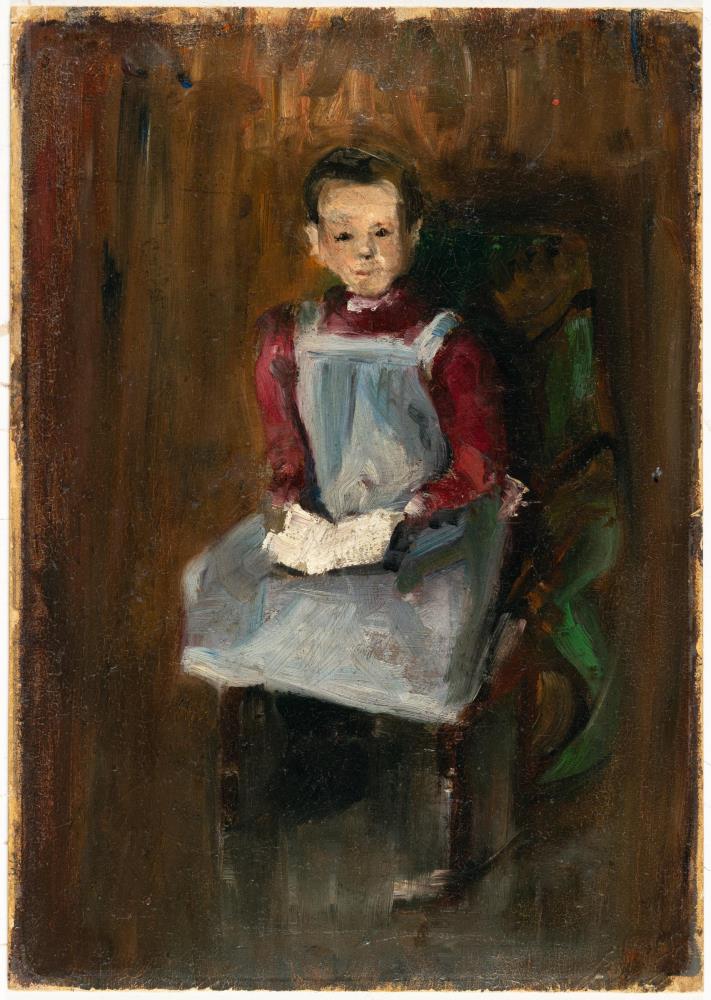
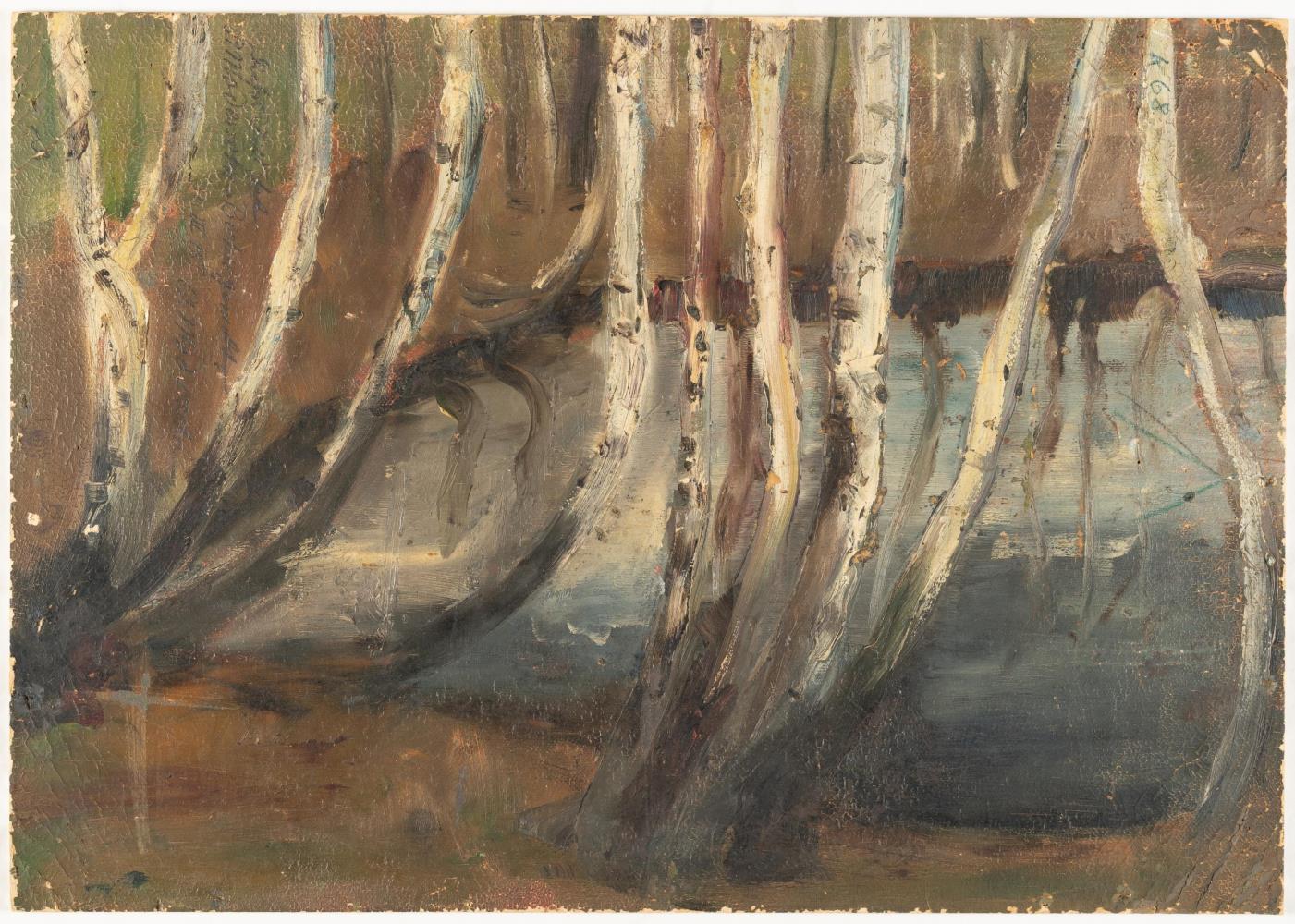
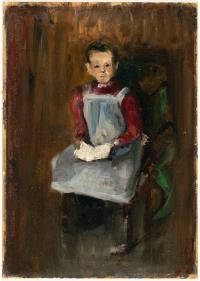
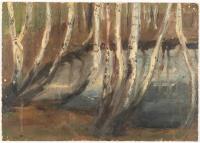
Recto: Sitzendes Kind mit Buch auf dem Schoß – Verso: Tümpel mit Birkenstämmen
Artist
Paula Modersohn-Becker
Ausstellung
Paula Modersohn-Becker (1876-1907), Kunsthalle, Bremen 1947, Kat.-Nr. 9, o. Abb. („Kind mit Buch auf grünem Stuhl“) ; Gemälde-Ausstellung Paula Modersohn-Becker, Otto Modersohn, Städtisches Kulturamt in den Ausstellungsräumen im Theaterflügel Schloß Celle, Celle 1948, Kat.-Nr. 9.
Provenance
Nachlass der Künstlerin/Tille Modersohn; Große Kunstschau Worpswede/Martin Goldyga (1950er Jahre); Privatbesitz, Bremen; Galerie Rosenbach, Hannover; Galerie Koch, Hannover; Privatbesitz, Bayern, 1973 bei Vorgenannter erworben, durch Erbfolge an den jetzigen Besitzer.
Share


Description
- Extremely early work by the important artist
- Double-sided work with child portrait and landscape depiction
- With confirmation by Otto Modersohn
This is not a work by Paula Modersohn-Becker.
But before you turn the page in confusion, wait a moment, we can explain:
In 1897/98, Paula Becker was not yet a Modersohn-Becker. She was not yet the artist whose typical pictorial language would later become so well-known. She was still Paula Becker, a young woman from Dresden who was studying painting. In 1897, she was admitted to the painting class at the Ladies' Academy in Berlin, where she initially painted primarily portraits. Also in 1897, she visited Worpswede for the first time in the summer - her parents were celebrating their silver wedding anniversary there, and the young Paula fell in love with the landscape. In 1898, Paula Becker managed to arrange a longer stay in Worpswede. Initially planned as a short study trip to visit the co-founder of the local artists' colony Fritz Mackensen, it turned into a more intensive and long-term preoccupation with the forms and colors of Worpswede.
The work we are offering shows the development of the young artist and the influences of her places of study in Berlin and Worpswede: a young girl can be seen in the recto. Unknown to us today, she is sitting on a chair with an open book and looking over at us. A hint of a smile comes from the painting board, and it is almost as if we know who is sitting opposite us. Through the dark-toned background, the colors and the liveliness of the sitter virtually shine, the childlike liveliness dominates the old-masterly darkness. We see how the painter learns art during her time at the Berlin academy in the spirit of the times: she builds up the picture from dark to light; and as a student at the so-called Ladies' Academy - female students are not admitted to the "real" art academy - she is entitled to the subject of the child portrait.
On the reverse, however, we no longer see any academy period, no strict adherence to rules, "pictorial worthiness" or formalism. Here, Paula Becker paints a pond, as unspectacular as it sounds. With the birch trunks framing it, the artist's later pictorial language already shines through here. The influence of Worpswede on her working method and painting style is clear, and the landscape appears much quicker.
Both pages are convincing in their own way and are fully-fledged testimonies to Paula Becker's art.
Otto Modersohn and Paula, who was eleven years younger, became engaged in 1901. Their contact had intensified from 1899, and after the death of his wife, Otto officially courted Paula. The relationship with the older Otto was to be difficult, with repeated talk of a possible divorce. The fact that Paula Modersohn-Becker not only became "the wife of" was due to her determination and assertiveness - but not to her husband. She was able to celebrate success in the male-dominated art world of the 20th century and establish herself with her very own style and imagery. What her husband, Otto Modersohn, who also painted, thought of the double work on offer here is clear from the work itself: in 1915, eight years after Paula's death, he validated the authenticity of the work by making a handwritten note on the side of the pond. It is remarkable that he thus also declared the portrait side to be a work of art, while degrading the landscape to the inscribable reverse side.
Whether the young Paula Becker would have agreed with this interpretation of her later husband remains to be seen.
Busch/Werner 7.
- Double-sided work with child portrait and landscape depiction
- With confirmation by Otto Modersohn
This is not a work by Paula Modersohn-Becker.
But before you turn the page in confusion, wait a moment, we can explain:
In 1897/98, Paula Becker was not yet a Modersohn-Becker. She was not yet the artist whose typical pictorial language would later become so well-known. She was still Paula Becker, a young woman from Dresden who was studying painting. In 1897, she was admitted to the painting class at the Ladies' Academy in Berlin, where she initially painted primarily portraits. Also in 1897, she visited Worpswede for the first time in the summer - her parents were celebrating their silver wedding anniversary there, and the young Paula fell in love with the landscape. In 1898, Paula Becker managed to arrange a longer stay in Worpswede. Initially planned as a short study trip to visit the co-founder of the local artists' colony Fritz Mackensen, it turned into a more intensive and long-term preoccupation with the forms and colors of Worpswede.
The work we are offering shows the development of the young artist and the influences of her places of study in Berlin and Worpswede: a young girl can be seen in the recto. Unknown to us today, she is sitting on a chair with an open book and looking over at us. A hint of a smile comes from the painting board, and it is almost as if we know who is sitting opposite us. Through the dark-toned background, the colors and the liveliness of the sitter virtually shine, the childlike liveliness dominates the old-masterly darkness. We see how the painter learns art during her time at the Berlin academy in the spirit of the times: she builds up the picture from dark to light; and as a student at the so-called Ladies' Academy - female students are not admitted to the "real" art academy - she is entitled to the subject of the child portrait.
On the reverse, however, we no longer see any academy period, no strict adherence to rules, "pictorial worthiness" or formalism. Here, Paula Becker paints a pond, as unspectacular as it sounds. With the birch trunks framing it, the artist's later pictorial language already shines through here. The influence of Worpswede on her working method and painting style is clear, and the landscape appears much quicker.
Both pages are convincing in their own way and are fully-fledged testimonies to Paula Becker's art.
Otto Modersohn and Paula, who was eleven years younger, became engaged in 1901. Their contact had intensified from 1899, and after the death of his wife, Otto officially courted Paula. The relationship with the older Otto was to be difficult, with repeated talk of a possible divorce. The fact that Paula Modersohn-Becker not only became "the wife of" was due to her determination and assertiveness - but not to her husband. She was able to celebrate success in the male-dominated art world of the 20th century and establish herself with her very own style and imagery. What her husband, Otto Modersohn, who also painted, thought of the double work on offer here is clear from the work itself: in 1915, eight years after Paula's death, he validated the authenticity of the work by making a handwritten note on the side of the pond. It is remarkable that he thus also declared the portrait side to be a work of art, while degrading the landscape to the inscribable reverse side.
Whether the young Paula Becker would have agreed with this interpretation of her later husband remains to be seen.
Busch/Werner 7.