Le Corbusier
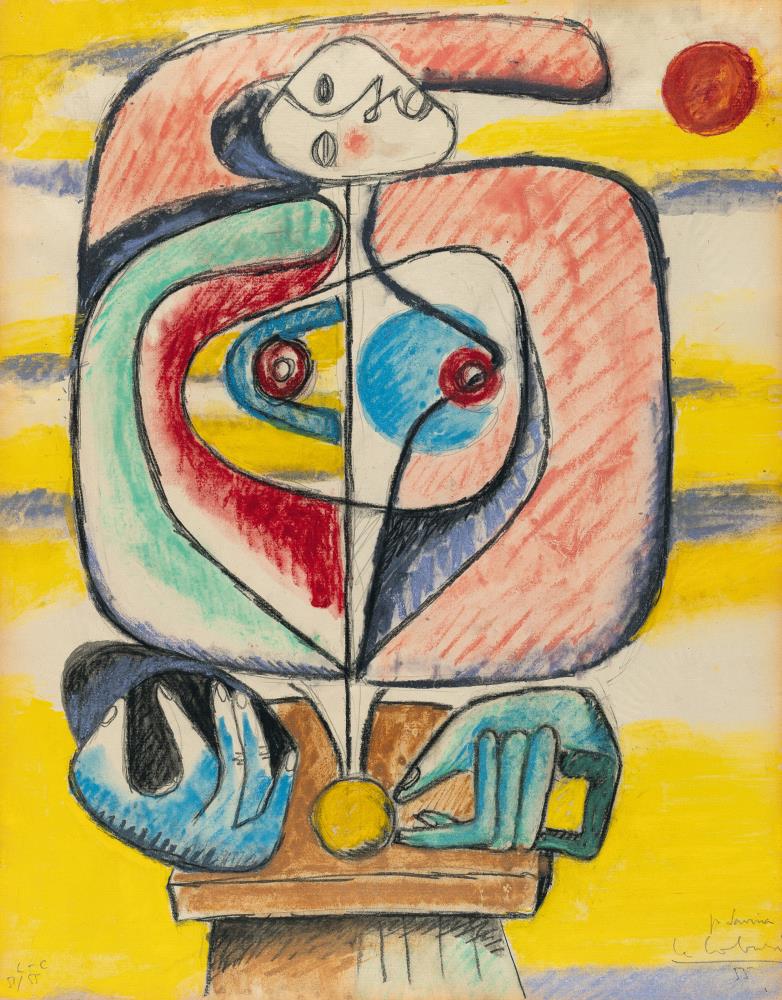
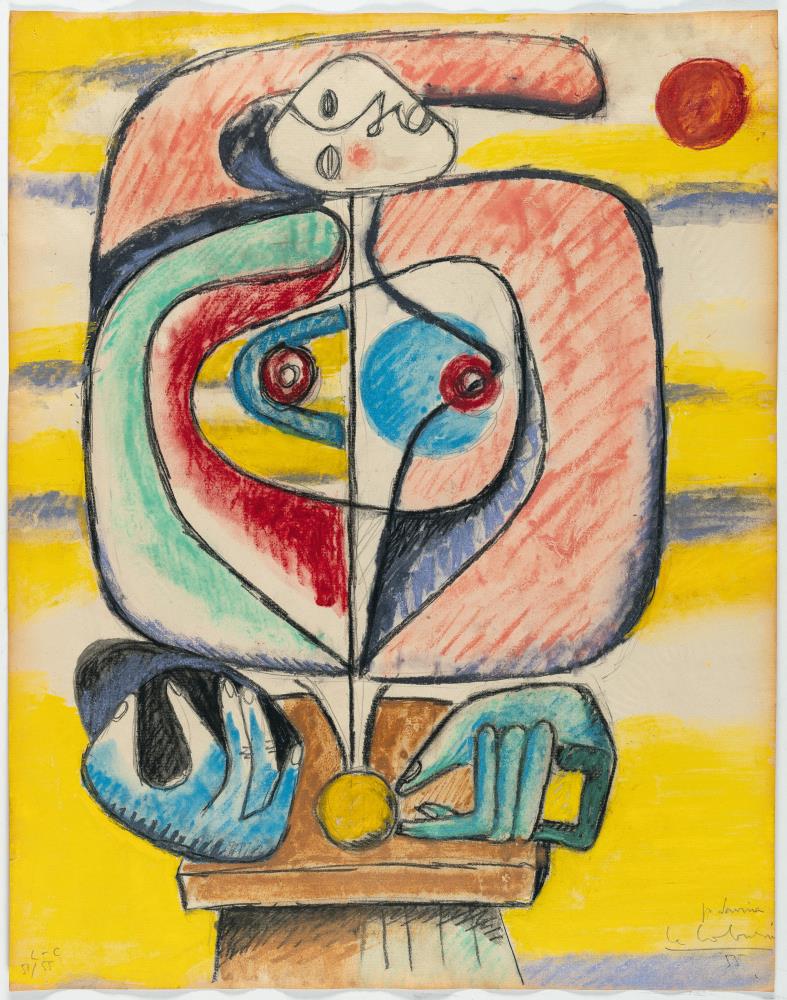
Les Mains ou Pomme d'or (sculpture project)
Artista
Le Corbusier
1887 La Chaux-de-Fonds - Roquebrune 1965
Ulteriori informazioni
Mit einer Bestätigung von Eric Mouchet, Paris, vom 9.5.2021 (in Kopie).
Provenienza
Private collection, France;
Private collection, Paris.
Private collection, Paris.
Share


Descrizione
• Dedicated to the Breton sculptor Joseph Savina, with whom Le Corbusier realised numerous sculptural projects from 1945 onwards
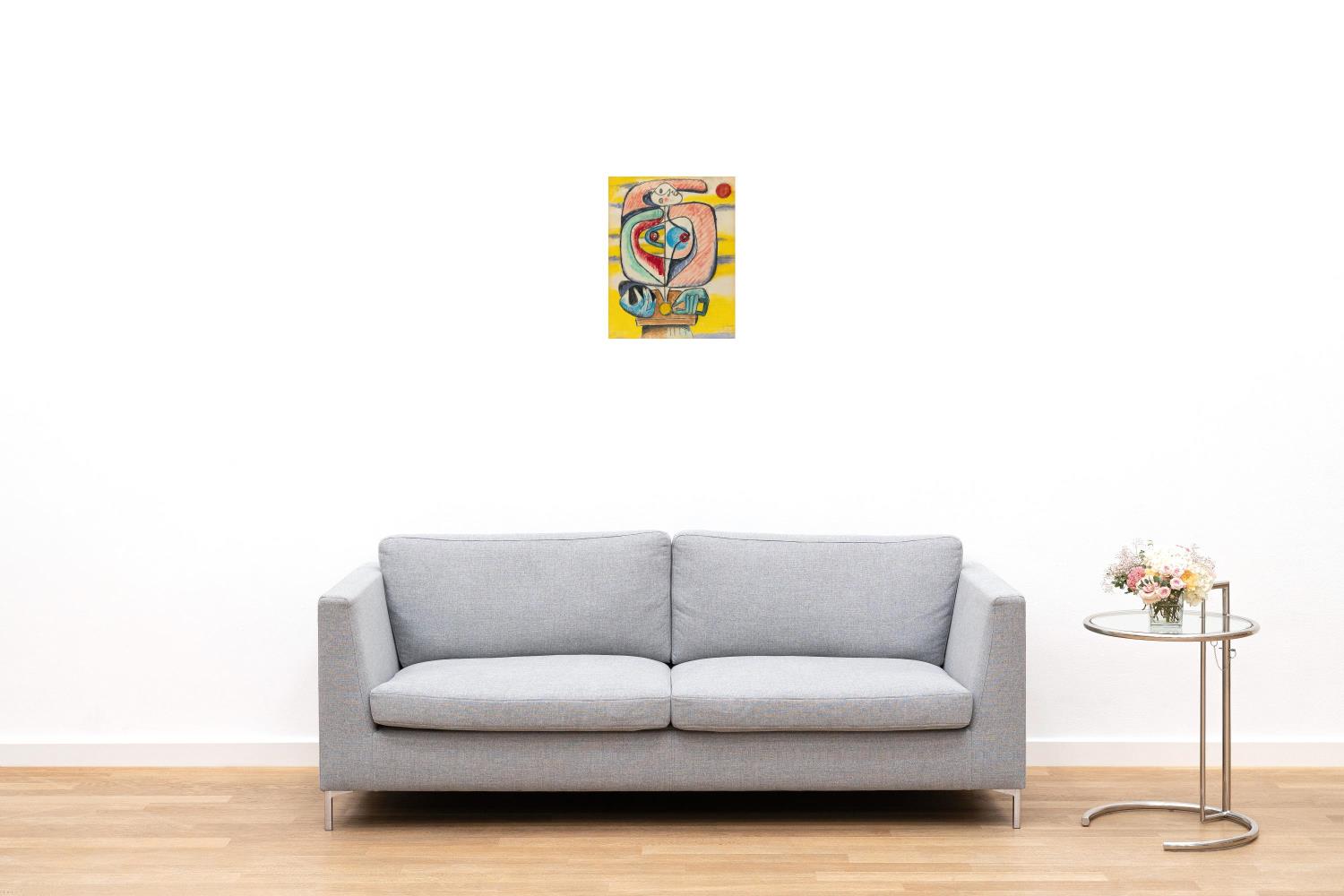
• A colour-rich, large-format composition that bridges the gap between drawing and sculptural design
• Characteristic dual dating of the initial concept and the later execution of the motif
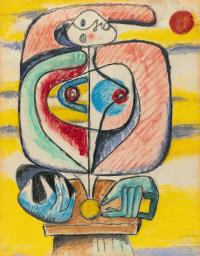
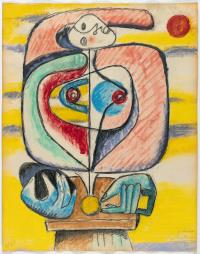
Le Corbusier’s drawings occupy a unique position within his oeuvre and simultaneously serve as a laboratory for his sculptural and architectural ideas. "Les Mains ou Pomme d’or (projet de sculpture)" belongs to that group of works from the 1950s in which organic-abstract forms, human anatomy and symbolic signs merge into a monumental visual language. The centrally arranged hands appear as a symbol of creative power, whilst the strictly axially structured composition already clearly evokes a sculptural concept – in keeping with the designation "projet de sculpture" in the title.
The sheet takes on special significance through its dedication to the Breton sculptor Joseph Savina. Le Corbusier had worked closely with Savina since the mid-1940s. Numerous sculptural works by the architect were executed in his studio. The composition also bears a close formal resemblance to the wooden sculpture ‘Les mains’, realised in 1955 in collaboration with Savina, and is likely to be directly linked to its creation. The drawing thus not only documents an artistic train of thought, but also points directly to the dialogue between design and sculptural realisation.
The double dating "51/55" is typical of Le Corbusier’s working method. As is often the case in his drawings, the first year is inscribed with the time of the motif’s ‘invention’, whilst the second refers to the actual execution. The vibrant areas of colour in yellow, red and blue lend the composition a powerful presence that oscillates between archaic figure, abstract sign and sculpture.
• A colour-rich, large-format composition that bridges the gap between drawing and sculptural design
• Characteristic dual dating of the initial concept and the later execution of the motif
Le Corbusier’s drawings occupy a unique position within his oeuvre and simultaneously serve as a laboratory for his sculptural and architectural ideas. "Les Mains ou Pomme d’or (projet de sculpture)" belongs to that group of works from the 1950s in which organic-abstract forms, human anatomy and symbolic signs merge into a monumental visual language. The centrally arranged hands appear as a symbol of creative power, whilst the strictly axially structured composition already clearly evokes a sculptural concept – in keeping with the designation "projet de sculpture" in the title.
The sheet takes on special significance through its dedication to the Breton sculptor Joseph Savina. Le Corbusier had worked closely with Savina since the mid-1940s. Numerous sculptural works by the architect were executed in his studio. The composition also bears a close formal resemblance to the wooden sculpture ‘Les mains’, realised in 1955 in collaboration with Savina, and is likely to be directly linked to its creation. The drawing thus not only documents an artistic train of thought, but also points directly to the dialogue between design and sculptural realisation.
The double dating "51/55" is typical of Le Corbusier’s working method. As is often the case in his drawings, the first year is inscribed with the time of the motif’s ‘invention’, whilst the second refers to the actual execution. The vibrant areas of colour in yellow, red and blue lend the composition a powerful presence that oscillates between archaic figure, abstract sign and sculpture.