László Moholy-Nagy
"Y"

Artist
László Moholy-Nagy
1895 Bácsborsód - Chicago 1946
Further information
Wir danken dem Moholy-Nagy Estate und Daniel Hug, dem Enkel des Künstlers, für die freundlichen Hinweise bei der Katalogisierung dieses Werkes.
Exhibition
László Moholy-Nagy, IVAM Centre Julio Gonzáles, Valencia, Fridericianum Museum, Kassel, Musée Cantini, Marseille 1991;
Future Present, Solomon Guggenheim Museum, New York, Art Institute Chicago, County Art Museum, Los Angeles 2016/17.
Future Present, Solomon Guggenheim Museum, New York, Art Institute Chicago, County Art Museum, Los Angeles 2016/17.
Provenance
Tristan Tzara Collection, Zurich/Paris;
Hans Joachim Ziersch, Munich;
Kornfeld, Bern 12 June 2009, Lot 121;
Private collection, Southern Germany, acquired from the aforementioned.
Hans Joachim Ziersch, Munich;
Kornfeld, Bern 12 June 2009, Lot 121;
Private collection, Southern Germany, acquired from the aforementioned.
Share


Description
• Rare and early Dadaist collage by Moholy-Nagy
• Dedicated to the poet and Dada co-founder Tristan Tzara
• An experimental, playful combination of technology, people, animals and typography
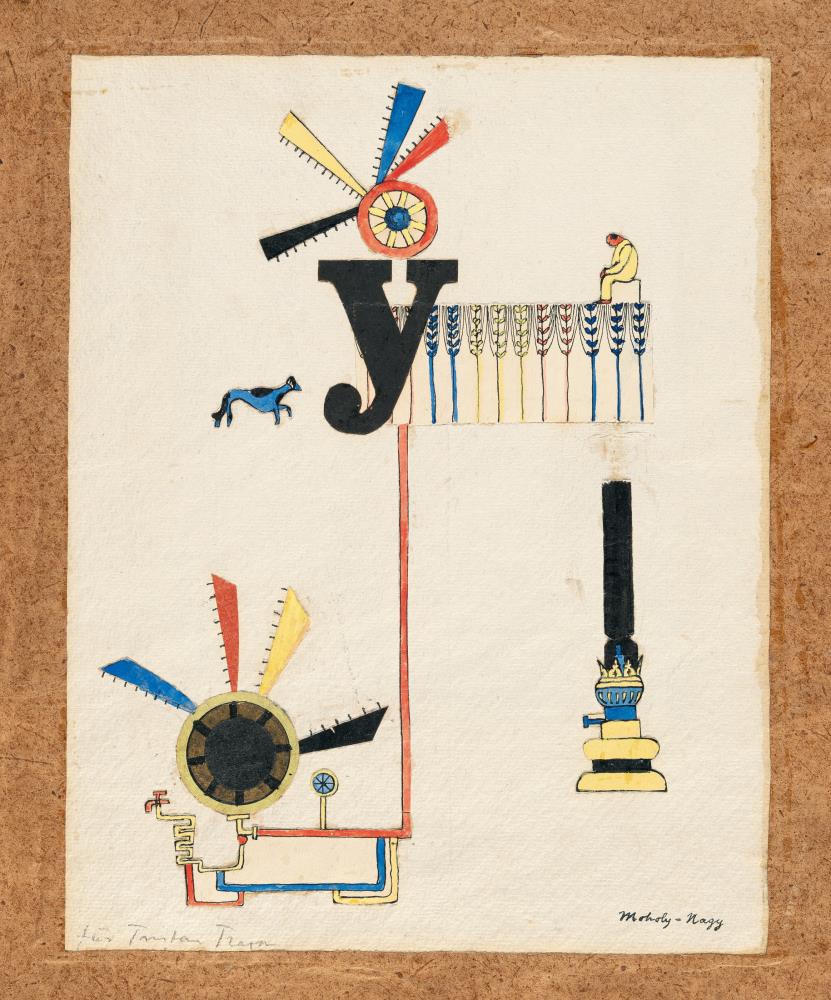
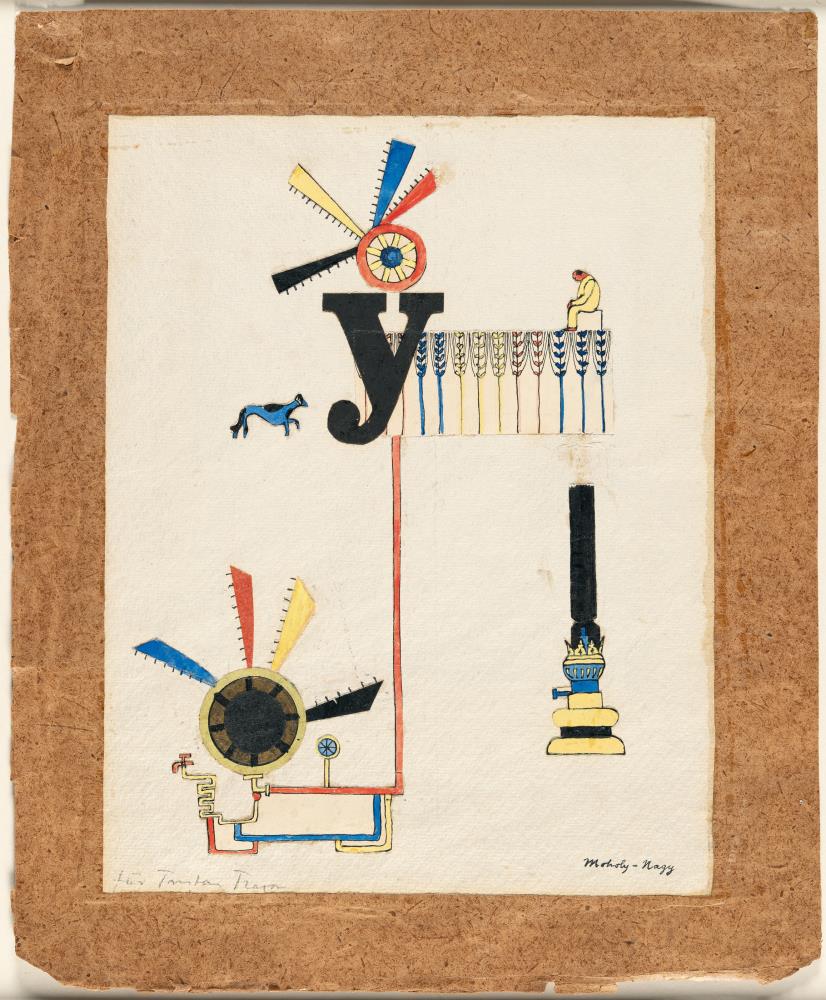
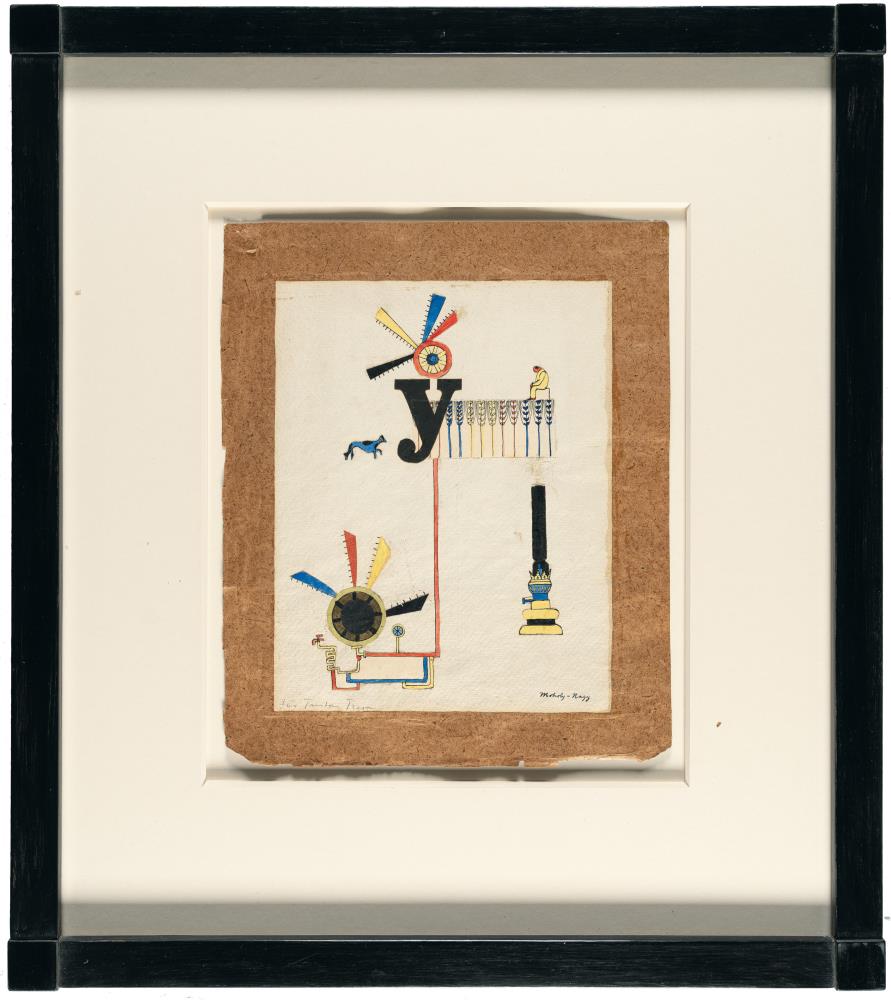
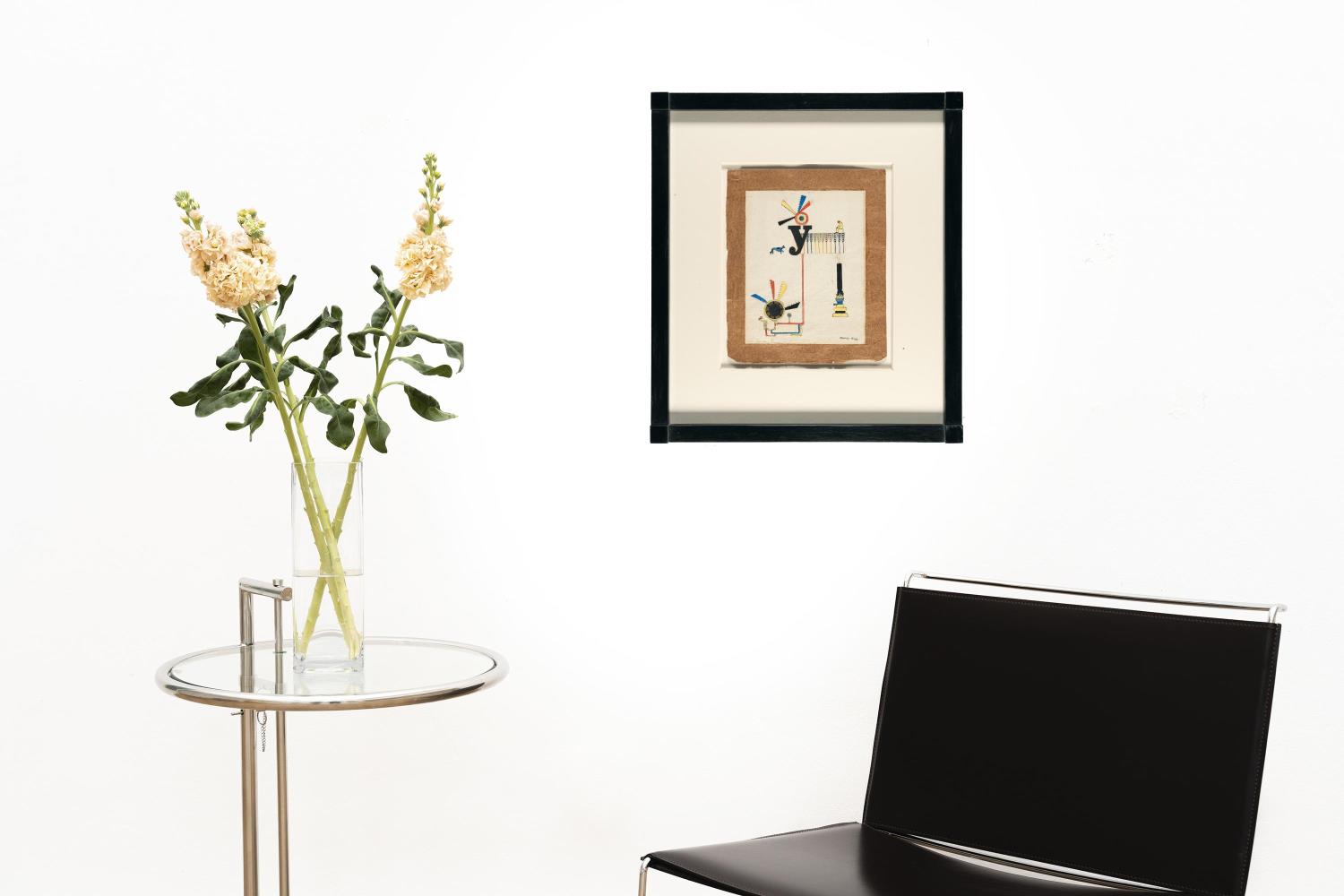
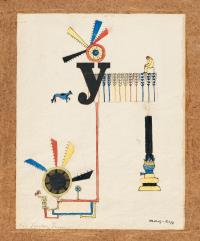
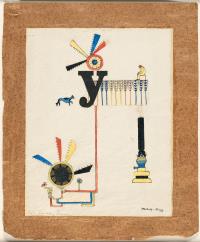
This collage marks a transitional point in László Moholy-Nagy’s early work, between his engagement with the Berlin Dada movement and the development of his own constructivist visual language, which took shape shortly afterwards within the context of the Bauhaus. A characteristic feature is the combination of heterogeneous elements: schematically depicted technical apparatus with wheels and cables, an oil lamp, a centrally placed letter ‘Y’, and small-format figures and plant motifs. The collage does not follow an illusionistic space, but rather an additive structure in which different levels of meaning converge. The small figures – the seated little man and the blue animal – act as deliberate disruptions within a seemingly technical framework. This tension corresponds to the practice of the Berlin Dadaists, with whom Moholy-Nagy came into contact after moving to Berlin in 1920.
The work is dedicated to the poet Tristan Tzara, a central figure of international Dadaism. Dada emerged as a radical counter-movement to established cultural and aesthetic norms following the First World War and was directed against traditional models of meaning and order. In their place came the deliberate combination of heterogeneous pictorial elements and a play on contradictions. Moholy-Nagy takes up this approach in his collage: technical forms, figures and freely placed motifs stand abruptly side by side, forming a fascinatingly open and deliberately ambiguous pictorial structure.
• Dedicated to the poet and Dada co-founder Tristan Tzara
• An experimental, playful combination of technology, people, animals and typography
This collage marks a transitional point in László Moholy-Nagy’s early work, between his engagement with the Berlin Dada movement and the development of his own constructivist visual language, which took shape shortly afterwards within the context of the Bauhaus. A characteristic feature is the combination of heterogeneous elements: schematically depicted technical apparatus with wheels and cables, an oil lamp, a centrally placed letter ‘Y’, and small-format figures and plant motifs. The collage does not follow an illusionistic space, but rather an additive structure in which different levels of meaning converge. The small figures – the seated little man and the blue animal – act as deliberate disruptions within a seemingly technical framework. This tension corresponds to the practice of the Berlin Dadaists, with whom Moholy-Nagy came into contact after moving to Berlin in 1920.
The work is dedicated to the poet Tristan Tzara, a central figure of international Dadaism. Dada emerged as a radical counter-movement to established cultural and aesthetic norms following the First World War and was directed against traditional models of meaning and order. In their place came the deliberate combination of heterogeneous pictorial elements and a play on contradictions. Moholy-Nagy takes up this approach in his collage: technical forms, figures and freely placed motifs stand abruptly side by side, forming a fascinatingly open and deliberately ambiguous pictorial structure.