Gabriele Münter
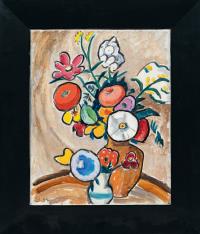
"Buntes Blumenbild" (Colourful Flower Painting)
Artist
Gabriele Münter
1877 Berlin - Murnau 1962
Further information
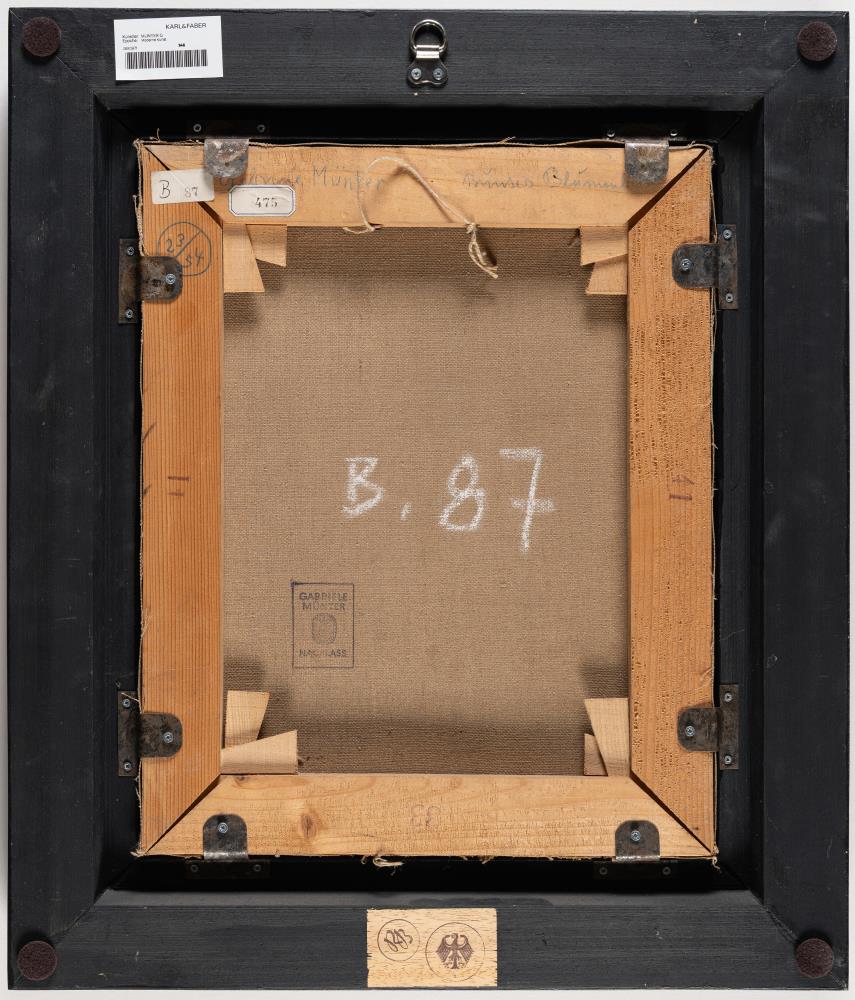
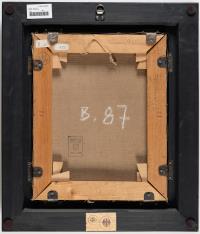
Verso auf dem Keilrahmen mit der handschriftlichen Werknummer "23/54", sowie dem Etikett mit der alten Inventarnummer "475" und dem Etikett mit der Nachlass Nr. "B 87", diese ist nochmals verso auf der Leinwand vermerkt.
Provenance
Estate of the artist, stamped on the reverse of the canvas;
Gabriele Münter and Johannes Eichner Foundation, Munich (until 2007);
Karl & Faber, 25 May 2007, Lot 1008;
Private collection, Southern Germany.
Gabriele Münter and Johannes Eichner Foundation, Munich (until 2007);
Karl & Faber, 25 May 2007, Lot 1008;
Private collection, Southern Germany.
Share


Description
• From the artist’s estate
• Characteristic floral still life from Münter’s mature creative phase, one of her central pictorial themes
• Concise, colour-intensive composition with typical simplification of form and clear contouring
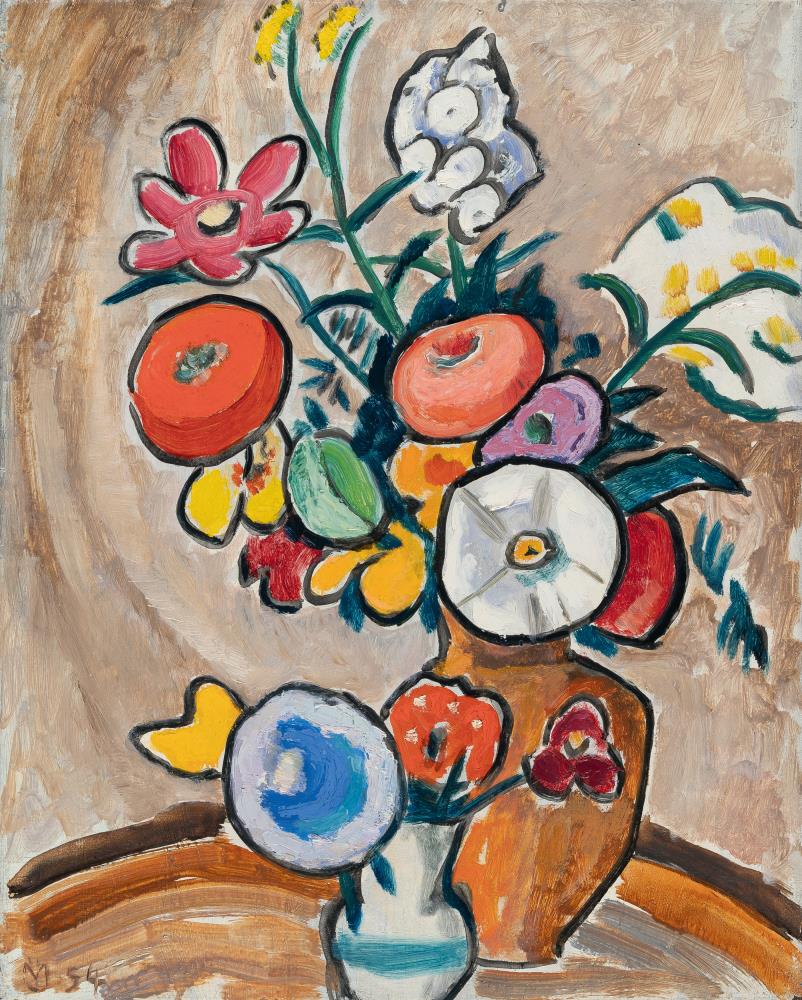
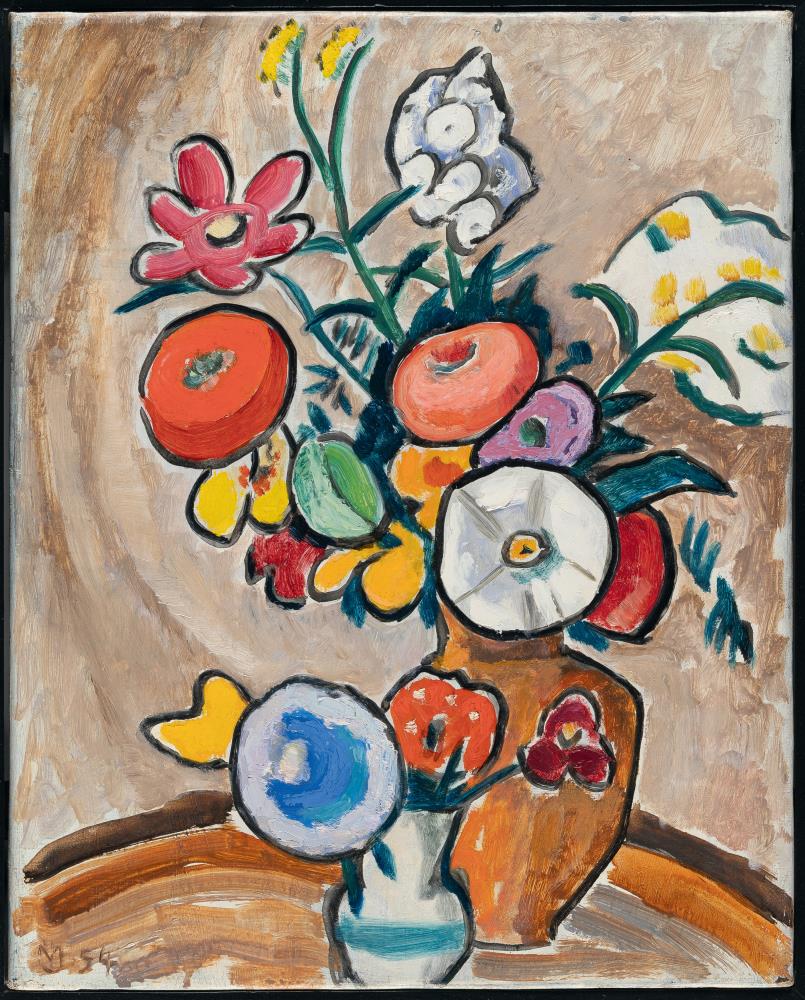
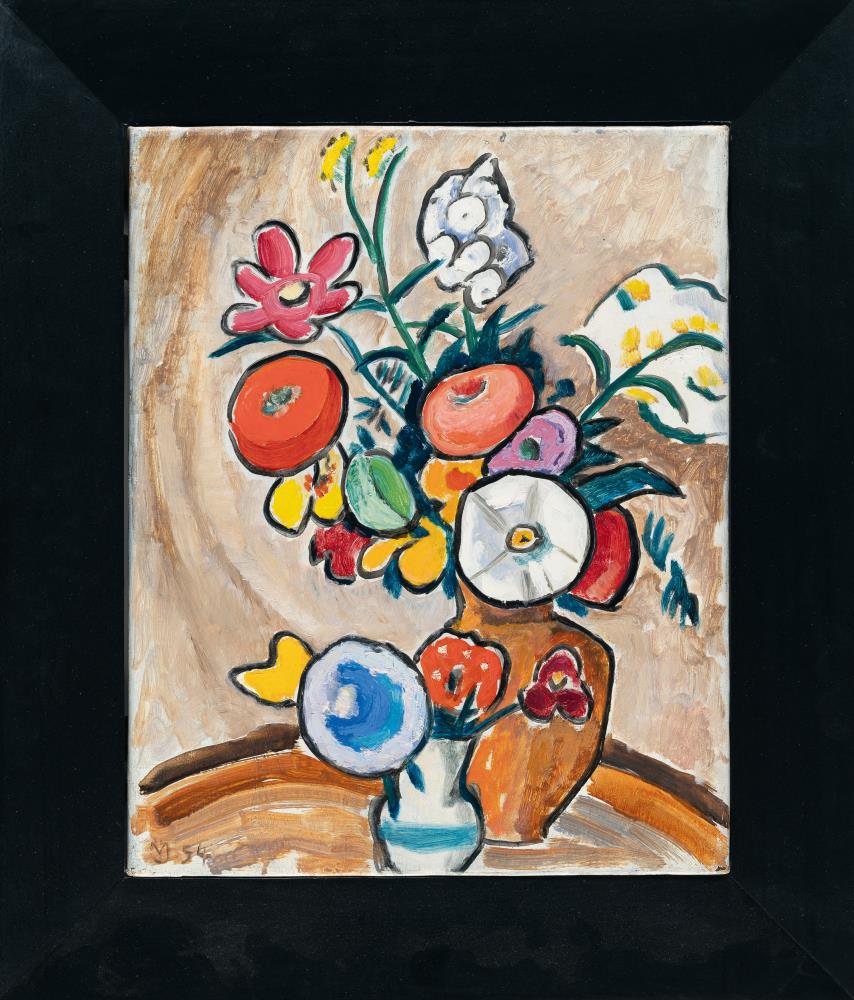
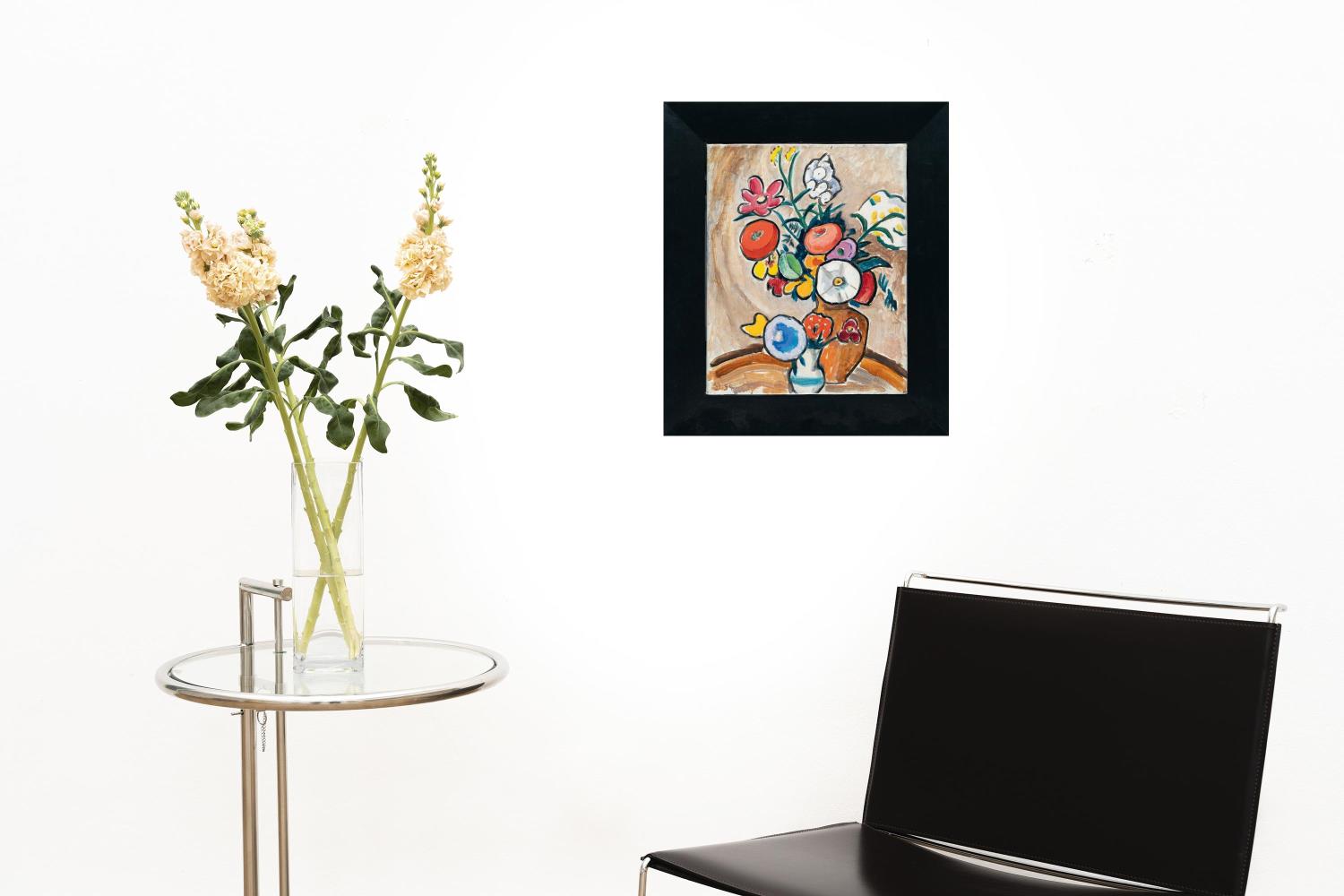
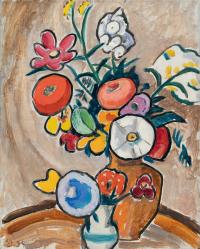
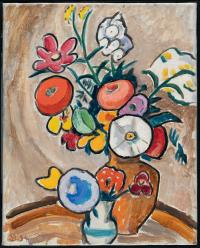
The floral still life plays a central role in Gabriele Münter’s late work. Less able to travel, the artist now focused on motifs from her immediate surroundings, particularly the flowers she gathered from her own garden. Here she returned to ornamental reduction and painterly condensation. This work is a particularly successful testament to this process: against a background that is restrained in colour yet animated by dynamic brushwork and variations in brightness, two vases of flowers stand on a suggested round tabletop; these—just like the flower heads—are clearly outlined by dark contours and set in relation to the picture plane. The luminous, partly monochrome, impasto-applied areas of colour in the colourful bouquet also reinforce the impression of flatness. Spatiality and movement arise from the numerous overlays, a compositional principle reminiscent of Japanese woodblock prints. Yet even more strongly here, as is so often the case with Münter, Bavarian folk art becomes visible as a point of reference.
• Characteristic floral still life from Münter’s mature creative phase, one of her central pictorial themes
• Concise, colour-intensive composition with typical simplification of form and clear contouring
The floral still life plays a central role in Gabriele Münter’s late work. Less able to travel, the artist now focused on motifs from her immediate surroundings, particularly the flowers she gathered from her own garden. Here she returned to ornamental reduction and painterly condensation. This work is a particularly successful testament to this process: against a background that is restrained in colour yet animated by dynamic brushwork and variations in brightness, two vases of flowers stand on a suggested round tabletop; these—just like the flower heads—are clearly outlined by dark contours and set in relation to the picture plane. The luminous, partly monochrome, impasto-applied areas of colour in the colourful bouquet also reinforce the impression of flatness. Spatiality and movement arise from the numerous overlays, a compositional principle reminiscent of Japanese woodblock prints. Yet even more strongly here, as is so often the case with Münter, Bavarian folk art becomes visible as a point of reference.