Max Beckmann
Portrait of Rietje & Nelly Lütjens
Artist
Max Beckmann
1884 Leipzig - New York 1950
Further information
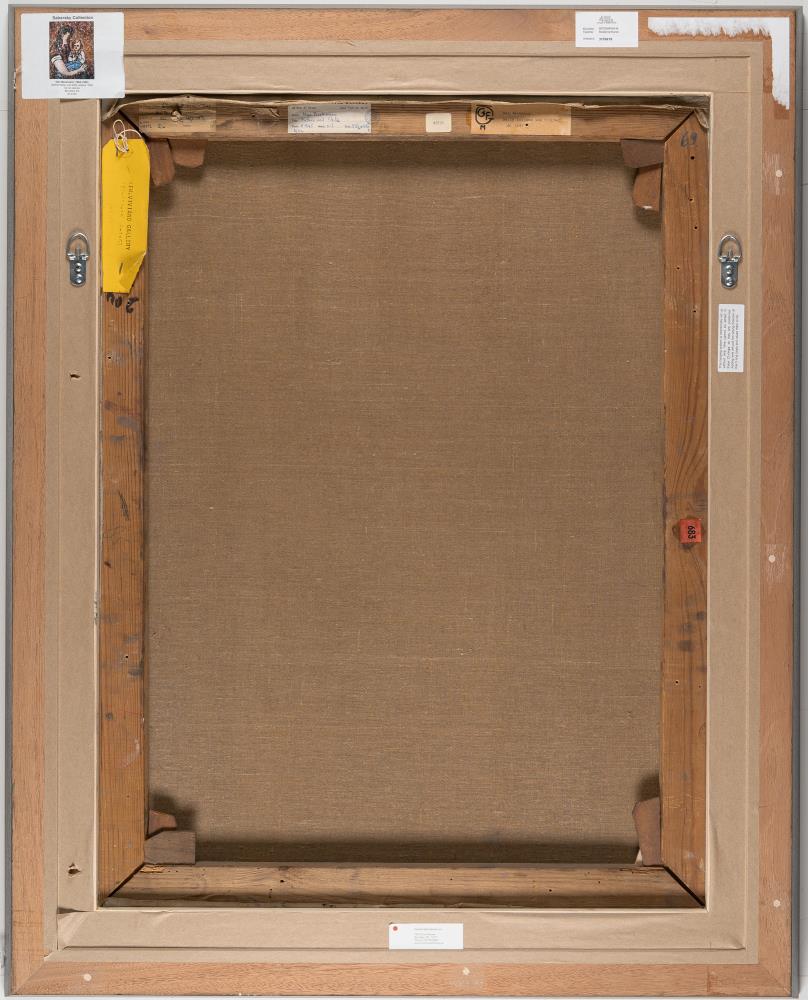
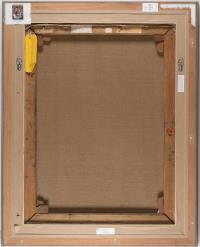
Verso auf dem Keilrahmen mit Zollstempeln, verschiedenen handschriftlichen Nummern und kleinem, typografischem Etikett "683".
Göpel/Tiedemann 692.
Göpel/Tiedemann 692.
Exhibition
Portraits (1925-1950) by Max Beckmann, Catherine Viviano Gallery, New York 1957, s/w Abb., o. S.;
Max Beckmann. Das Portrait. Gemälde, Aquarelle, Zeichnungen, Badischer Kunstverein, Karlsruhe 1963, Kat.-Nr. 55, s/w Abb.;
Max Beckmann. Bildnisse aus den Jahren 1905-1950. Gemälde, Aquarelle, Pastelle und Zeichnungen, Galerie Günther Franke, München 1964, Kat.-Nr. 15, s/w Abb., verso mit dem Etikett;
Paintings, Sculptures, Drawings & Watercolors by Max Beckmann, Catherine Viviano Gallery, New York 1973;
Max Beckmann. Paintings & Sculpture, Grace Borgenicht Gallery, New York 1981, o. Kat.-Nr. in Werkliste aufgeführt, o. Abb.;
Max Beckmann 1884-1950, Alpha Gallery, Boston 1984;
Max Beckmann. Paintings and Drawings, Grace Borgenicht Gallery, New York 1985, Kat.-Nr. 12, farb. Abb.;
Expressionist Painters, Galerie St. Etienne, New York 1986;
From Kandinsky to Dix. Paintings of the German Expressionists, Nassau County Museum of Art, Roslyn, New York 1989, farb. Abb. S. 47.
Max Beckmann. Das Portrait. Gemälde, Aquarelle, Zeichnungen, Badischer Kunstverein, Karlsruhe 1963, Kat.-Nr. 55, s/w Abb.;
Max Beckmann. Bildnisse aus den Jahren 1905-1950. Gemälde, Aquarelle, Pastelle und Zeichnungen, Galerie Günther Franke, München 1964, Kat.-Nr. 15, s/w Abb., verso mit dem Etikett;
Paintings, Sculptures, Drawings & Watercolors by Max Beckmann, Catherine Viviano Gallery, New York 1973;
Max Beckmann. Paintings & Sculpture, Grace Borgenicht Gallery, New York 1981, o. Kat.-Nr. in Werkliste aufgeführt, o. Abb.;
Max Beckmann 1884-1950, Alpha Gallery, Boston 1984;
Max Beckmann. Paintings and Drawings, Grace Borgenicht Gallery, New York 1985, Kat.-Nr. 12, farb. Abb.;
Expressionist Painters, Galerie St. Etienne, New York 1986;
From Kandinsky to Dix. Paintings of the German Expressionists, Nassau County Museum of Art, Roslyn, New York 1989, farb. Abb. S. 47.
Literature
Göpel, Erhard, Max Beckmann as a Portrait Painter. An exhibition marking Beckmann’s 80th birthday in Munich, in: Die Weltkunst 34 (1964), pp. 137–138, ill.;
Göpel, Erhard, Max Beckmann. Diaries 1940–1950, Munich 1955;
Gallwitz, Klaus et al. (eds.), Max Beckmann Letters, Munich/Zurich 1993/94, Vol. III (1937–1950).
Göpel, Erhard, Max Beckmann. Diaries 1940–1950, Munich 1955;
Gallwitz, Klaus et al. (eds.), Max Beckmann Letters, Munich/Zurich 1993/94, Vol. III (1937–1950).
Provenance
Max Beckmann’s studio;
Nelly and Helmuth Lütjens, Amsterdam (on loan from the artist);
Max Beckmann’s studio/artist’s estate;
Mathilde Quappi Beckmann, 1950, by inheritance;
Buchholz Gallery – Curt Valentin, New York, until at least 1955, presumably on consignment, with label on the reverse;
Catherine Viviano Gallery, New York, at least 1963, on consignment, with label on the reverse;
Grace Borgenicht Gallery, New York, at least 1984–87, on consignment;
Collection of Serge Sabarsky (1912–1996), New York, label on the reverse of the frame;
Estate of Serge Sabarsky, New York, since 1996;
Collection of Vally Sabarsky (1902–2002), New York;
Vally Sabarsky Foundation, New York, since 2002.
Nelly and Helmuth Lütjens, Amsterdam (on loan from the artist);
Max Beckmann’s studio/artist’s estate;
Mathilde Quappi Beckmann, 1950, by inheritance;
Buchholz Gallery – Curt Valentin, New York, until at least 1955, presumably on consignment, with label on the reverse;
Catherine Viviano Gallery, New York, at least 1963, on consignment, with label on the reverse;
Grace Borgenicht Gallery, New York, at least 1984–87, on consignment;
Collection of Serge Sabarsky (1912–1996), New York, label on the reverse of the frame;
Estate of Serge Sabarsky, New York, since 1996;
Collection of Vally Sabarsky (1902–2002), New York;
Vally Sabarsky Foundation, New York, since 2002.
Share


Description
• One of the most intimate scenes in Beckmann’s rare family portraits
• Dr Helmuth Lütjens, director of the Amsterdam branch of the Paul Cassirer art dealership, was Beckmann’s most important supporter during his exile in the Netherlands
• Part of Serge Sabarsky’s renowned collection since 1987, Neue Galerie New York
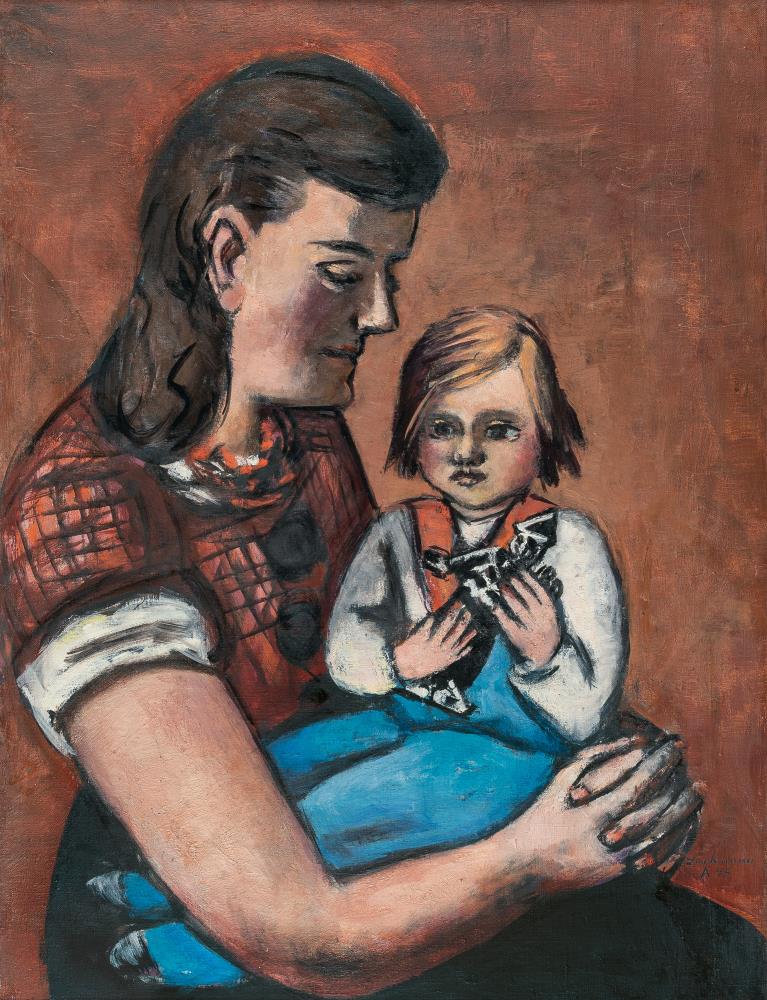
The winter of 1944/45 in Amsterdam is very harsh; there is hardly any food or charcoal, and people are waiting for liberation from the German occupation. For Max Beckmann, visits to the art dealer Helmuth Lütjens and his family provided a comforting ray of hope during this time. They inspired the painter to take up the theme of ‘mother and child’, which is otherwise very rare in his work.
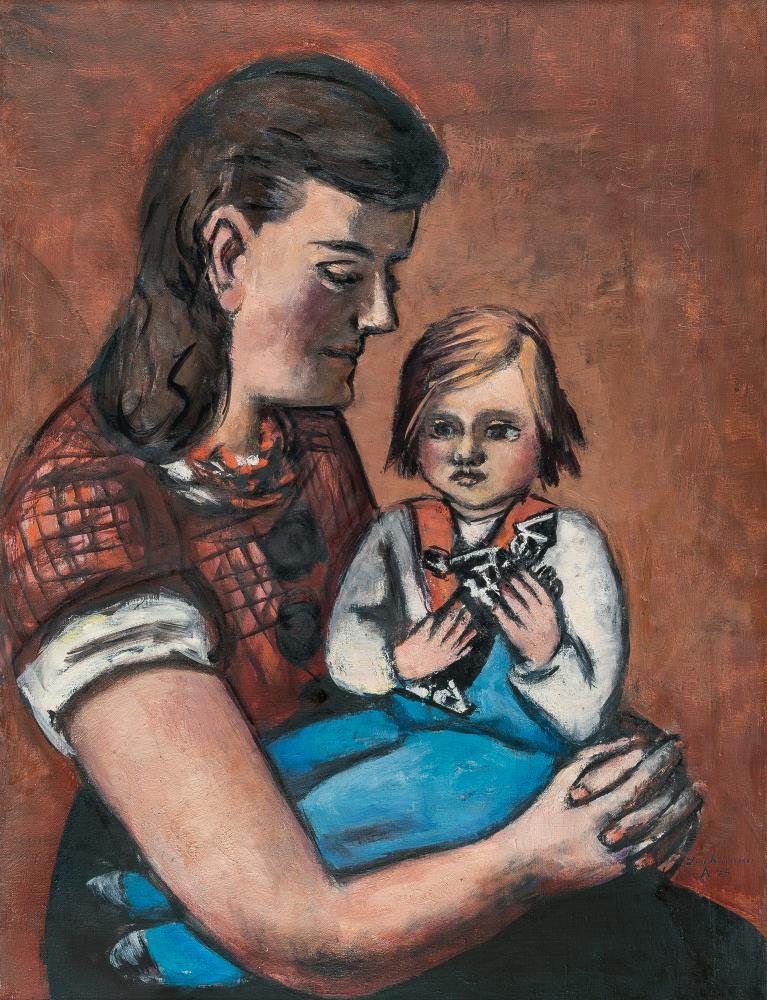
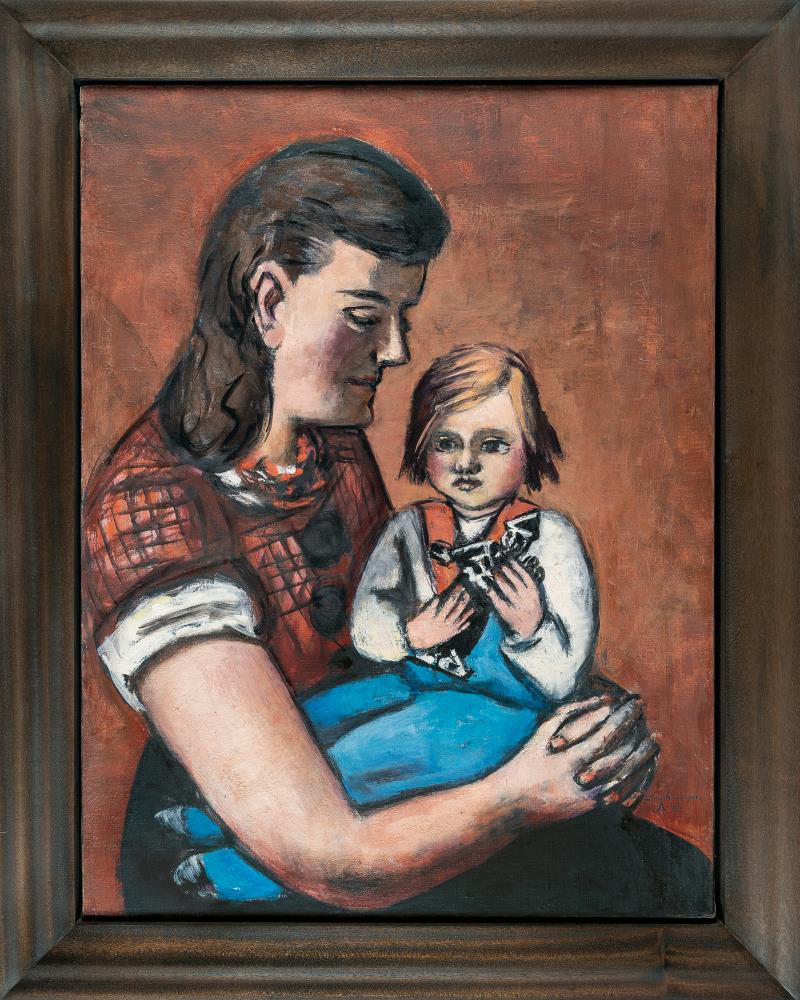
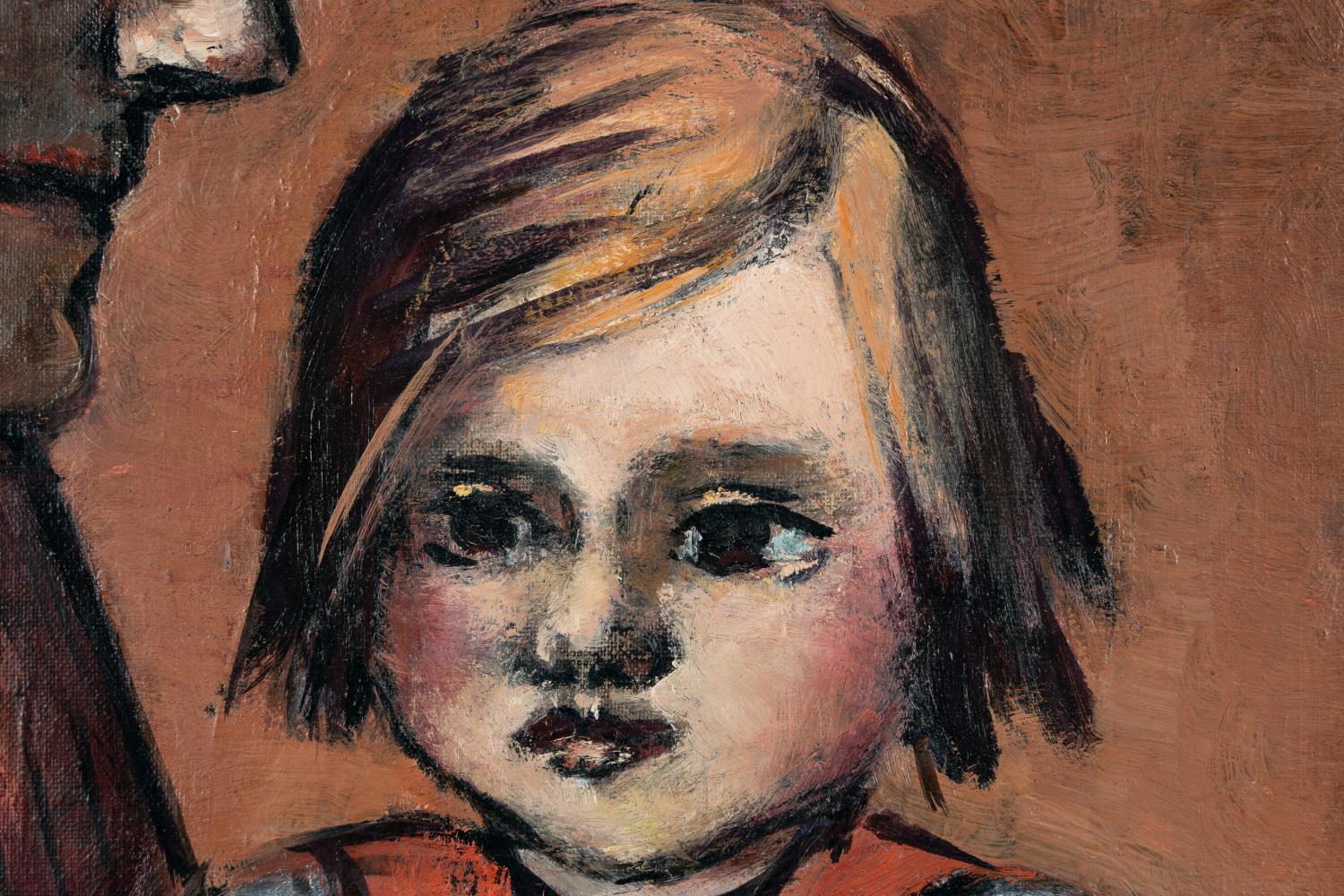
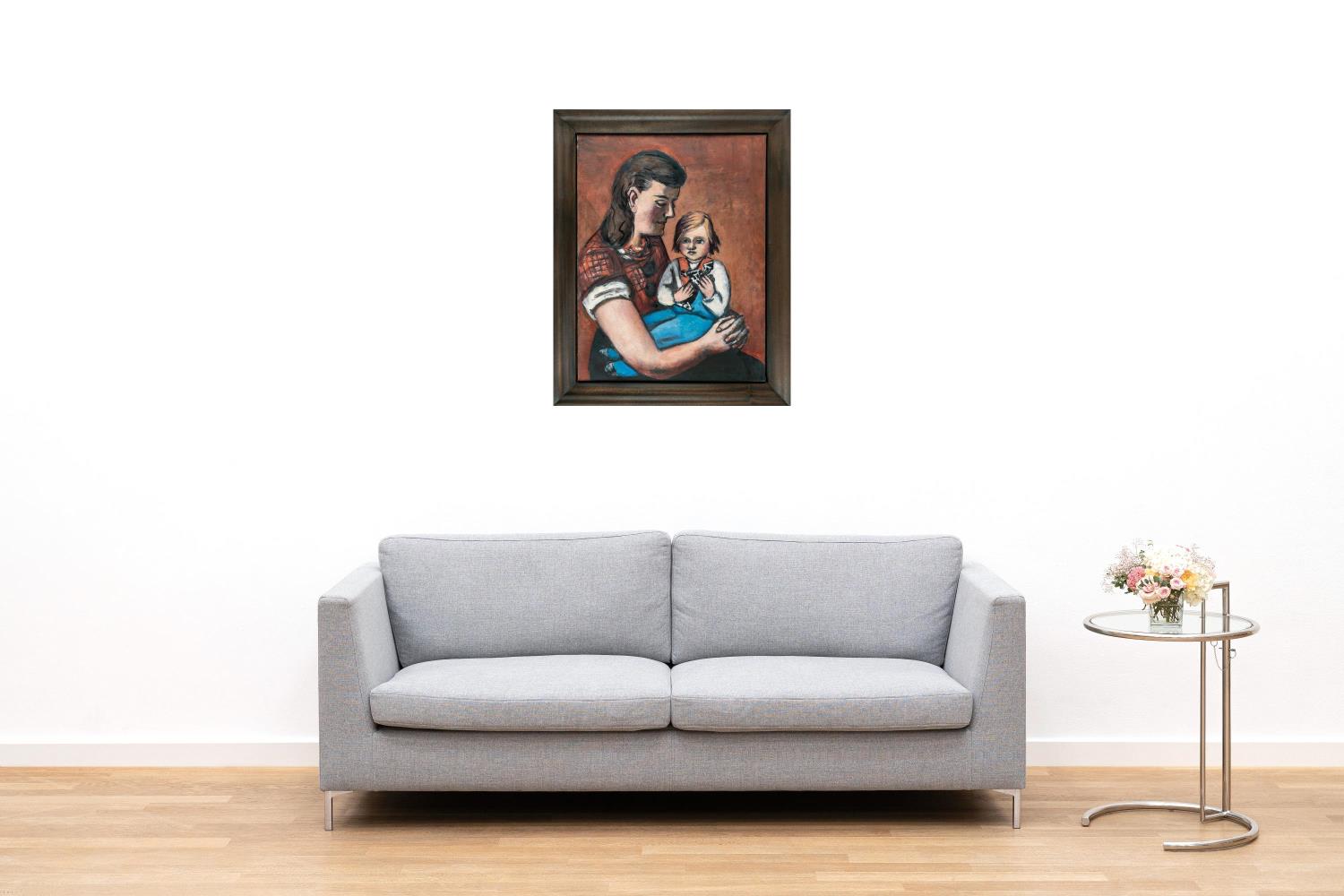
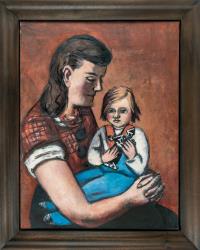
In a classical manner, he depicts Nelly Lütjens as a seated mother with her young daughter Rietje on her lap. She embraces the child with her arm, her hands clasped. This caring gesture is echoed by Rietje, who holds a doll in front of her. The dominant colour scheme of blue, white and red gives the painting a serene atmosphere, but is also an allusion to the nationality of those depicted, as Nelly Lütjens is Dutch.
The Lütjens family lives in a house at Keizersgracht 109 in Amsterdam, which also houses the rooms of the Paul Cassirer Gallery, run by Helmuth Lütjens. Beckmann has entrusted his paintings to this gallery for safe keeping. Every Friday, the artist visits Helmuth Lütjens. He often sketches the family. In September 1944, the painter even stayed there for a week with his wife Quappi to protect themselves from any hostility as Germans in the event of the hoped-for Allied advance.
Following this stay, Beckmann painted the ‘Lütjens Family Portrait’ (MB-G 683): It shows the Lütjens couple looking at a picture, presumably this very "Lütjens Family Portrait". Only their young daughter is looking in a different direction. She is holding up a jumping jack in one hand and pointing at it with the other. Here, Beckmann is already hinting at the child’s reaction to the sight of the "Lütjens Family Portrait": Rietje points to the jumping jack she would like to have but does not possess.
No sooner had the ‘Lütjens Family Portrait’ been put up in Lütjens’ house at Christmas 1944 than Beckmann began sketching designs for another family portrait. The Friday visits also continued. On 19 January 1945, Beckmann noted: "(...) intend to go to Lütjen’s later, my morphine in these times."
"Portrait of Rietje and Nelly" is the continuation of the "Lütjen Family Portrait." Here, the painter now places the child at the centre and places a doll in her hands.
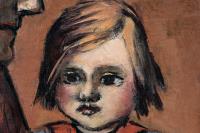
The intensive working process on the painting can be traced in the diary. On 15 February 1945, Beckmann notes: "Working thoroughly on Nelly with child for the first time. Will still give me a lot of work." Beckmann, who actually has little patience with children, is fond of Lütjens’ daughter and calls her Rikchen. On 7 March he writes: "Working extremely hard on Rikchen for the 40th time. Now she’s good." The painter emphasises the girl’s face, and especially her large eyes, with several layers of paint. The painting is finally completed two days before Rietje’s second birthday in March 1945 and is shown to Helmuth Lütjens. In parallel with the painter’s work on the painting, Quappi Beckmann makes a jumping jack for Rietje, which she now receives as a birthday present. Although the painting did not remain in the family’s possession, the jumping jack has been kept by the daughter, now 80 years old and living in Amsterdam.
Beckmann portrays Rietje and Nelly Lütjens as the epitome of the close bond between mother and child, thus creating a modern yet timeless icon.
Dr Nina Peter
• Dr Helmuth Lütjens, director of the Amsterdam branch of the Paul Cassirer art dealership, was Beckmann’s most important supporter during his exile in the Netherlands
• Part of Serge Sabarsky’s renowned collection since 1987, Neue Galerie New York
The winter of 1944/45 in Amsterdam is very harsh; there is hardly any food or charcoal, and people are waiting for liberation from the German occupation. For Max Beckmann, visits to the art dealer Helmuth Lütjens and his family provided a comforting ray of hope during this time. They inspired the painter to take up the theme of ‘mother and child’, which is otherwise very rare in his work.
In a classical manner, he depicts Nelly Lütjens as a seated mother with her young daughter Rietje on her lap. She embraces the child with her arm, her hands clasped. This caring gesture is echoed by Rietje, who holds a doll in front of her. The dominant colour scheme of blue, white and red gives the painting a serene atmosphere, but is also an allusion to the nationality of those depicted, as Nelly Lütjens is Dutch.
The Lütjens family lives in a house at Keizersgracht 109 in Amsterdam, which also houses the rooms of the Paul Cassirer Gallery, run by Helmuth Lütjens. Beckmann has entrusted his paintings to this gallery for safe keeping. Every Friday, the artist visits Helmuth Lütjens. He often sketches the family. In September 1944, the painter even stayed there for a week with his wife Quappi to protect themselves from any hostility as Germans in the event of the hoped-for Allied advance.
Following this stay, Beckmann painted the ‘Lütjens Family Portrait’ (MB-G 683): It shows the Lütjens couple looking at a picture, presumably this very "Lütjens Family Portrait". Only their young daughter is looking in a different direction. She is holding up a jumping jack in one hand and pointing at it with the other. Here, Beckmann is already hinting at the child’s reaction to the sight of the "Lütjens Family Portrait": Rietje points to the jumping jack she would like to have but does not possess.
No sooner had the ‘Lütjens Family Portrait’ been put up in Lütjens’ house at Christmas 1944 than Beckmann began sketching designs for another family portrait. The Friday visits also continued. On 19 January 1945, Beckmann noted: "(...) intend to go to Lütjen’s later, my morphine in these times."
"Portrait of Rietje and Nelly" is the continuation of the "Lütjen Family Portrait." Here, the painter now places the child at the centre and places a doll in her hands.
The intensive working process on the painting can be traced in the diary. On 15 February 1945, Beckmann notes: "Working thoroughly on Nelly with child for the first time. Will still give me a lot of work." Beckmann, who actually has little patience with children, is fond of Lütjens’ daughter and calls her Rikchen. On 7 March he writes: "Working extremely hard on Rikchen for the 40th time. Now she’s good." The painter emphasises the girl’s face, and especially her large eyes, with several layers of paint. The painting is finally completed two days before Rietje’s second birthday in March 1945 and is shown to Helmuth Lütjens. In parallel with the painter’s work on the painting, Quappi Beckmann makes a jumping jack for Rietje, which she now receives as a birthday present. Although the painting did not remain in the family’s possession, the jumping jack has been kept by the daughter, now 80 years old and living in Amsterdam.
Beckmann portrays Rietje and Nelly Lütjens as the epitome of the close bond between mother and child, thus creating a modern yet timeless icon.
Dr Nina Peter