Fritz Winter
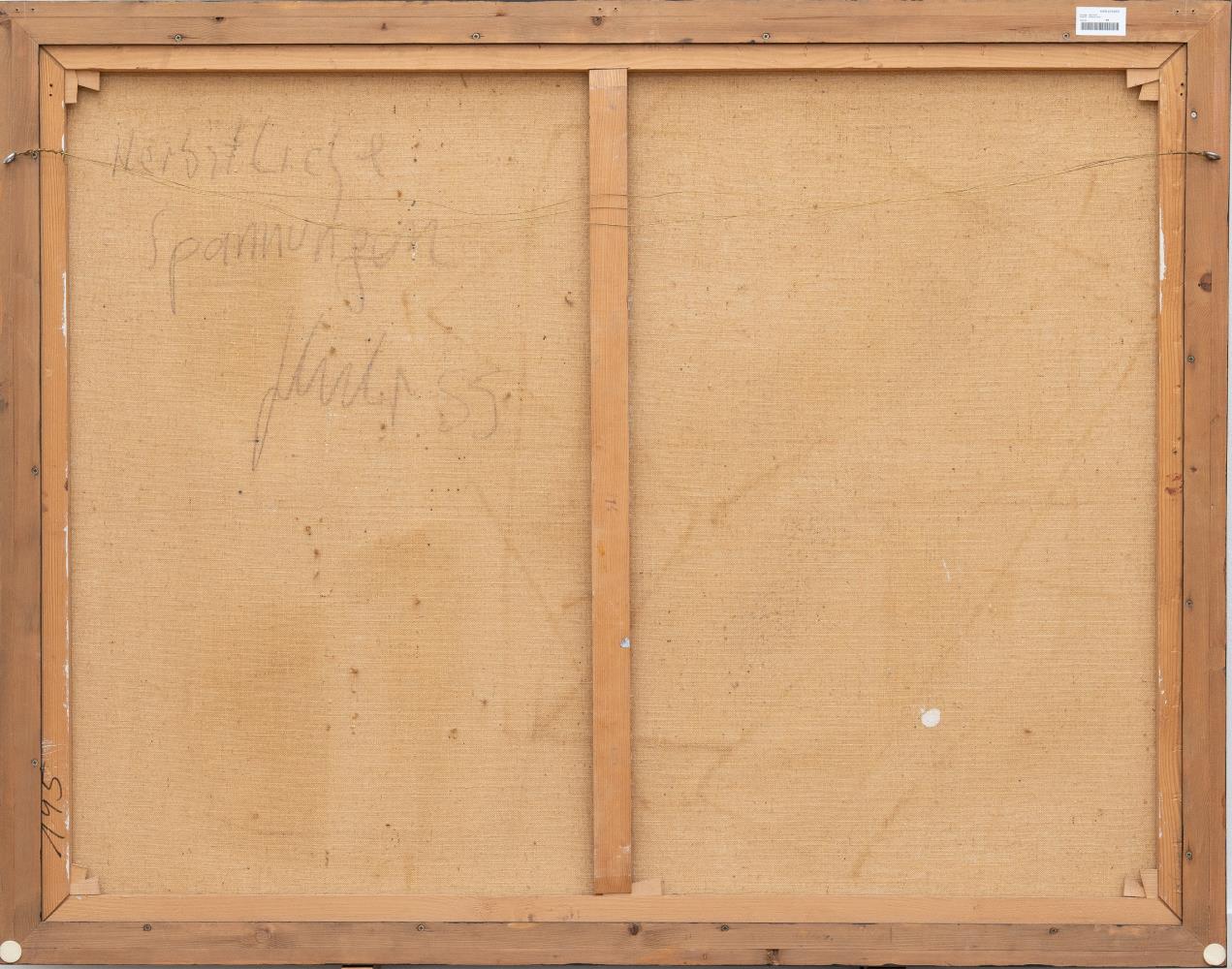
"Herbstliche Spannungen" (Autumnal Tensions)
Artist
Fritz Winter
1905 Altenbögge - Herrsching 1976
Further information
Lohberg 1924.
Provenance
Fritz Winter Foundation, Munich (Inv. No. 195);
Private collection, Southern Germany;
Grisebach, Berlin 28 November 1997, Lot 80;
Private collection, Luxembourg, acquired from the aforementioned;
Private collection, Luxembourg.
Private collection, Southern Germany;
Grisebach, Berlin 28 November 1997, Lot 80;
Private collection, Luxembourg, acquired from the aforementioned;
Private collection, Luxembourg.
Share


Description
• Fritz Winter is one of the most important artists of German Informel
• As a founding member of the ZEN 49 group, he had a formative influence on post-war modern art and the discourse on abstraction
• In 1955, the year the painting was created, Winter was represented for the first time at the documenta in Kassel, with further participations following in 1959 and 1964
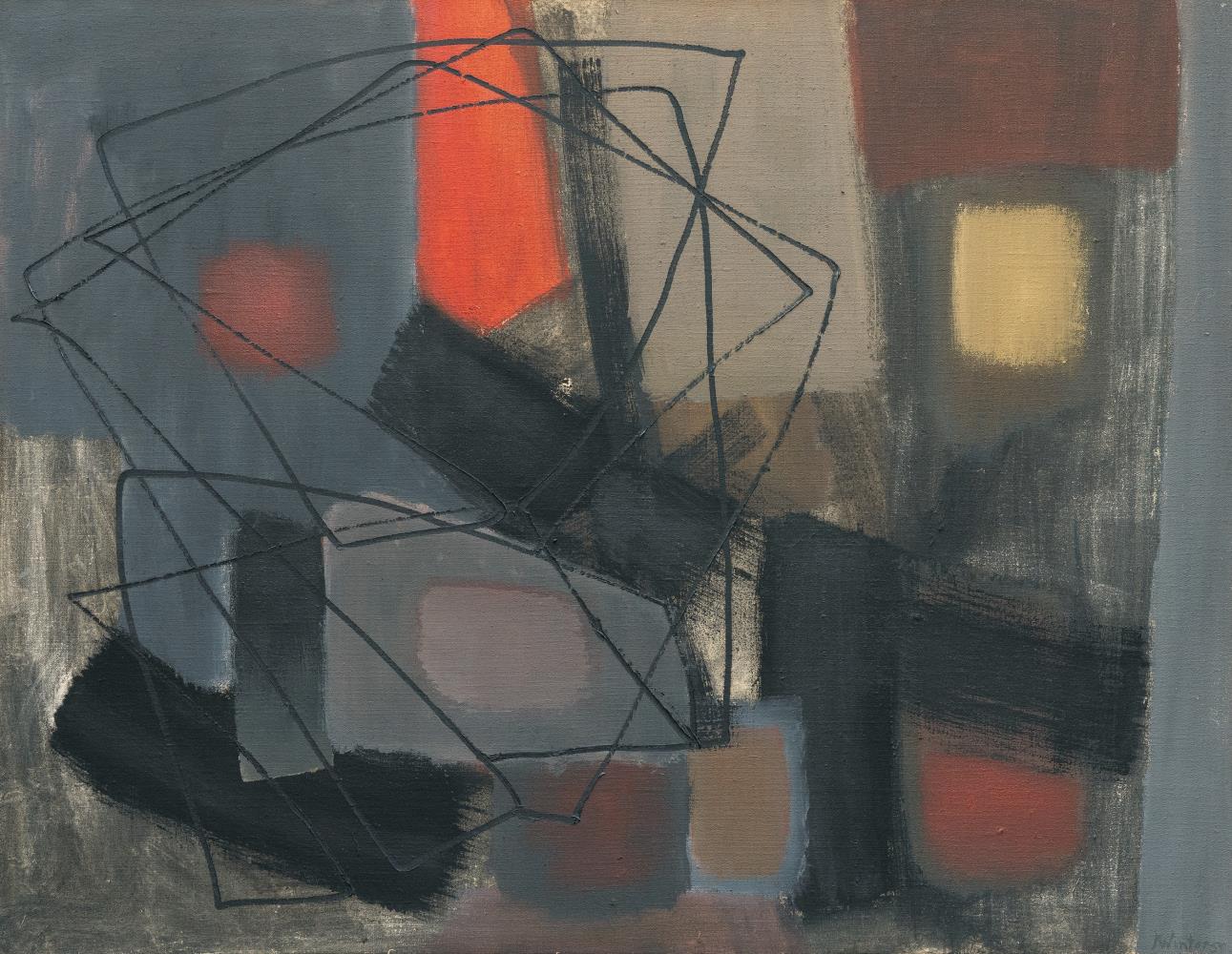
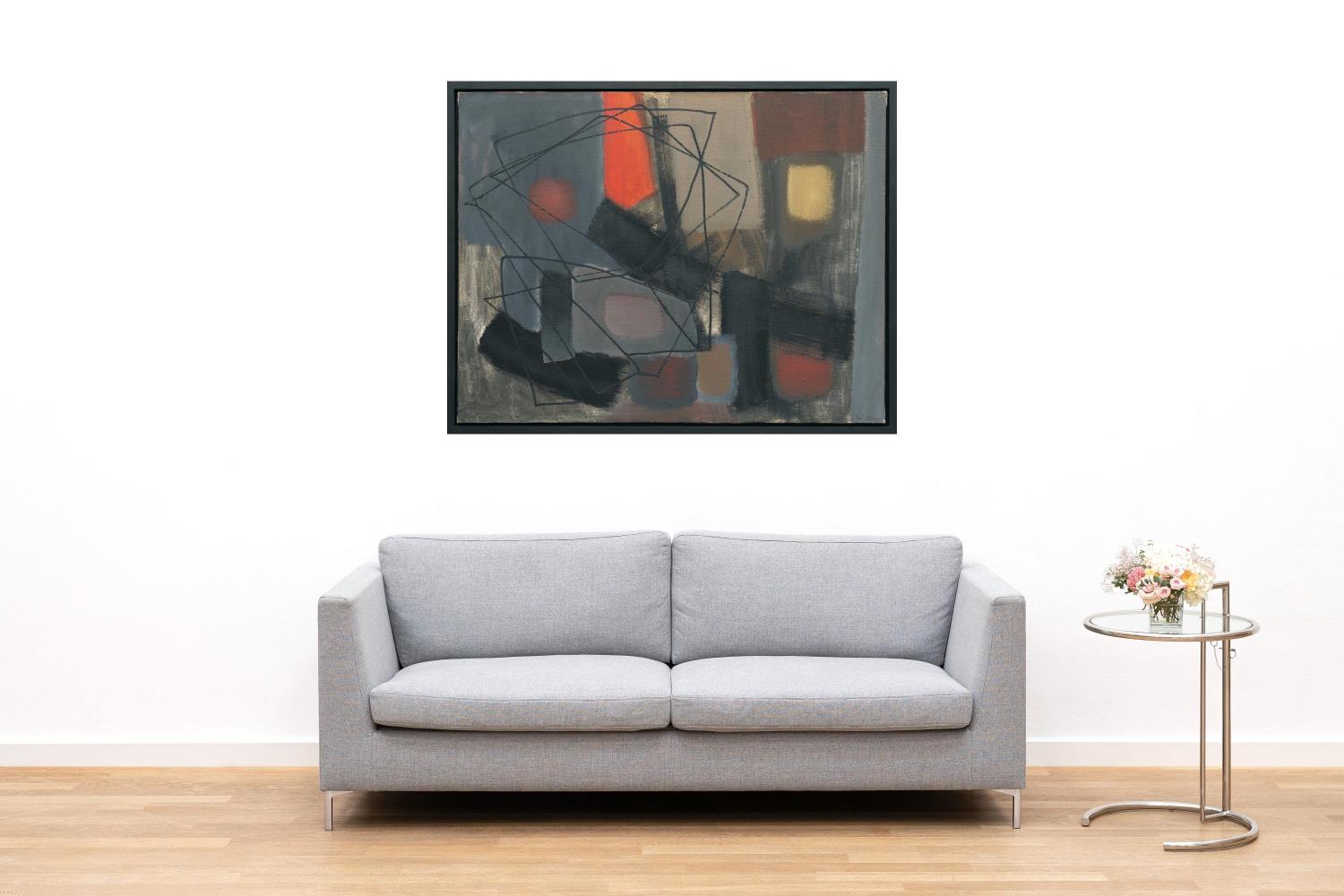
This painting was created in 1955, a particularly eventful year for Fritz Winter: He took part in documenta I and, in the same year, was appointed to a professorship at the State Academy of Fine Arts in Kassel, as one of the most important representatives of German post-war abstraction. ‘Autumnal Tensions’ belongs to that middle phase of his work in which Winter brings together a framework of lines and areas of colour to form a visual language of his own.
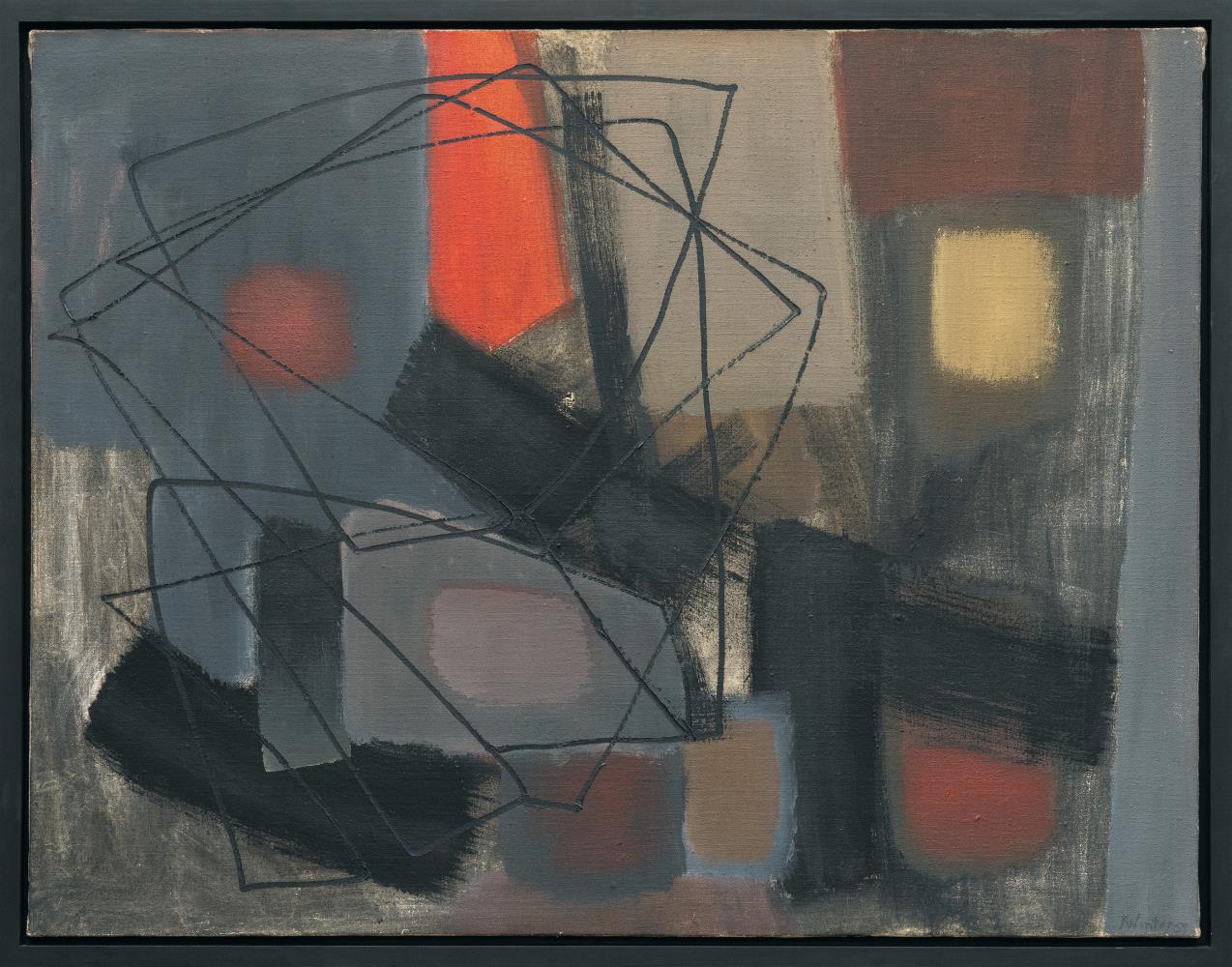
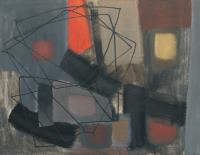
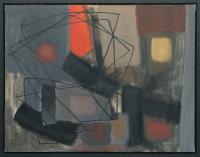
Over a background rendered in warm earth tones – grey, ochre, off-white – lies an angular, frequently bent network of black lines that accentuates the centre of the picture whilst simultaneously suggesting the movement of kinetic oscillation. Within this network, Winter places sharply accentuated areas of colour: a luminous vermilion bar in the upper left, a cool yellow on the right, and dark red, black-brown and dusky pink sections that meet rhythmically on the large-format canvas.
Born in 1905, Winter initially worked as a miner before joining the Bauhaus in Dessau in 1927, where he studied under Paul Klee and Wassily Kandinsky, among others. In 1937, Winter was banned from painting and exhibiting by the National Socialists, and in 1939 he was called up for military service. It was not until 1949 that he returned from Russian captivity, and in the same year, together with Willi Baumeister, Rupprecht Geiger and other artists, he founded the Munich-based artists’ group ZEN 49, which provided non-representational painting in Germany with its first organised platform. His participation in the three subsequent editions of documenta (I, II, III) underscores his international significance as a leading representative of the post-war avant-garde.
• As a founding member of the ZEN 49 group, he had a formative influence on post-war modern art and the discourse on abstraction
• In 1955, the year the painting was created, Winter was represented for the first time at the documenta in Kassel, with further participations following in 1959 and 1964
This painting was created in 1955, a particularly eventful year for Fritz Winter: He took part in documenta I and, in the same year, was appointed to a professorship at the State Academy of Fine Arts in Kassel, as one of the most important representatives of German post-war abstraction. ‘Autumnal Tensions’ belongs to that middle phase of his work in which Winter brings together a framework of lines and areas of colour to form a visual language of his own.
Over a background rendered in warm earth tones – grey, ochre, off-white – lies an angular, frequently bent network of black lines that accentuates the centre of the picture whilst simultaneously suggesting the movement of kinetic oscillation. Within this network, Winter places sharply accentuated areas of colour: a luminous vermilion bar in the upper left, a cool yellow on the right, and dark red, black-brown and dusky pink sections that meet rhythmically on the large-format canvas.
Born in 1905, Winter initially worked as a miner before joining the Bauhaus in Dessau in 1927, where he studied under Paul Klee and Wassily Kandinsky, among others. In 1937, Winter was banned from painting and exhibiting by the National Socialists, and in 1939 he was called up for military service. It was not until 1949 that he returned from Russian captivity, and in the same year, together with Willi Baumeister, Rupprecht Geiger and other artists, he founded the Munich-based artists’ group ZEN 49, which provided non-representational painting in Germany with its first organised platform. His participation in the three subsequent editions of documenta (I, II, III) underscores his international significance as a leading representative of the post-war avant-garde.