Kurt Schwitters
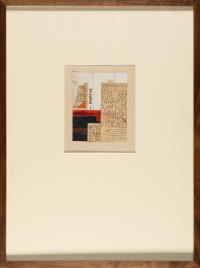
Ohne Titel (Köstlich)
Artist
Kurt Schwitters
Ausstellung
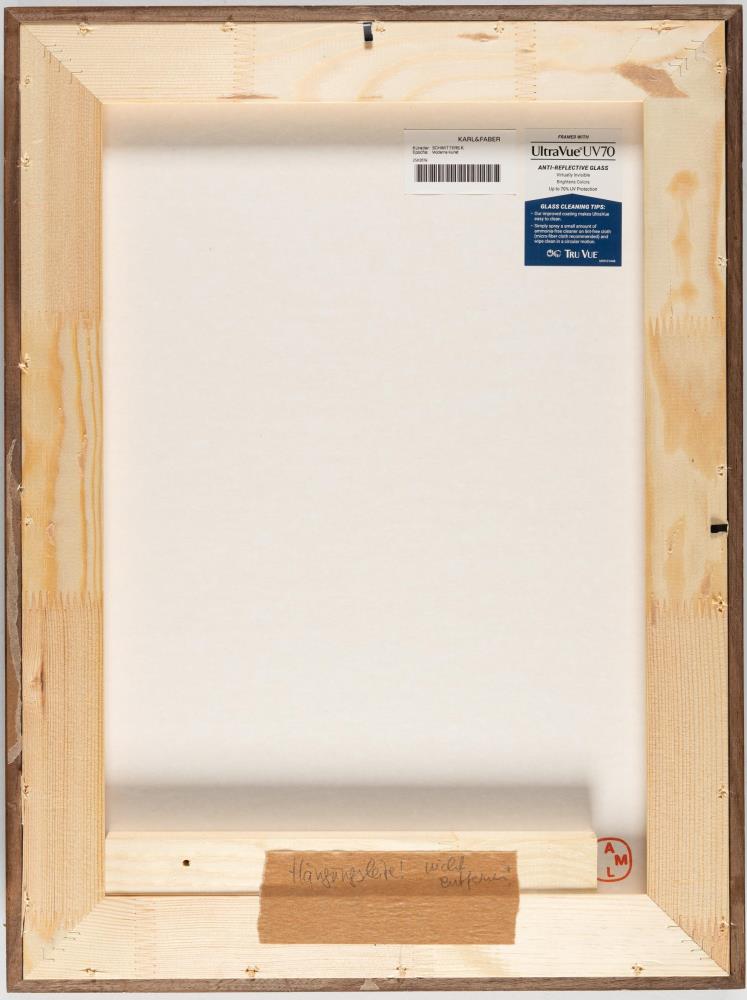
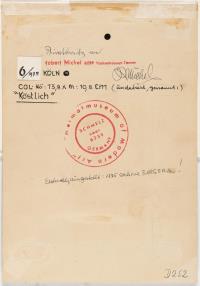
die abstrakten hannover. Buchheister, Domela, Jahns, Nitzschke, Schwitters, Vordemberge-Gildewart, Galerie Bargera, Köln 1975, Kat.-Nr. 51, o. Abb., verso handschriftlich bezeichnet ; Kurt Schwitters, Kreissparkasse Hannover, 1989, ohne Katalog ; Kurt Schwitters. Merz – ein Gesamtweltbild, Museum Tinguely, Basel 2004, Kat.-Nr. 107, farb. Abb. S. 165 ; Living in the Material World. „Things“ in Art of the 20th Century and Beyond, The National Art Center, Tokio 2007, Kat.-Nr. II-1-28, farb. Abb.Ella Bergmann-Michel und Robert Michel. Ein Künstlerpaar der Moderne, Sprengel Museum Hannover, 2018, außer Kat.
Literature
Bericht über das Geschäftsjahr 1988, Kreissparkasse Hannover, 1988, farb. Abb. S. 38; Orchard, K. und Schulz, I. (Hrsg.), Kurt Schwitters. Werke und Dokumente im Sprengel Museum, Hannover 1998, Kat.-Nr. 47, farb. Abb. S. 141.
Provenance
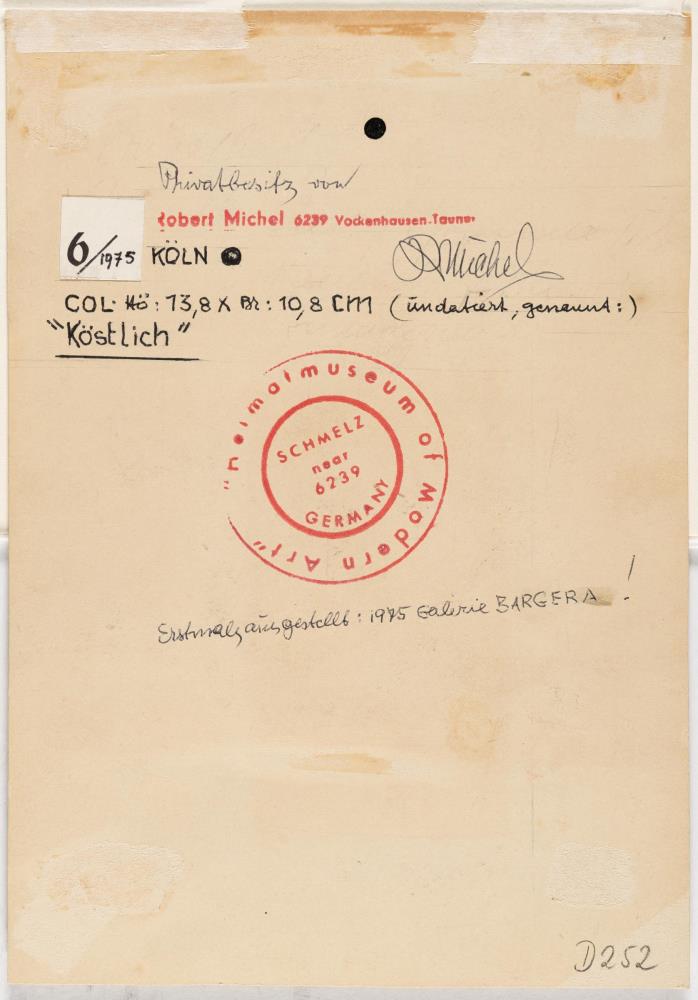
Sammlung Robert Michel, Vockenhausen, direkt vom Künstler erhalten; Privatsammlung, Norddeutschland, 1983 durch Erbschaft von Vorgenanntem, ab 1987 als Dauerleihgabe im Sprengel Museum, Hannover.
Share


Description
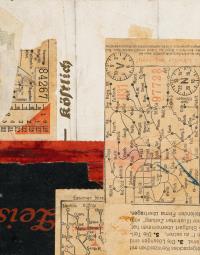
- Detailed collage full of narrative pleasure and potential for discovery
- Schwitters uses everyday printed works such as tickets and napkins to elevate them to the status of art
- From the estate of the artist couple Ella Bergmann-Michel and Robert Michel, who had been friends with Kurt Schwitters since 1921 and exchanged their works several times
In his legendary collage paintings, Kurt Schwitters transformed the accidental into the necessary - found objects from everyday life into poetic compositions of captivating modernity.
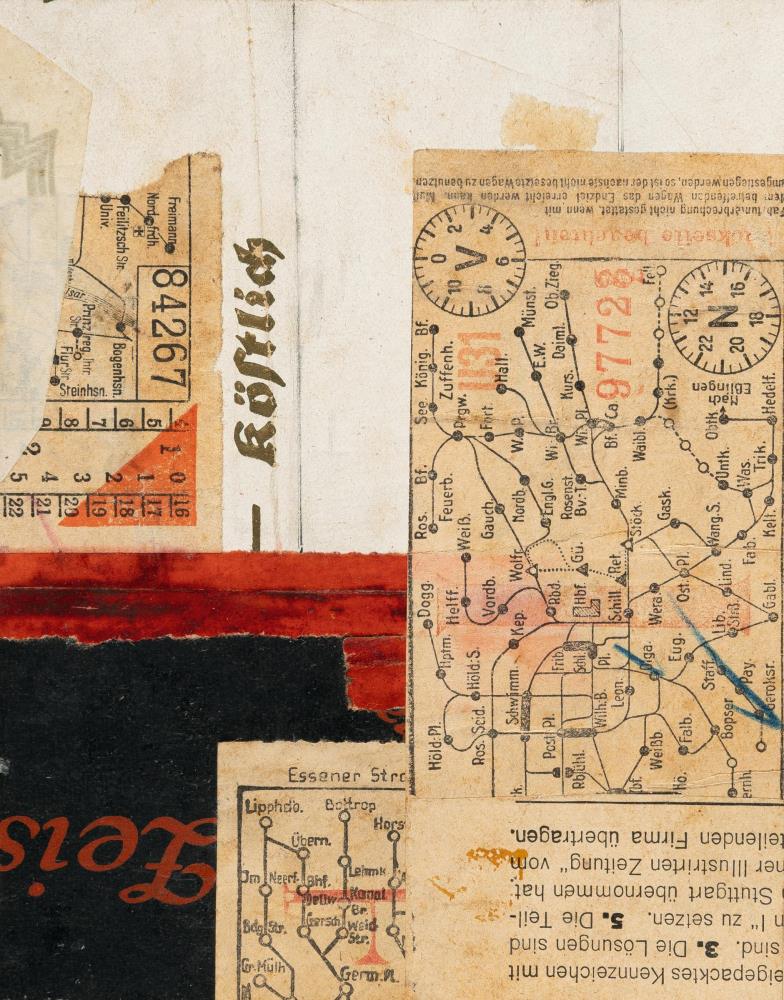
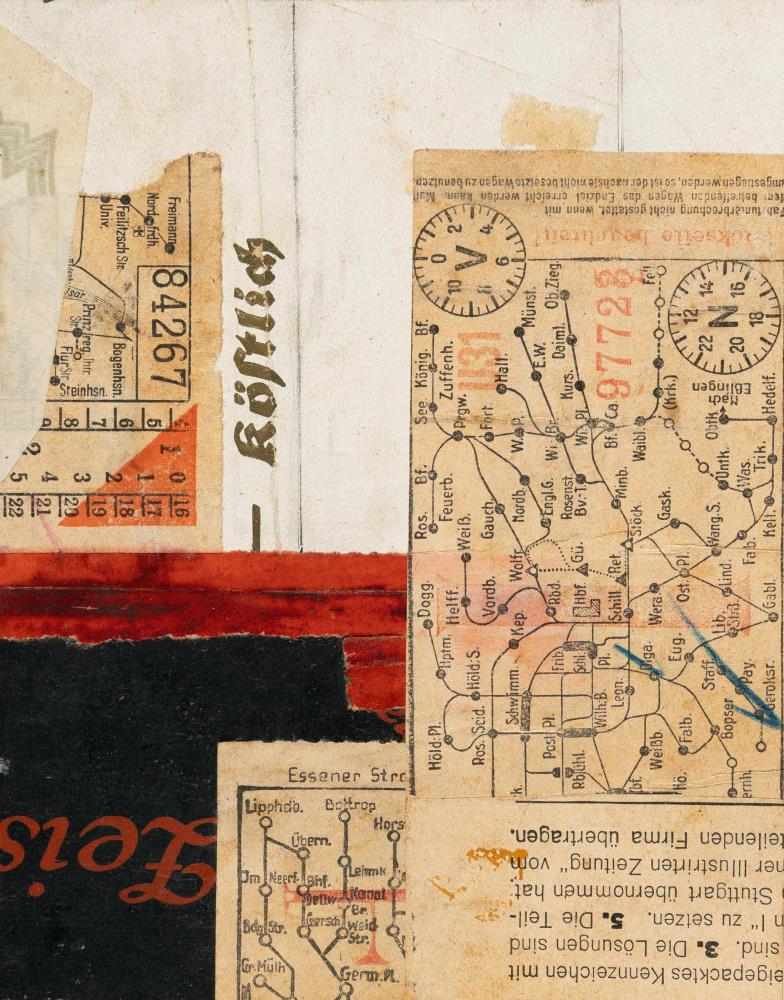
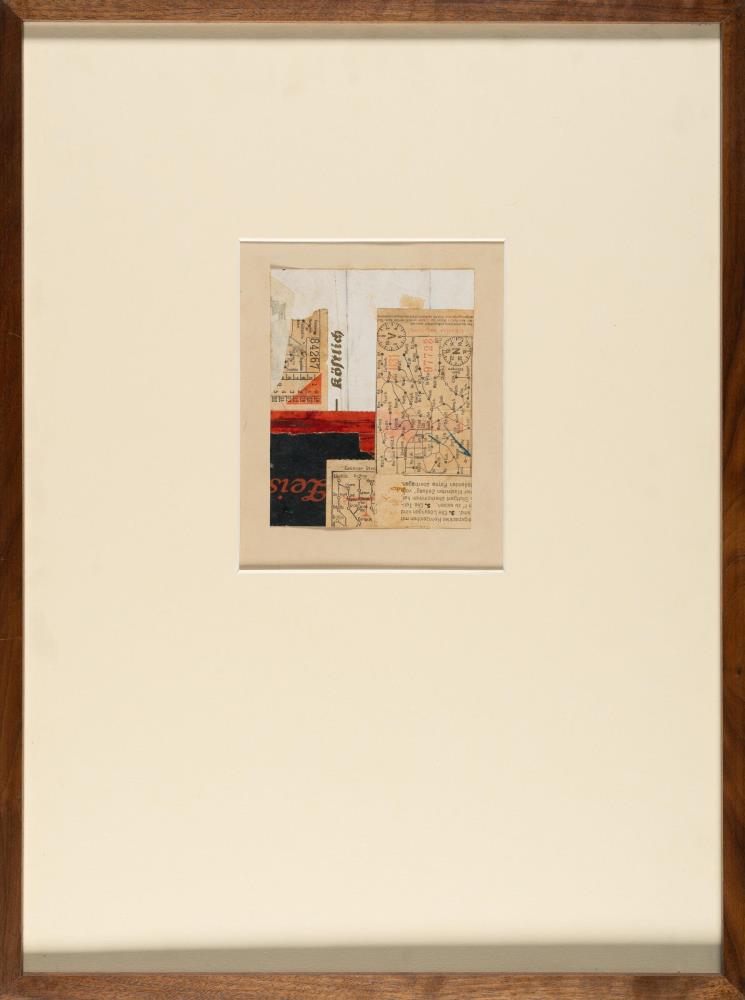
Thus "delicious" captivates with the supposedly familiar. Fragments of tickets from long-gone public transport networks meet the gold embossing that gives the work its title - and ultimately open up not into the void, but into the space of possibilities of used yet white paper. His "Schachbild" assembles pieces of wood, but apart from the chessboard pattern that gives it its name, the work eludes any figuration. Is Schwitters narrating here? Is he counteracting? Is he collaging according to aesthetic or iconographic principles? The reality of the pictures is no more - long live individual interpretation!
The collages were all created in the context of his idea of "Merz". Schwitters found the fragment in a newspaper; the word "Kommerz" had fallen victim to the scissors. Thus devoid of meaning, it becomes a program and an illusionary surface for word and meaning games. With his adherence to "Merz", Schwitters remained an outsider, probably willingly and gladly. His fellow DADA artists rejected the idea of making "art" at all as bourgeois.
Orchard/Schulz 1635.
- Schwitters uses everyday printed works such as tickets and napkins to elevate them to the status of art
- From the estate of the artist couple Ella Bergmann-Michel and Robert Michel, who had been friends with Kurt Schwitters since 1921 and exchanged their works several times
In his legendary collage paintings, Kurt Schwitters transformed the accidental into the necessary - found objects from everyday life into poetic compositions of captivating modernity.
Thus "delicious" captivates with the supposedly familiar. Fragments of tickets from long-gone public transport networks meet the gold embossing that gives the work its title - and ultimately open up not into the void, but into the space of possibilities of used yet white paper. His "Schachbild" assembles pieces of wood, but apart from the chessboard pattern that gives it its name, the work eludes any figuration. Is Schwitters narrating here? Is he counteracting? Is he collaging according to aesthetic or iconographic principles? The reality of the pictures is no more - long live individual interpretation!
The collages were all created in the context of his idea of "Merz". Schwitters found the fragment in a newspaper; the word "Kommerz" had fallen victim to the scissors. Thus devoid of meaning, it becomes a program and an illusionary surface for word and meaning games. With his adherence to "Merz", Schwitters remained an outsider, probably willingly and gladly. His fellow DADA artists rejected the idea of making "art" at all as bourgeois.
Orchard/Schulz 1635.