Egon Schiele
Recto: Zwei Männer – Verso: Kleine Figurenskizzen
Artist
Egon Schiele
Provenance
Sammlung/Nachlass Serge Sabarsky, New York;
Sammlung/Stiftung Vally Sabarsky, New York.
Sammlung/Stiftung Vally Sabarsky, New York.
Share


Description
- Fascinating insight into Schiele's discovery process
- Color-intensive composition full of tension
- From one of the artist's sketchbooks
One of the most exciting experiences of any art collector is being able to look over the shoulder of their favorite artists. Visits to the studios of artist friends, workshop tours organized by art associations and work talks in galleries and auction houses are correspondingly coveted (and rare). Here, the process can be observed in the hope of getting closer to the genius - knowing full well that any external view can never reflect the inner artistic process. Visiting a contemporary artist's studio is a question of networking, money and time. With artists from past eras, these hurdles become an impossibility: Dürer and Sintenis can no longer be looked over their shoulders!
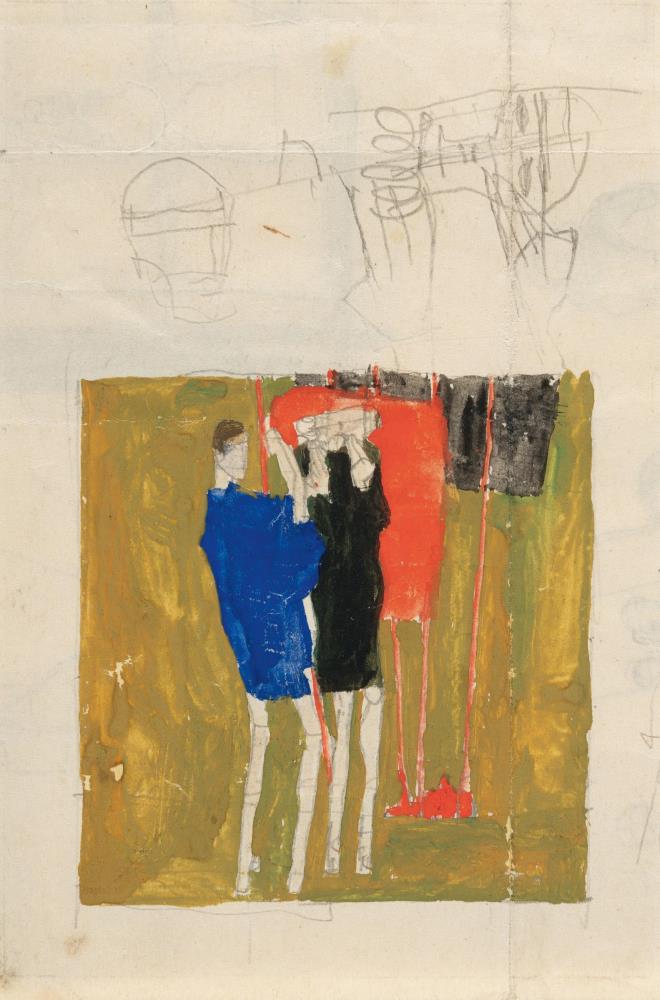
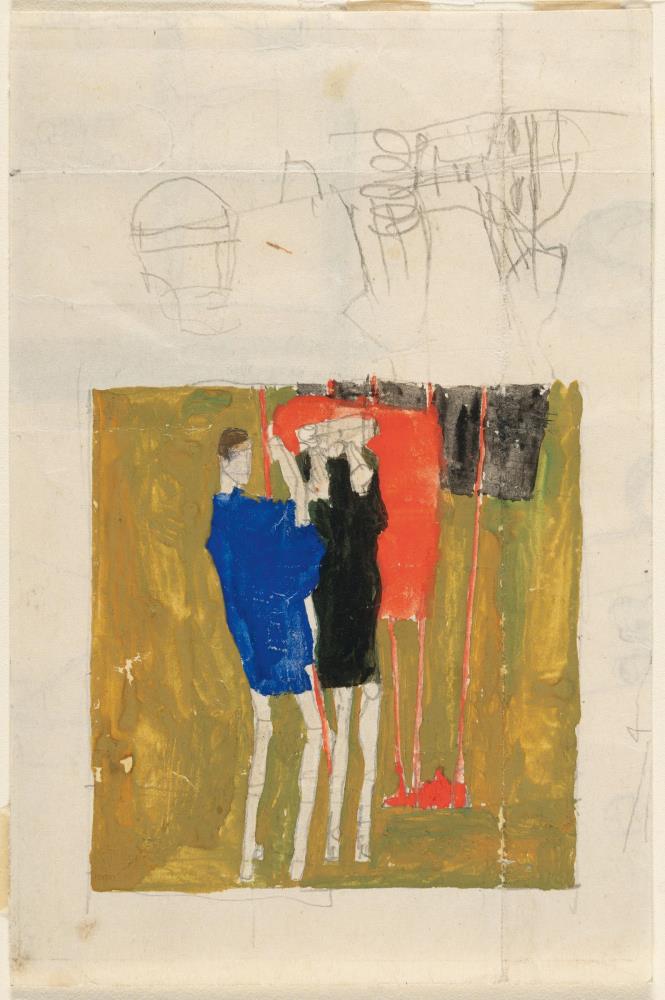
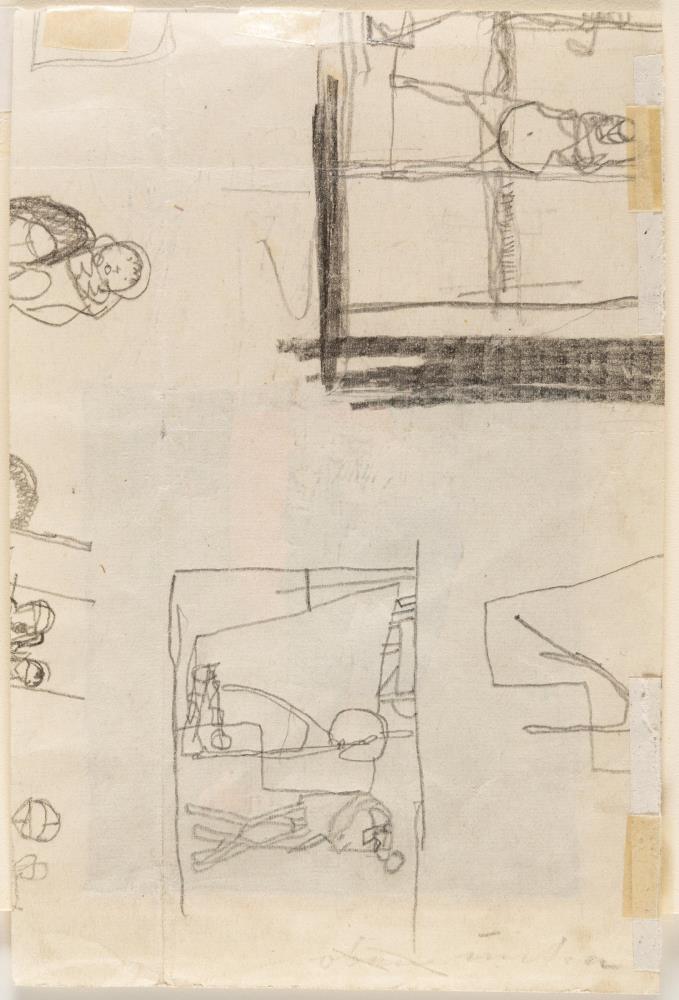
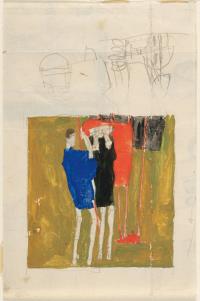
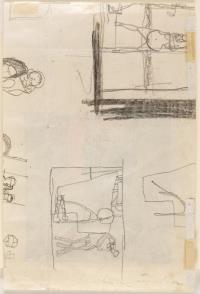
One consolation, however, are artists who have documented and archived their work processes to give us art fans an insight into their work even after they have passed away. This season, a number of sketchbooks will be offered in the Early Art auction, which tell of searching for (and finding) motifs. In Modern Art, we are pleased to offer sketch sheets by Gustav Klimt or Egon Schiele, for example, which show preliminary studies for painting details such as heads, boots or armchairs. These tidy sheets are works of art in themselves. With the Two Men lot, we are offering a special rarity: We don't see a clean drawing, a beautifully thought-out sheet. Instead, we are standing directly in the studio of the wild Schiele, smelling the colors and the struggle to find the image. The sheet bears witness to finding and discarding, to losing oneself and trying things out. Thus we see numerous abstract sketches, here a head, there a scene. The square executed in gouache makes the sheet centrally attractive. Here, in all their sketchiness, two Schiele men appear, stretched out against the box. Just like Schiele's artistic spirit, they want to break out, conquer the sheet, take possession of it, grasp it.
Not with Kallir.
Jane Kallir, who according to Sabarsky examined this work, assumes that it actually comes from one of Egon Schiele's sketchbooks. However, as she never mentions individual sketchbook sheets in her catalog raisonné, this sheet was not included in the updated 2nd edition of her catalog raisonné (1998).
- Color-intensive composition full of tension
- From one of the artist's sketchbooks
One of the most exciting experiences of any art collector is being able to look over the shoulder of their favorite artists. Visits to the studios of artist friends, workshop tours organized by art associations and work talks in galleries and auction houses are correspondingly coveted (and rare). Here, the process can be observed in the hope of getting closer to the genius - knowing full well that any external view can never reflect the inner artistic process. Visiting a contemporary artist's studio is a question of networking, money and time. With artists from past eras, these hurdles become an impossibility: Dürer and Sintenis can no longer be looked over their shoulders!
One consolation, however, are artists who have documented and archived their work processes to give us art fans an insight into their work even after they have passed away. This season, a number of sketchbooks will be offered in the Early Art auction, which tell of searching for (and finding) motifs. In Modern Art, we are pleased to offer sketch sheets by Gustav Klimt or Egon Schiele, for example, which show preliminary studies for painting details such as heads, boots or armchairs. These tidy sheets are works of art in themselves. With the Two Men lot, we are offering a special rarity: We don't see a clean drawing, a beautifully thought-out sheet. Instead, we are standing directly in the studio of the wild Schiele, smelling the colors and the struggle to find the image. The sheet bears witness to finding and discarding, to losing oneself and trying things out. Thus we see numerous abstract sketches, here a head, there a scene. The square executed in gouache makes the sheet centrally attractive. Here, in all their sketchiness, two Schiele men appear, stretched out against the box. Just like Schiele's artistic spirit, they want to break out, conquer the sheet, take possession of it, grasp it.
Not with Kallir.
Jane Kallir, who according to Sabarsky examined this work, assumes that it actually comes from one of Egon Schiele's sketchbooks. However, as she never mentions individual sketchbook sheets in her catalog raisonné, this sheet was not included in the updated 2nd edition of her catalog raisonné (1998).