Egon Schiele
Heuhütten



Artist
Egon Schiele
Ausstellung
Viennese Graphic Design from the Secession to Expressonism, Galerie St. Etienne, New York 1991/92, Kat.-Nr. 77 ; Man Museo d’arte Provincia di Nuoro, Nuoro 2007/08 ; Egon Schiele: Living Landscapes, Neue Galerie Museum, New York 2024/25.
Provenance
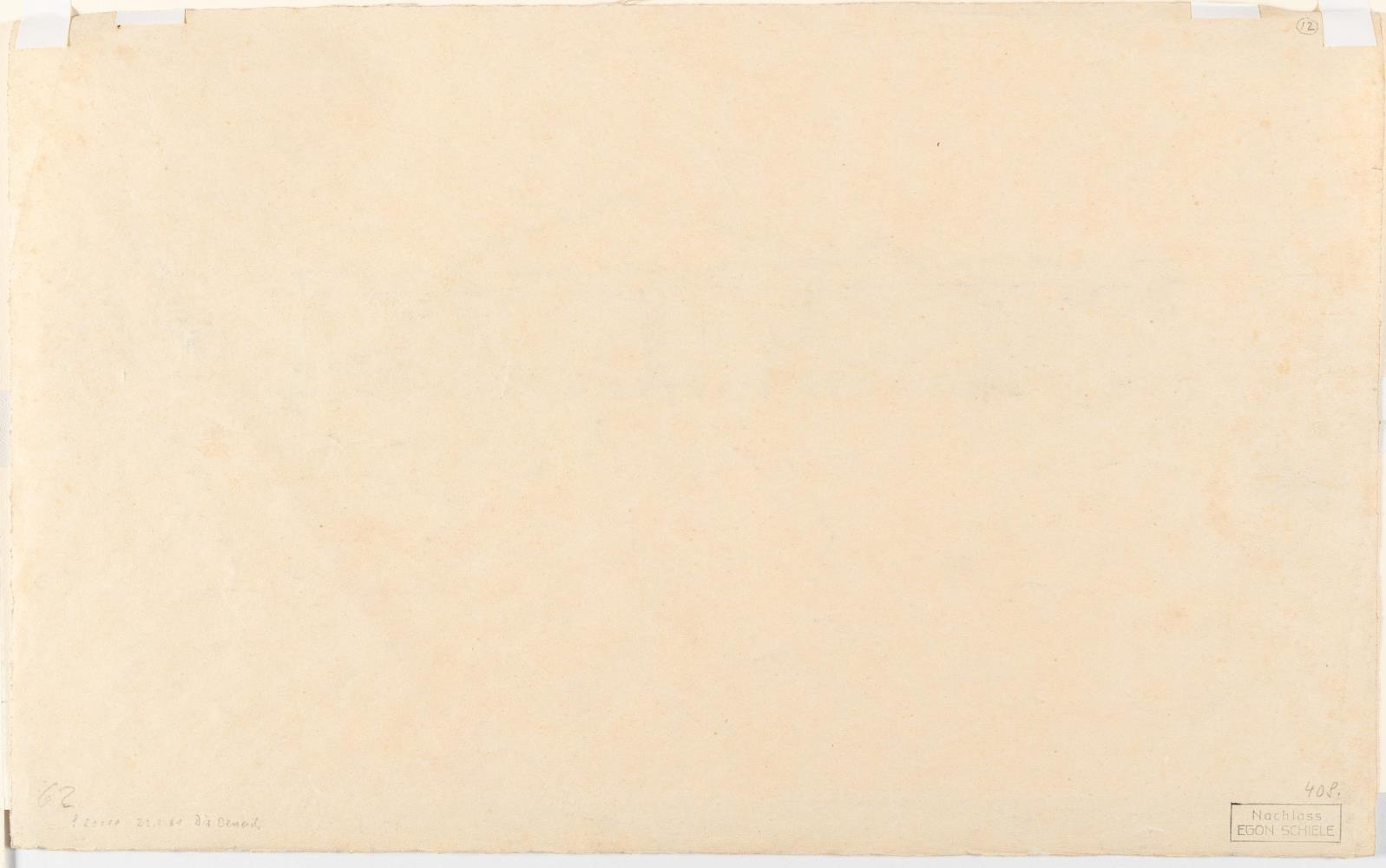
Nachlass des Künstlers, verso mit dem Stempel und der handschriftlichen Nummer „408.“; Sammlung Otto Benesch (1896 – 1964), Wien/Cambridge (USA)/New York, verso handschriftlich bezeichnet; Sammlung/Nachlass Serge Sabarsky, New York, spätestens 1991 erworben; Sammlung/Stiftung Vally Sabarsky, New York.
Share


Description
- Exciting insight into the young artist's working process
- Schiele creates an atmospheric setting with few resources
- In 1914, Schiele was at the height of his success, which sadly ended four years later with his death
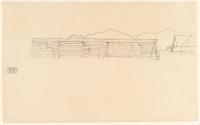
In the upper part of the sheet, a row of sketchily indicated hay huts runs through the picture. This is all that Schiele declared accomplished in 1914 on the present sheet by signing and dating it. Here, a young artist is not only trying to capture his world quickly, he is also creating an atmosphere in just a few elements. The huts are not simply thrown on top of the paper by chance, the emptiness is rather a space of possibility, a scenery is created in the viewer's imagination. A late summer's day, the harvest will soon be gathered, the hay huts await their task. Here Schiele skillfully demonstrates what we appreciate him so much for; he reduces the scenery to such an extent that it is rendered in its message, in its essence, but requires the viewer's imagination due to the degree of abstraction.
Kallir D 1682a.
- Schiele creates an atmospheric setting with few resources
- In 1914, Schiele was at the height of his success, which sadly ended four years later with his death
In the upper part of the sheet, a row of sketchily indicated hay huts runs through the picture. This is all that Schiele declared accomplished in 1914 on the present sheet by signing and dating it. Here, a young artist is not only trying to capture his world quickly, he is also creating an atmosphere in just a few elements. The huts are not simply thrown on top of the paper by chance, the emptiness is rather a space of possibility, a scenery is created in the viewer's imagination. A late summer's day, the harvest will soon be gathered, the hay huts await their task. Here Schiele skillfully demonstrates what we appreciate him so much for; he reduces the scenery to such an extent that it is rendered in its message, in its essence, but requires the viewer's imagination due to the degree of abstraction.
Kallir D 1682a.