Ernst Ludwig Kirchner
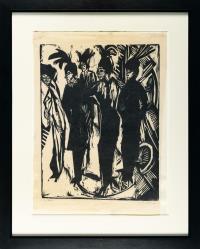
Fünf Kokotten auf der Straße
Artist
Ernst Ludwig Kirchner
Exhibition
Lebenslust & Totentanz: Olbricht Collection, Kunsthalle Krems 2010, p. 184, no illus;
Ernst Ludwig Kirchner - on the occasion of the book presentation of the first two volumes of the critical catalog raisonné of Ernst Ludwig Kirchner's prints, Galerie Aurel Scheibler, Berlin 2013, no cat. no.
Ernst Ludwig Kirchner - on the occasion of the book presentation of the first two volumes of the critical catalog raisonné of Ernst Ludwig Kirchner's prints, Galerie Aurel Scheibler, Berlin 2013, no cat. no.
Provenance
Collection Eberhard Grisebach, Jena;
Private collection, Germany;
Theobald Jennings Gallery, London;
Private collection, North Rhine-Westphalia
Private collection, Germany;
Theobald Jennings Gallery, London;
Private collection, North Rhine-Westphalia
Share


Description
- One of the most important woodcuts in Ernst Ludwig Kirchner's extensive oeuvre of prints and from the artist's most important creative period
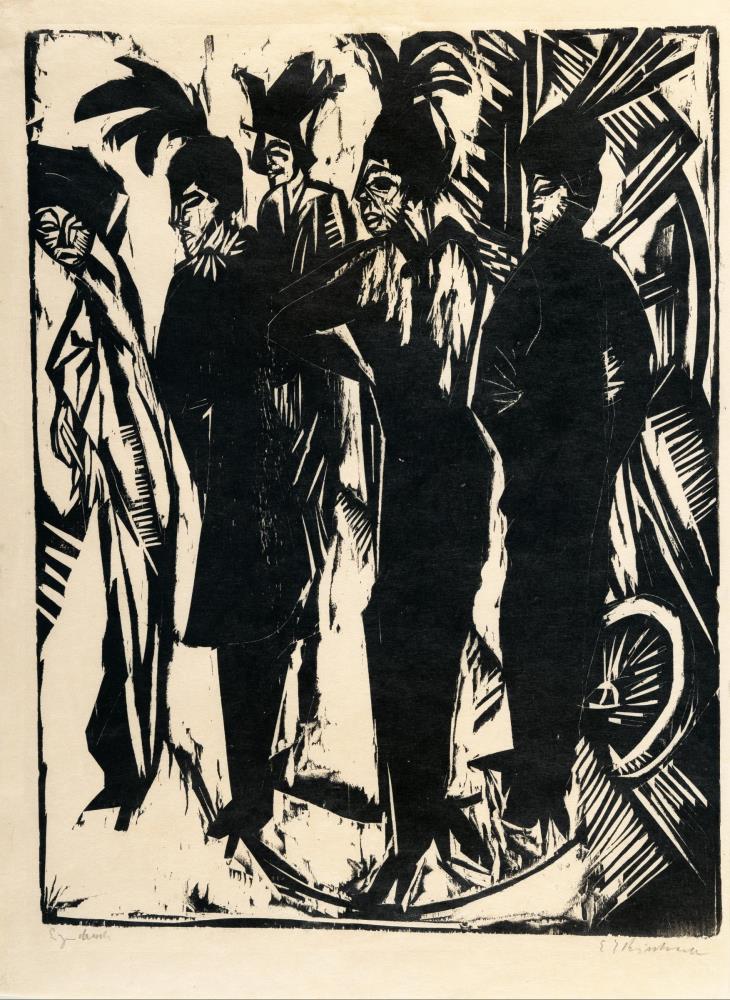
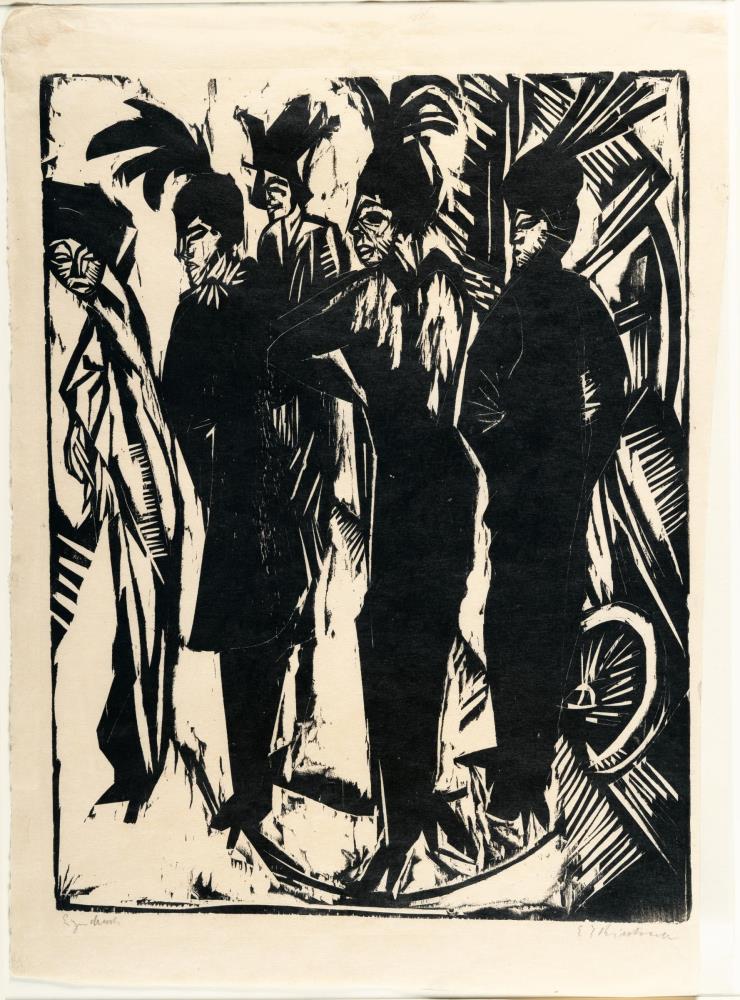
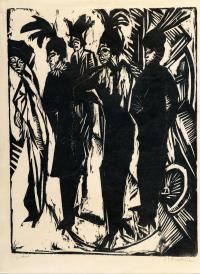
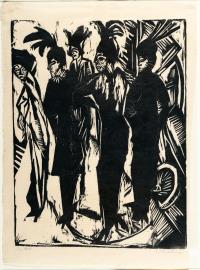
- Kirchner shows five self-confident Berlin ladies of the New West, which he also depicted in a painting in 1913
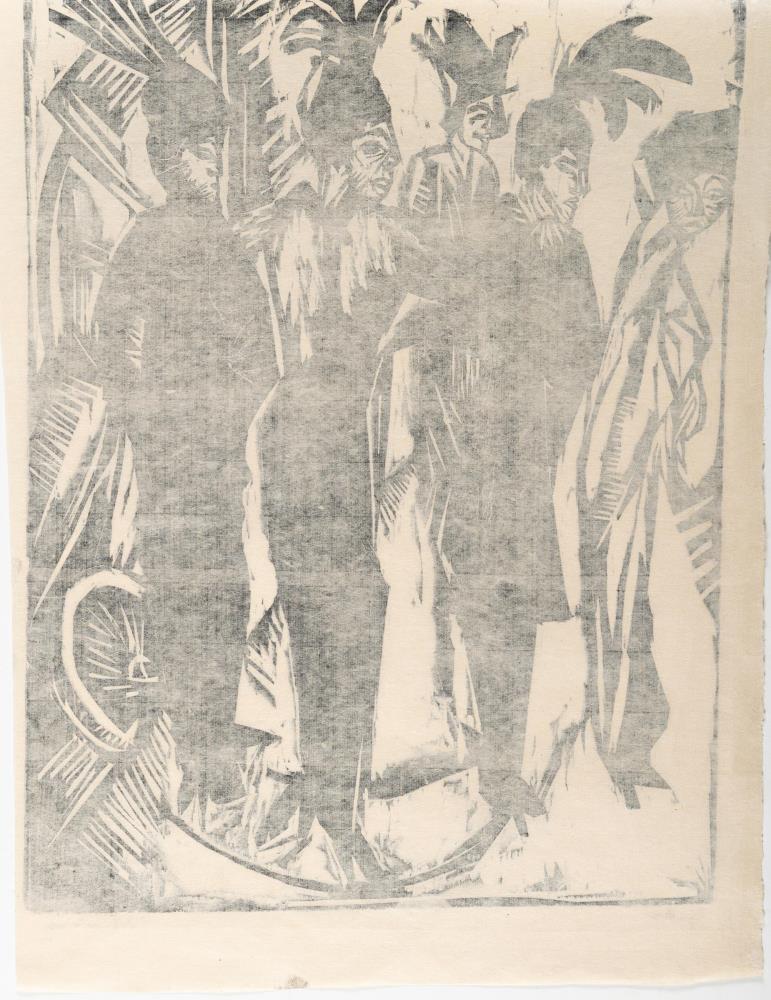
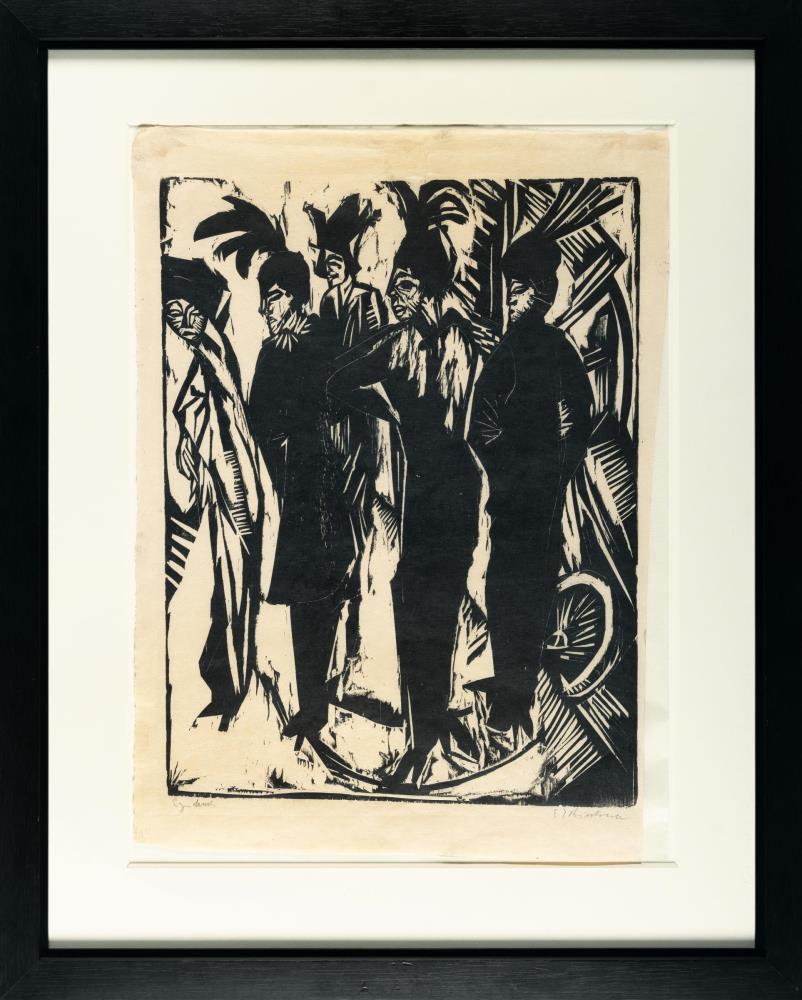
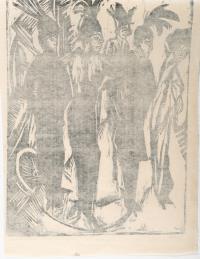
- This is the only known example of this woodcut, which is very rarely offered on the market, printed on fine Japan paper and is of museum significance
Berlin, New West, somewhere between the Kaiser Wilhelm Memorial Church and KaDeWe. The inevitability of war already hangs in the air, but there is still the smell of exhaust fumes, consumerism and cheap perfume. The streets are populated with passers-by on their way to the shops, pleasure-seeking business people and visitors attracted by this brave new world. In the midst of the crowds, five female figures push their way along the sidewalks. They are tall, elegantly dressed and unearthly beautiful. Unapproachable paragons of their gender, elevated above mere mortals.
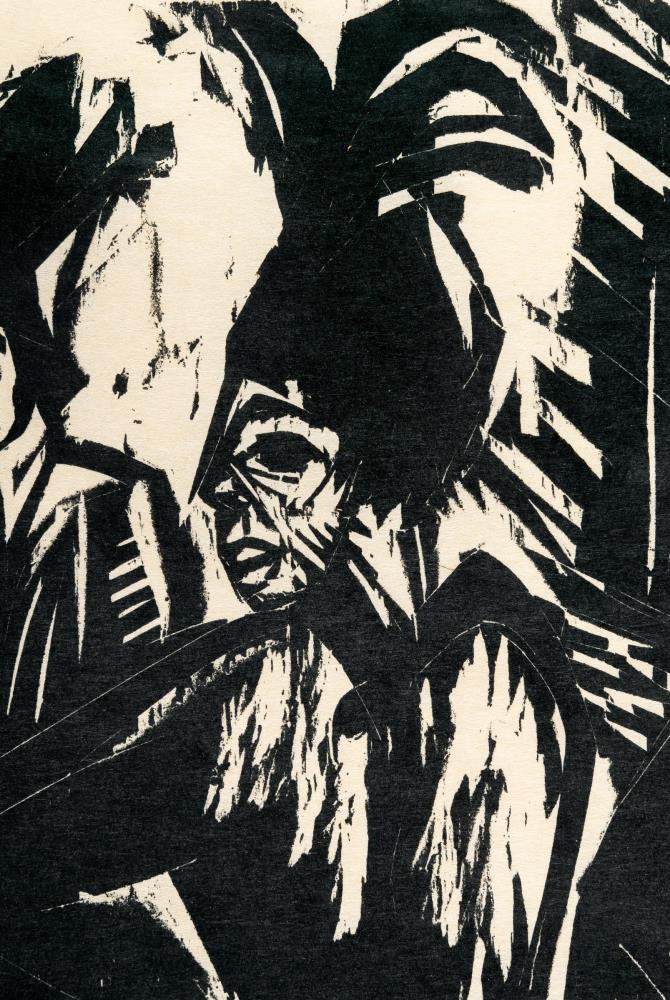
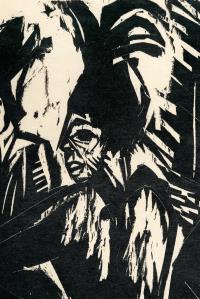
But what Kirchner shows here are not ladies from Schöneberg society who have arranged to meet for tea in the Kaufhaus des Westens. Au contraire, the women shown here are on business! To compare them with the famous "Tauentzien girls", as Kurt Tucholsky called them, would be an insult. And yet, what Kirchner depicts here are prostitutes. The artist shows them as untouchable. This exaggeration, however, does not seem to stem from a feeling of admiration. As in his 1913 painting "Five Women on the Street" (now in the Museum Ludwig, Cologne), predators are also shown here. Their entire form is strangely elongated, the fur coats and feather appliqués nestling around their bodies like fur. The faces are angular and almost sharp. There are five sphinxes, ready to devour the next man who foolishly approaches them. The depiction may refer to Kirchner's image of women at the time, which rejected an offensive and dominant self-determined marketing of one's own female sexuality.
But it also shows the signs of the times: war is imminent. People lose themselves in ecstasy, in the demimonde, in drugs. Fritzi Massary's voice sets the melody with "Die kleine Kokotte", and the world - especially Berlin - dances on the volcano. Kirchner's pictorial composition picks up on the zeitgeist, demonstrating its perversion of the circumstances. The women are only apparently coquettes. But if you look closely, behind all the powder, hats and stern looks, you can see: They are big black birds, harbingers of a new, cruel time. The war is coming. To ashes. To dust.
Gercken 645 II (from II).
- Kirchner shows five self-confident Berlin ladies of the New West, which he also depicted in a painting in 1913
- This is the only known example of this woodcut, which is very rarely offered on the market, printed on fine Japan paper and is of museum significance
Berlin, New West, somewhere between the Kaiser Wilhelm Memorial Church and KaDeWe. The inevitability of war already hangs in the air, but there is still the smell of exhaust fumes, consumerism and cheap perfume. The streets are populated with passers-by on their way to the shops, pleasure-seeking business people and visitors attracted by this brave new world. In the midst of the crowds, five female figures push their way along the sidewalks. They are tall, elegantly dressed and unearthly beautiful. Unapproachable paragons of their gender, elevated above mere mortals.
But what Kirchner shows here are not ladies from Schöneberg society who have arranged to meet for tea in the Kaufhaus des Westens. Au contraire, the women shown here are on business! To compare them with the famous "Tauentzien girls", as Kurt Tucholsky called them, would be an insult. And yet, what Kirchner depicts here are prostitutes. The artist shows them as untouchable. This exaggeration, however, does not seem to stem from a feeling of admiration. As in his 1913 painting "Five Women on the Street" (now in the Museum Ludwig, Cologne), predators are also shown here. Their entire form is strangely elongated, the fur coats and feather appliqués nestling around their bodies like fur. The faces are angular and almost sharp. There are five sphinxes, ready to devour the next man who foolishly approaches them. The depiction may refer to Kirchner's image of women at the time, which rejected an offensive and dominant self-determined marketing of one's own female sexuality.
But it also shows the signs of the times: war is imminent. People lose themselves in ecstasy, in the demimonde, in drugs. Fritzi Massary's voice sets the melody with "Die kleine Kokotte", and the world - especially Berlin - dances on the volcano. Kirchner's pictorial composition picks up on the zeitgeist, demonstrating its perversion of the circumstances. The women are only apparently coquettes. But if you look closely, behind all the powder, hats and stern looks, you can see: They are big black birds, harbingers of a new, cruel time. The war is coming. To ashes. To dust.
Gercken 645 II (from II).