Leo Putz
The Ice Queen II



Artist
Leo Putz
1869 - Meran - 1940
Further information
Putz 1125.
Provenance
Wiener Kunstauktionen, Vienna, 11 October 2005, lot 180;
Private collection, Southern Germany.
Private collection, Southern Germany.
Share


Description
• Fairy-tale paintings are among the finest works from Putz’s earlier creative periods
• The theme of the ‘Ice Queen’ occupies a special place in Putz’s oeuvre; he explored it on several occasions between 1903 and 1917/18
• Paintings full of subtle eroticism and sensuality
Leo Putz liked to take up motifs from fairy tales and legends and interpret them in his own way. His fairy-tale paintings ‘Puss in Boots’, ‘The Twelve Brothers’, ‘Hansel and Gretel’, ‘Princess Rapunzel’ and others are among the most beautiful and distinctive works from the artist’s early creative periods.
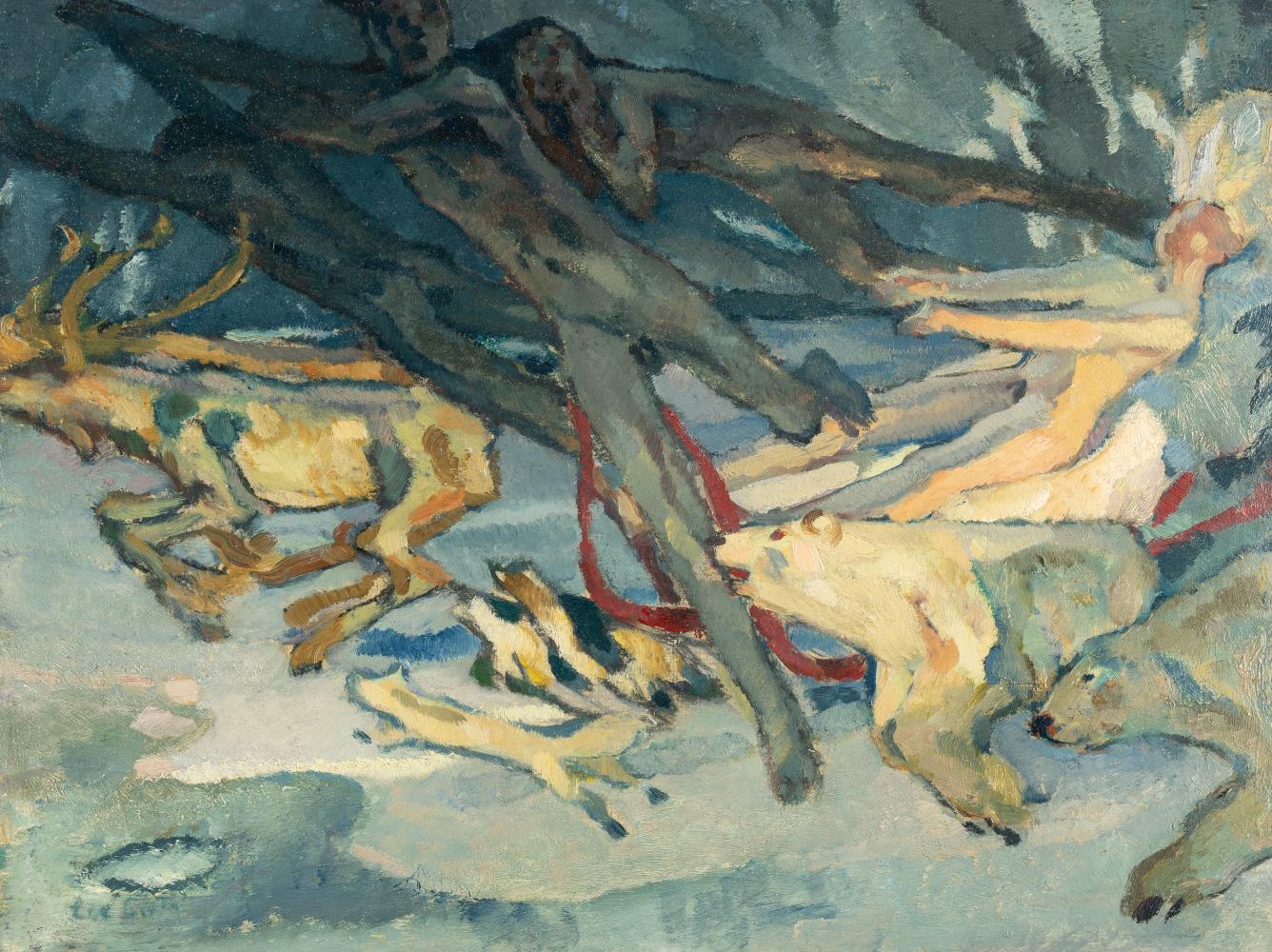
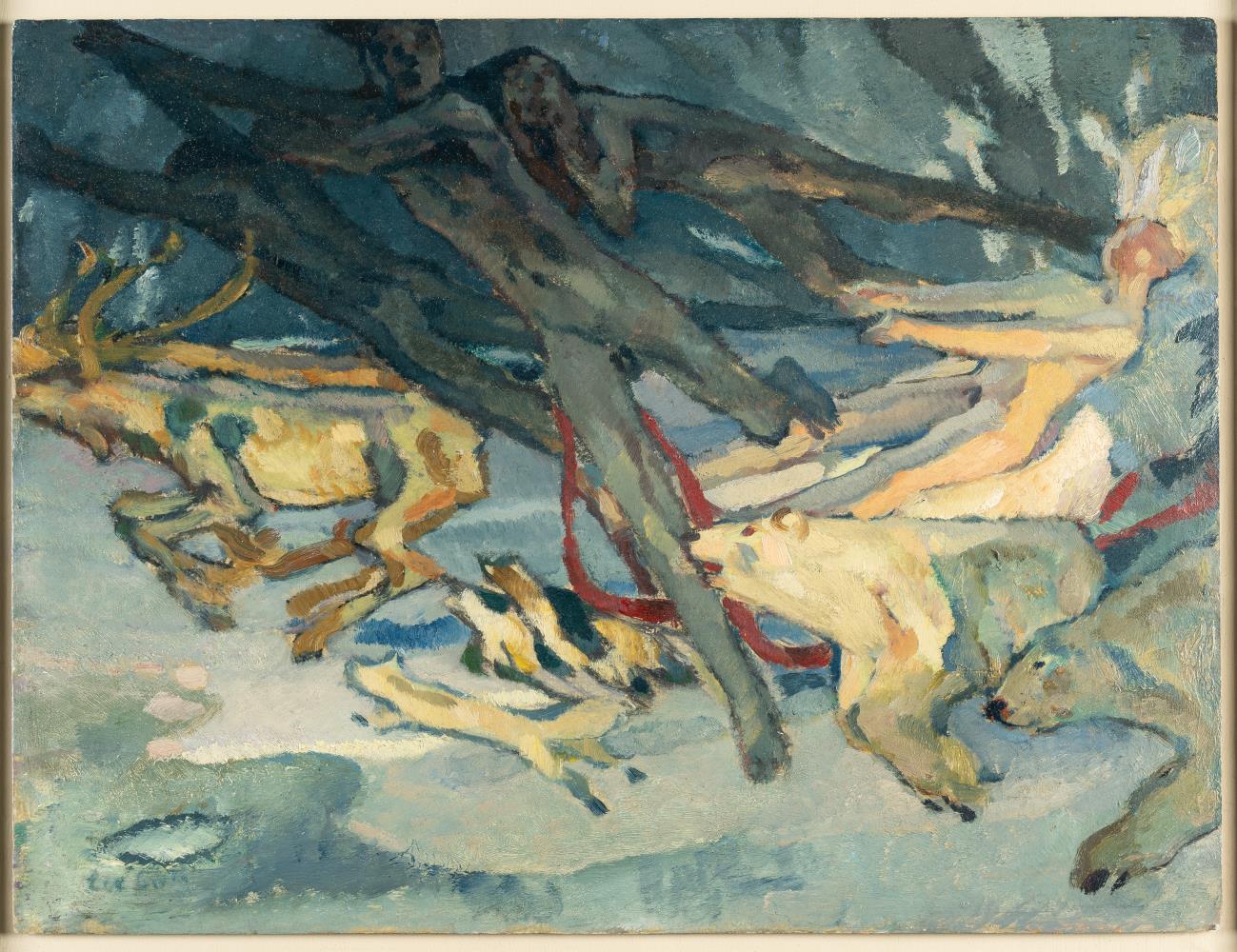
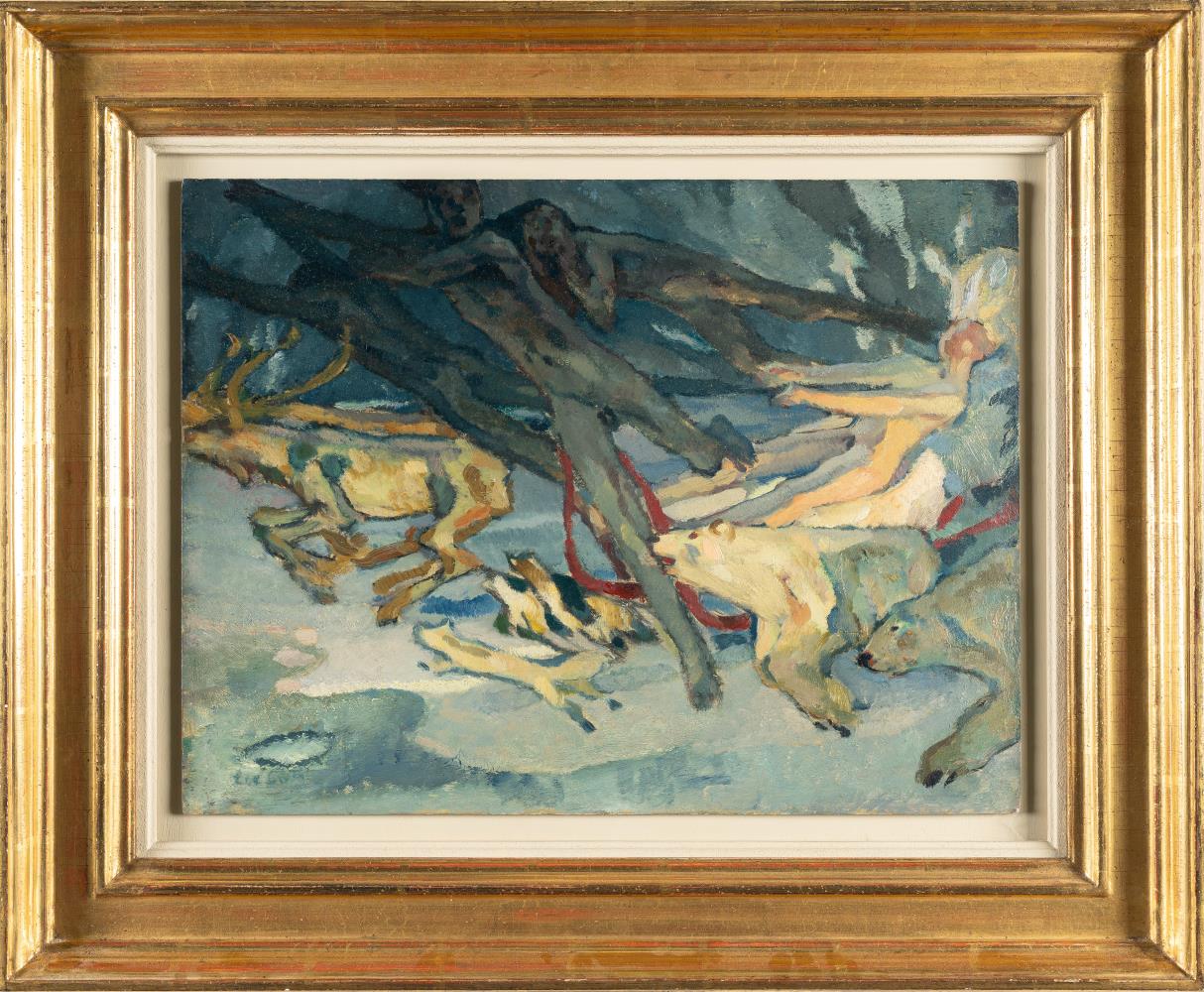
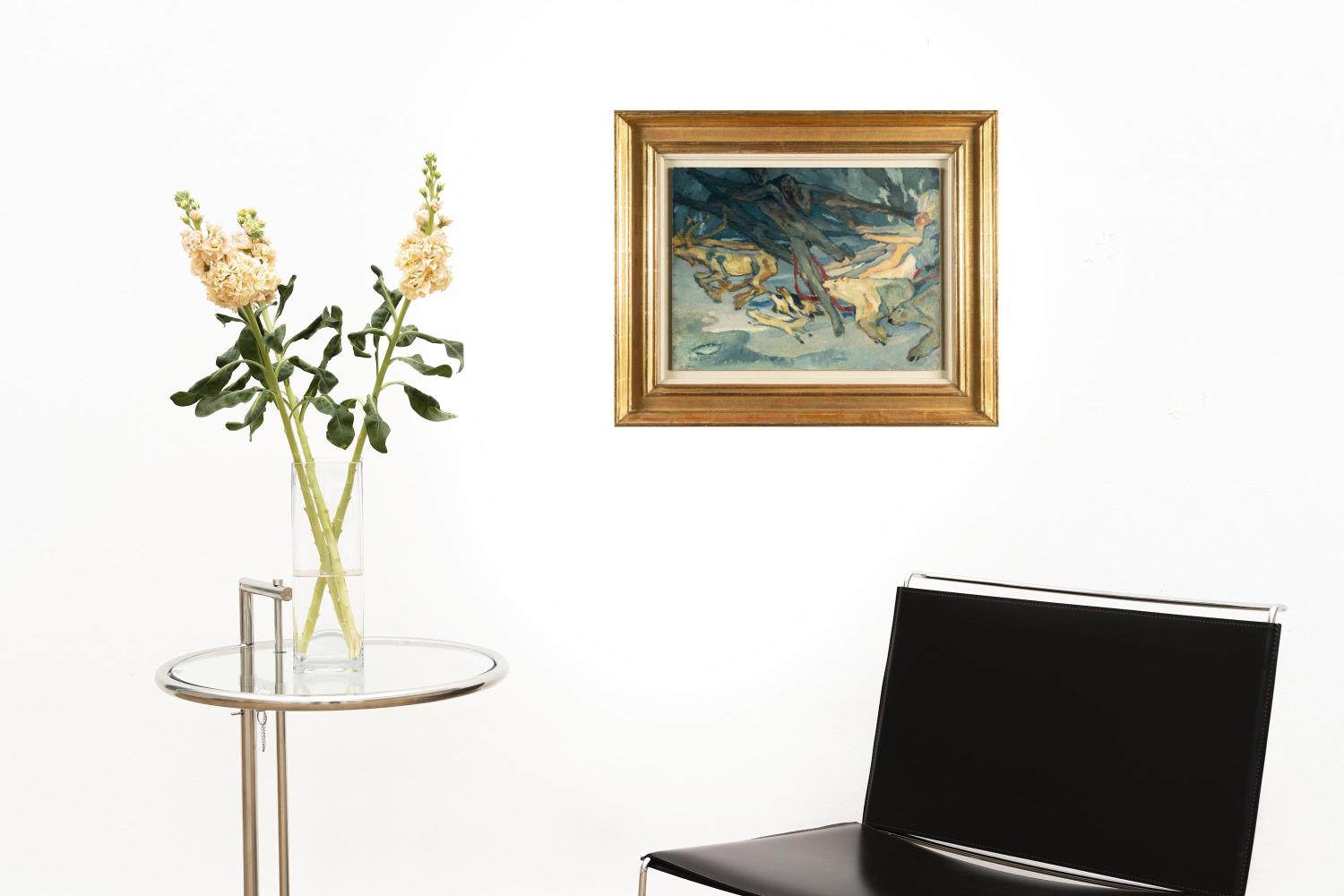
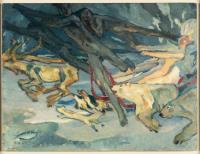
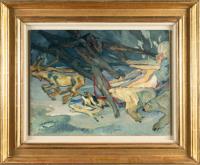
In our painting, we see the Ice Queen, wearing a crown of icicles, naked on a red sledge drawn by deer or reindeer, racing across a gloomy snowy landscape. She is accompanied on her breakneck journey by polar bears, dogs and arctic foxes. Three dark male figures flee in panic.
Leo Putz’s Ice Queen is imbued with a subtle eroticism and sensuality. He makes her the bearer of a mysterious message. Her relentless hunt is characterised by hard-heartedness, emotional coldness and cruelty. She is the demonic woman who brings ruin. The red colour of her chariot not only suggests her royal dignity, but also presents her as a goddess of war. The blue colour scheme of the landscape, partly broken up with black, partly enhanced with light blue, is set in contrast to the warm colours of her flesh tones. Yet the sporadically applied bright yellow accents symbolise the melting of the ice, which could possibly signify the warming of the Ice Queen’s cold heart.
The theme of the Ice Queen occupies a special place in Putz’s oeuvre. An initial sketch can be dated to 1903, whilst Sketches II and III were produced in an early version in 1906. In 1917/18 he painted further versions; our painting can also be dated to this period.
• The theme of the ‘Ice Queen’ occupies a special place in Putz’s oeuvre; he explored it on several occasions between 1903 and 1917/18
• Paintings full of subtle eroticism and sensuality
Leo Putz liked to take up motifs from fairy tales and legends and interpret them in his own way. His fairy-tale paintings ‘Puss in Boots’, ‘The Twelve Brothers’, ‘Hansel and Gretel’, ‘Princess Rapunzel’ and others are among the most beautiful and distinctive works from the artist’s early creative periods.
In our painting, we see the Ice Queen, wearing a crown of icicles, naked on a red sledge drawn by deer or reindeer, racing across a gloomy snowy landscape. She is accompanied on her breakneck journey by polar bears, dogs and arctic foxes. Three dark male figures flee in panic.
Leo Putz’s Ice Queen is imbued with a subtle eroticism and sensuality. He makes her the bearer of a mysterious message. Her relentless hunt is characterised by hard-heartedness, emotional coldness and cruelty. She is the demonic woman who brings ruin. The red colour of her chariot not only suggests her royal dignity, but also presents her as a goddess of war. The blue colour scheme of the landscape, partly broken up with black, partly enhanced with light blue, is set in contrast to the warm colours of her flesh tones. Yet the sporadically applied bright yellow accents symbolise the melting of the ice, which could possibly signify the warming of the Ice Queen’s cold heart.
The theme of the Ice Queen occupies a special place in Putz’s oeuvre. An initial sketch can be dated to 1903, whilst Sketches II and III were produced in an early version in 1906. In 1917/18 he painted further versions; our painting can also be dated to this period.