Bruno Goller
Composition

Artist
Bruno Goller
1901 Gummersbach - Düsseldorf 1998
Exhibition
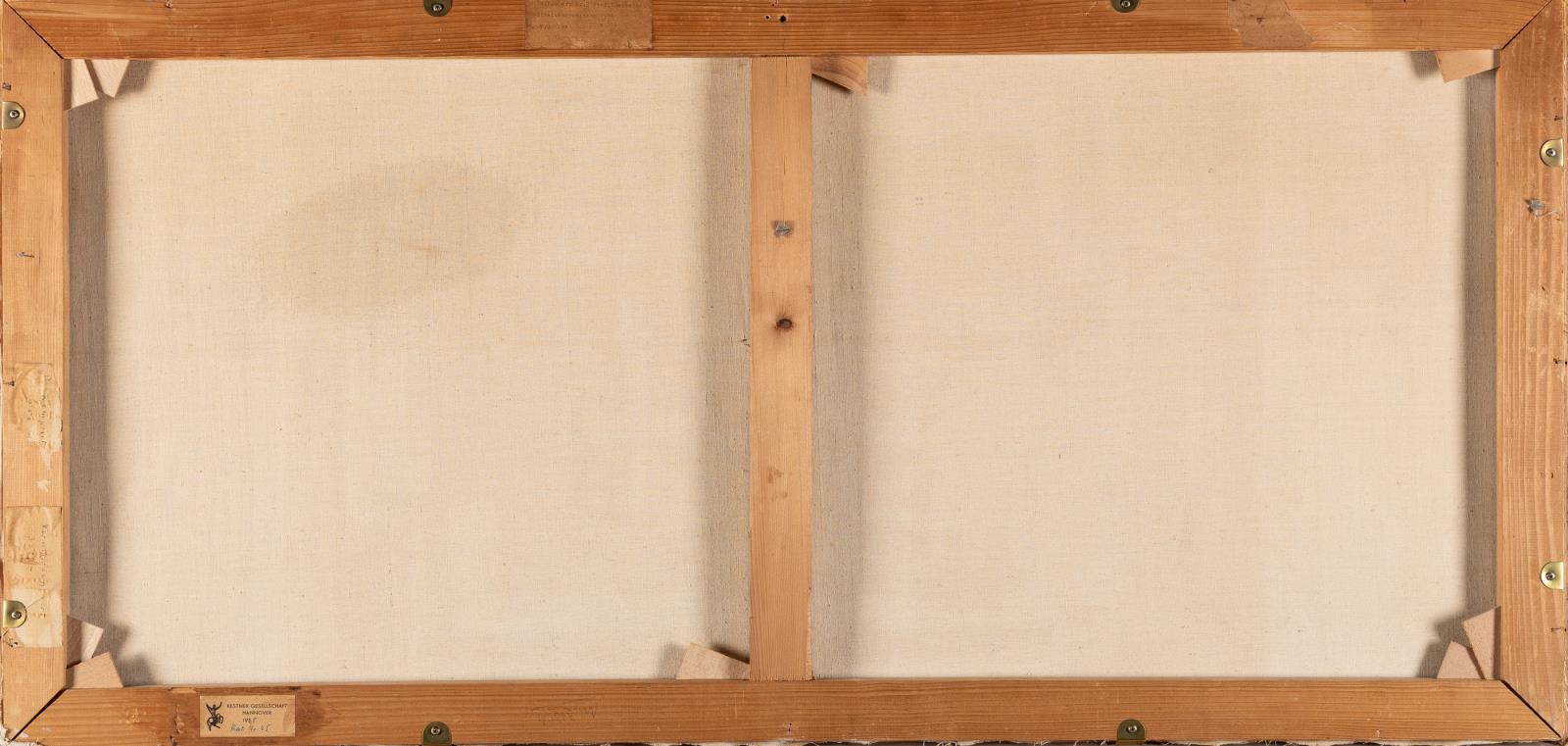
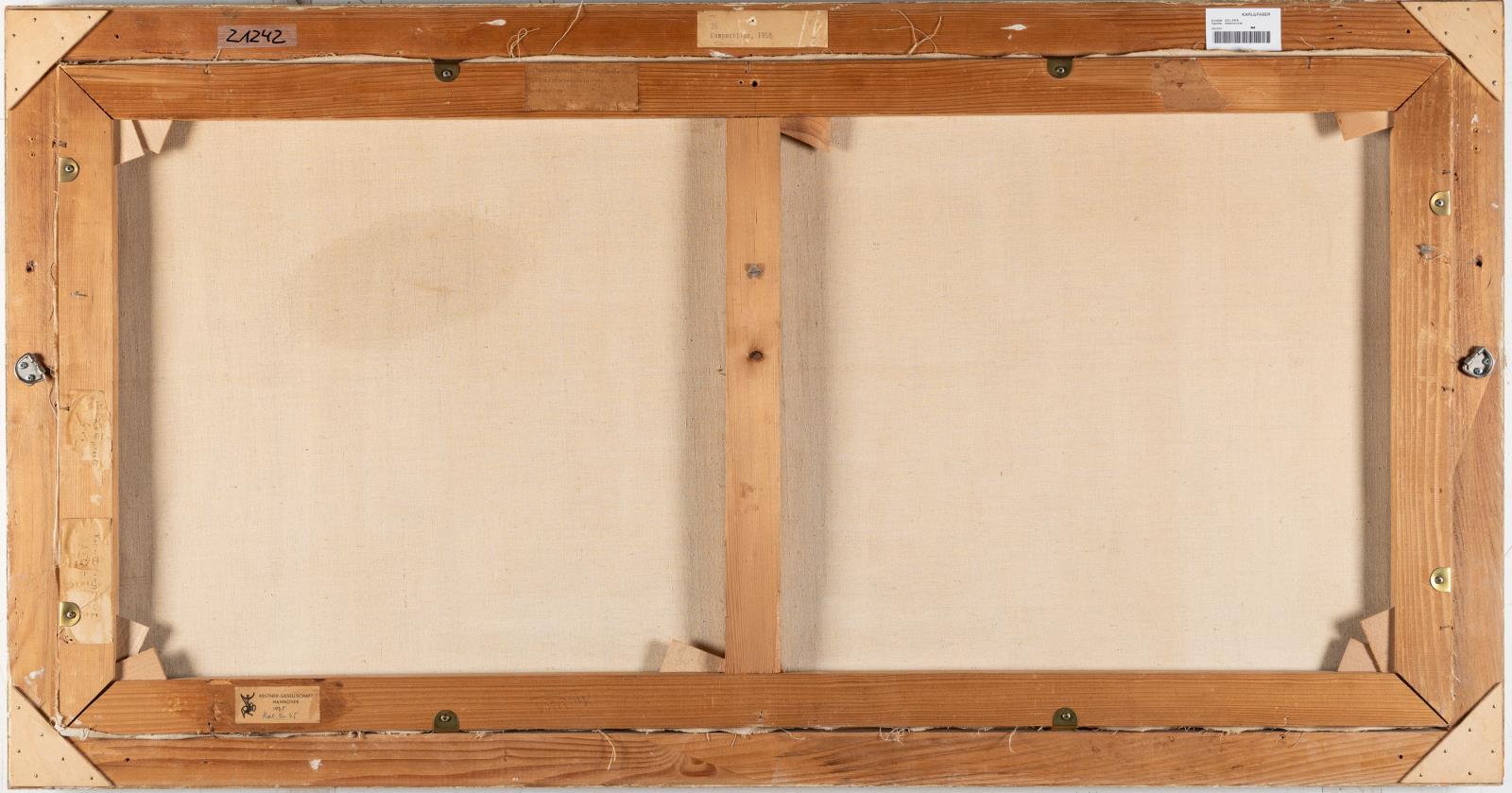
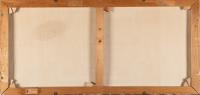
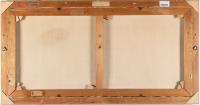
Kestner-Gesellschaft, Hanover 1958, cat. no. 45, label on the reverse of the stretcher;
Overbeck-Gesellschaft, Lübeck 1958;
Kunst- und Museumsverein Wuppertal, 1964, cat. no. 29;
Städtische Kunsthalle Düsseldorf, 1969, cat. no. 35.
Overbeck-Gesellschaft, Lübeck 1958;
Kunst- und Museumsverein Wuppertal, 1964, cat. no. 29;
Städtische Kunsthalle Düsseldorf, 1969, cat. no. 35.
Provenance
Hürter Collection, Oberkassel, with label on the reverse of the stretcher.
Van Ham, Cologne 30 November 2016, Lot 16;
Private collection, North Rhine-Westphalia.
Van Ham, Cologne 30 November 2016, Lot 16;
Private collection, North Rhine-Westphalia.
Share


Description
• A leading figure in post-war German painting
• An enigmatic composition straddling abstraction and symbolic form
• Created during Goller’s pivotal creative phase of the 1950s
Bruno Goller ranks among the most distinctive voices in post-war German painting. Standing apart from the major stylistic movements, he developed a distinctive visual language that straddles figuration, abstraction and magical realism. His works are characterised by reduced forms, precise contours and a peculiar tension between decorative order and symbolic significance.
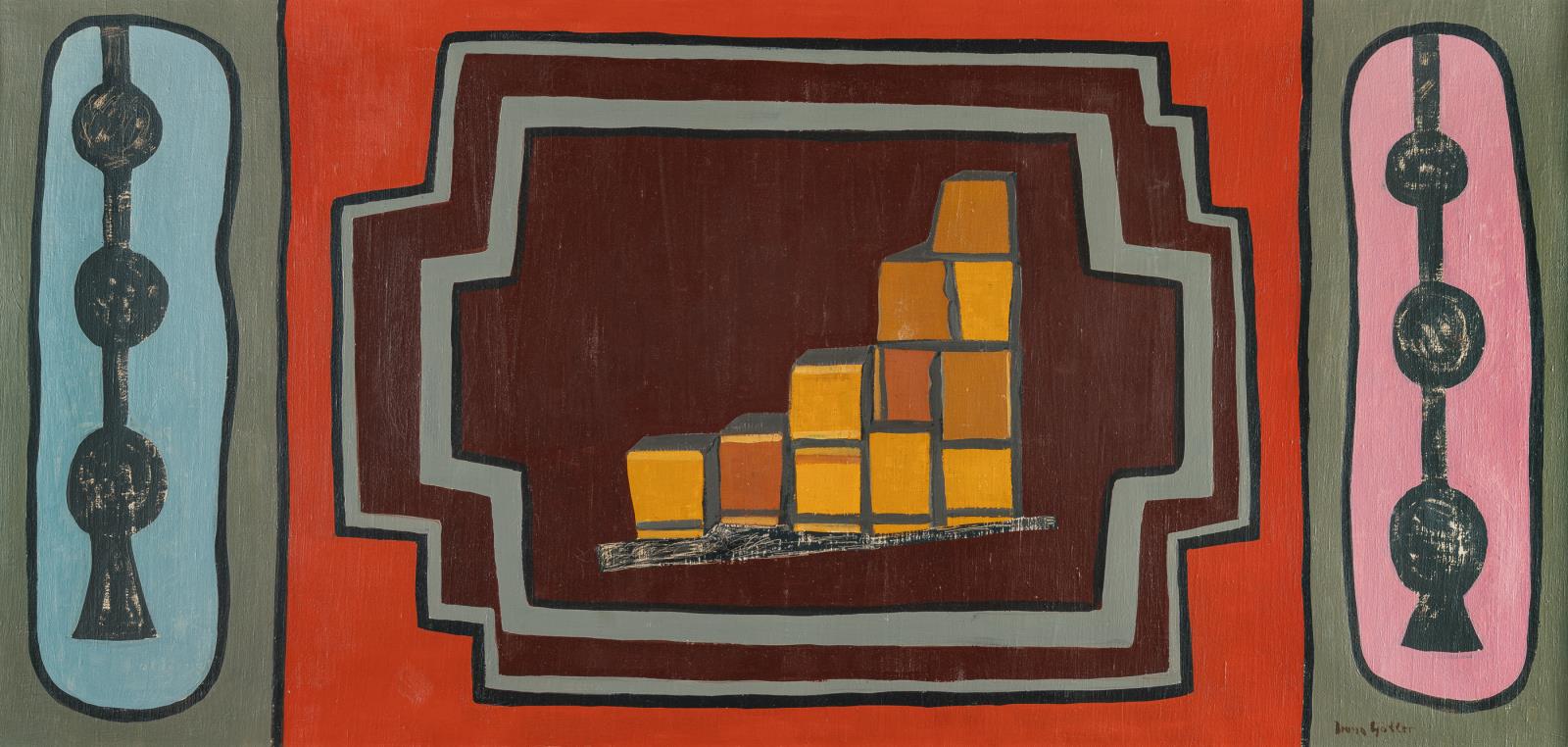
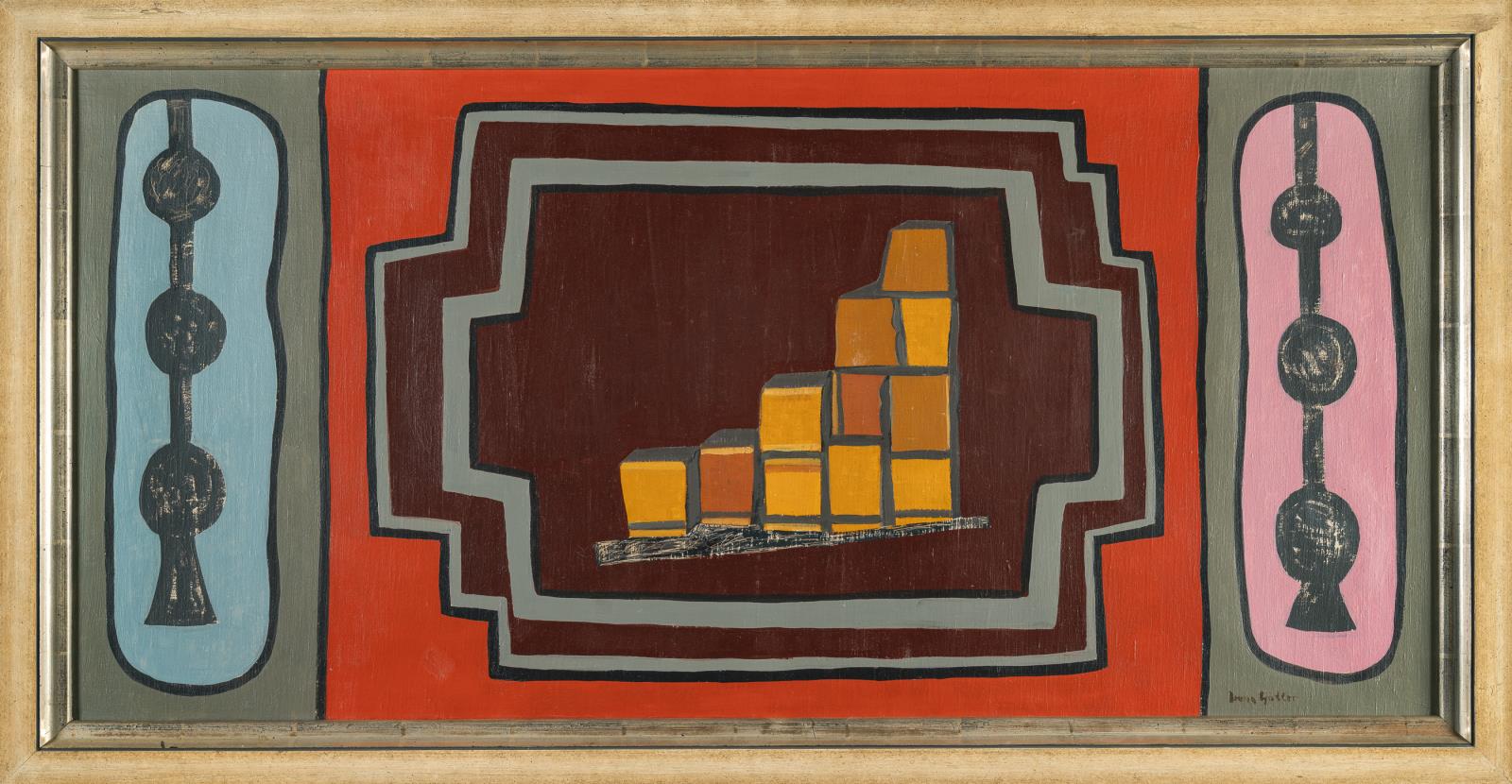
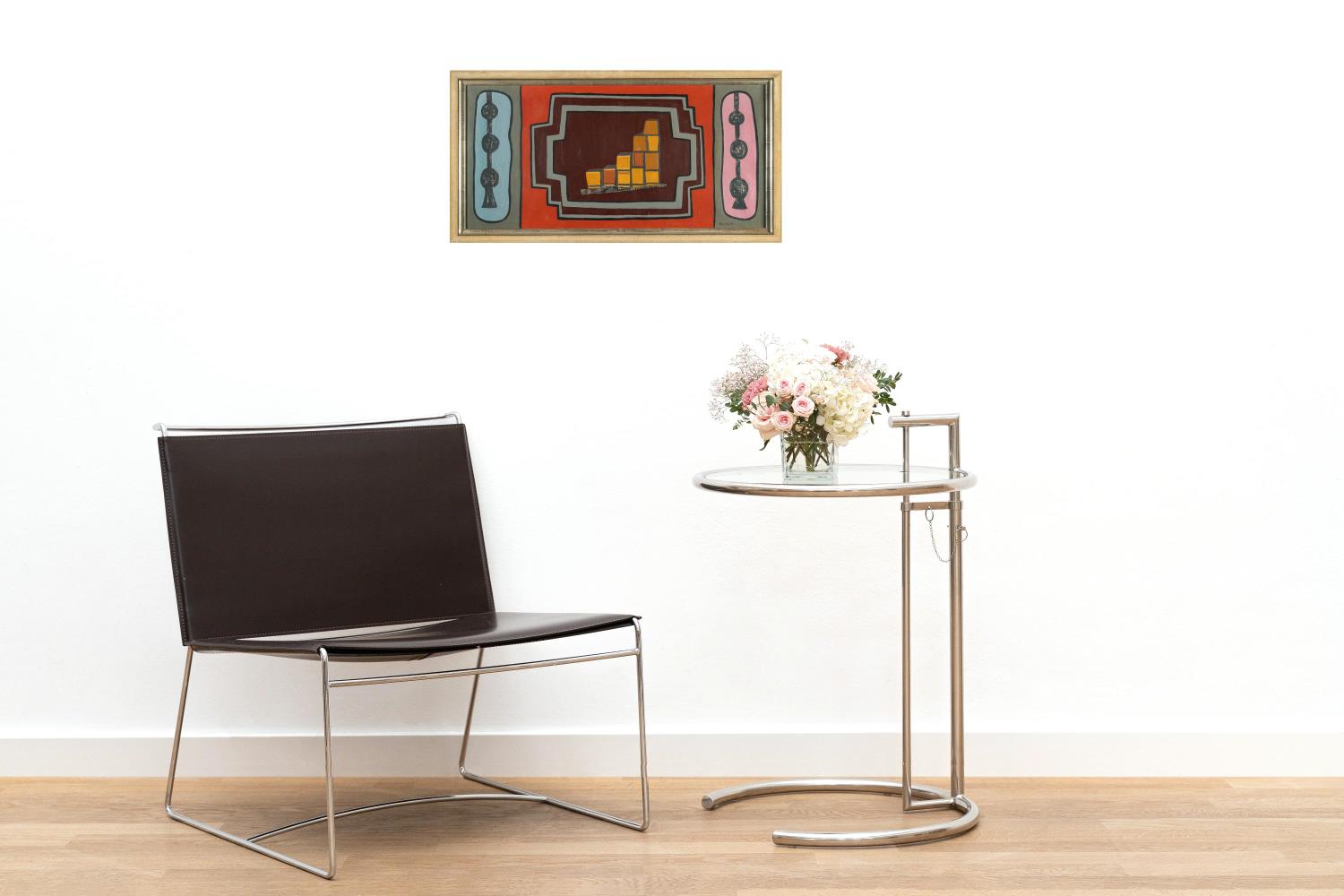
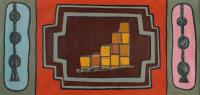
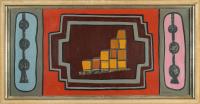
This ‘Composition’ from 1956 belongs to a group of works in which Goller largely sets aside figuration in favour of a symbolic formal language. Two vertically arranged, totem-like forms frame a central field of stepped cubic elements. The strictly symmetrical layout and the flat use of colour lend the picture an almost architectural stability.
Using strong contrasts of reddish-brown, orange, grey and pastel tones, as well as striking black outlines, Goller develops a pictorial structure of great clarity and, at the same time, an enigmatic effect. The forms elude unambiguous interpretation and oscillate between abstract signs and symbolic objects.
It was particularly in the 1950s that Goller achieved a distinctive refinement of his formal language. His paintings combine decorative elegance with quiet monumentality and display that balance of order and mystery which makes his work unique within German post-war art.
• An enigmatic composition straddling abstraction and symbolic form
• Created during Goller’s pivotal creative phase of the 1950s
Bruno Goller ranks among the most distinctive voices in post-war German painting. Standing apart from the major stylistic movements, he developed a distinctive visual language that straddles figuration, abstraction and magical realism. His works are characterised by reduced forms, precise contours and a peculiar tension between decorative order and symbolic significance.
This ‘Composition’ from 1956 belongs to a group of works in which Goller largely sets aside figuration in favour of a symbolic formal language. Two vertically arranged, totem-like forms frame a central field of stepped cubic elements. The strictly symmetrical layout and the flat use of colour lend the picture an almost architectural stability.
Using strong contrasts of reddish-brown, orange, grey and pastel tones, as well as striking black outlines, Goller develops a pictorial structure of great clarity and, at the same time, an enigmatic effect. The forms elude unambiguous interpretation and oscillate between abstract signs and symbolic objects.
It was particularly in the 1950s that Goller achieved a distinctive refinement of his formal language. His paintings combine decorative elegance with quiet monumentality and display that balance of order and mystery which makes his work unique within German post-war art.