Ernst Ludwig Kirchner
Sitzende und stehende nackte Frau
Artist
Ernst Ludwig Kirchner
Provenance
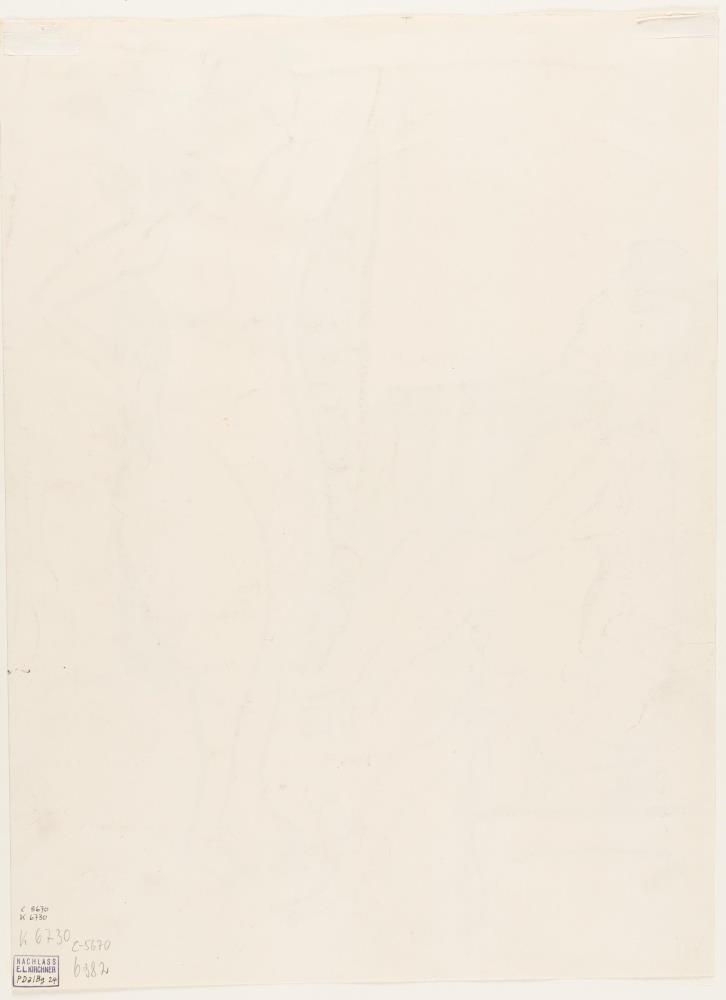
Nachlass des Künstlers, verso mit dem Basler Stempel (Lugt 1570b) und der handschriftlichen Registriernummer „P Da/Bg 24“ sowie den Vermerken „K 6730“, „C 5670“ und „6382“;
Privatbesitz, Schweiz.
Privatbesitz, Schweiz.
Share


Description
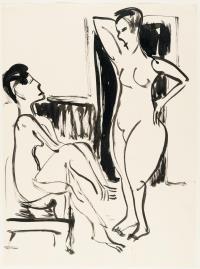
While Kirchner's early works display powerful, often angular lines, he developed a new, more two-dimensional and abstract style in his late work in Davos.
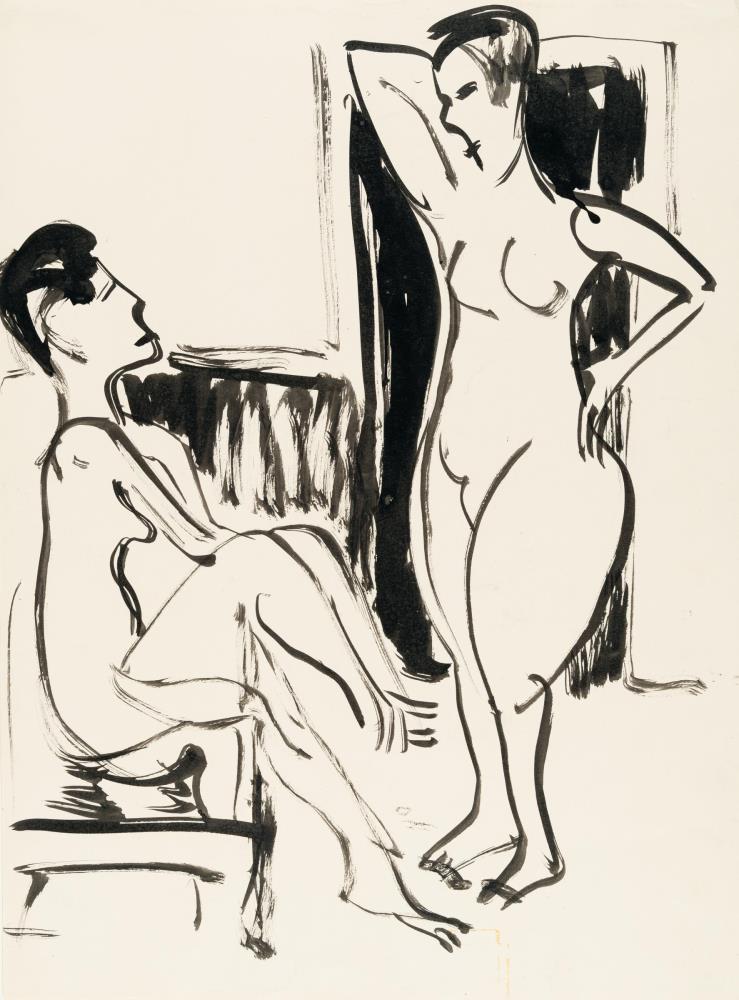
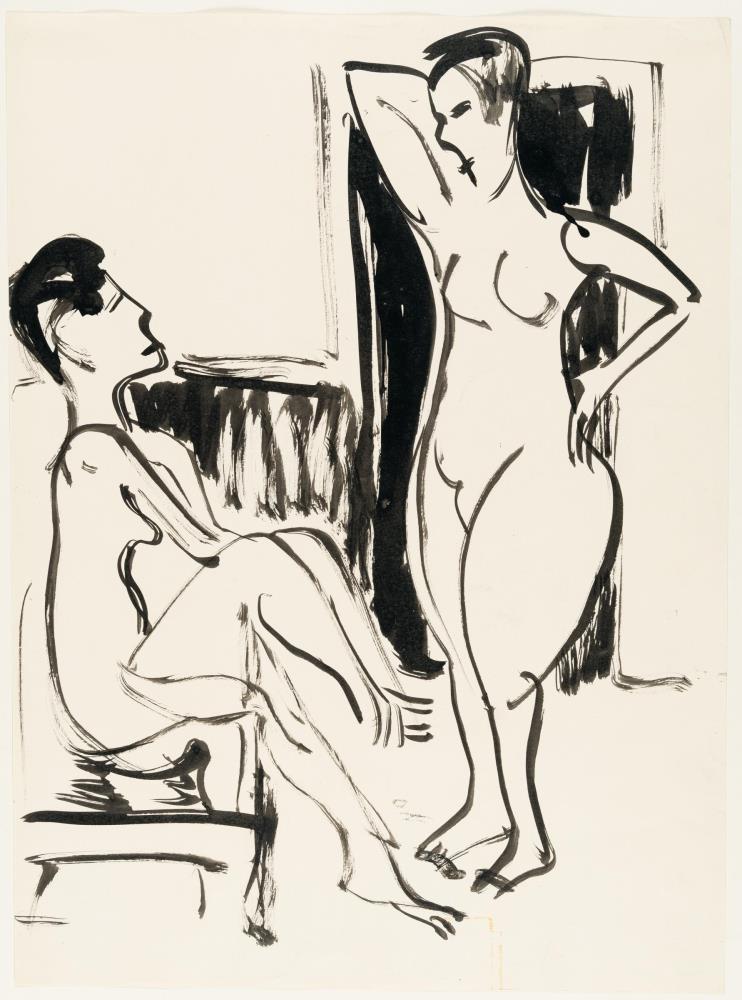
The two naked female bodies are also worked out in less detail here, instead being more strongly defined by their contours. Kirchner concentrates on capturing the essence of the human figure with a few expressive strokes. The surrounding space is not depicted illusionistically, but as a flat, abstract background. The figures are integrated into a two-dimensional spatial construct that reduces the spatial depth.
The year 1936 was also a time of fear and despair for Kirchner. The National Socialists ostracised his art as "degenerate". Many of his works were removed from German museums. This increasing persecution and inner tension are reflected in his last works, which often convey a melancholy or internalised mood. Only two years later, in 1938, he took his own life.
This work is documented in the Ernst Ludwig Kirchner Archive, Wichtrach/Bern.
The two naked female bodies are also worked out in less detail here, instead being more strongly defined by their contours. Kirchner concentrates on capturing the essence of the human figure with a few expressive strokes. The surrounding space is not depicted illusionistically, but as a flat, abstract background. The figures are integrated into a two-dimensional spatial construct that reduces the spatial depth.
The year 1936 was also a time of fear and despair for Kirchner. The National Socialists ostracised his art as "degenerate". Many of his works were removed from German museums. This increasing persecution and inner tension are reflected in his last works, which often convey a melancholy or internalised mood. Only two years later, in 1938, he took his own life.
This work is documented in the Ernst Ludwig Kirchner Archive, Wichtrach/Bern.