Kurt Schwitters
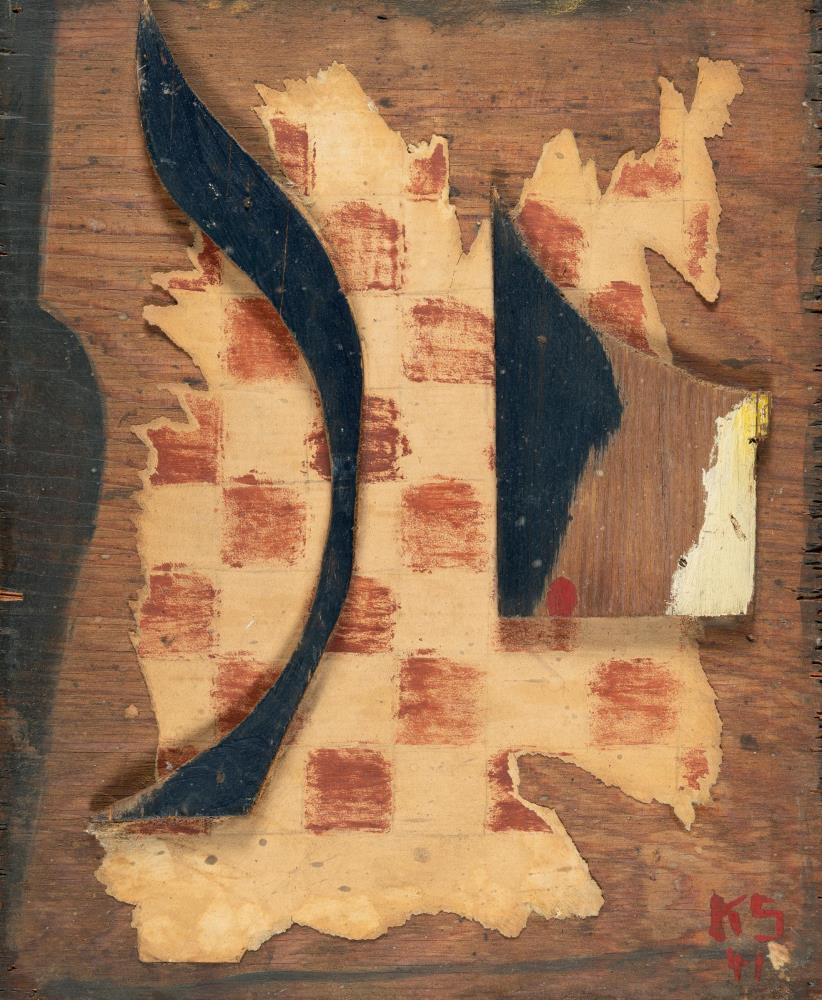
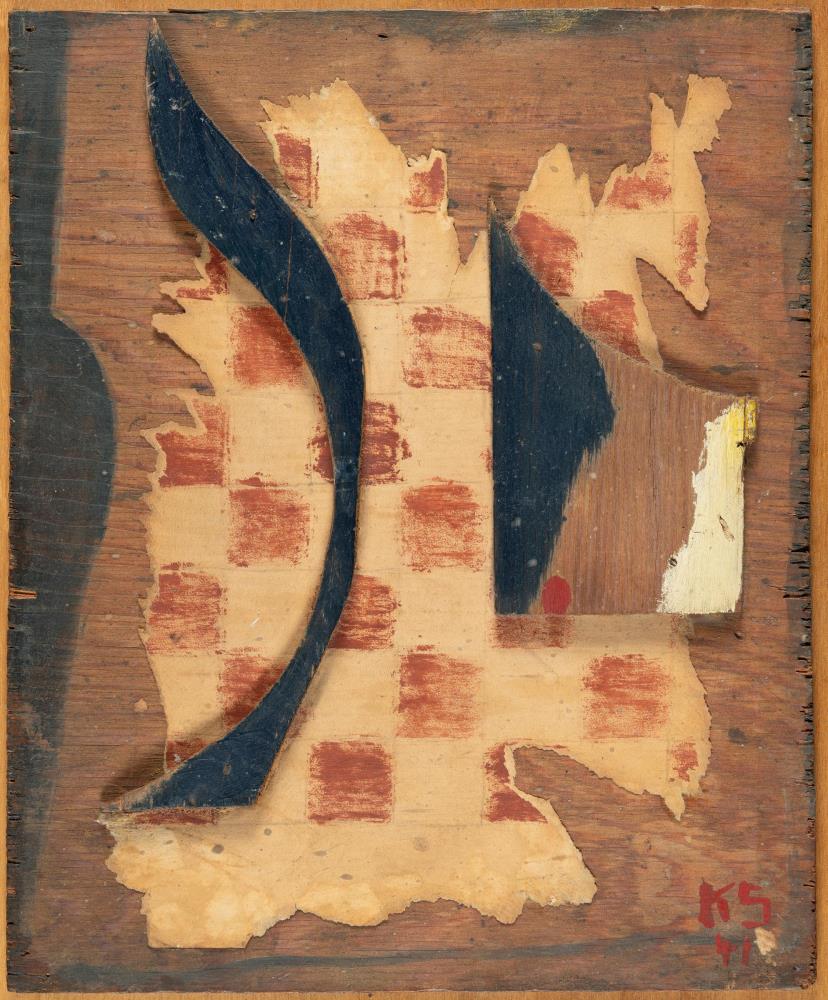
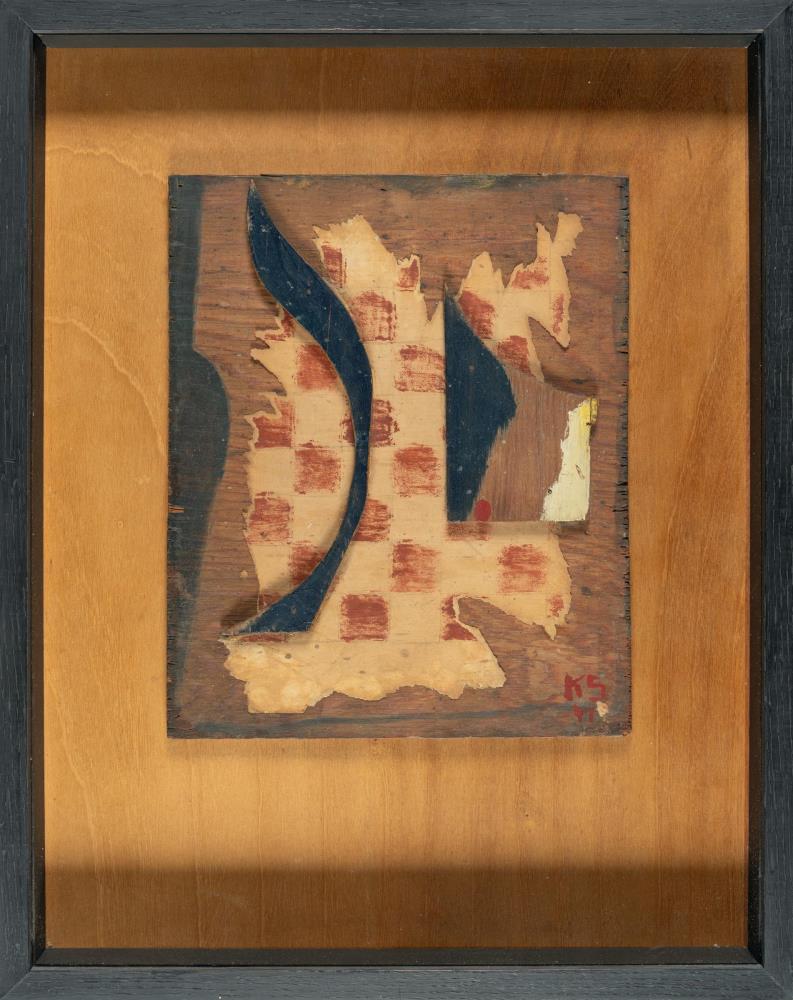
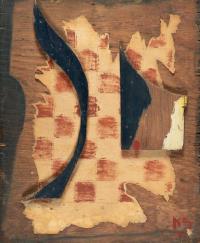
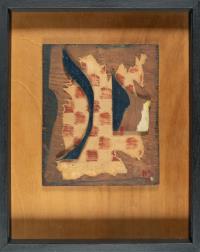
Das Schachbild
Artist
Kurt Schwitters
Ausstellung
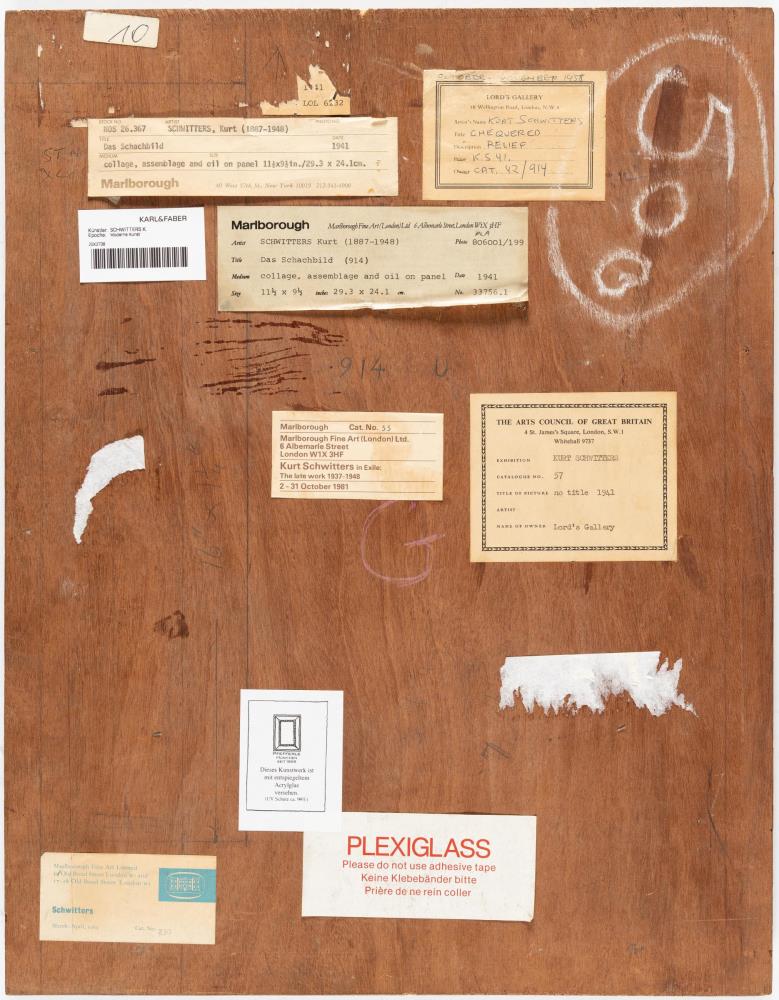
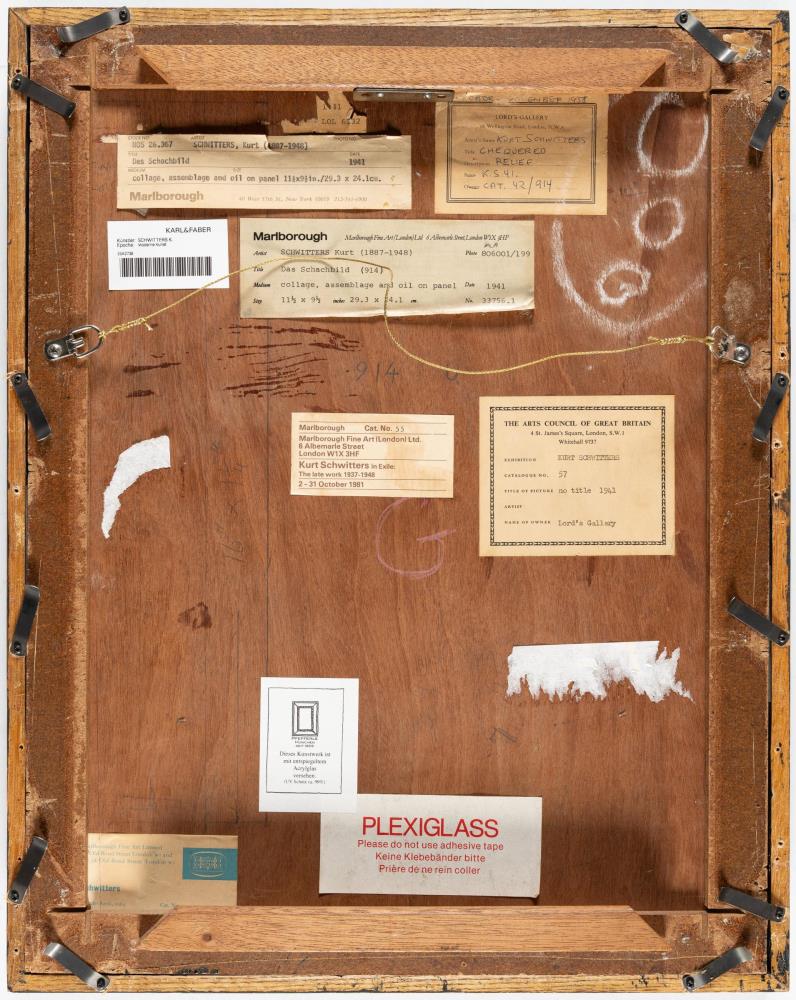
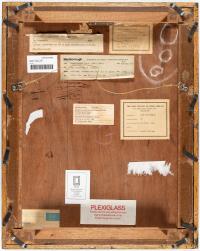
Kurt Schwitters, Lord's Gallery, London 1958, Kat.-Nr. 42, o. Abb. („Chequered“), verso mit dem Etikett ; Kurt Schwitters 1887-1948, The Arts Council Gallery, Cambridge u.a. 1959-1960, Kat.-Nr. 57, o. Abb., verso mit dem Etikett ; Kurt Schwitters. Retrospective, Marlborough Fine Art, London 1963, Kat.-Nr. 230, o. Abb., verso mit dem Etikett ; Kurt Schwitters in Exile: The Late Work 1937-1948, Marlborough Fine Art, London 1981, Kat.-Nr. 55, s/w Abb. S. 129, verso mit dem Etikett ; Kurt Schwitters, Marlborough Gallery, New York 1985, Kat.-Nr. 40, farb. Abb. S. 19, verso mit dem Etikett ; Robert Rauschenberg. Robert Heinecken, Pace/MacGill Gallery, New York 2002, ohne Katalog (Liste Nr. II/5).
Provenance
Nachlass des Künstlers; Sammlung Ernst Schwitters, Lysaker/Norwegen (Sohn des Künstlers); Lord's Gallery, London (1958-1966, in Kommission); Marlborough Fine Art, London & Marlborough International Fine Art, Vaduz (1971-1985, in Kommission); Sammlung Jean Stein (1934-2017), New York, 1985 bei Vorgenannter erworben; Sammlung, Österreich.
Share


Description
- Schwitters almost transfers the collage principle into three-dimensionality
- Found scraps of wood become an arrangement full of dynamism
- According to the catalog of the Lord's Gallery, London (1958), Kurt Schwitters and his son Ernst played chess on this self-painted game board during their internment together at Hutchinson Camp in Douglas on the Isle of Man
In his legendary collage paintings, Kurt Schwitters transformed the accidental into the necessary - found objects from everyday life into poetic compositions of captivating modernity.
Thus "delicious" captivates with the supposedly familiar. Fragments of tickets from long-gone public transport networks meet the gold embossing that gives the work its title - and ultimately open up not into the void, but into the space of possibilities of used yet white paper. His "Schachbild" assembles pieces of wood, but apart from the chessboard pattern that gives it its name, the work eludes any figuration. Is Schwitters narrating here? Is he counteracting? Is he collaging according to aesthetic or iconographic principles? The reality of the pictures is no more - long live individual interpretation!
The collages were all created in the context of his idea of "Merz". Schwitters found the fragment in a newspaper; the word "Kommerz" had fallen victim to the scissors. Thus devoid of meaning, it becomes a program and an illusionary surface for word and meaning games. With his adherence to "Merz", Schwitters remained an outsider, probably willingly and gladly. His fellow DADA artists rejected the idea of making "art" at all as bourgeois.
Orchard/Schulz 2769.
- Found scraps of wood become an arrangement full of dynamism
- According to the catalog of the Lord's Gallery, London (1958), Kurt Schwitters and his son Ernst played chess on this self-painted game board during their internment together at Hutchinson Camp in Douglas on the Isle of Man
In his legendary collage paintings, Kurt Schwitters transformed the accidental into the necessary - found objects from everyday life into poetic compositions of captivating modernity.
Thus "delicious" captivates with the supposedly familiar. Fragments of tickets from long-gone public transport networks meet the gold embossing that gives the work its title - and ultimately open up not into the void, but into the space of possibilities of used yet white paper. His "Schachbild" assembles pieces of wood, but apart from the chessboard pattern that gives it its name, the work eludes any figuration. Is Schwitters narrating here? Is he counteracting? Is he collaging according to aesthetic or iconographic principles? The reality of the pictures is no more - long live individual interpretation!
The collages were all created in the context of his idea of "Merz". Schwitters found the fragment in a newspaper; the word "Kommerz" had fallen victim to the scissors. Thus devoid of meaning, it becomes a program and an illusionary surface for word and meaning games. With his adherence to "Merz", Schwitters remained an outsider, probably willingly and gladly. His fellow DADA artists rejected the idea of making "art" at all as bourgeois.
Orchard/Schulz 2769.