Pierre-Auguste Renoir
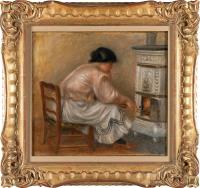
Femme au Coin du Poêle
Artist
Pierre-Auguste Renoir
Provenance
Nachlass des Künstlers; Sammlung Pierre Renoir, Paris; The Lefevre Gallery (Alex. Reid & Lefevre Ltd.), London; André Weil, Paris, 1948 bei Vorgenannter erworben; Privatsammlung, London, 1950 bei Vorgenanntem erworben; Privatsammlung, 2001 bei Vorgenannter erworben; Christie's, New York 5.5.2005, Los 230; Privatsammlung, Europa.
Share


Description
- Domestic scene in harmonious earthy colors, painted in Cagnes-sur-Mer
- The sitter is probably Gabrielle Renard, Renoir's preferred model after 1900
- From the collection of Pierre Renoir, actor and eldest legitimate son of the painter
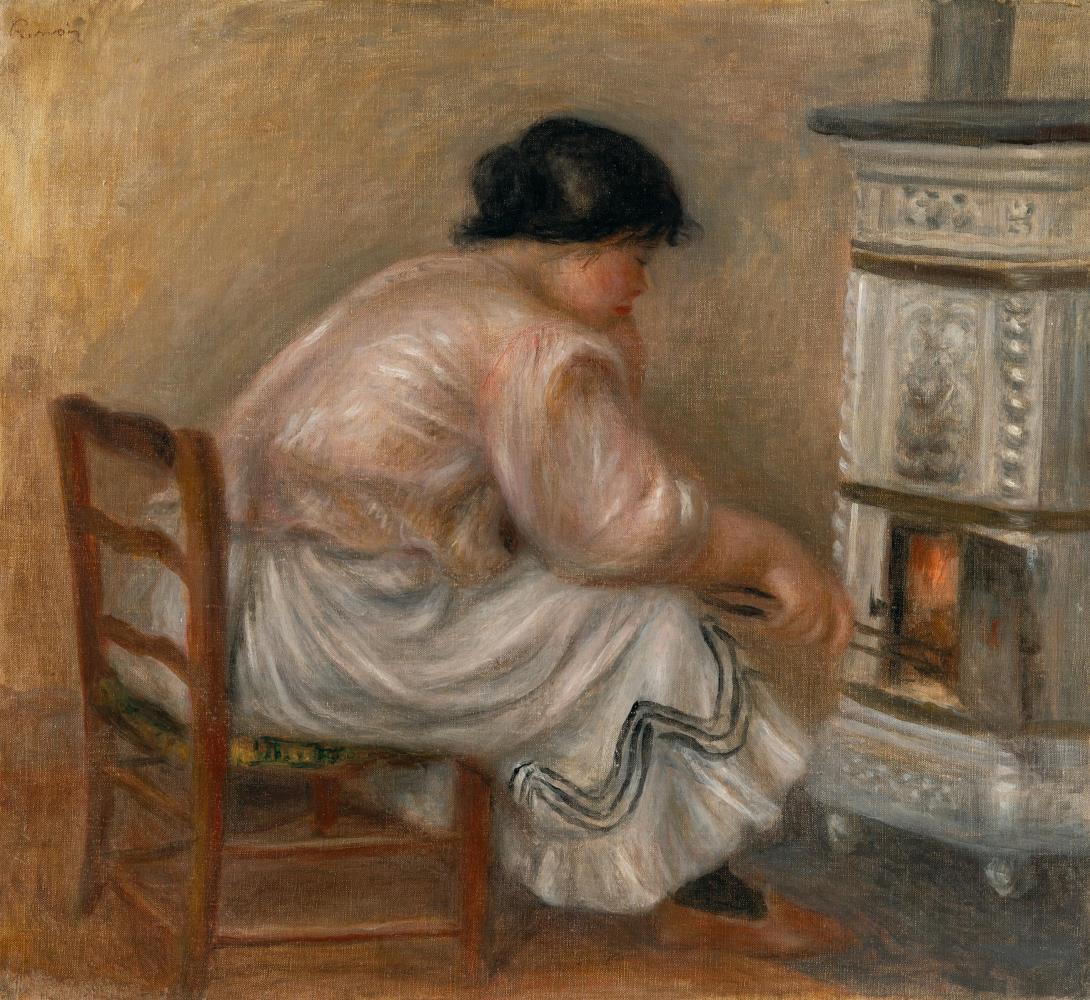
It is very likely that our portrait is of Gabrielle Renard (1878-1959). She came to Paris from a small village in 1894 at the age of fifteen to work as a domestic help and nanny for the Renoir family. She would stay with the family for over twenty years.
Renoir rejects professional models and prefers natural, unaffected women. In Gabrielle Renard, he found the ideal embodiment of his artistic ideas: Her skin "absorbed the light", her physique corresponded to his ideal - graceful, yet down-to-earth - and her natural calm lent his paintings an authentic, intimate atmosphere (see W. Gaunt, Renoir, Oxford 1982, p. 47). She quickly became Renoir's preferred model. He depicted her in over two hundred paintings, as a caring Venus, in erotic poses or as a generic portrait of a woman. When Renoir moved permanently to Cagnes-sur-Mer in 1907 in search of a mild climate to alleviate his arthritis, Gabrielle Renard accompanied the Renoirs and became a member of the family, so to speak. She only left the Renoir household in 1914, shortly before she married the American painter Conrad Slade.
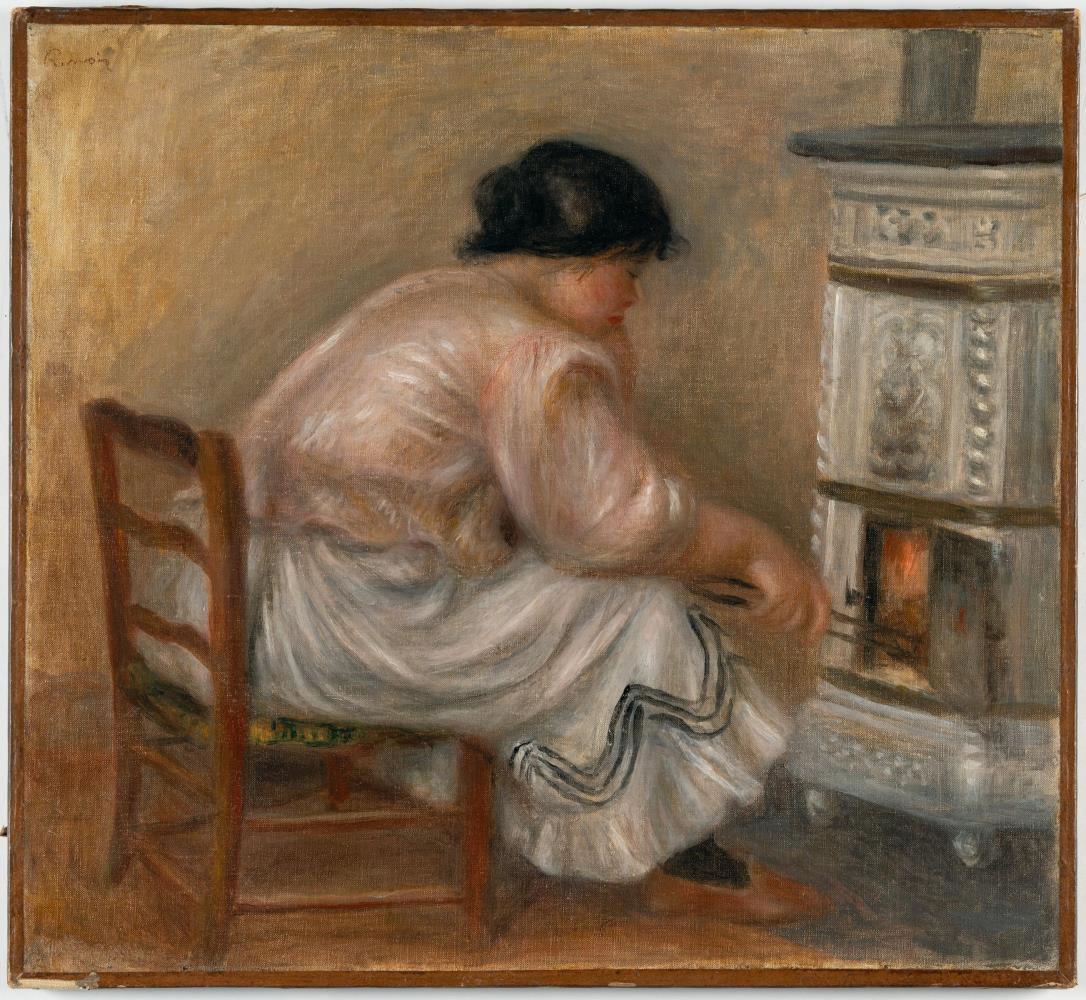
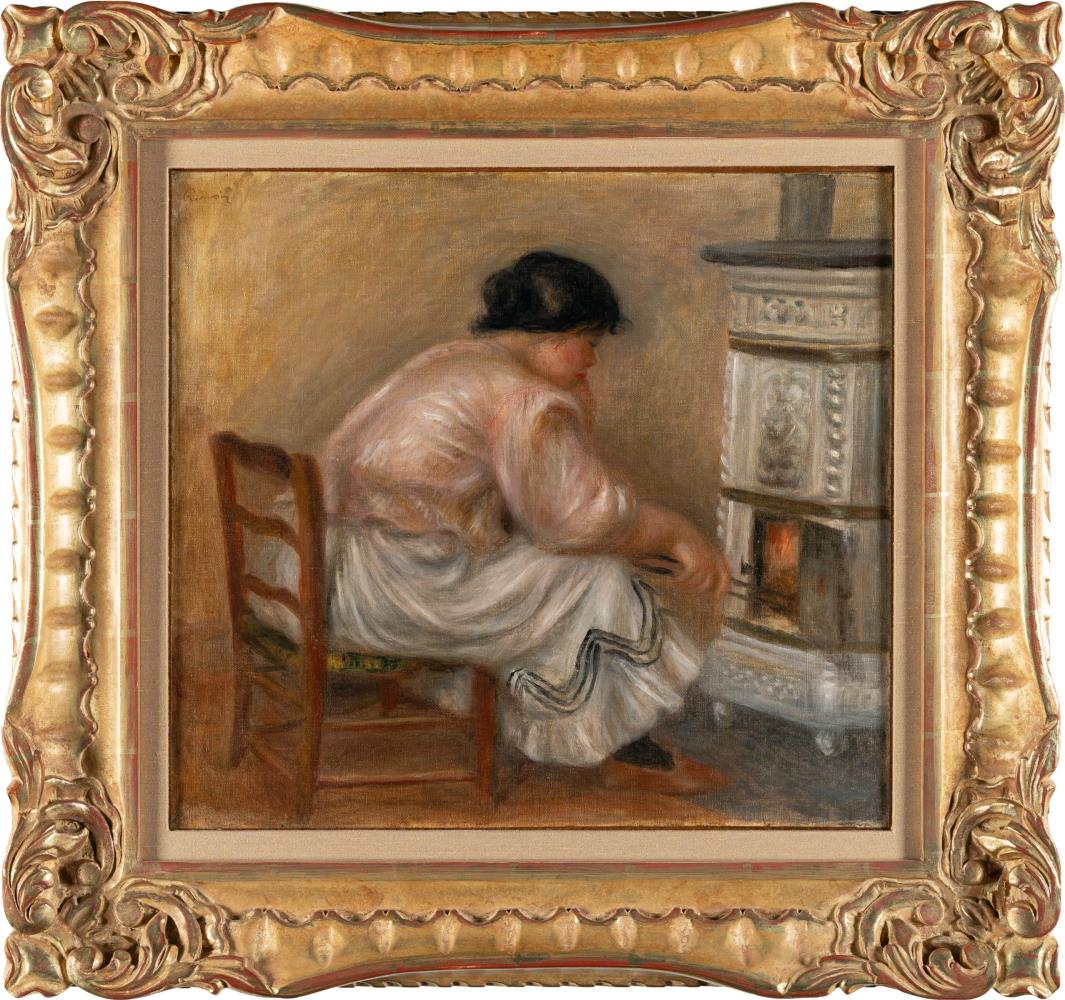
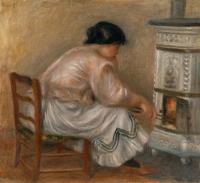
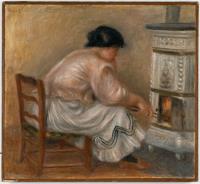
Femme au coin du poêle in particular reflects Renoir's search for "inner beauty in the everyday". He depicts the young woman stoking the fire, an ordinary domestic activity, but the simple motif is transformed by Renoir's color magic into a scene of quiet sublimity. The warm reflections of the stove, the dull glow of the flame and the delicate sheen of Gabrielle's pink blouse and white skirt create a harmonious interplay of light and materiality. This composition combines the intimacy of domestic realism with the painterly sophistication of his more sophisticated portraits from the 1890s. Here he transforms a constant, domestic scene into something timeless. Everyday life becomes art.
Renoir says: "I like painting best when it seems eternal without boasting about it - an everyday eternity that reveals itself on the street corner: a maid who pauses for a moment while scrubbing a pot and becomes a Juno on Mount Olympus." (J. Renoir, Renoir, My Father, Boston, 1958, p. 233).
Dauberville V, 4137.
With an expertise from the Wildenstein Institute, Paris, dated April 1, 2005.
Literature
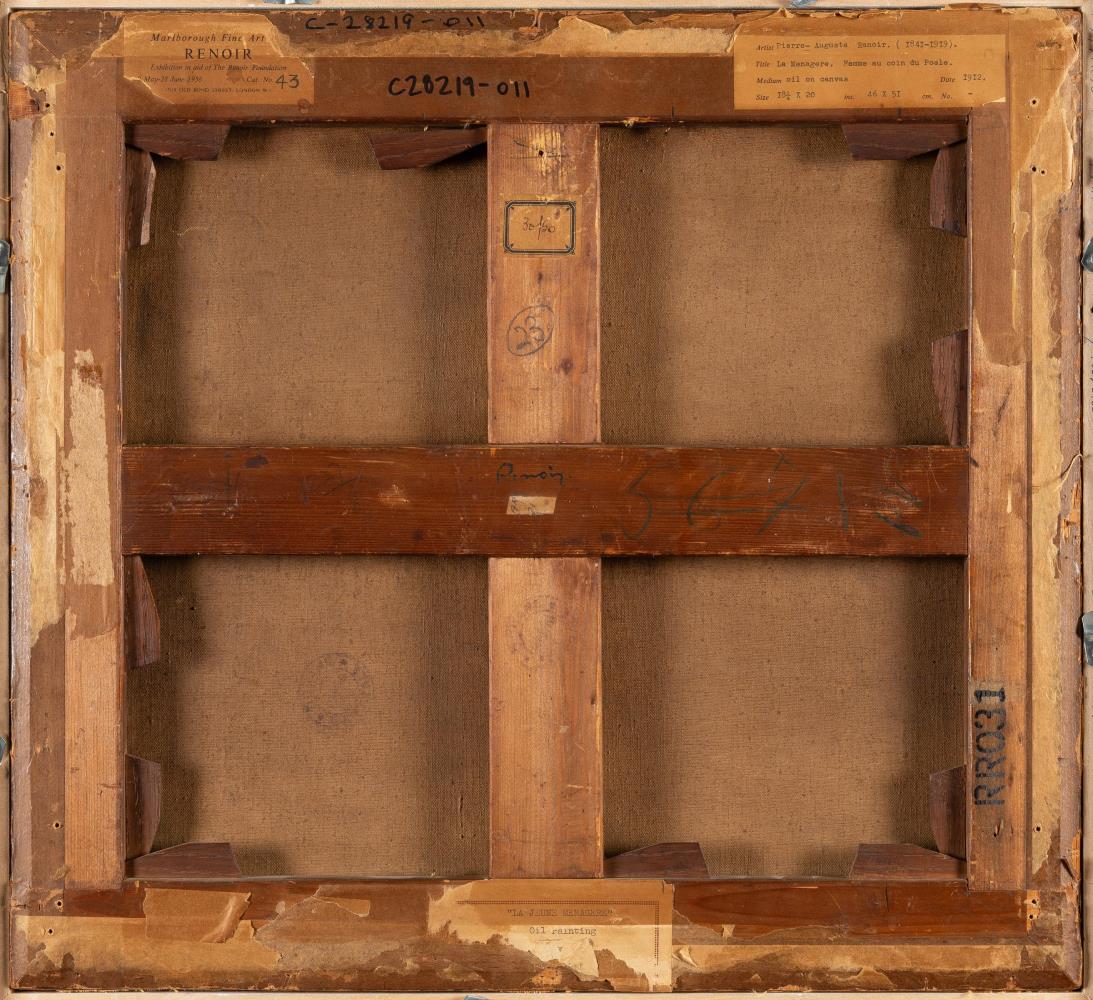
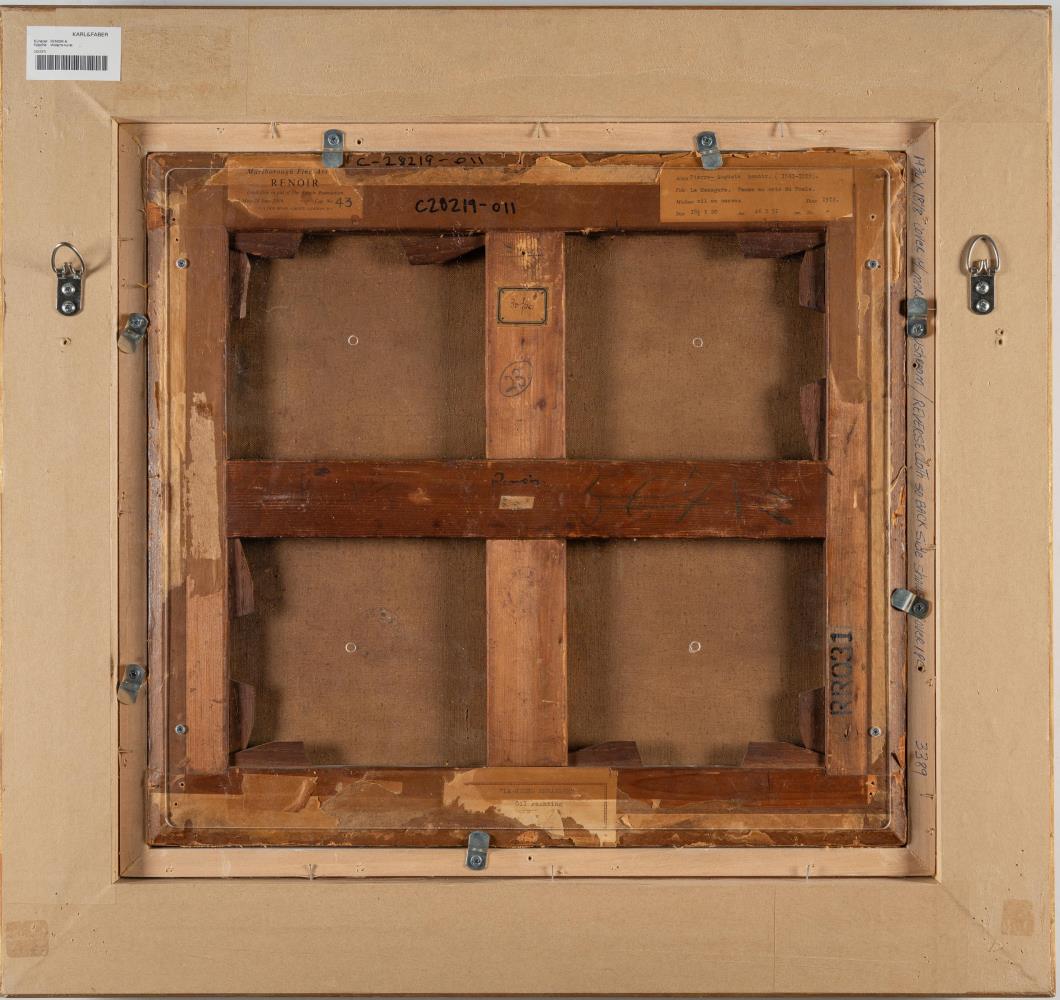
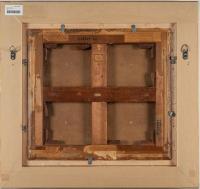
Bernheim-Jeune (ed.), L'Atelier de Renoir, Paris 1931, vol. II, no. 443, plate 143. Exhibition Exposition Renoir au profit de l'Orphelinat des arts, Galerie André Weil, Paris 1948; Renoir, Royal Scottish Academy, Edinburgh 1953, cat. no. 23; Renoir. An Exhibition of Paintings from European Collections in Aid of the Renoir Foundation, Marlborough Fine Art, London 1956, cat. no. 43, with the label on the reverse of the stretcher; A Great Period of French Painting, Marlborough Fine Art, London, cat. no. 33, illus; Collection David et Ezra Nahmad: Impressionisme et Audaces du XIXe siècle, Musée Paul Valéry, Sète 2013, cat. no. 31, ill. 253 p. 117; William J. Glackens and Pierre-Auguste Renoir: Affinities and Distinctions, NSU Art Museum, Fort Lauderdale 2018/19, cat. no. 31, ill. p. 90; William J. Glackens and Pierre-Auguste Renoir: Affinities and Distinctions, Hunter Museum of American Art, Chattanooga 2019, cat. no. 31, ill. p. 90.
- The sitter is probably Gabrielle Renard, Renoir's preferred model after 1900
- From the collection of Pierre Renoir, actor and eldest legitimate son of the painter
It is very likely that our portrait is of Gabrielle Renard (1878-1959). She came to Paris from a small village in 1894 at the age of fifteen to work as a domestic help and nanny for the Renoir family. She would stay with the family for over twenty years.
Renoir rejects professional models and prefers natural, unaffected women. In Gabrielle Renard, he found the ideal embodiment of his artistic ideas: Her skin "absorbed the light", her physique corresponded to his ideal - graceful, yet down-to-earth - and her natural calm lent his paintings an authentic, intimate atmosphere (see W. Gaunt, Renoir, Oxford 1982, p. 47). She quickly became Renoir's preferred model. He depicted her in over two hundred paintings, as a caring Venus, in erotic poses or as a generic portrait of a woman. When Renoir moved permanently to Cagnes-sur-Mer in 1907 in search of a mild climate to alleviate his arthritis, Gabrielle Renard accompanied the Renoirs and became a member of the family, so to speak. She only left the Renoir household in 1914, shortly before she married the American painter Conrad Slade.
Femme au coin du poêle in particular reflects Renoir's search for "inner beauty in the everyday". He depicts the young woman stoking the fire, an ordinary domestic activity, but the simple motif is transformed by Renoir's color magic into a scene of quiet sublimity. The warm reflections of the stove, the dull glow of the flame and the delicate sheen of Gabrielle's pink blouse and white skirt create a harmonious interplay of light and materiality. This composition combines the intimacy of domestic realism with the painterly sophistication of his more sophisticated portraits from the 1890s. Here he transforms a constant, domestic scene into something timeless. Everyday life becomes art.
Renoir says: "I like painting best when it seems eternal without boasting about it - an everyday eternity that reveals itself on the street corner: a maid who pauses for a moment while scrubbing a pot and becomes a Juno on Mount Olympus." (J. Renoir, Renoir, My Father, Boston, 1958, p. 233).
Dauberville V, 4137.
With an expertise from the Wildenstein Institute, Paris, dated April 1, 2005.
Literature
Bernheim-Jeune (ed.), L'Atelier de Renoir, Paris 1931, vol. II, no. 443, plate 143. Exhibition Exposition Renoir au profit de l'Orphelinat des arts, Galerie André Weil, Paris 1948; Renoir, Royal Scottish Academy, Edinburgh 1953, cat. no. 23; Renoir. An Exhibition of Paintings from European Collections in Aid of the Renoir Foundation, Marlborough Fine Art, London 1956, cat. no. 43, with the label on the reverse of the stretcher; A Great Period of French Painting, Marlborough Fine Art, London, cat. no. 33, illus; Collection David et Ezra Nahmad: Impressionisme et Audaces du XIXe siècle, Musée Paul Valéry, Sète 2013, cat. no. 31, ill. 253 p. 117; William J. Glackens and Pierre-Auguste Renoir: Affinities and Distinctions, NSU Art Museum, Fort Lauderdale 2018/19, cat. no. 31, ill. p. 90; William J. Glackens and Pierre-Auguste Renoir: Affinities and Distinctions, Hunter Museum of American Art, Chattanooga 2019, cat. no. 31, ill. p. 90.