Max Beckmann
Kazbek
Artista
Max Beckmann
1884 Leipzig - New York 1950
Ulteriori informazioni
Herausgegeben vom Verlag Graphisches Kabinett, Günther Franke, München.
Hofmaier 281 A (von B).
Hofmaier 281 A (von B).
Provenienza
Alice Adam Ltd., Chicago;
private collection, Germany, acquired from the aforementioned in 1995.
private collection, Germany, acquired from the aforementioned in 1995.
Share


Descrizione
• A popular Beckmann motif from Berlin nightlife in the 1920s
• The subject, Naila, served as Beckmann’s model on numerous occasions for a wide variety of subjects
• Large-format etching in a narrow portrait format
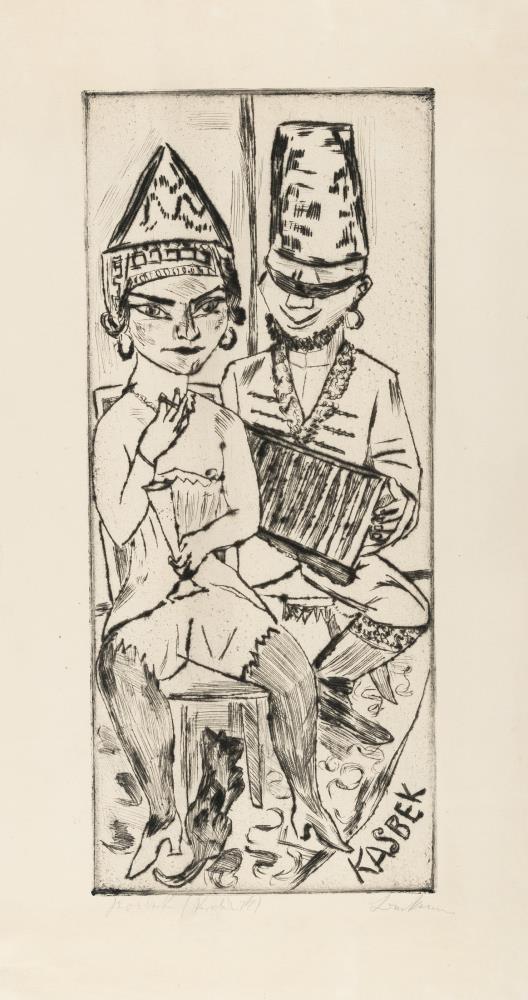
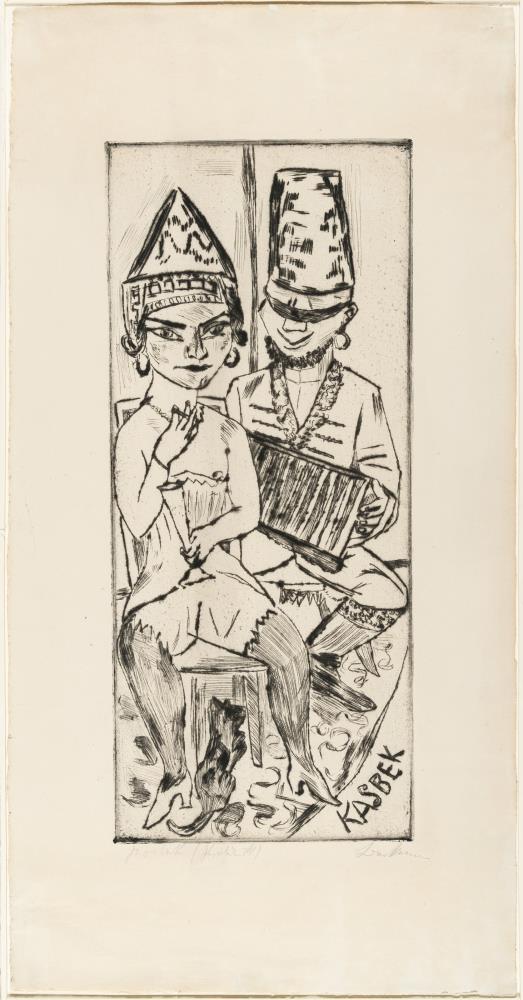
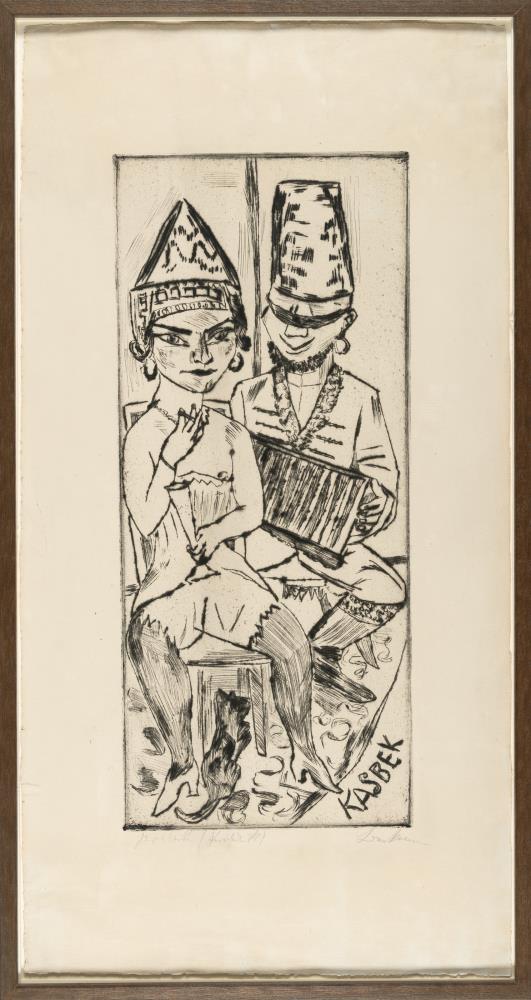
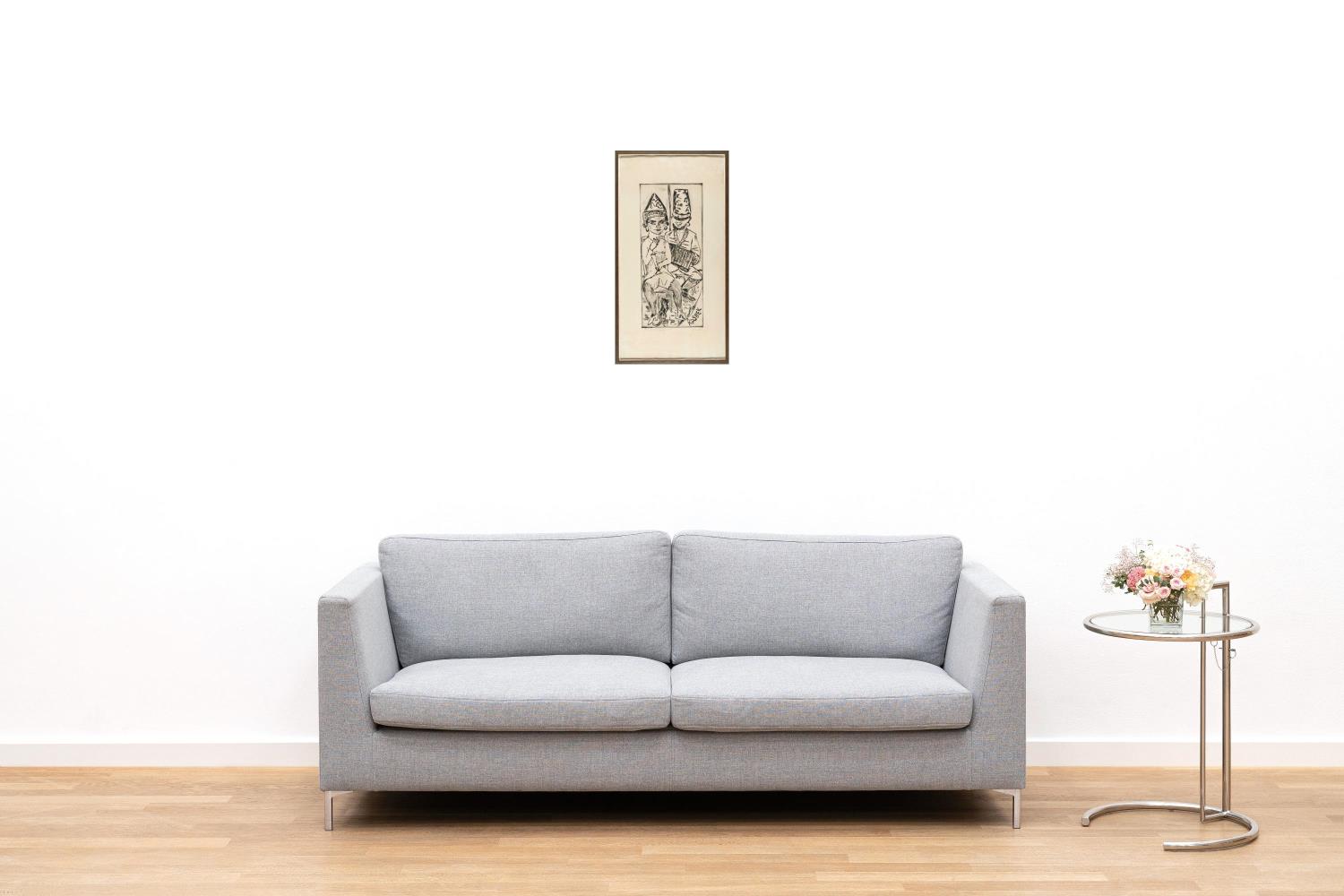
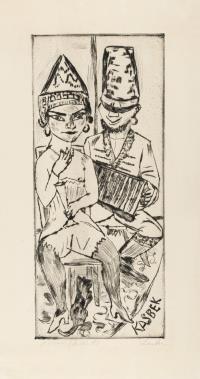
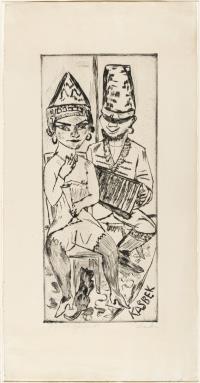
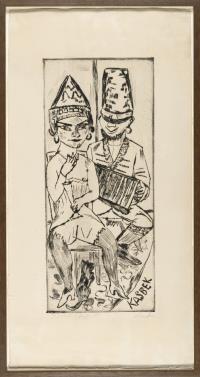
Here, Max Beckmann depicts a scene from the Berlin nightclub called ‘Kasbek’, named after the third-highest mountain in Georgia. It presumably belonged to emigrants from the collapsed Russian Tsarist Empire, many of whom were in Germany, particularly in Berlin, during the Russian Revolution.
The nightclub motifs, depicting well-known establishments in Berlin at the time, rank among Beckmann’s most popular subjects alongside his numerous variety show, circus, dance and ball scenes. In 1923, he produced three etchings featuring scenes from Berlin nightclubs: "Königin Bar II", "Kasbek" and "Tamerlan". The latter two are designed in characteristic, narrow portrait formats. The etching "Königin Bar II" is a variation on the print "Königin Bar I", created as early as 1920, featuring a self-portrait of the artist, which he later rendered as a painting in 1935.
The woman depicted here in "Kasbek" is Naila (Mrs Dr H. M.), who lived in Berlin and Frankfurt. Beckmann portrayed her in three oil paintings and in a total of over ten prints, both as individual portraits and in group scenes. The man with the accordion depicted here is unknown.
In September 1928, Günther Franke used the etching "Kasbek" on the promotional leaflet "First Announcement of New Beckmann Prints" published by his firm, Graphisches Kabinett.
• The subject, Naila, served as Beckmann’s model on numerous occasions for a wide variety of subjects
• Large-format etching in a narrow portrait format
Here, Max Beckmann depicts a scene from the Berlin nightclub called ‘Kasbek’, named after the third-highest mountain in Georgia. It presumably belonged to emigrants from the collapsed Russian Tsarist Empire, many of whom were in Germany, particularly in Berlin, during the Russian Revolution.
The nightclub motifs, depicting well-known establishments in Berlin at the time, rank among Beckmann’s most popular subjects alongside his numerous variety show, circus, dance and ball scenes. In 1923, he produced three etchings featuring scenes from Berlin nightclubs: "Königin Bar II", "Kasbek" and "Tamerlan". The latter two are designed in characteristic, narrow portrait formats. The etching "Königin Bar II" is a variation on the print "Königin Bar I", created as early as 1920, featuring a self-portrait of the artist, which he later rendered as a painting in 1935.
The woman depicted here in "Kasbek" is Naila (Mrs Dr H. M.), who lived in Berlin and Frankfurt. Beckmann portrayed her in three oil paintings and in a total of over ten prints, both as individual portraits and in group scenes. The man with the accordion depicted here is unknown.
In September 1928, Günther Franke used the etching "Kasbek" on the promotional leaflet "First Announcement of New Beckmann Prints" published by his firm, Graphisches Kabinett.