Emil Nolde
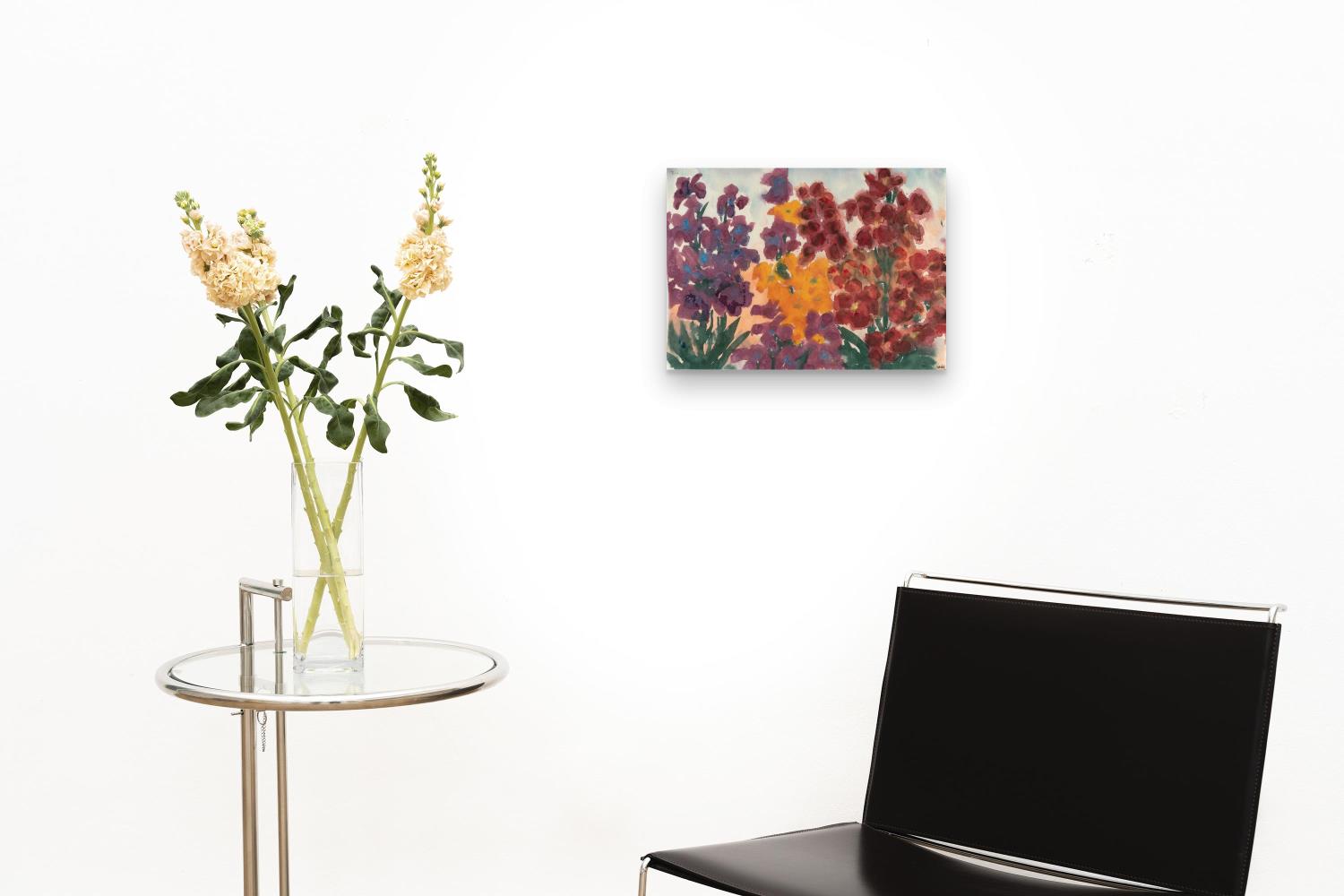
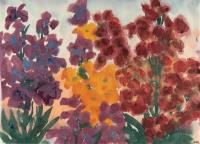
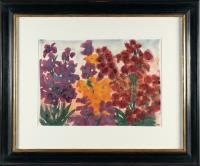
Yellow, red and purple flowers
Artista
Emil Nolde
1867 Nolde - Seebüll 1956
Ulteriori informazioni
Mit einer Fotoexpertise von Professor Dr. Manfred Reuther, Seebüll, vom 11.2.2014. Das Werk ist in der Ada und Emil Nolde Stiftung, Seebüll, registriert.
Mostra
Meister der Klassischen Moderne, Haus Beda, Bitburg 2013, Kat.-Nr. 20;
Emil Nolde. Aquarelle, Galerie Schwarzer, Düsseldorf 2012.
Emil Nolde. Aquarelle, Galerie Schwarzer, Düsseldorf 2012.
Provenienza
Roman Norbert Ketterer, Campione;
Karl-Heinz Reinheimer Collection, Sindelfingen;
Private collection, Southern Germany.
Karl-Heinz Reinheimer Collection, Sindelfingen;
Private collection, Southern Germany.
Share


Descrizione
• Densely composed, colour-rich floral arrangement
• Free, flowing watercolour application without defined contours
• A typical example of Nolde’s mature floral watercolours from the 1920s
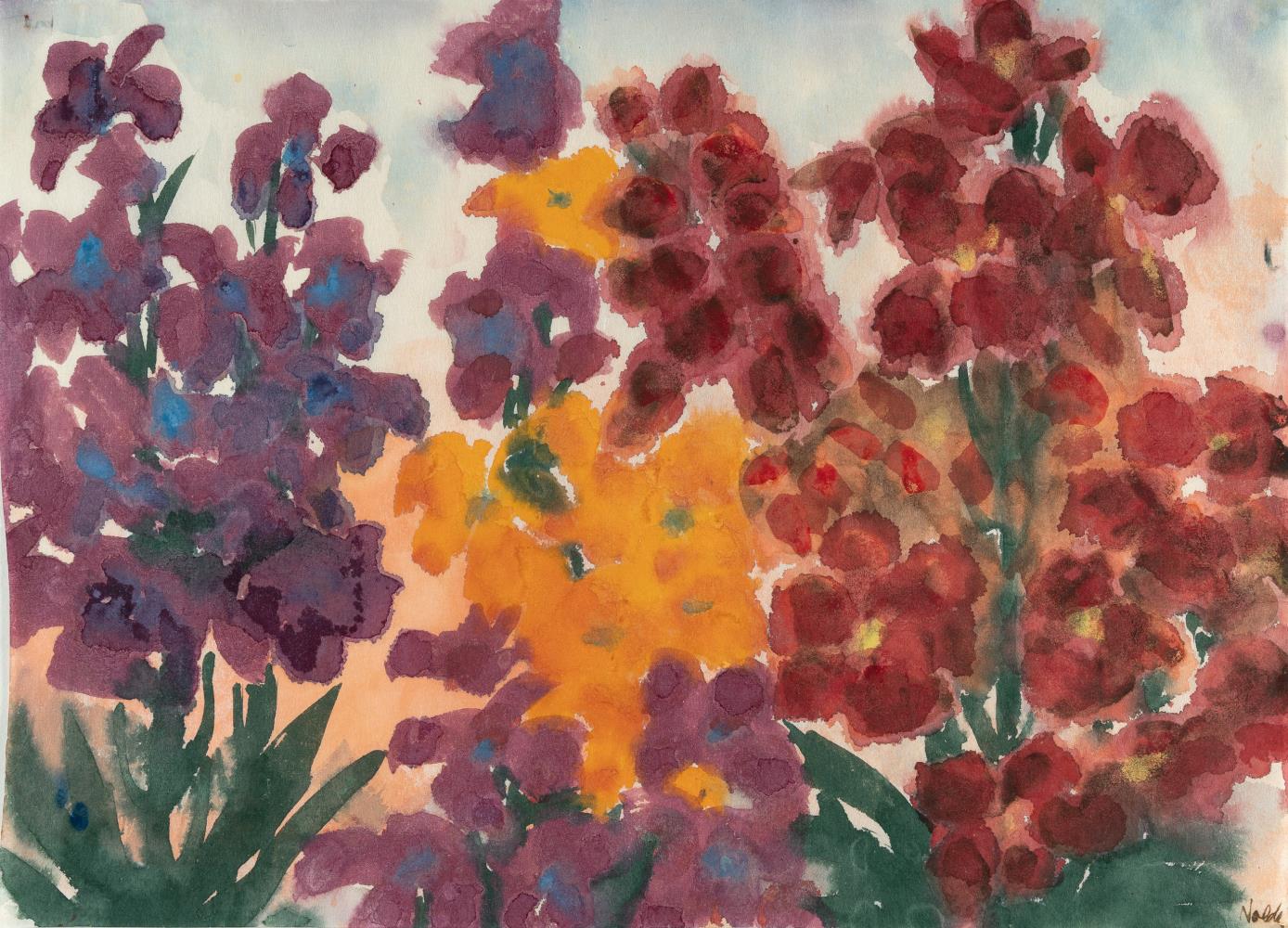
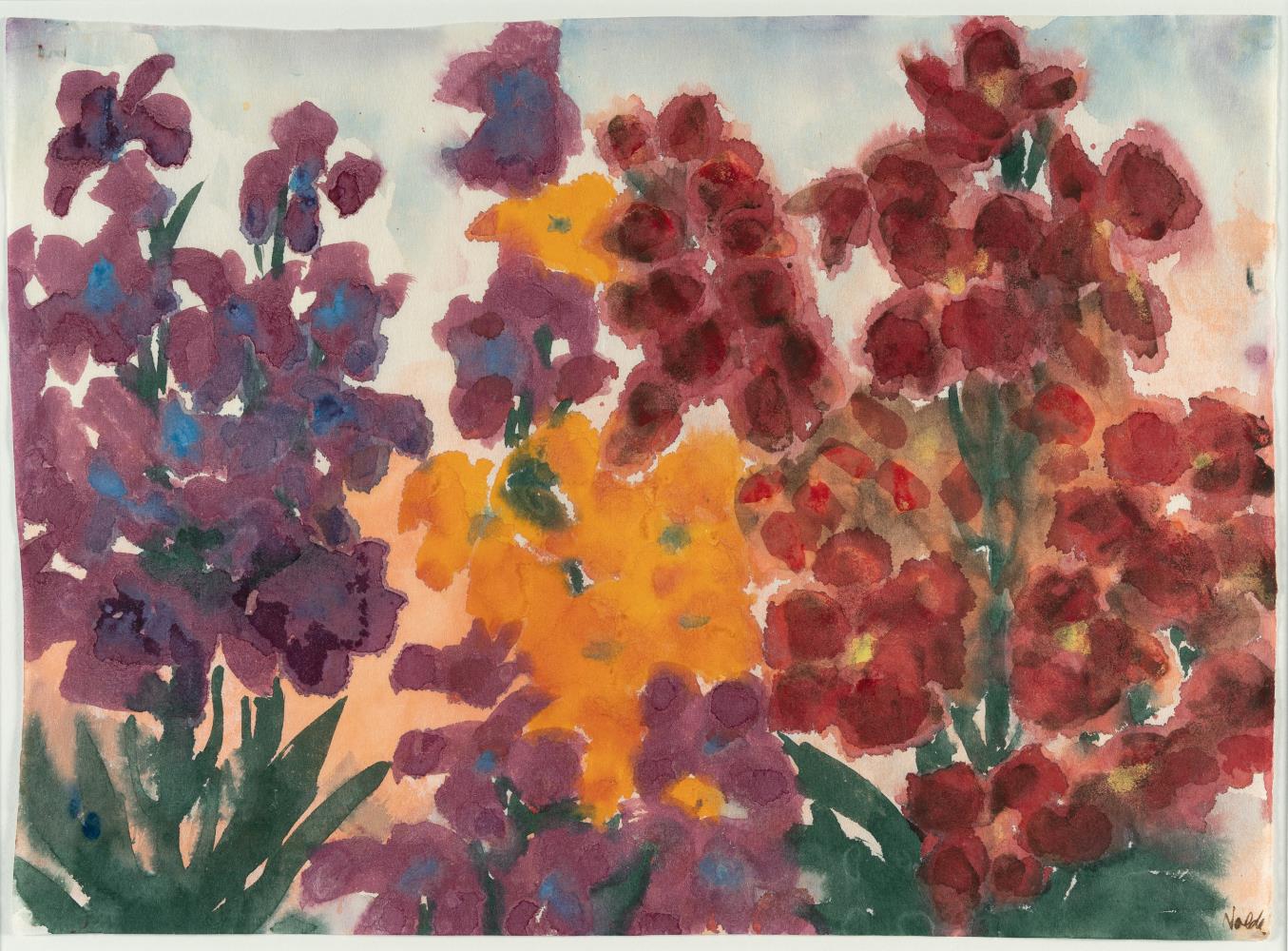
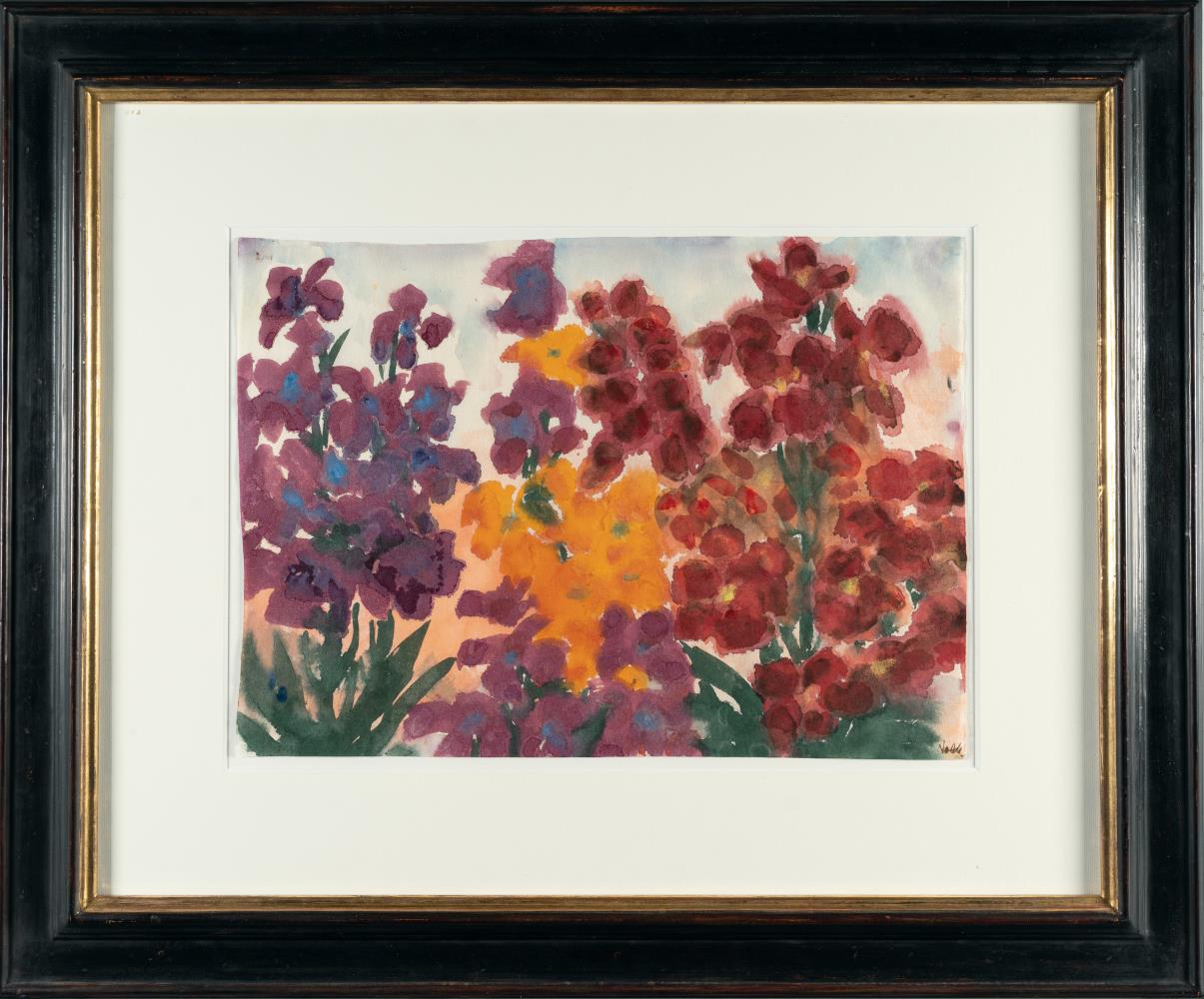
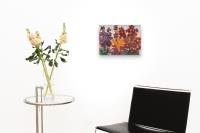
This watercolour depicts a densely arranged, almost two-dimensional floral composition in which red, violet and yellow blossoms coalesce into a structure of heightened colour. The individual forms are not defined with botanical precision, but are rendered in loosely placed, interflowing patches of colour. Shades of red modulate into darker, at times almost brownish areas, whilst the violet blossoms are distinguished by cool, bluish accents. The bright yellow in the centre acts as a compositional focal point and structures the pictorial field.
A characteristic feature is the extensive absence of contours and outline lines. The composition develops primarily from the colour itself: in the wet areas, the pigments run freely into one another, creating soft transitions, whilst denser applications accentuate individual flowers. This working method corresponds to Nolde’s preferred watercolour technique, in which he works directly with the paint without a preparatory drawing, thereby achieving an intensified, spontaneous pictorial effect.
The motif of flowers is one of the central themes in Emil Nolde’s work and has featured prominently, particularly in his watercolours, since the 1910s. Around 1920, Nolde developed the characteristic style of his floral watercolours, defined by the free, flowing application of paint and the reduction of form in favour of chromatic effect. The present work is an example of this phase of his career, in which motif and technique combine to form a distinctive visual language.
The use of Japanese paper is essential in this context. The absorbent material allows the paint to penetrate deeply, enhancing its transparency and luminosity. At the same time, the creative process remains visible: blurred edges, thickened areas and the bleeding of the paint are integral to the pictorial effect and lend the composition a distinctive quality that oscillates between figuration and dissolution.
• Free, flowing watercolour application without defined contours
• A typical example of Nolde’s mature floral watercolours from the 1920s
This watercolour depicts a densely arranged, almost two-dimensional floral composition in which red, violet and yellow blossoms coalesce into a structure of heightened colour. The individual forms are not defined with botanical precision, but are rendered in loosely placed, interflowing patches of colour. Shades of red modulate into darker, at times almost brownish areas, whilst the violet blossoms are distinguished by cool, bluish accents. The bright yellow in the centre acts as a compositional focal point and structures the pictorial field.
A characteristic feature is the extensive absence of contours and outline lines. The composition develops primarily from the colour itself: in the wet areas, the pigments run freely into one another, creating soft transitions, whilst denser applications accentuate individual flowers. This working method corresponds to Nolde’s preferred watercolour technique, in which he works directly with the paint without a preparatory drawing, thereby achieving an intensified, spontaneous pictorial effect.
The motif of flowers is one of the central themes in Emil Nolde’s work and has featured prominently, particularly in his watercolours, since the 1910s. Around 1920, Nolde developed the characteristic style of his floral watercolours, defined by the free, flowing application of paint and the reduction of form in favour of chromatic effect. The present work is an example of this phase of his career, in which motif and technique combine to form a distinctive visual language.
The use of Japanese paper is essential in this context. The absorbent material allows the paint to penetrate deeply, enhancing its transparency and luminosity. At the same time, the creative process remains visible: blurred edges, thickened areas and the bleeding of the paint are integral to the pictorial effect and lend the composition a distinctive quality that oscillates between figuration and dissolution.