Gabriele Münter
Still Life with Tulips and Crocuses
Artista
Gabriele Münter
1877 Berlin - Murnau 1962
Ulteriori informazioni
Mit einer Bestätigung von Dr. Isabelle Jansen, Gabriele Münter- und Johannes Eichner-Stiftung, München, vom 4.5.2026. Das Bild ist im Nachlass der Künstlerin unter der Nr. S49 verzeichnet. Es wird in das in Vorbereitung befindliche Werkverzeichnis der Gemälde von Gabriele Münter aufgenommen.
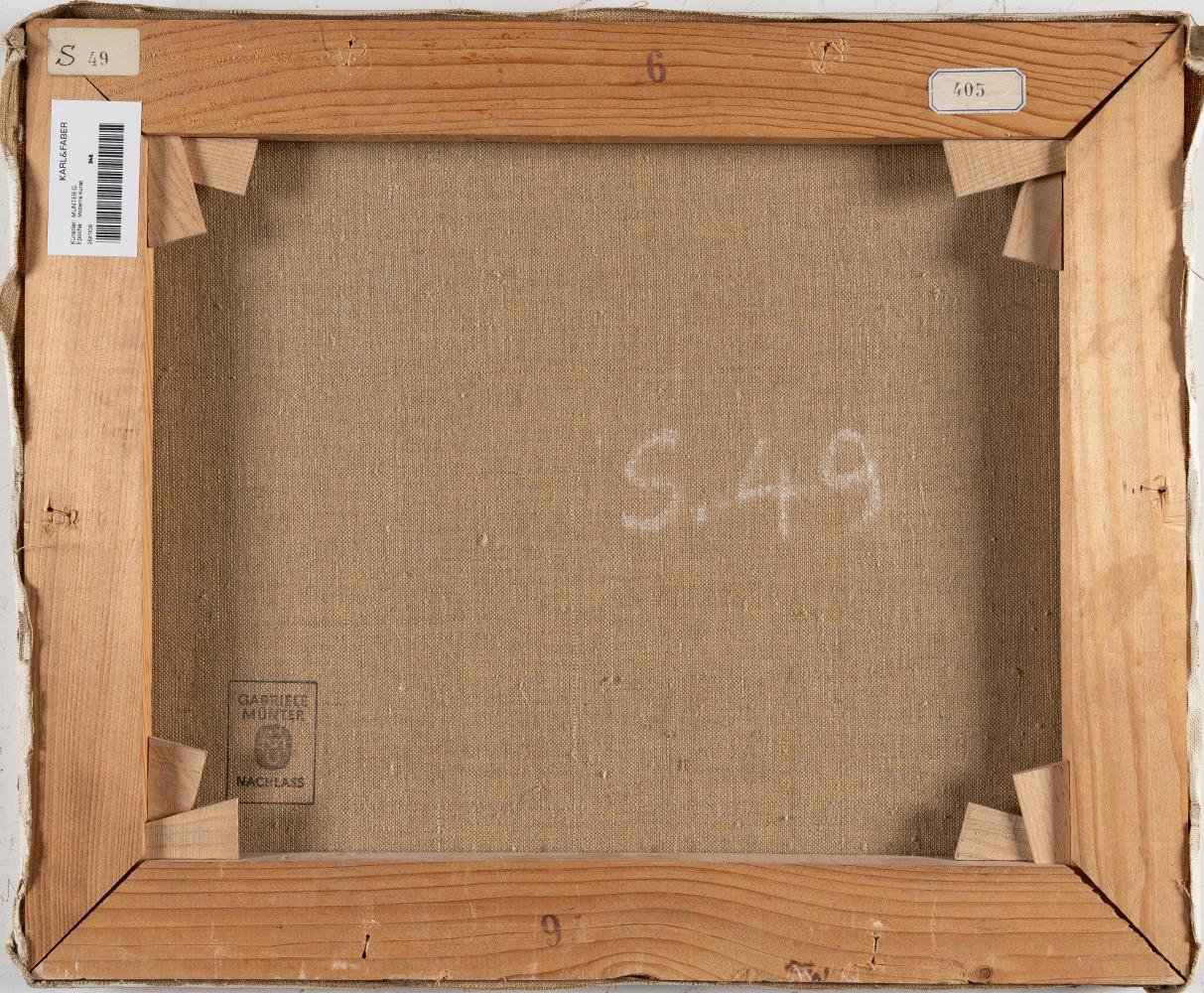
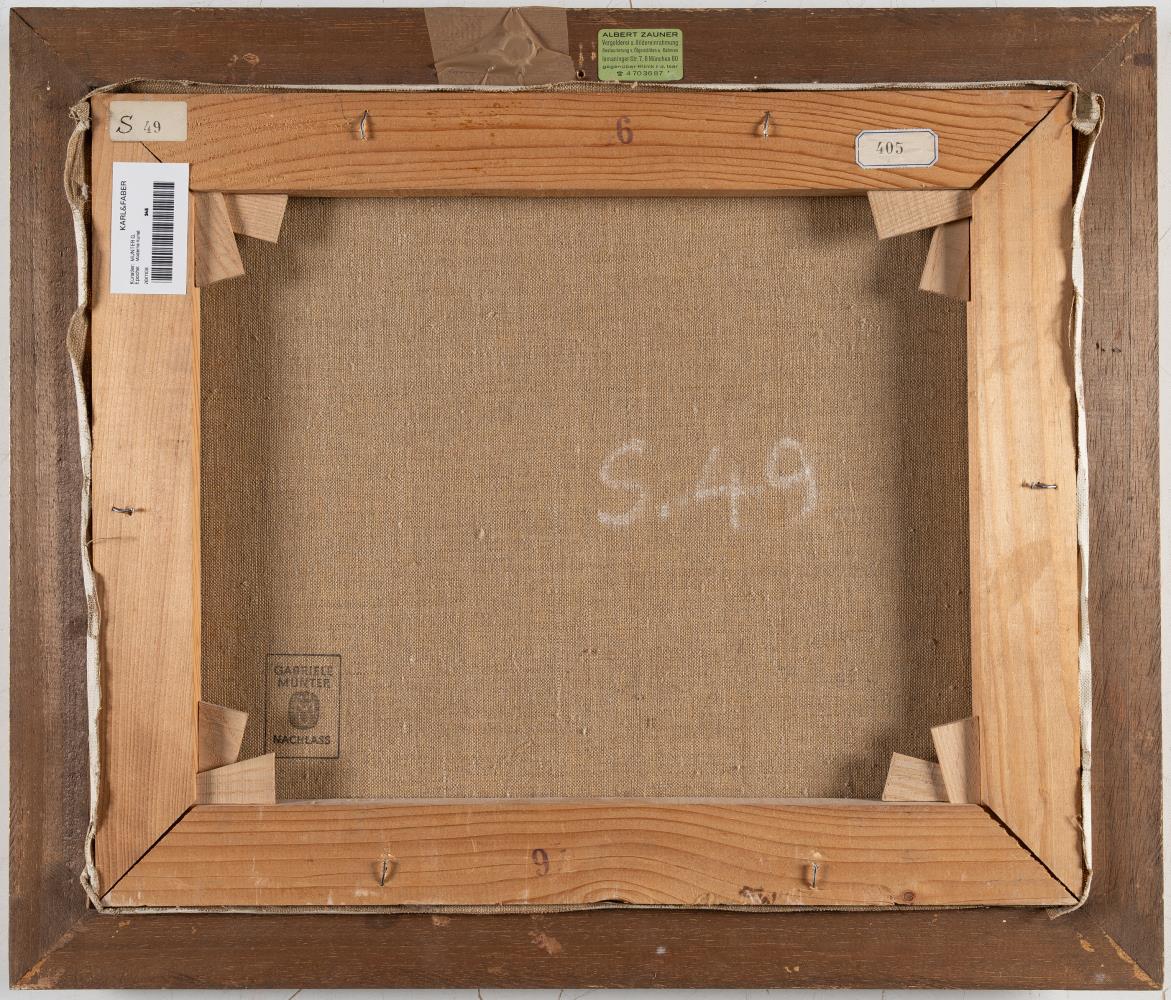
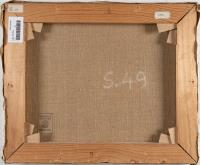
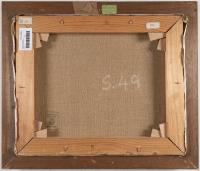
Verso auf der Leinwand mit der handschriftichen Nachlass Nr. "S 49" sowie auf dem Keilrahmen mit einem Etikett mit der Nachlass Nr. und einem weiteren Etikett mit der alten Inventarnummer "405".
Verso auf der Leinwand mit der handschriftichen Nachlass Nr. "S 49" sowie auf dem Keilrahmen mit einem Etikett mit der Nachlass Nr. und einem weiteren Etikett mit der alten Inventarnummer "405".
Provenienza
The artist’s estate, stamped on the reverse of the canvas;
Private collection, Southern Germany.
Private collection, Southern Germany.
Share


Descrizione
• Characteristic late work in expressive colours
• Poetic motifs with elements of folk art
• Not offered on the art market for decades
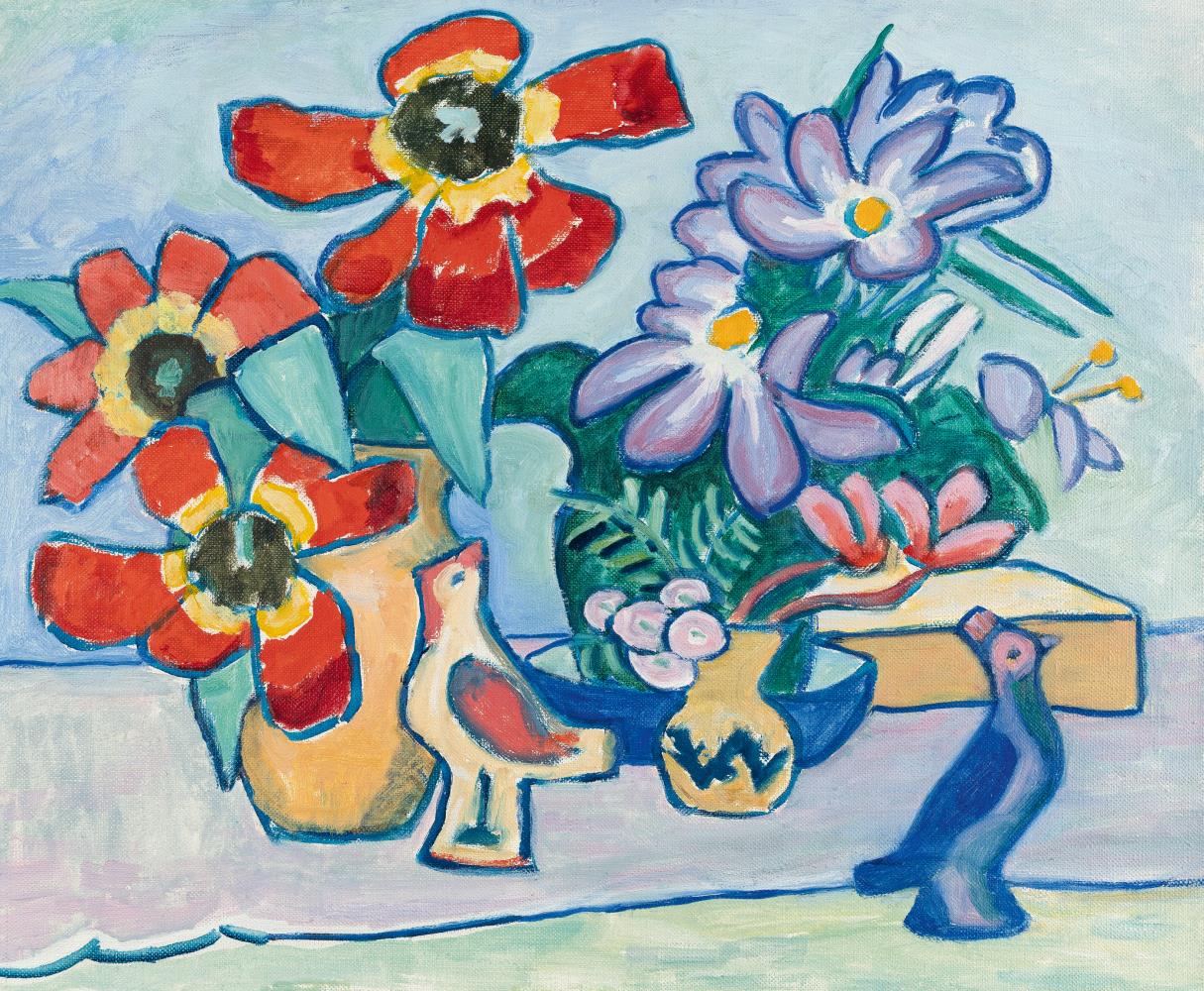
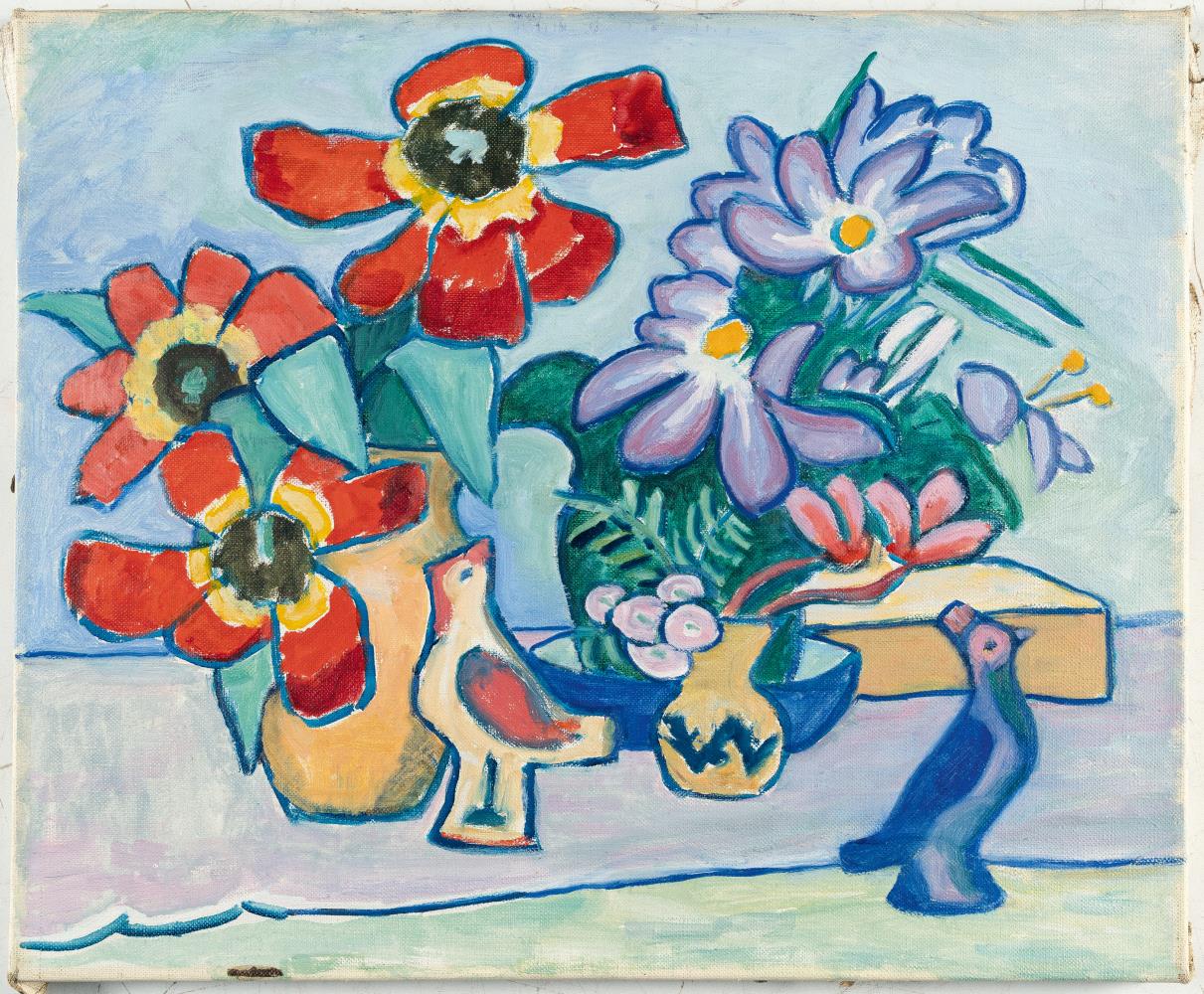
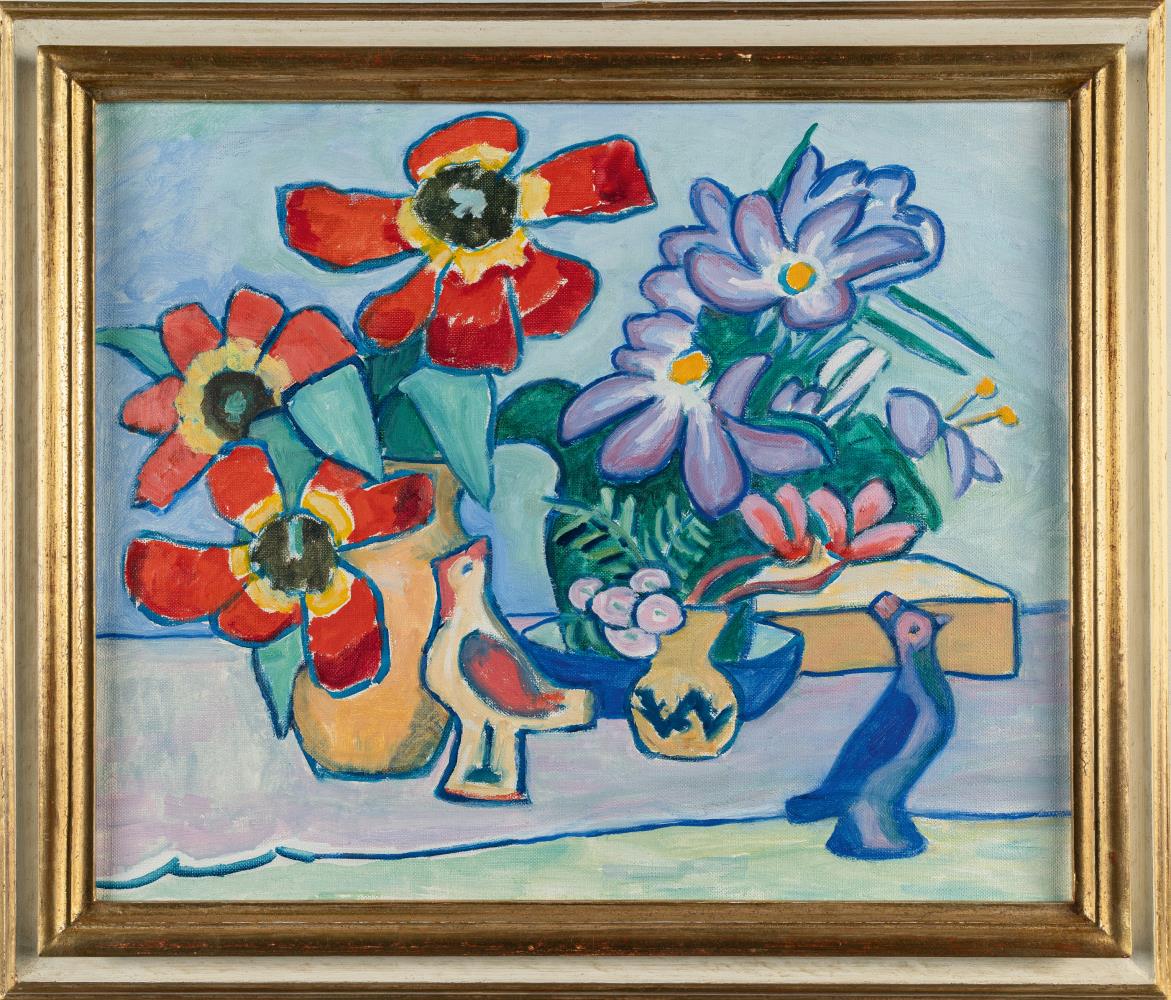
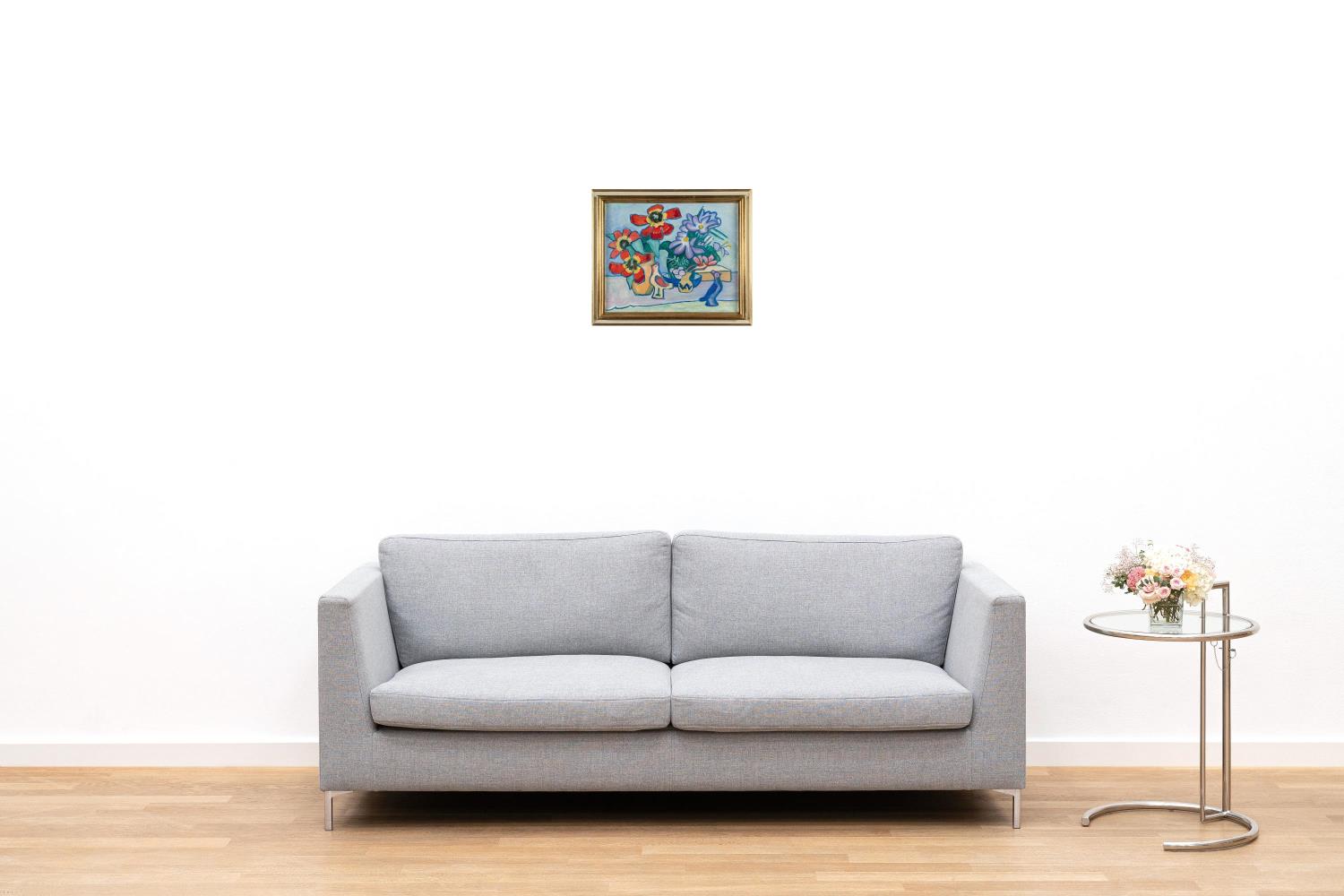
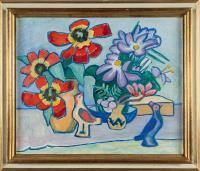
In her late floral still lifes, Gabriele Münter finds a particularly free and cheerful visual language in which expressive colour and decorative clarity combine in a characteristic manner. This work depicts a lush arrangement of red and violet blooms, unfolding with great immediacy against a neutral, calmly structured background. The composition conveys a spontaneous freshness and vibrant colour.
Typical of Münter’s late oeuvre is the use of bold blue contour lines, which hold the individual forms together and lend the objects a rhythmic unity. This blue border ties in with the dark outline lines that Münter had already employed during her time in the Blue Rider circle. She found inspiration for this both in Bavarian reverse-glass painting and in her artistic exchange with Alexej von Jawlensky, who regarded the use of contour lines as essential for enhancing the luminosity of the colours. In this late work, however, these outlines appear softer and more decorative. The simplified forms and intense colour create a visual effect of great luminosity and immediate presence.
The small ceramic birds, which Münter has arranged amongst vases and vessels, deserve particular attention. Such craft objects recur frequently in the artist’s late work and reflect her lifelong enthusiasm for folk art and craftsmanship. The playful figures lend the still life an innocent yet personal character.
Stylistically, the work can be dated to the late 1940s or early 1950s, a phase in which Münter brought her distinctive synthesis of expressive colour, simplified form and decorative harmony to a particular level of maturity.
• Poetic motifs with elements of folk art
• Not offered on the art market for decades
In her late floral still lifes, Gabriele Münter finds a particularly free and cheerful visual language in which expressive colour and decorative clarity combine in a characteristic manner. This work depicts a lush arrangement of red and violet blooms, unfolding with great immediacy against a neutral, calmly structured background. The composition conveys a spontaneous freshness and vibrant colour.
Typical of Münter’s late oeuvre is the use of bold blue contour lines, which hold the individual forms together and lend the objects a rhythmic unity. This blue border ties in with the dark outline lines that Münter had already employed during her time in the Blue Rider circle. She found inspiration for this both in Bavarian reverse-glass painting and in her artistic exchange with Alexej von Jawlensky, who regarded the use of contour lines as essential for enhancing the luminosity of the colours. In this late work, however, these outlines appear softer and more decorative. The simplified forms and intense colour create a visual effect of great luminosity and immediate presence.
The small ceramic birds, which Münter has arranged amongst vases and vessels, deserve particular attention. Such craft objects recur frequently in the artist’s late work and reflect her lifelong enthusiasm for folk art and craftsmanship. The playful figures lend the still life an innocent yet personal character.
Stylistically, the work can be dated to the late 1940s or early 1950s, a phase in which Münter brought her distinctive synthesis of expressive colour, simplified form and decorative harmony to a particular level of maturity.