Karl Peter Röhl
Construction

Artista
Karl Peter Röhl
1890 - Kiel - 1975
Ulteriori informazioni
Wir danken dem Nachlass Karl Peter Röhl für die Hilfe bei der Katalogisierung dieses Werkes.
Mostra
Karl Peter Röhl. Bauhaus Weimar, Galerie Gmurzynska, Köln 1975, Kat.-Nr. 17, Abb. S. 38;
Karl Peter Röhl. Bauhausjahre. Ausstellung zum 100. Geburtstag, Galerie Gmurzynska, Köln 1990, S. 86, Abb. S. 87.
Karl Peter Röhl. Bauhausjahre. Ausstellung zum 100. Geburtstag, Galerie Gmurzynska, Köln 1990, S. 86, Abb. S. 87.
Provenienza
Artist’s estate;
Private collection, Switzerland.
Private collection, Switzerland.
Share


Descrizione
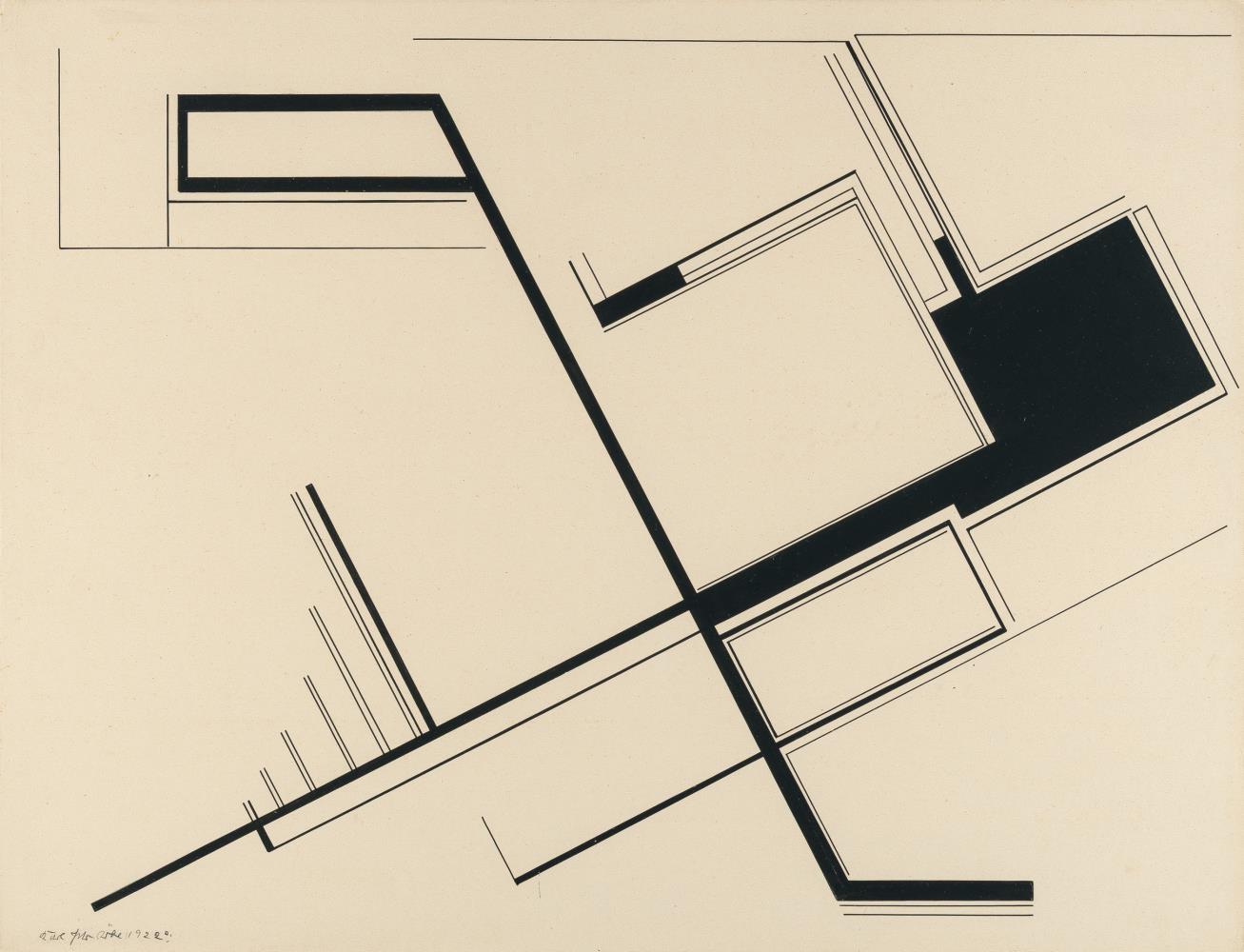
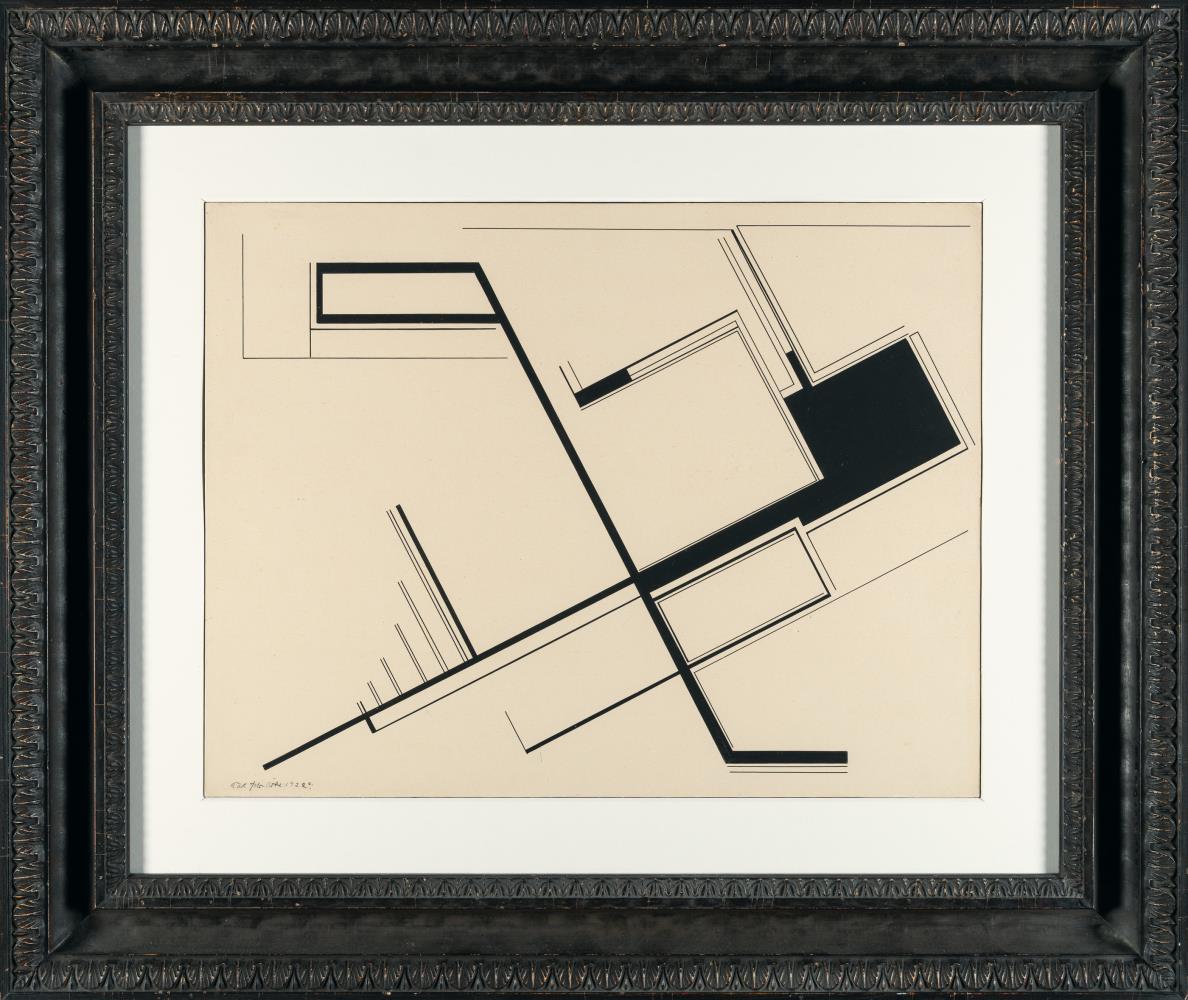
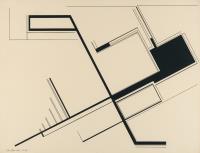
• Ink drawing from Röhl’s Bauhaus period
• Reduction to lines, angles and rectangular basic forms
• Expression of a rational, architecturally conceived pictorial order
In the early 1920s, Karl Peter Röhl made the transition from a subjectively influenced expressionist conception of the image to an objective, constructivist formal language. This development is linked to the avant-garde tendencies at the Bauhaus in Weimar, as well as the influences of Theo van Doesburg and the Dutch De Stijl movement.
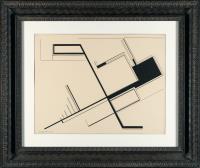
This ink drawing is one of the characteristic works of this phase. Here, Röhl develops a strictly geometric, non-representational composition defined by its reduction to lines, planes and precisely placed angles. The black bars and rectangular forms structure the picture plane with almost architectural clarity and lend the composition a rational, constructive order.
• Reduction to lines, angles and rectangular basic forms
• Expression of a rational, architecturally conceived pictorial order
In the early 1920s, Karl Peter Röhl made the transition from a subjectively influenced expressionist conception of the image to an objective, constructivist formal language. This development is linked to the avant-garde tendencies at the Bauhaus in Weimar, as well as the influences of Theo van Doesburg and the Dutch De Stijl movement.
This ink drawing is one of the characteristic works of this phase. Here, Röhl develops a strictly geometric, non-representational composition defined by its reduction to lines, planes and precisely placed angles. The black bars and rectangular forms structure the picture plane with almost architectural clarity and lend the composition a rational, constructive order.