Max Liebermann
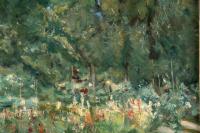
The Kitchen Garden in Wannsee, View towards the South-West

Artista
Max Liebermann
1847 - Berlin - 1935
Ulteriori informazioni
Eberle 1920/18.
Provenienza
1943–1946 evacuated by the State Office for the Preservation of Historical Monuments, Munich, for protection against air raids;
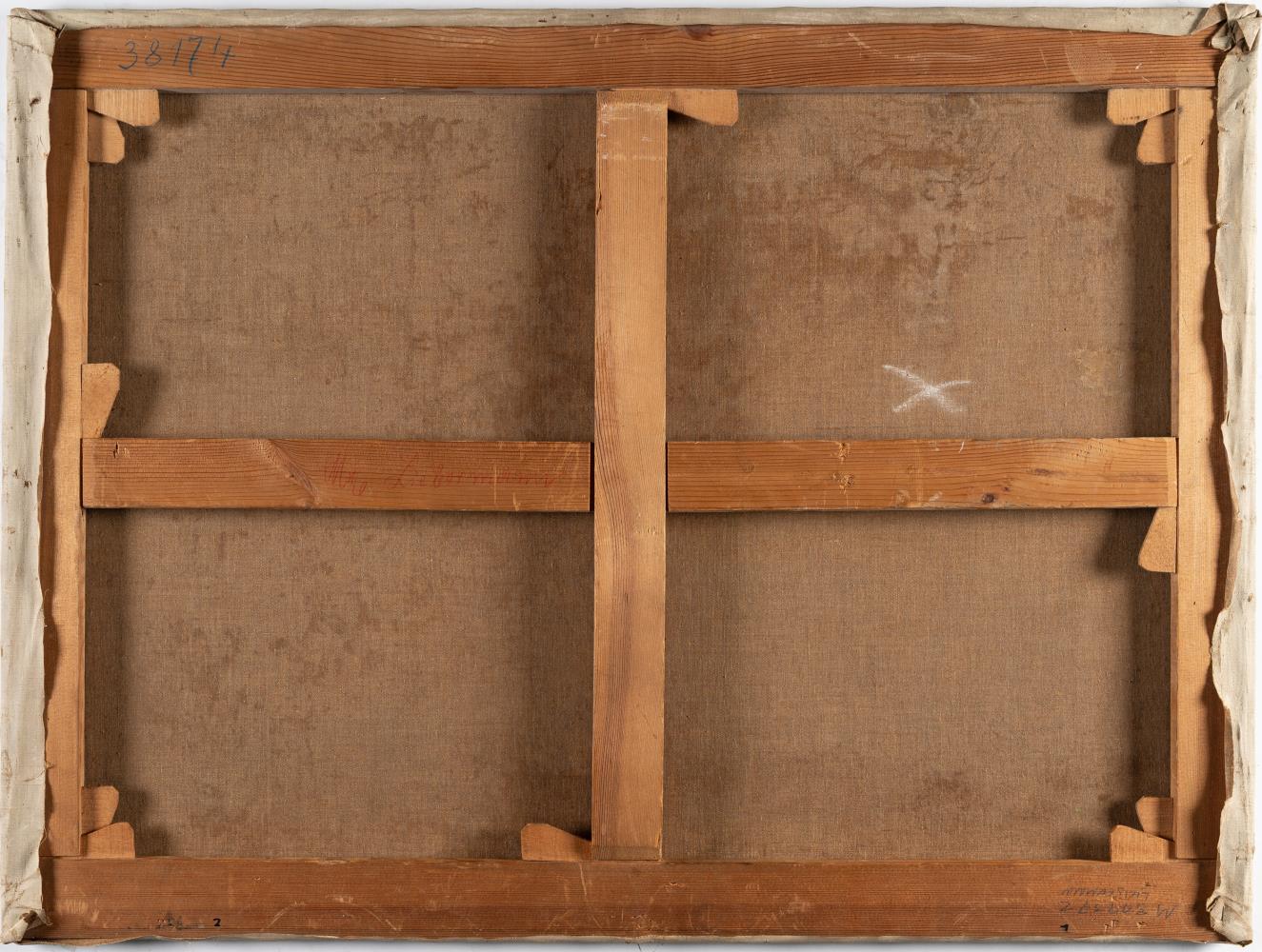
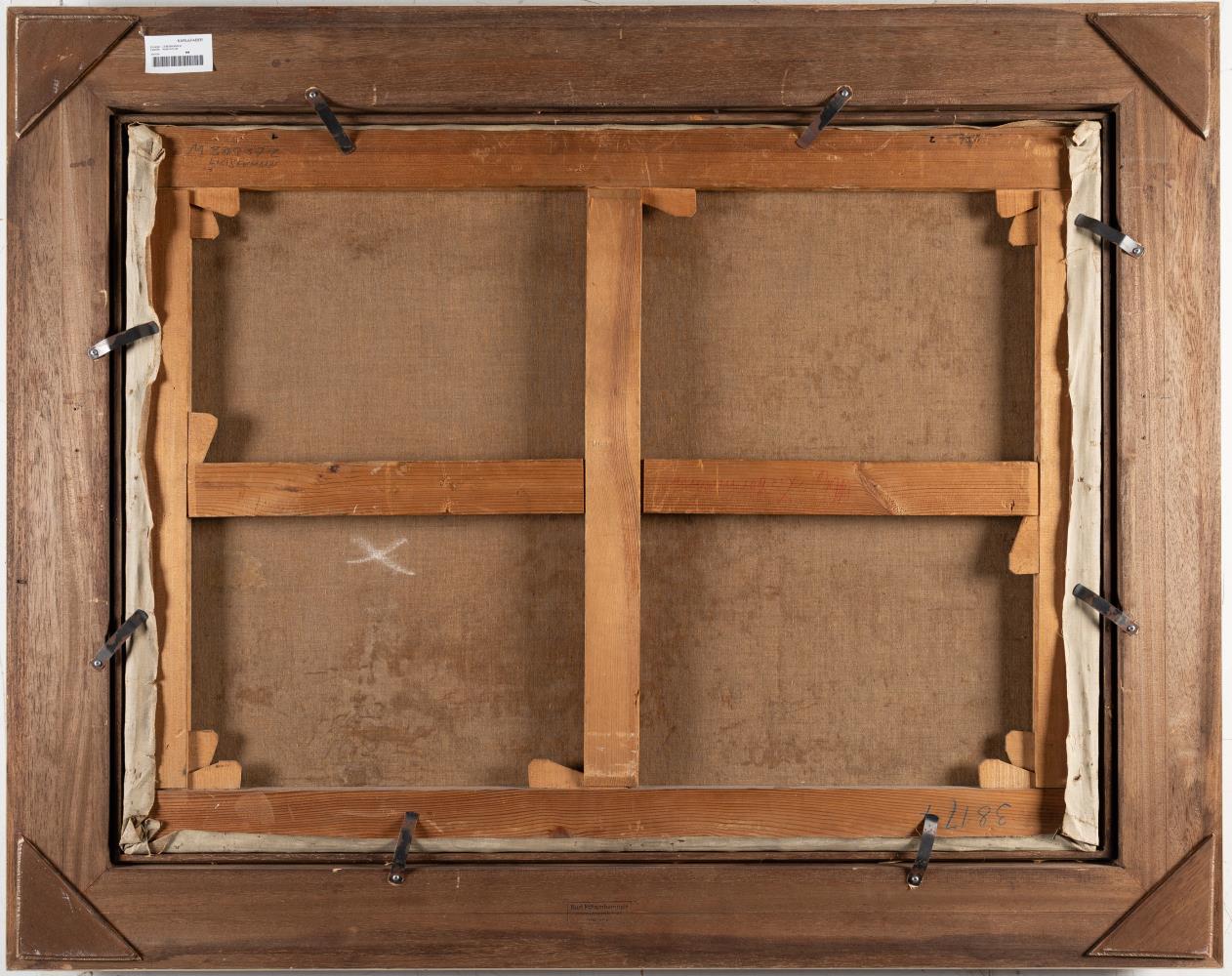
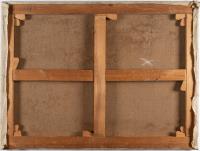
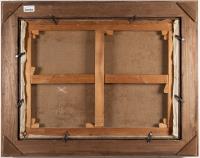
1946–1948 Central Collecting Point, Munich, marked on the reverse with the blue number ‘38174’;
Maria Dietlinde Weinmüller, Tegernsee;
Kurt and Herrmann Lion, Kreuzlingen, 1970s;
Private collection, Switzerland;
Ketterer, Munich 3 December 2008, Lot 252;
Private collection, Northern Germany.
1946–1948 Central Collecting Point, Munich, marked on the reverse with the blue number ‘38174’;
Maria Dietlinde Weinmüller, Tegernsee;
Kurt and Herrmann Lion, Kreuzlingen, 1970s;
Private collection, Switzerland;
Ketterer, Munich 3 December 2008, Lot 252;
Private collection, Northern Germany.
Share


Descrizione
• Masterful depiction of the kitchen garden at Wannsee
• Typical Impressionist lighting
• One of the most popular motifs in Liebermann’s oeuvre
In the summer of 1909, Max Liebermann acquired one of the last available plots of land by the water in the Alsen villa colony on Lake Wannsee and had Paul Otto Baumgarten build him a summer house there – his "Schloss am See", as he called it in a letter to Adolph Goldschmidt in July 1910. He designed the gardens in collaboration with Alfred Lichtwark; the kitchen garden facing the street, modelled on North German farm gardens with wide perennial beds on either side of an axial gravel path, became one of the most frequently depicted motifs in Liebermann’s late work from the 1910s onwards.
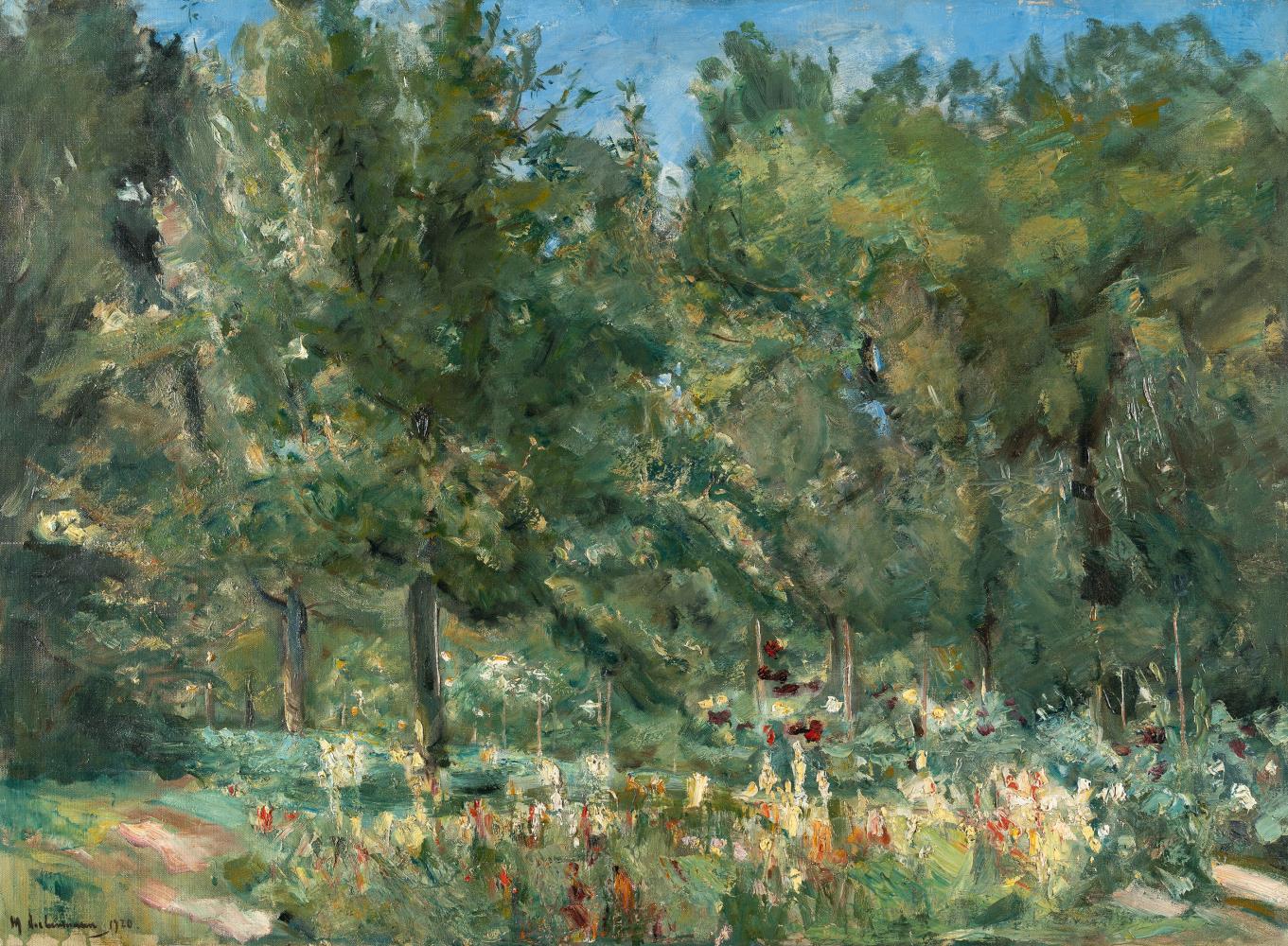
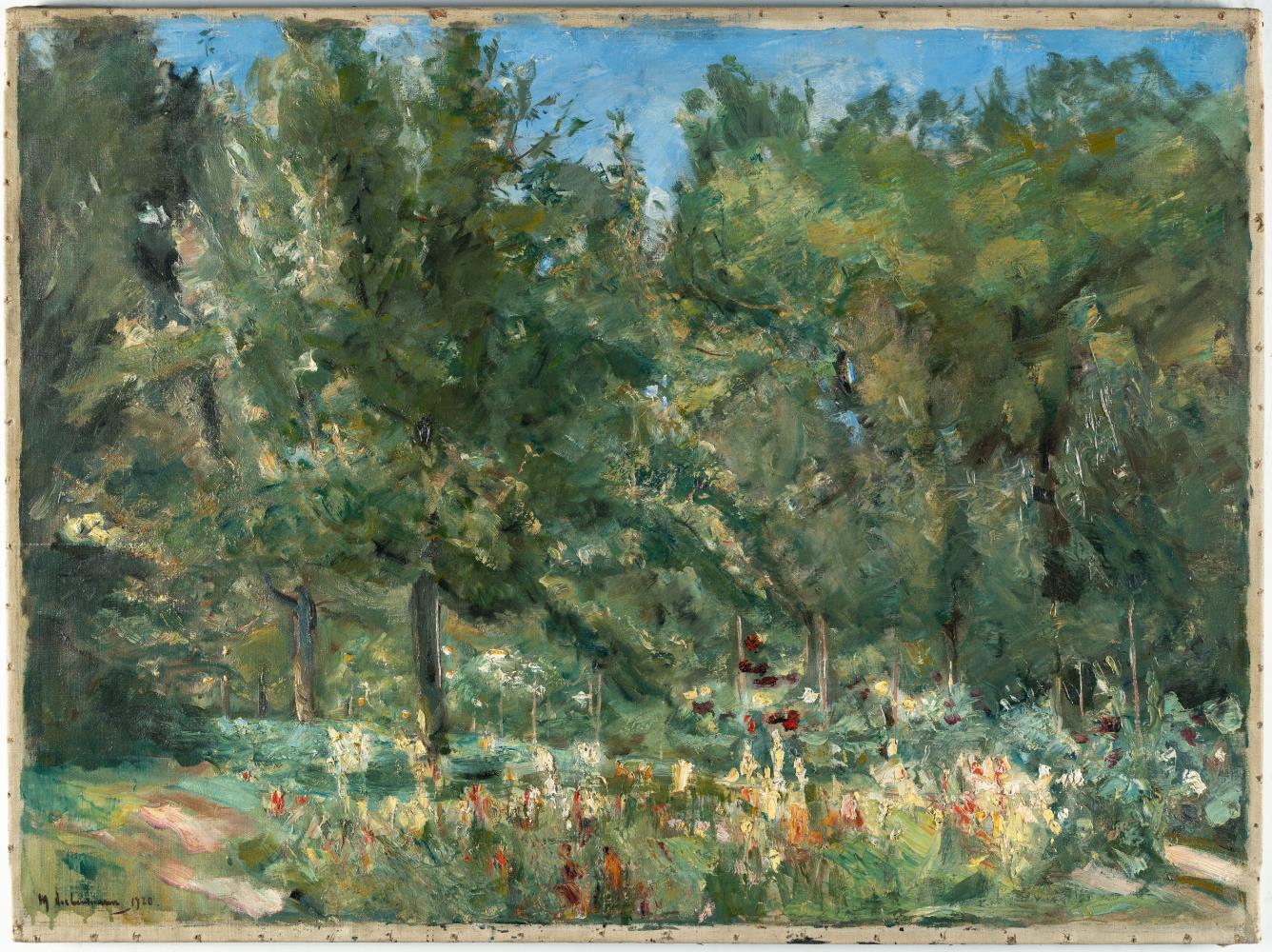
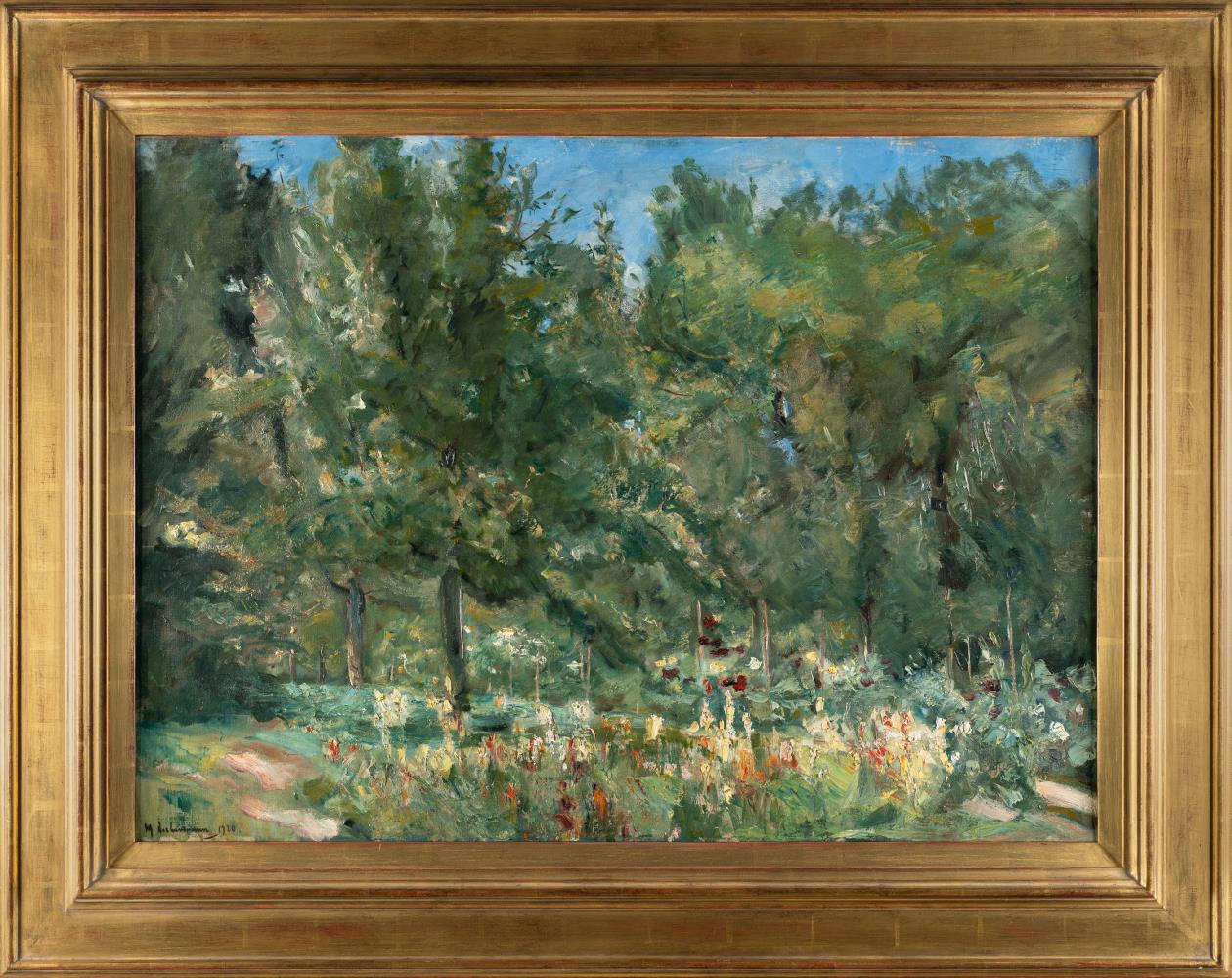
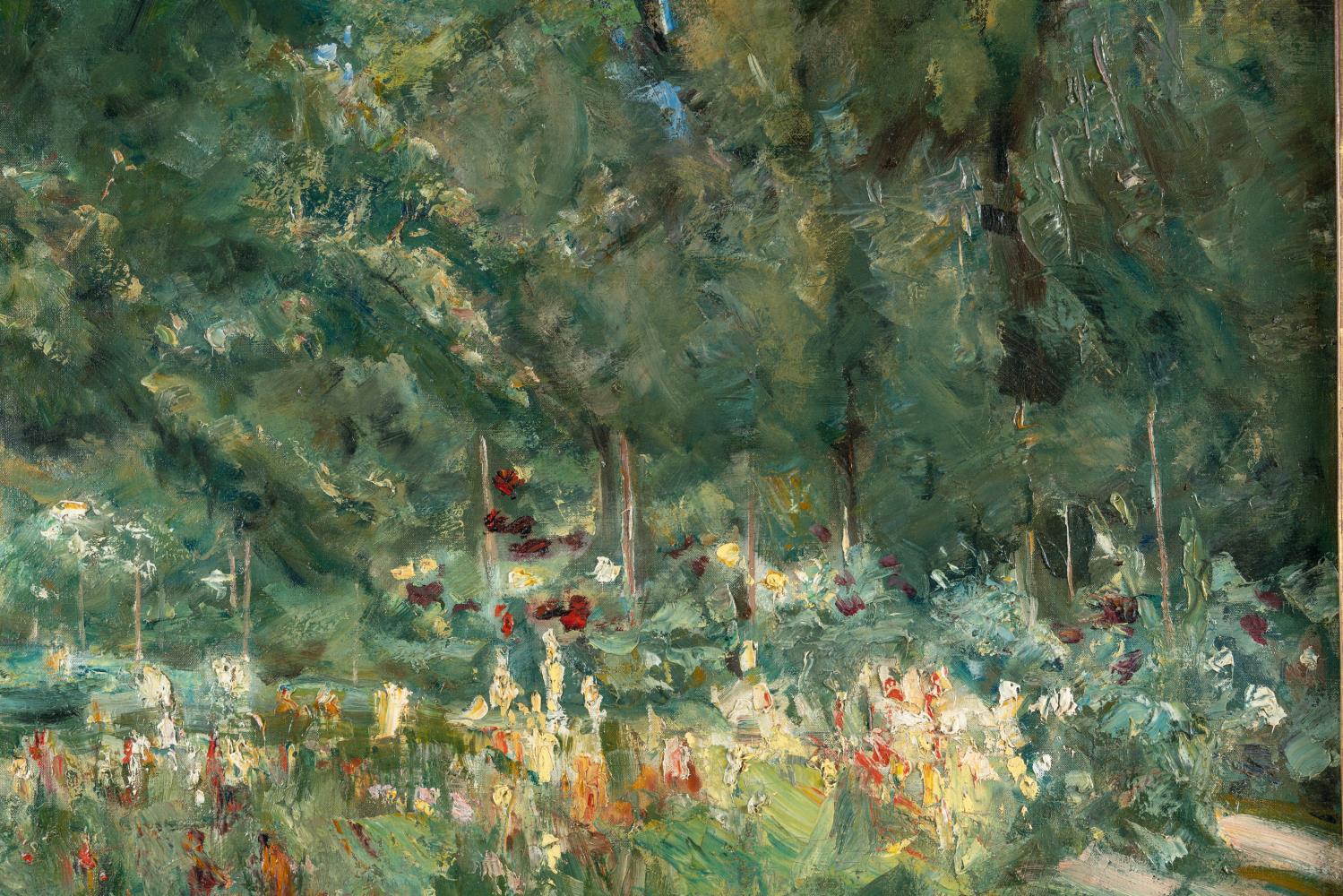
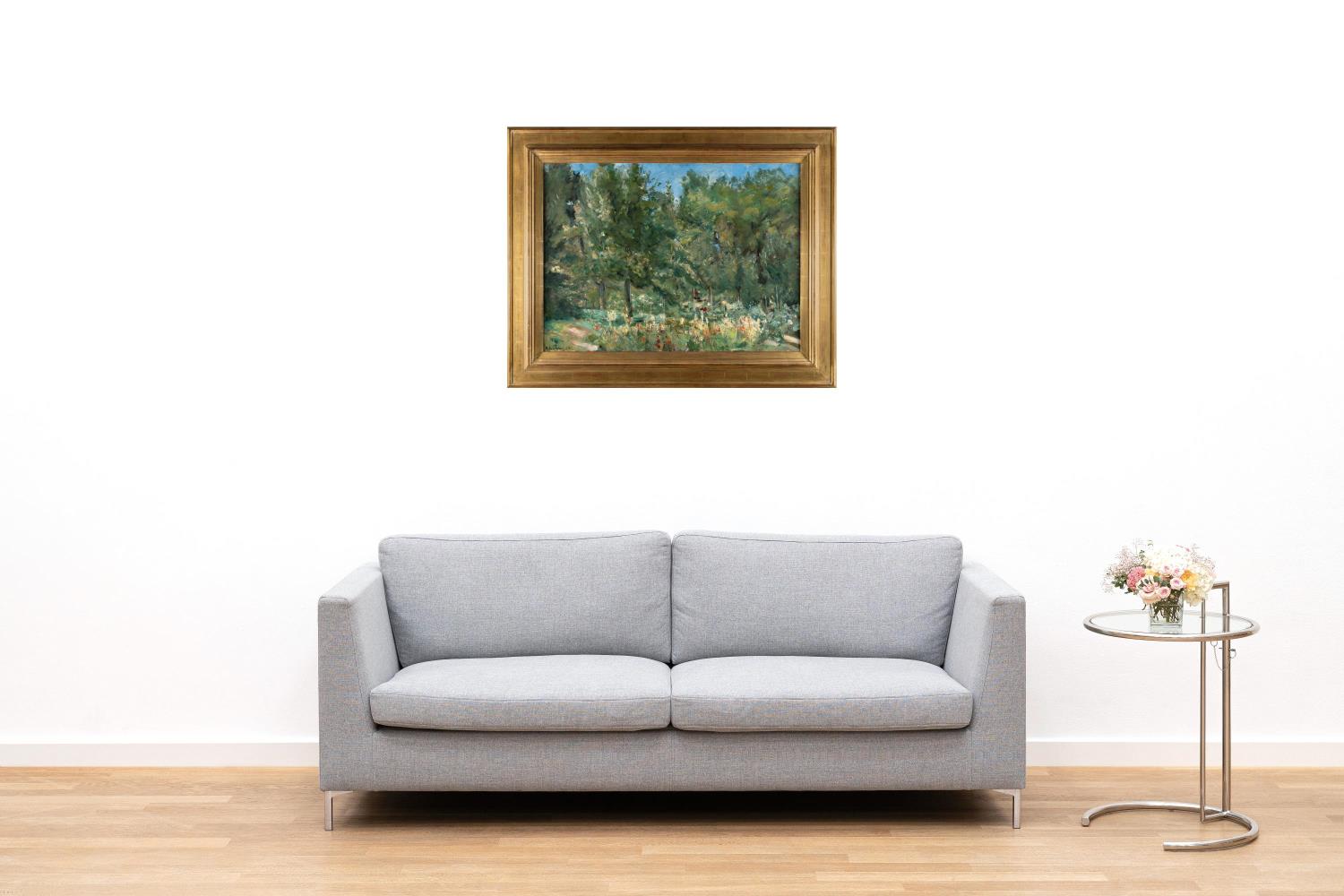
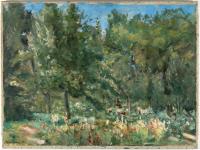
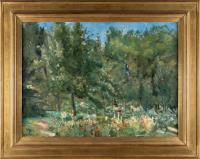
This work, dated 1920, shows this area from one of its most charming angles: the view looks south-west, into a depth created not by perspective but by the painterly layering of the vegetation. The high summer light filters through the foliage in delicate highlights, causing the treetops to shimmer in varying shades of green and casting warm reflections on the gravel path, which opens the picture towards the viewer in a delicate pink-grey. In front of this lies the loosely arranged shrubbed border, rendered in swift, impasto dabs of pure white, broken red and warm orange. Above the darker depths of the fruit trees and birches lies a clear summer blue, which lends the floral accents additional luminosity.
It is precisely this spontaneity with which Liebermann captures the light in the garden that made his Wannsee garden paintings among his most sought-after works even during his lifetime. Within this group of works, the present painting occupies a special place: in 1921, Liebermann revisited the same view in two large-format versions – the work recorded here thus marks the beginning of this concentrated engagement with the motif. The free, unrestrained brushwork, the masterful application of paint and the atmospheric cohesion make the work a characteristic example of the late Wannsee years, in which the artist’s private pictorial space and his painterly focus on light, colour and movement within the vegetation combine most beautifully.
Extensive provenance research yielded no evidence of any confiscation of assets resulting from persecution.
• Typical Impressionist lighting
• One of the most popular motifs in Liebermann’s oeuvre
In the summer of 1909, Max Liebermann acquired one of the last available plots of land by the water in the Alsen villa colony on Lake Wannsee and had Paul Otto Baumgarten build him a summer house there – his "Schloss am See", as he called it in a letter to Adolph Goldschmidt in July 1910. He designed the gardens in collaboration with Alfred Lichtwark; the kitchen garden facing the street, modelled on North German farm gardens with wide perennial beds on either side of an axial gravel path, became one of the most frequently depicted motifs in Liebermann’s late work from the 1910s onwards.
This work, dated 1920, shows this area from one of its most charming angles: the view looks south-west, into a depth created not by perspective but by the painterly layering of the vegetation. The high summer light filters through the foliage in delicate highlights, causing the treetops to shimmer in varying shades of green and casting warm reflections on the gravel path, which opens the picture towards the viewer in a delicate pink-grey. In front of this lies the loosely arranged shrubbed border, rendered in swift, impasto dabs of pure white, broken red and warm orange. Above the darker depths of the fruit trees and birches lies a clear summer blue, which lends the floral accents additional luminosity.
It is precisely this spontaneity with which Liebermann captures the light in the garden that made his Wannsee garden paintings among his most sought-after works even during his lifetime. Within this group of works, the present painting occupies a special place: in 1921, Liebermann revisited the same view in two large-format versions – the work recorded here thus marks the beginning of this concentrated engagement with the motif. The free, unrestrained brushwork, the masterful application of paint and the atmospheric cohesion make the work a characteristic example of the late Wannsee years, in which the artist’s private pictorial space and his painterly focus on light, colour and movement within the vegetation combine most beautifully.
Extensive provenance research yielded no evidence of any confiscation of assets resulting from persecution.