Rosemarie Trockel
Knitted picture
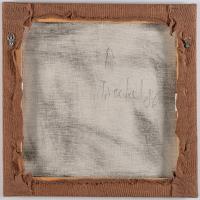
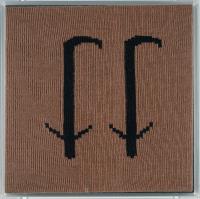
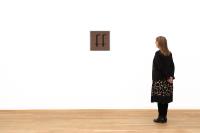
Artista
Rosemarie Trockel
1952 Schwerte
Mostra
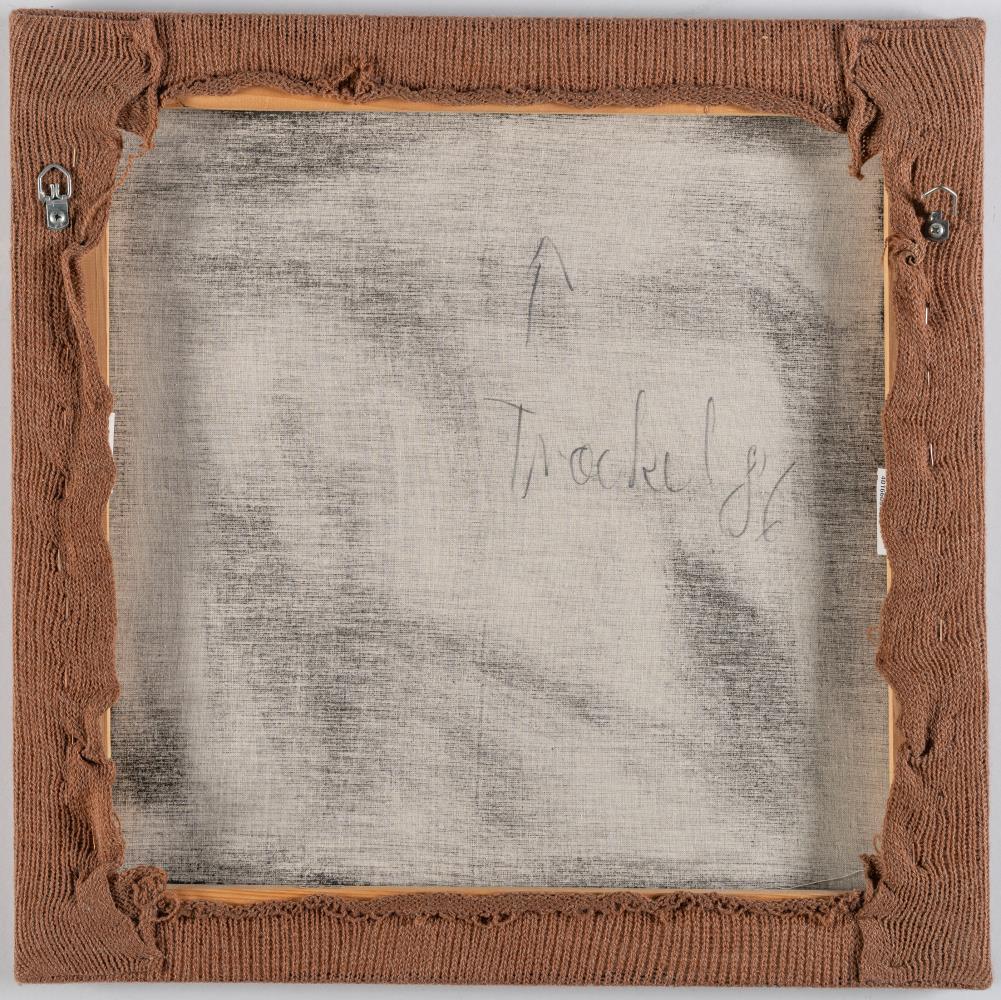
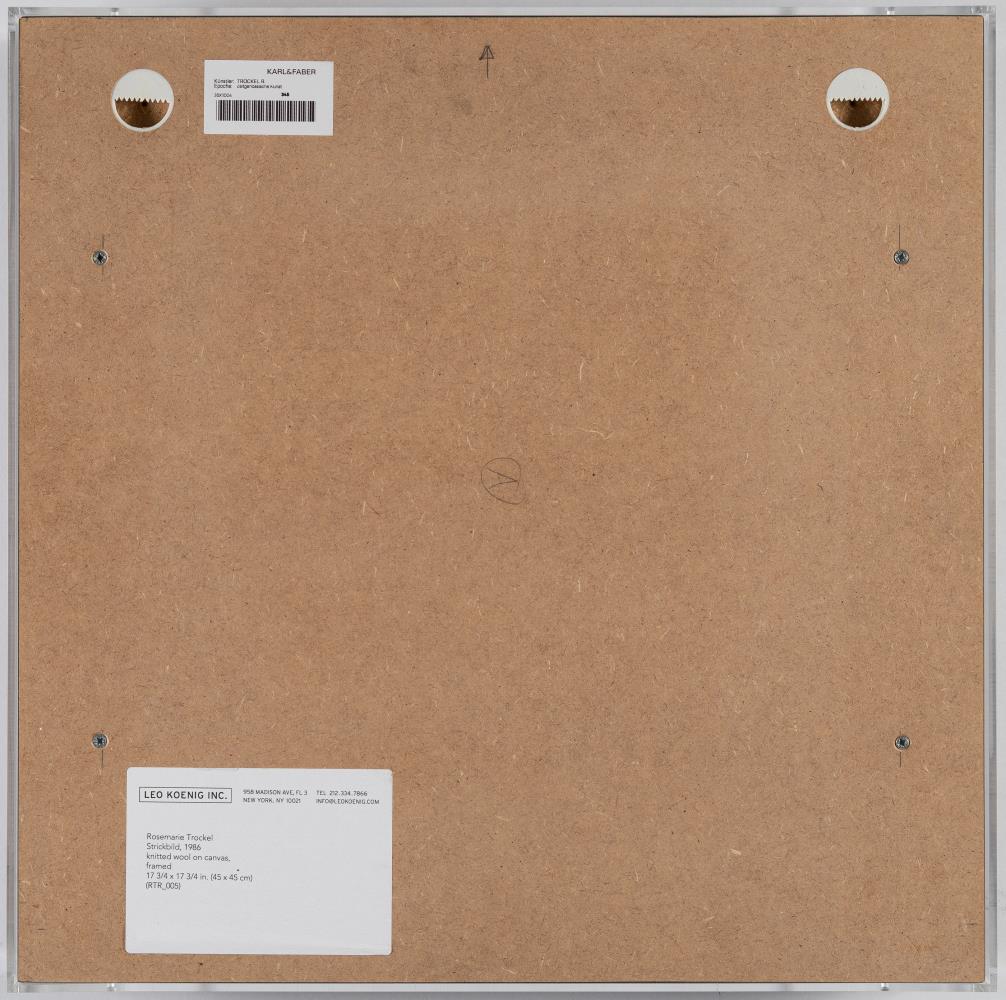
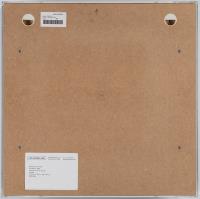
The History of Hand Knitting. Nicole Eisenman. Rosemarie Trockel, Leo Koenig Inc., New York 2023, with label on the reverse of the box back;
Rosemarie Trockel. Post-Menopause, Museum Ludwig, Cologne 2005, cat. no. RT 1359, b/w ill. p. 159.
Rosemarie Trockel. Post-Menopause, Museum Ludwig, Cologne 2005, cat. no. RT 1359, b/w ill. p. 159.
Provenienza
Galerie Erika und Otto Friedrich, Bern;
Private collection, acquired from the above in 1988;
Sotheby’s, London 13 February 2014, Lot 316;
Private collection, USA.
Private collection, acquired from the above in 1988;
Sotheby’s, London 13 February 2014, Lot 316;
Private collection, USA.
Share


Descrizione
• Rosemarie Trockel is one of the leading international conceptual artists; her knitted works are among her best-known series
• In 1999, she was the first artist to exhibit in the German Pavilion at the Venice Biennale
• For years, the artist has held a top position among the world’s most significant contemporary artists, ranking fourth in the Kunstkompass
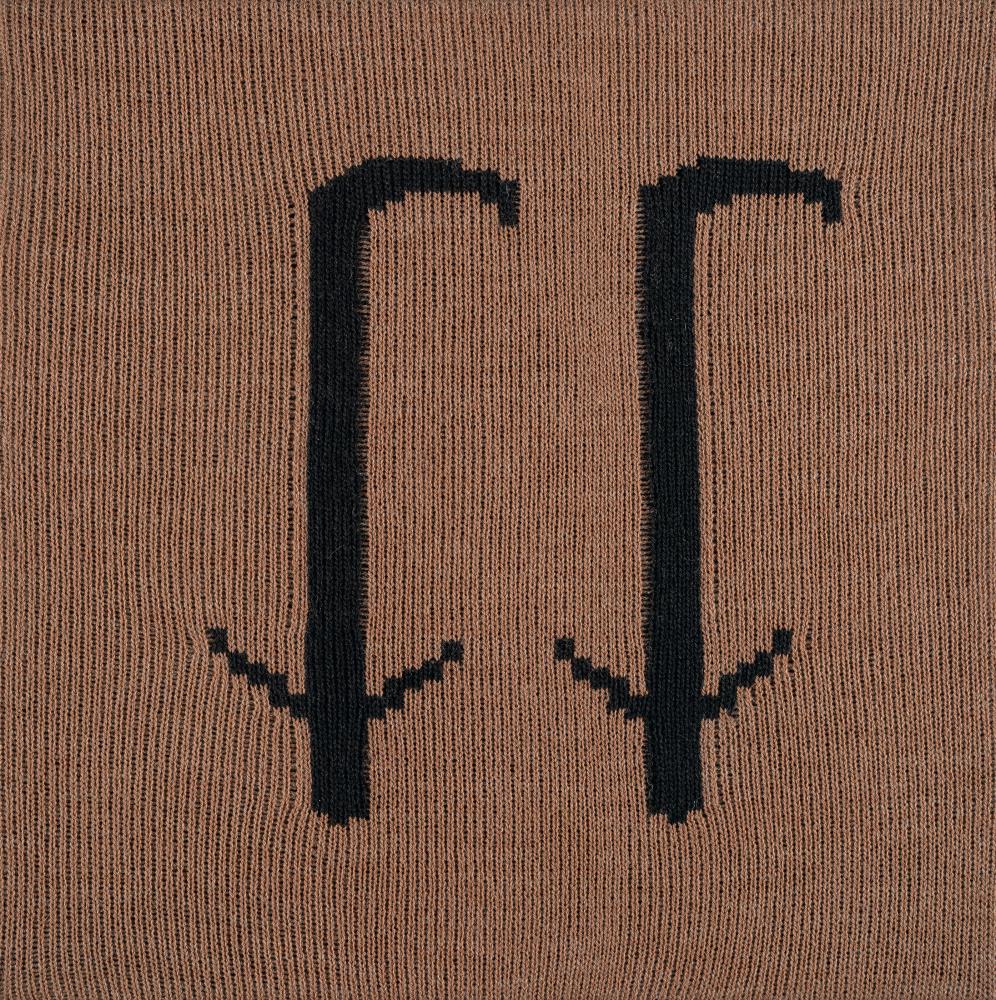
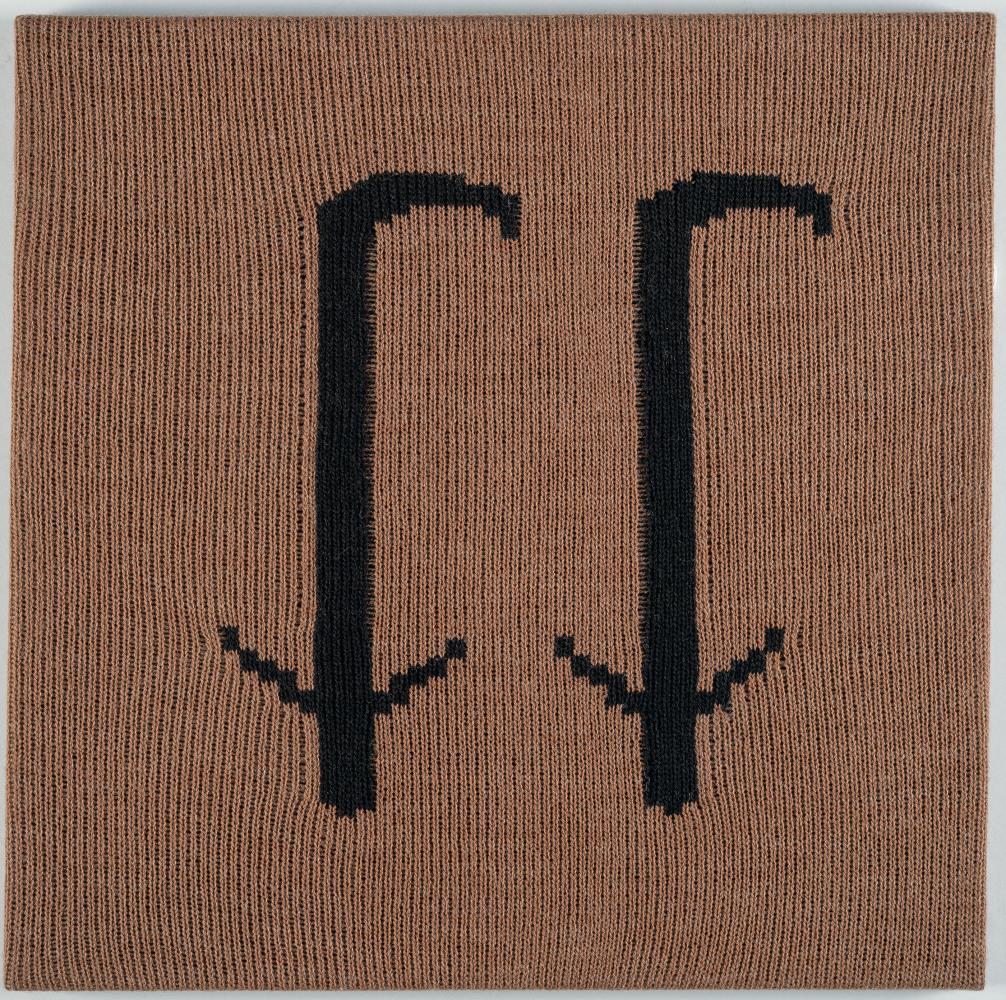
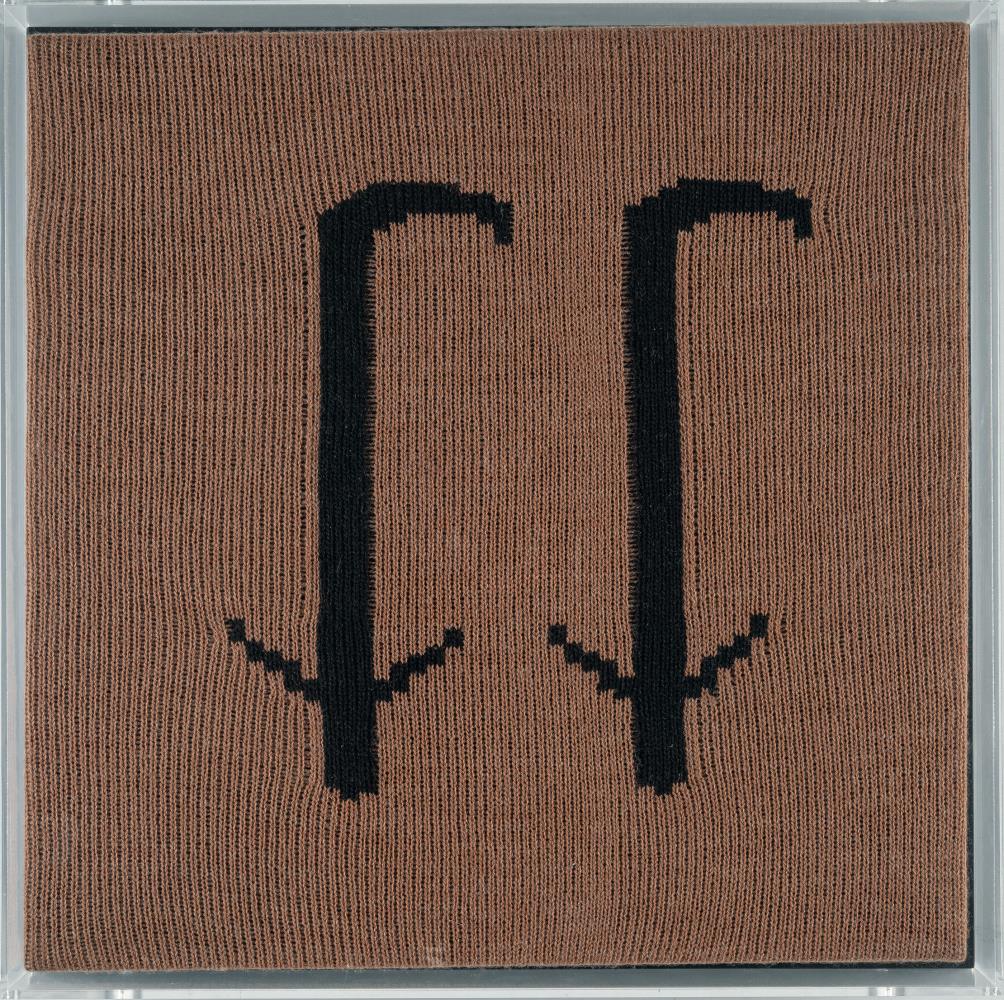
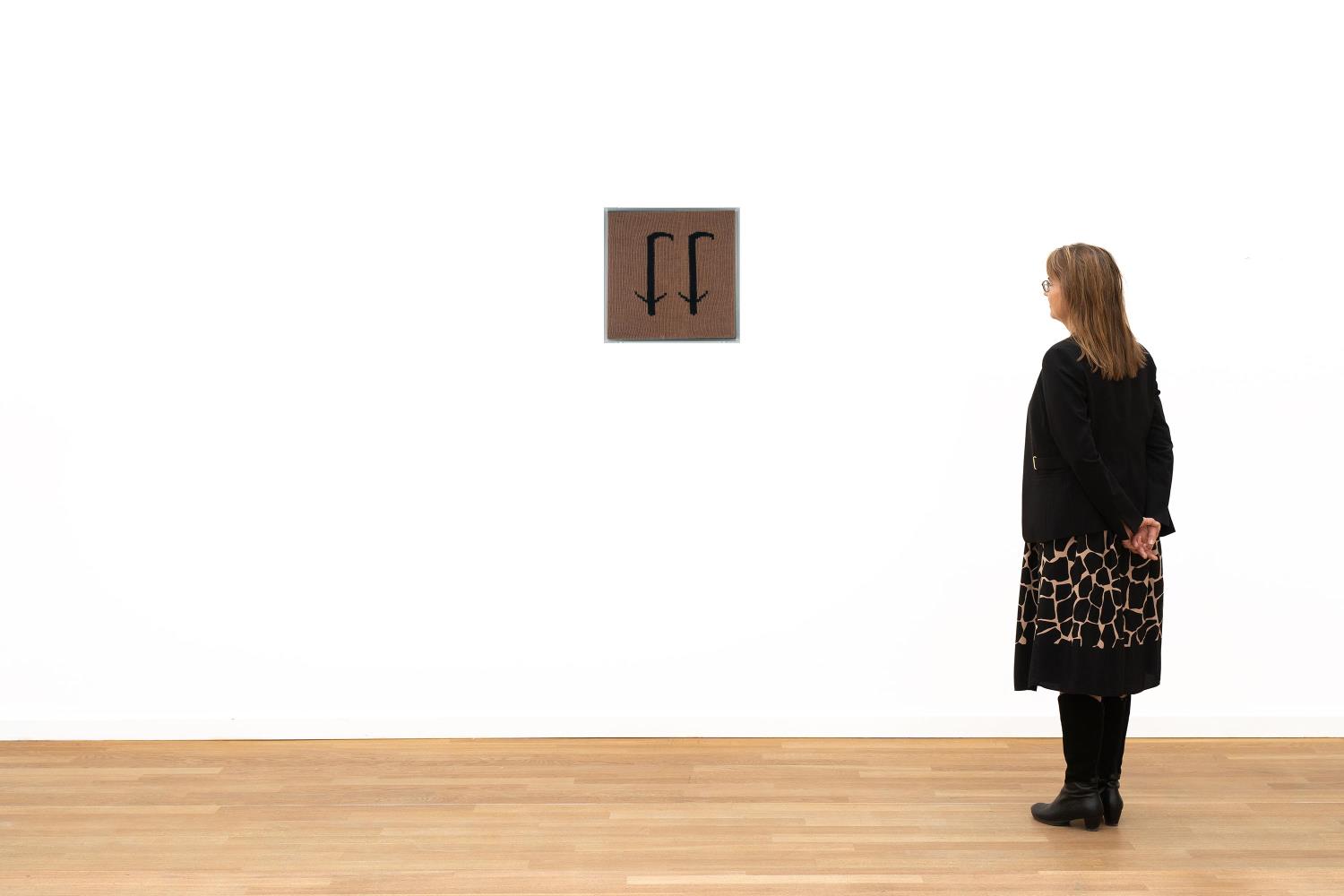
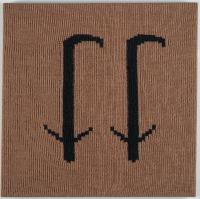
Rosemarie Trockel’s knitted paintings are icons of 1980s art. In a scene that was at the time predominantly dominated by male painter colleagues, she consistently developed a body of work that combines textile techniques with conceptual inquiries. She uses industrially manufactured knitted works, such as the one presented here, to question authorship, originality and artistic hierarchies. Two black, rune-like symbols are inscribed into a monochrome umber-coloured, machine-knitted surface; in their formal reduction, they appear as legible symbols, yet elude any concrete interpretation. With her knitted works, Rosemarie Trockel deliberately subverts traditional attributions of ‘women’s work’ and craft. In the context of her oeuvre, these works function as a critical reflection on traditional role stereotypes, artistic creative processes and cultural codings of material. The reduced formal language and the serial aesthetic of the knitted pictures refer to the design principles of Minimal Art, although the textile technique also ironically subverts these minimalist design principles. Beyond any thematic definition, the artist creates works of enigmatic beauty that oscillate between image and object, between intimacy and distance, and stand on their own in their aesthetic ambition.
• In 1999, she was the first artist to exhibit in the German Pavilion at the Venice Biennale
• For years, the artist has held a top position among the world’s most significant contemporary artists, ranking fourth in the Kunstkompass
Rosemarie Trockel’s knitted paintings are icons of 1980s art. In a scene that was at the time predominantly dominated by male painter colleagues, she consistently developed a body of work that combines textile techniques with conceptual inquiries. She uses industrially manufactured knitted works, such as the one presented here, to question authorship, originality and artistic hierarchies. Two black, rune-like symbols are inscribed into a monochrome umber-coloured, machine-knitted surface; in their formal reduction, they appear as legible symbols, yet elude any concrete interpretation. With her knitted works, Rosemarie Trockel deliberately subverts traditional attributions of ‘women’s work’ and craft. In the context of her oeuvre, these works function as a critical reflection on traditional role stereotypes, artistic creative processes and cultural codings of material. The reduced formal language and the serial aesthetic of the knitted pictures refer to the design principles of Minimal Art, although the textile technique also ironically subverts these minimalist design principles. Beyond any thematic definition, the artist creates works of enigmatic beauty that oscillate between image and object, between intimacy and distance, and stand on their own in their aesthetic ambition.