Sam Francis
Untitled (SFF.274)
Artista
Sam Francis
1923 San Mateo/Kalifornien - Santa Monica 1994
Ulteriori informazioni
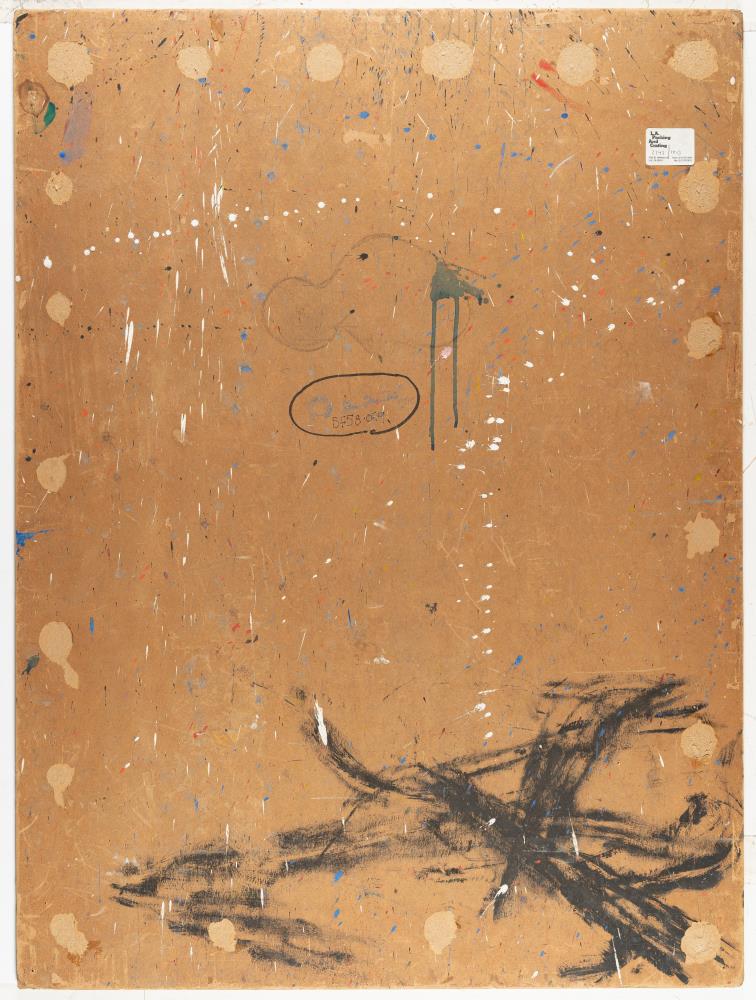
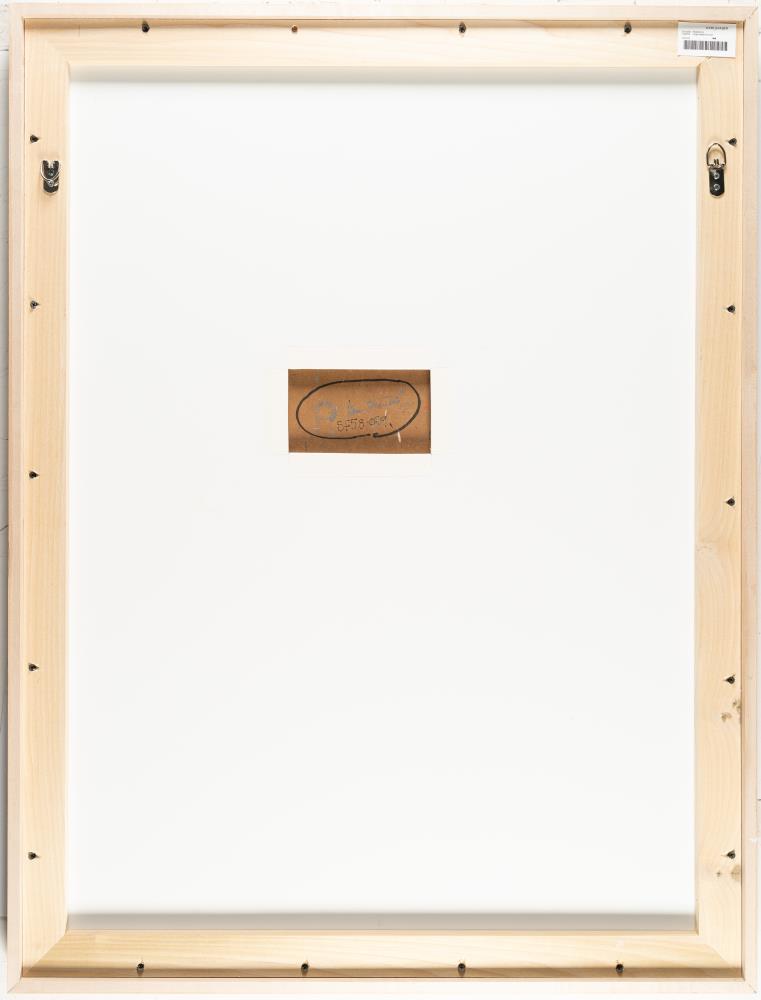
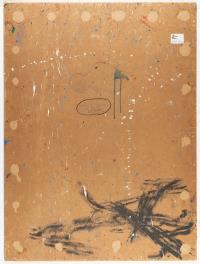
Verso vom Atelierassistenten bezeichnet.
Burchett-Lere SFF.274.
Das Werk ist im "Sam Francis: Online Catalogue Raisonné Project" unter den Archivnummern SFP58-60, SF58-072 und SFP58-079 verzeichnet (Malgrund dort als Masonite bezeichnet).
Burchett-Lere SFF.274.
Das Werk ist im "Sam Francis: Online Catalogue Raisonné Project" unter den Archivnummern SFP58-60, SF58-072 und SFP58-079 verzeichnet (Malgrund dort als Masonite bezeichnet).
Mostra
Sam Francis in New York 1958–1960, Manny Silverman Gallery, Los Angeles 1997;
Sam Francis. Paintings and Works on Paper from the 50s, Lawrence Rubin Greenberg Van Doren Fine Art, New York 1999, cat. no. 11, colour ill.;
Sam Francis. Works on Paper from the Sixties, Brian Gross Fine Art, San Francisco 2001, cat. no. 1;
Sam Francis. Five Decades of Abstract Expressionism from California Collections, Pasadena Museum of California Art/Crocker Art Museum, Sacramento 2013/14, cat. no. 31, colour ill. p. 74;
Sam Francis. From Dusk to Dawn, Heather James Fine Art, Palm Desert, California, and Jackson Hole, Wyoming 2019, colour ill. pp. 18 ff.
Sam Francis. Paintings and Works on Paper from the 50s, Lawrence Rubin Greenberg Van Doren Fine Art, New York 1999, cat. no. 11, colour ill.;
Sam Francis. Works on Paper from the Sixties, Brian Gross Fine Art, San Francisco 2001, cat. no. 1;
Sam Francis. Five Decades of Abstract Expressionism from California Collections, Pasadena Museum of California Art/Crocker Art Museum, Sacramento 2013/14, cat. no. 31, colour ill. p. 74;
Sam Francis. From Dusk to Dawn, Heather James Fine Art, Palm Desert, California, and Jackson Hole, Wyoming 2019, colour ill. pp. 18 ff.
Letteratura
Burchett-Lere, Debra and Aneta Zebala, Sam Francis. The Artist's Materials, 2019, p. 123.
Provenienza
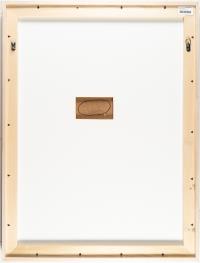
Estate of the artist, stamped on the reverse;
Private collection, acquired from the above in 1994;
Private collection, Lugano.
Private collection, acquired from the above in 1994;
Private collection, Lugano.
Share


Descrizione
The American painter Sam Francis is one of the most significant figures in post-war abstract art, having developed a visual language entirely of his own within the international Abstract Expressionist movement. Whilst many artists of his generation focused on existential intensity, heavy materiality or gestural drama, Francis developed a style of painting characterised by extraordinary luminosity, openness and spatial expansion. For him, colour is not merely a means of representation, but the very vehicle of light, movement and energy.
Francis’s work is characterised by a diversity of experiences and various influences from abstract ideas.
Francis’s affinity for Japon and for Far Eastern culture and philosophy, which had already taken root in the 1950s, plays a major role in this context. During his stay in Paris, he came into contact with artists such as Zao Wou-Ki and Chue The-Chung, and later, during his first visit to Japon, he met the Japanese Gutai artists.
Through these influences, Francis was able to formulate new approaches to abstraction for himself. In particular, the introduction of white areas into his works, which stand in contrast to the bright colours, characterises the conceptual uniqueness of Sam Francis. The artist thus breaks away from his earlier grid-like all-over compositions and develops a new understanding of pictorial space in his paintings. He engages intensively with the principle of negative space, or ‘ma’ as it is described in Japon, thereby creating a particular lightness in his works which, in turn, assigns entirely new qualities to colour. In this context, Francis begins to view the white areas of the canvas no longer as a mere background, but as an active pictorial space. The void becomes the antithesis of colour, a place of light, concentration and expansion.
From the densely painted early canvases of the 1950s, through the radical ‘Edge Paintings’ of the 1960s, to the complexly condensed late works of the 1980s and 1990s, Francis’s overall oeuvre revolves around this central theme: the struggle between colour and space, between fullness and emptiness, between expansion and concentration. In doing so, he develops a visual language that appears equally physical, atmospheric and almost spiritual.
• Sam Francis is one of the most significant representatives of Abstract Expressionism
• A striking example of Francis’ ability to make colour tangible in space as a light-permeated, almost floating energy
• An expressive interplay of expansive blue colour formations, luminous red and orange tones, and impulsive drippings and splashes of extraordinary gestural energy
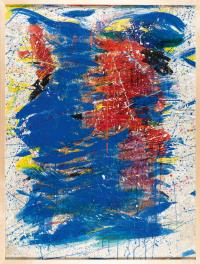
The present work, "Untitled (SFF.274)", from 1958/59, was created during a decisive transitional phase in Sam Francis’s oeuvre, in which the pictorial space increasingly opened up.
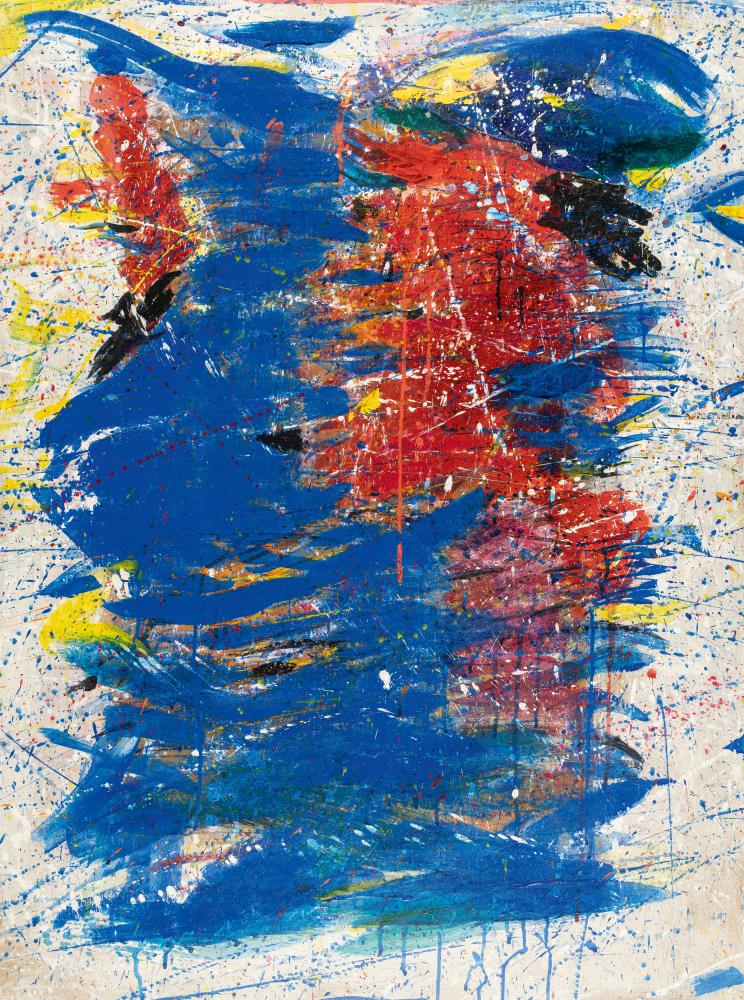
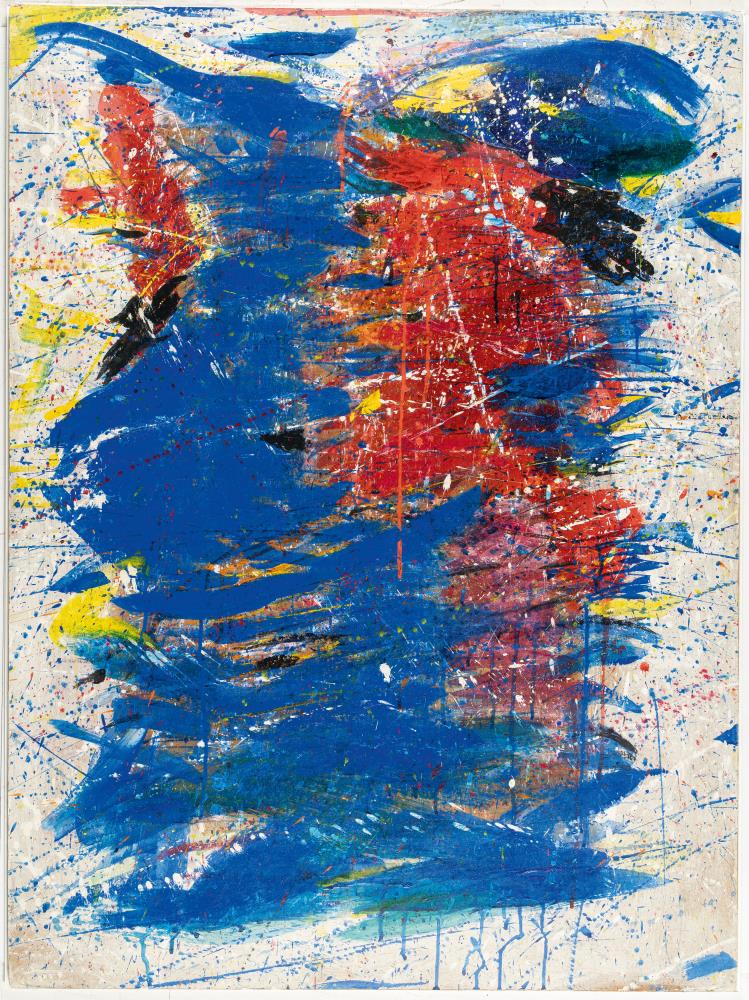
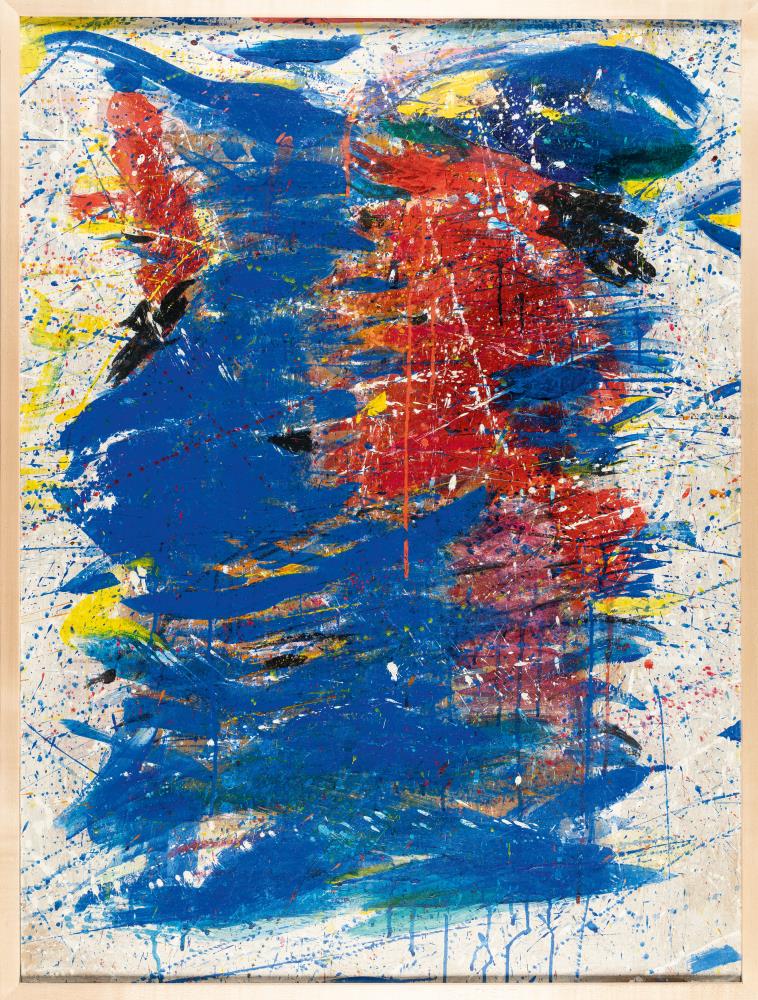
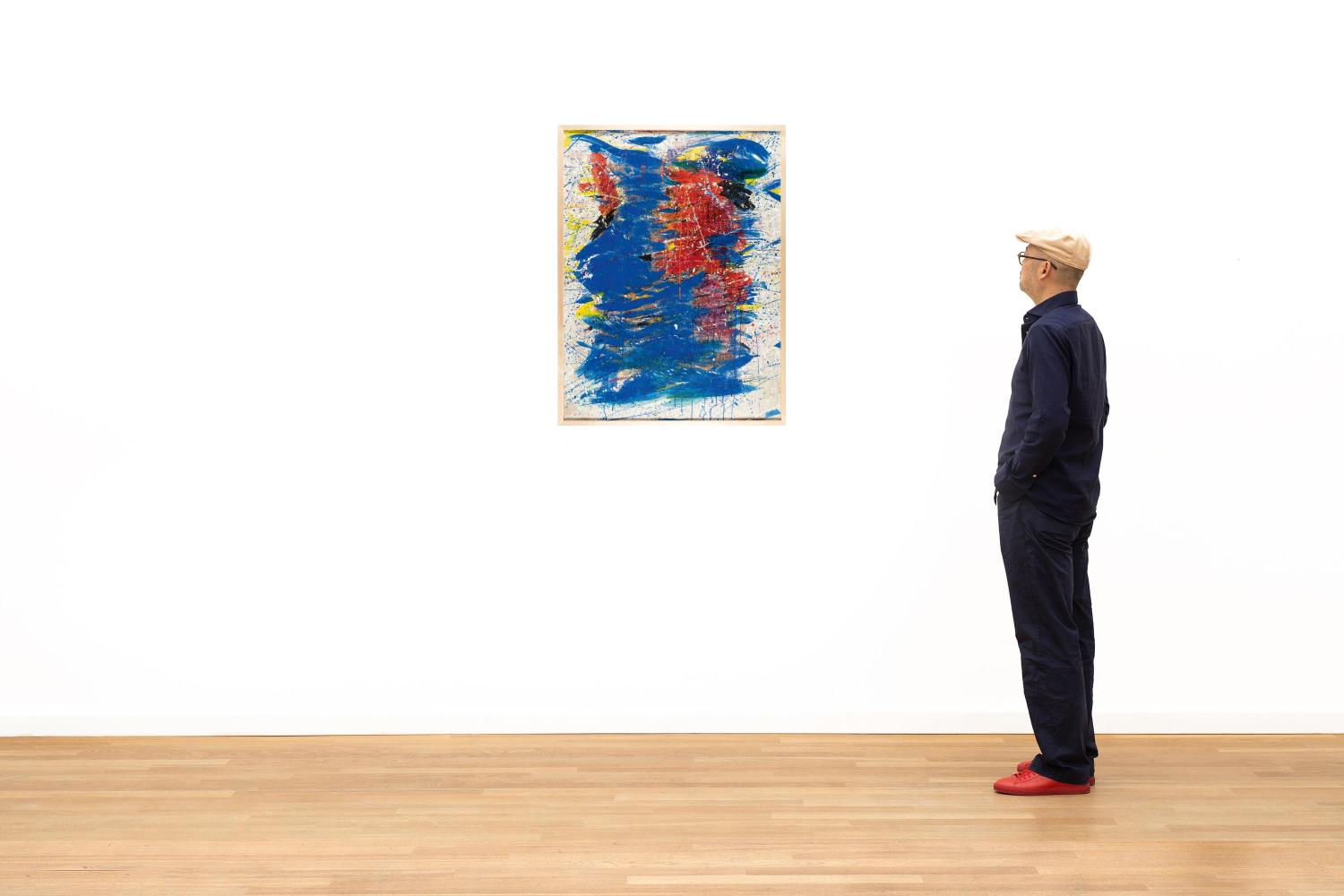
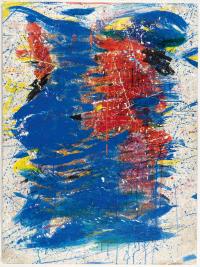
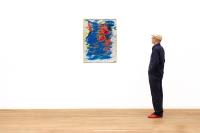
The composition is dominated by a sweeping blue colour formation that covers almost the entire picture surface with great gestural energy, contrasting with a centrally concentrated area of vibrant red, orange and pink tones. The paint appears both powerful and translucent; splashes, drippings and linear markings in white, yellow and black criss-cross the surface, lending the painting a vibrant, almost atmospheric movement. Despite the impulsive painting style, the work possesses a remarkable internal balance between density and openness. The white areas remain present as active pictorial spaces, lending the composition that lightness and spatial expansiveness which became so characteristic of Francis’s works of the late 1950s.
The work possesses that extraordinary luminosity which makes Francis one of the most significant colourists of his generation. Colour appears not as a material mass, but as light-permeated energy.
Francis’s work is characterised by a diversity of experiences and various influences from abstract ideas.
Francis’s affinity for Japon and for Far Eastern culture and philosophy, which had already taken root in the 1950s, plays a major role in this context. During his stay in Paris, he came into contact with artists such as Zao Wou-Ki and Chue The-Chung, and later, during his first visit to Japon, he met the Japanese Gutai artists.
Through these influences, Francis was able to formulate new approaches to abstraction for himself. In particular, the introduction of white areas into his works, which stand in contrast to the bright colours, characterises the conceptual uniqueness of Sam Francis. The artist thus breaks away from his earlier grid-like all-over compositions and develops a new understanding of pictorial space in his paintings. He engages intensively with the principle of negative space, or ‘ma’ as it is described in Japon, thereby creating a particular lightness in his works which, in turn, assigns entirely new qualities to colour. In this context, Francis begins to view the white areas of the canvas no longer as a mere background, but as an active pictorial space. The void becomes the antithesis of colour, a place of light, concentration and expansion.
From the densely painted early canvases of the 1950s, through the radical ‘Edge Paintings’ of the 1960s, to the complexly condensed late works of the 1980s and 1990s, Francis’s overall oeuvre revolves around this central theme: the struggle between colour and space, between fullness and emptiness, between expansion and concentration. In doing so, he develops a visual language that appears equally physical, atmospheric and almost spiritual.
• Sam Francis is one of the most significant representatives of Abstract Expressionism
• A striking example of Francis’ ability to make colour tangible in space as a light-permeated, almost floating energy
• An expressive interplay of expansive blue colour formations, luminous red and orange tones, and impulsive drippings and splashes of extraordinary gestural energy
The present work, "Untitled (SFF.274)", from 1958/59, was created during a decisive transitional phase in Sam Francis’s oeuvre, in which the pictorial space increasingly opened up.
The composition is dominated by a sweeping blue colour formation that covers almost the entire picture surface with great gestural energy, contrasting with a centrally concentrated area of vibrant red, orange and pink tones. The paint appears both powerful and translucent; splashes, drippings and linear markings in white, yellow and black criss-cross the surface, lending the painting a vibrant, almost atmospheric movement. Despite the impulsive painting style, the work possesses a remarkable internal balance between density and openness. The white areas remain present as active pictorial spaces, lending the composition that lightness and spatial expansiveness which became so characteristic of Francis’s works of the late 1950s.
The work possesses that extraordinary luminosity which makes Francis one of the most significant colourists of his generation. Colour appears not as a material mass, but as light-permeated energy.