Hans von Marées
Young Bacchus

Artista
Hans von Marées
1837 Elberfeld - Rom 1887
Ulteriori informazioni
Meier-Gräfe II, 748.
Provenienza
Arthur Volkmann (1851–1941), Rome; Paul Cassirer, Berlin, 3–4 March 1925, lot 220; Prof. Dr Leopold Reidemeister (1900–1987), Director-General of the Cologne Municipal Museums from 1954 and Director-General of the Berlin State Museums from 1957); Private collection, Switzerland (inherited from the aforementioned); Lempertz, Cologne, 5 June 2021, Lot 2124; Private collection, Germany.
Share


Descrizione
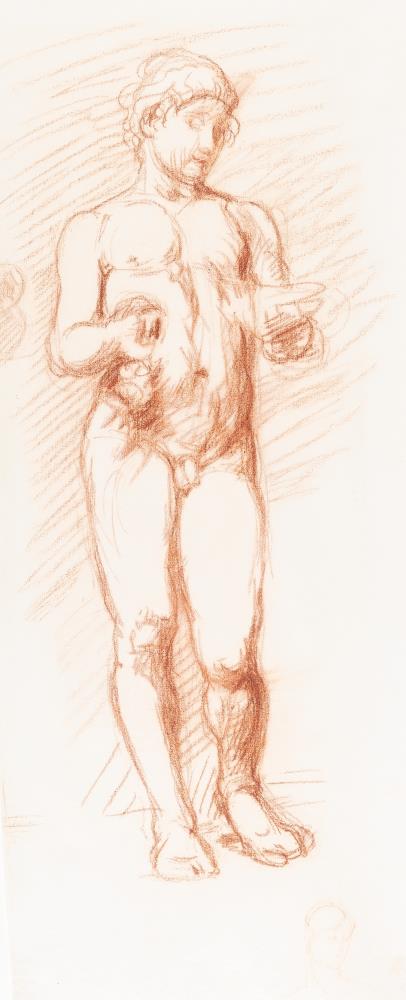
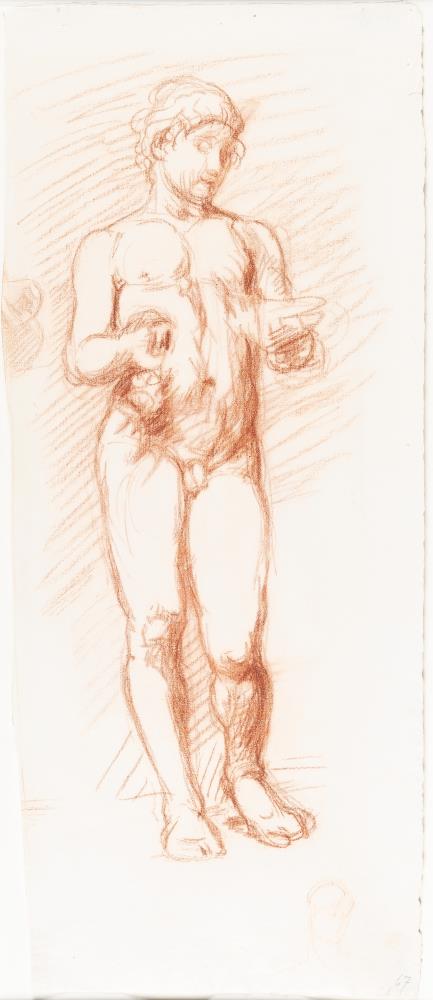
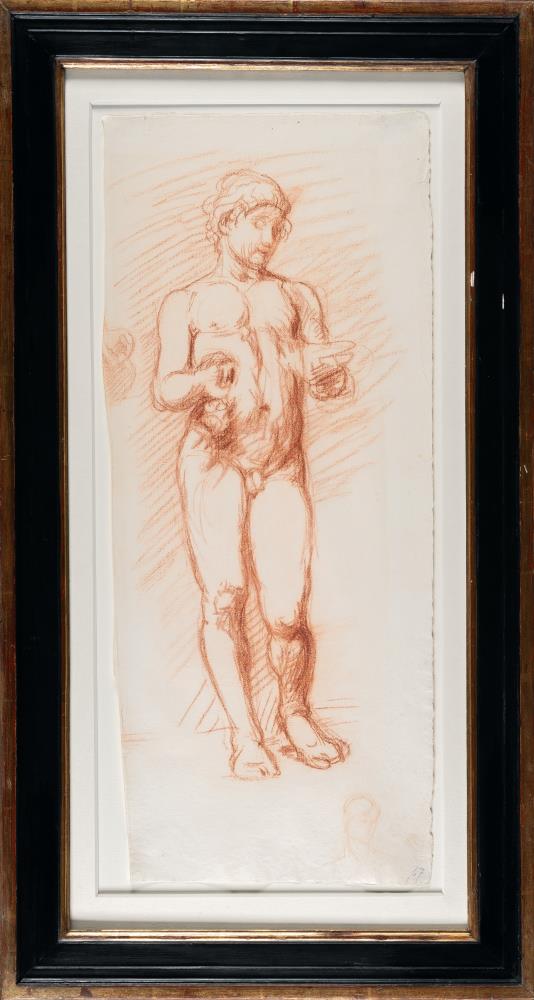
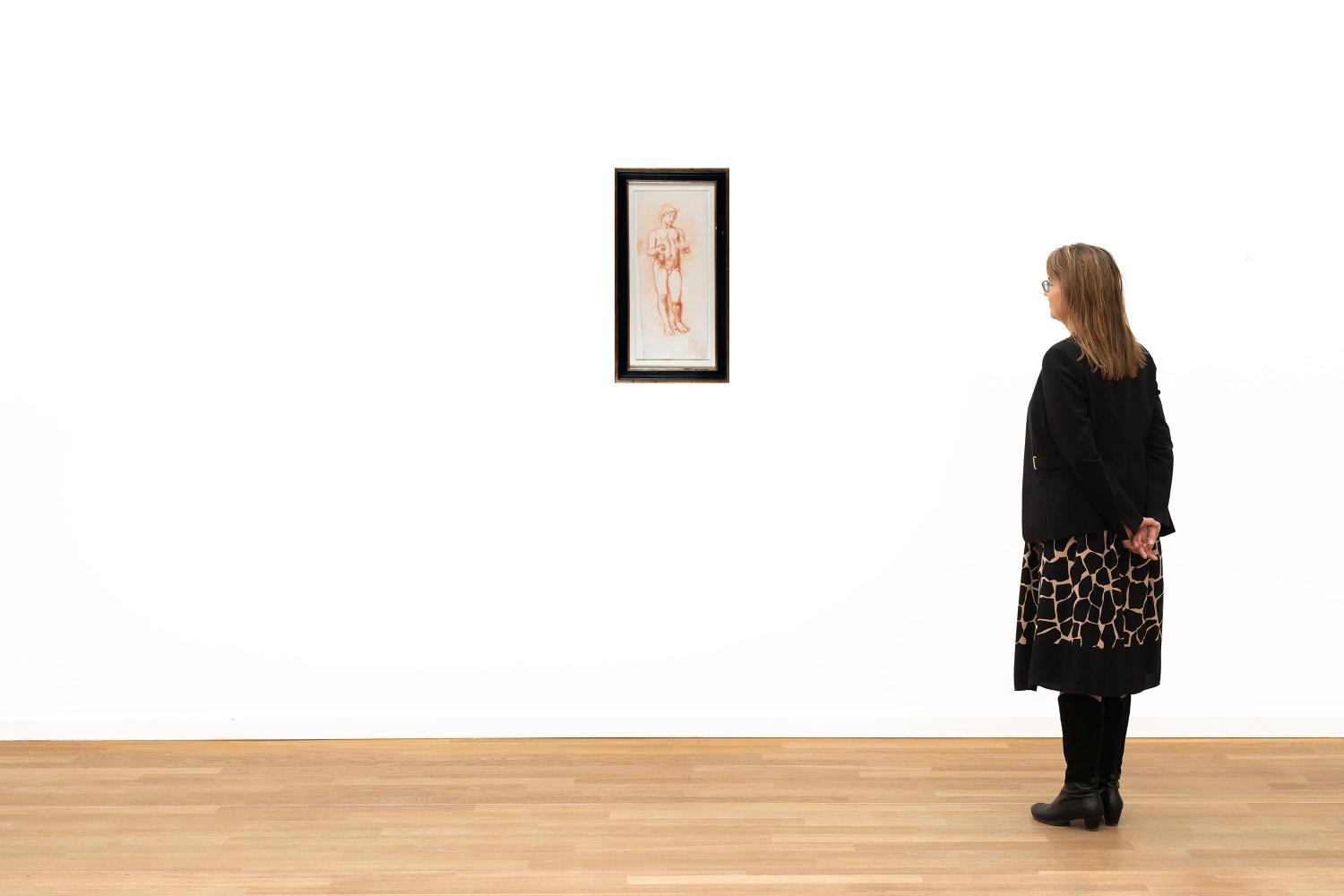
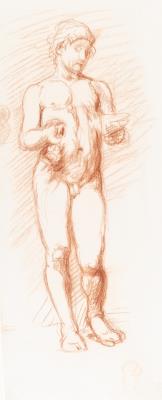
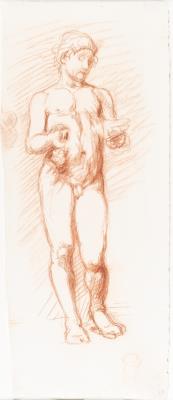
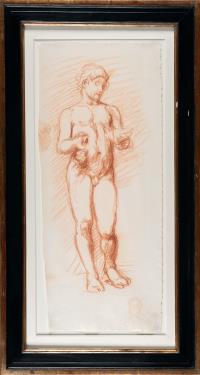
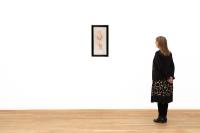
This drawing is part of a series of nude studies for a statue of Bacchus (Fig. 1) by Artur Volkmann (1851–1941). According to Meier-Graefe, Hans von Marées played an active role in its creation. He goes on to write: It was modelled in clay before Volkmann’s move to Germany in the autumn of 1883 and work on the marble version began after Volkmann’s return to Rome (1885). It was completed after Marées’s death. The marble sculpture is in the collection of the Breslau Museum. Hans von Marées’s drawings date from the period before and after Volkmann’s journey. In 1876, Artur Volkmann had been awarded a scholarship for a stay in Rome. Konrad Fiedler, the eminent art theorist, had given him a letter of recommendation to his friend Hans von Marées. In December of the same year, Marées had met him, and it seems that he immediately exerted a decisive influence on the hitherto directionless young man. In June 1877, Marées wrote to Fiedler: ‘He has, as it were, placed himself forcibly in my hands.’ Meier-Graefe describes what Volkmann, as a sculptor, was able to learn from the painter and draughtsman Marées as follows: ‘At first, these were very general artistic concepts common to both painting and sculpture, the benefit of which lay in a liberating influence that prepared the ground for a natural development. Gradually, however, because Volkmann was struggling so much, Marées began to take a closer interest, delved deeper into sculpture himself, and was able to express his findings in the form of direct corrections." This influence can also be seen in our sheet. Marées drew the Bacchus himself and according to his own ideas. Artur Volkmann then produced a completing copy based on Marées’s study on the left-hand side of the sheet, which was originally 43 cm wide. Between 1909 (the publication of Meier-Graefe’s Catalogue Raisonné) and 1925 (the auction at Paul Cassirer), the left-hand section of the sheet, on which Volkmann’s copy was located, was cut off. Presumably, Hans von Marées’s masterful drawing was intended to be showcased once more as a work of art in its own right, and indeed our sheet ranks among the finest studies in the Bacchus series. Another study from the Bacchus series is held at the Von der Heydt Museum in Wuppertal. Marées’ engagement with the figure of Bacchus was interrupted by Volkmann’s stay in Germany from 1883 to 1885; it resumed with the marble version in 1885. Our sheet is one of Marées’ early studies from 1883. It depicts the youthful and somewhat rounder nude from the front in a classical pose with a supporting leg and a free leg. In his hands, he holds, only hinted at, a bunch of grapes and a chalice. The light coming from the upper left models the body with strong contrasts. The background is partly darkened by hatching. A few lines mark the boundary between the floor and the wall surface, thereby situating the figure in the space. In the later studies created from 1885 onwards, the figure of Bacchus appears more elongated and more masculine. The sculptor Louis Tuaillon (1862–1919), who lived in Rome from 1885 to 1903 and was a friend of Marées, had already noted this change. Meier Gräfe, who relied on Tuaillon’s accounts when identifying the drawings, writes: ‘According to Tuaillon, as long as Marées was working on the sculpture, it was considerably fuller and rounder than it ultimately became.’