Schule Annibale Carracci
Saint Margaret of Antioch



Artista
Schule Annibale Carracci
1560 Bologna - Rom 1609
Provenienza
International private collection.
Share


Descrizione
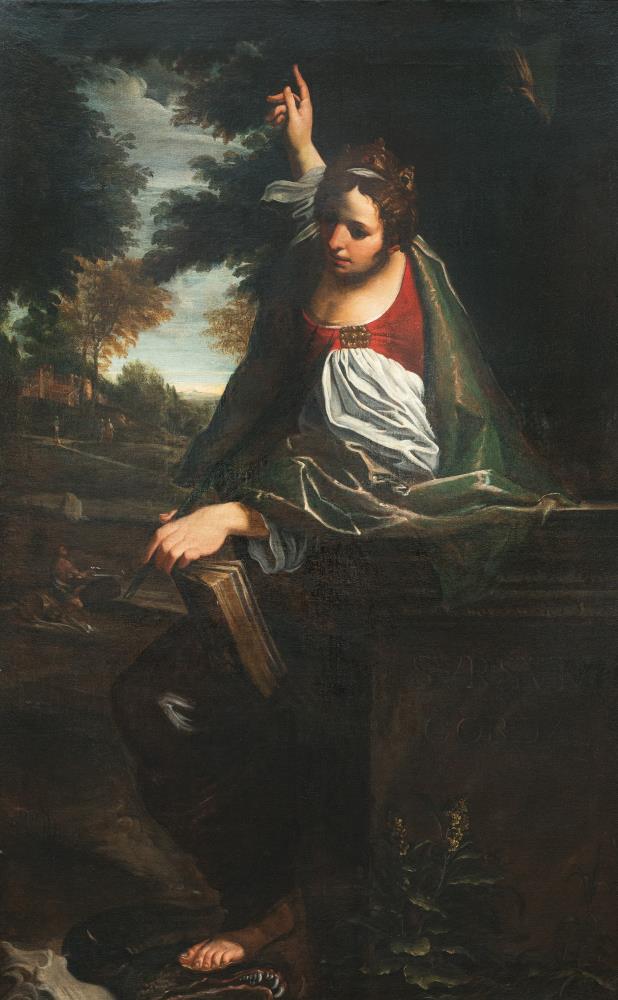
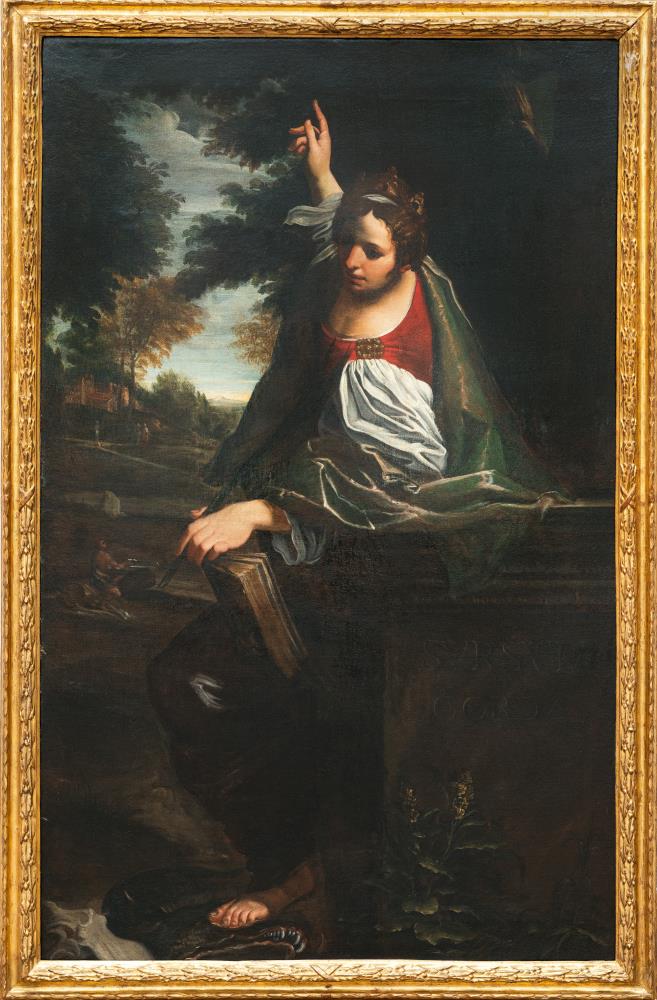
The depiction of Saint Margaret of Antioch is directly derived from a composition by Annibale Carracci, which he created in 1599 for the Roman church of Santa Caterina dei Funari and which has been preserved there to this day. The iconography follows the established type of the saint: Margaret appears with a book and the martyr’s palm, whilst she subdues the dragon – a symbol of the devil – with her foot. In the background, henchmen armed with an axe and a saw prepare for her martyrdom, alluding to the cruel tortures to which, according to legend, she was subjected. As a daughter of Antioch, she professed the Christian faith and vowed to remain a virgin, for which she ultimately suffered death. The encounter with the dragon, which she overcomes by making the sign of the cross, is one of the central episodes of her life and is vividly depicted both by Carracci and in this version. The composition reflects the visual language characteristic of altarpieces from around 1600: the monumentally enlarged figure is shown from a low angle and faces the perspective of the praying congregation. This version largely adopts this structure, though it varies certain details. For instance, the painter deviates from the original in the design of the foreground by replacing the ivy tendril originally depicted there with yellow-flowering plants, thereby creating a distinctive accent of his own. The saint’s raised right hand finds its meaning in the liturgical context of her original location: Together with the inscription ‘Sursum corda’ (‘Lift up your hearts’) on the plinth, it refers to the Eucharist and directs the viewer’s gaze upwards. In the original altar setting, this gesture also refers to a Coronation of the Virgin Mary depicted above it, thus uniting the pictorial programme into a theologically and visually coherent whole.