Christo Und Jeanne-Claude
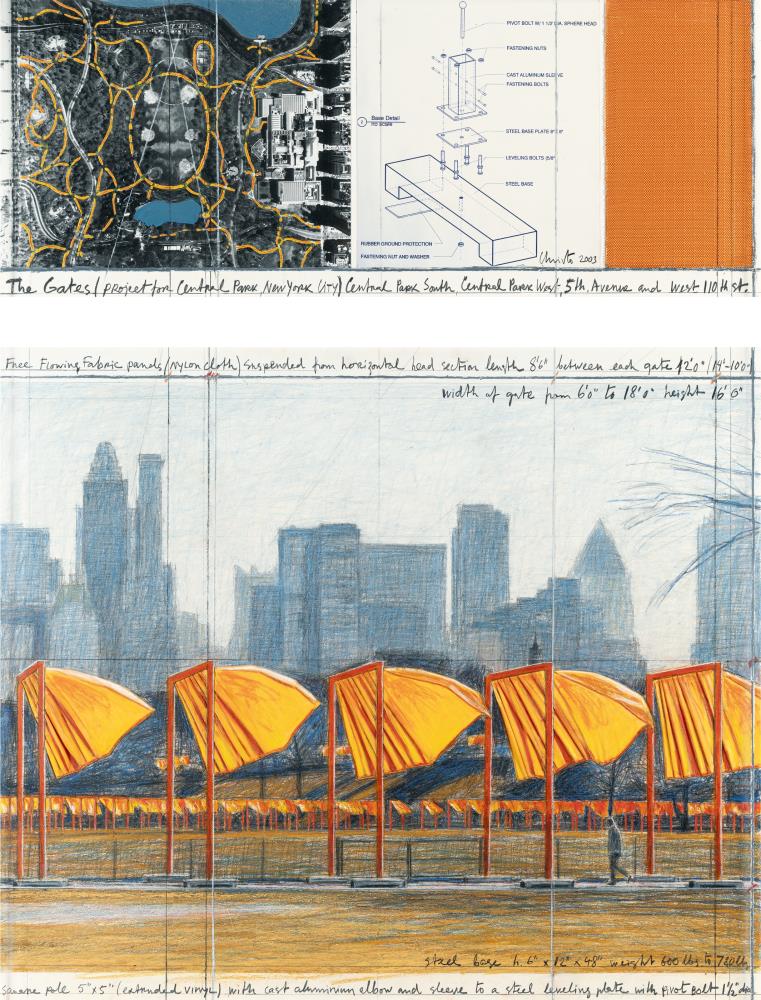
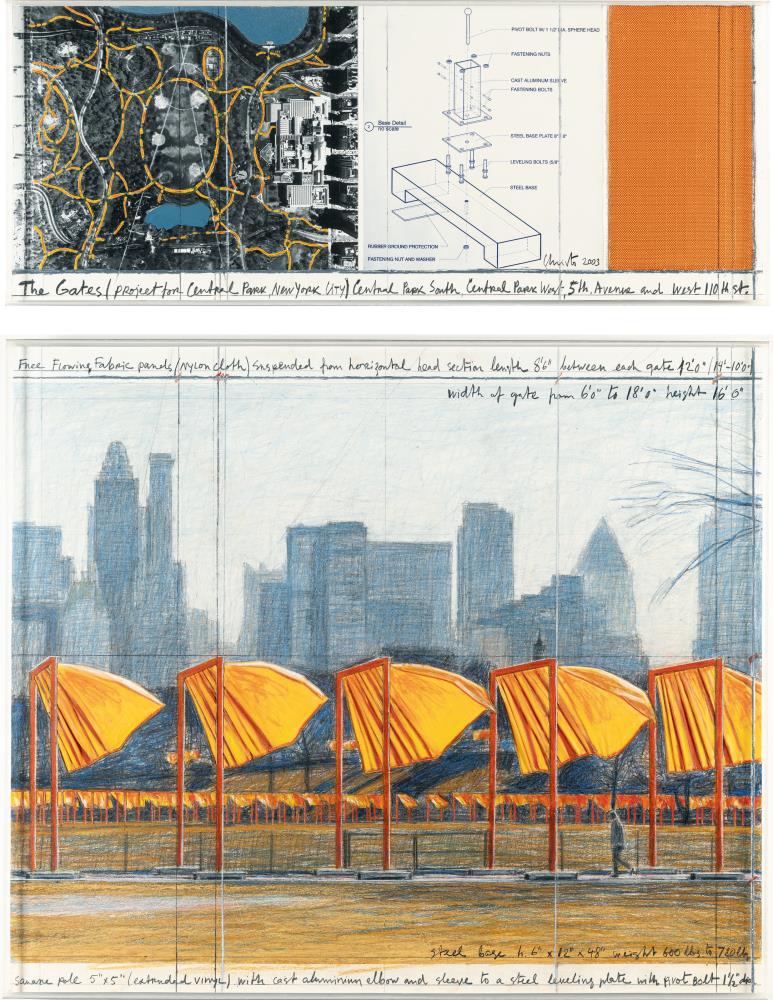
"The Gates (Project for Central Park, New York City)"
Artist
Christo Und Jeanne-Claude
1935 Gabrowo/Bulgarien - New York 2020 und 1935 Casablanca - New York 2009
Further information
Das Werk ist im Archiv der Christo und Jeanne-Claude Foundation, New York, registriert.
Provenance
Alp Galleries, New York;
Private collection, Bavaria, acquired from the aforementioned in 2004.
Private collection, Bavaria, acquired from the aforementioned in 2004.
Share


Description
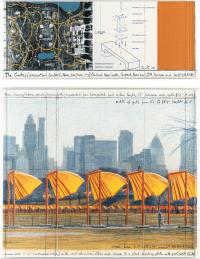
• Captivating collage featuring a masterfully executed study
• The multi-layered composition, with its delicate line work, is exemplary of the working method of the world-famous artist couple
• Preliminary study for one of Christo and Jeanne-Claude’s most significant and high-profile projects, realised in 2005 in Central Park, New York
"Do you know that I don’t have any artworks that exist? They all go away when they’re finished. Only the preparatory drawings and collages remain, giving my works an almost legendary character."
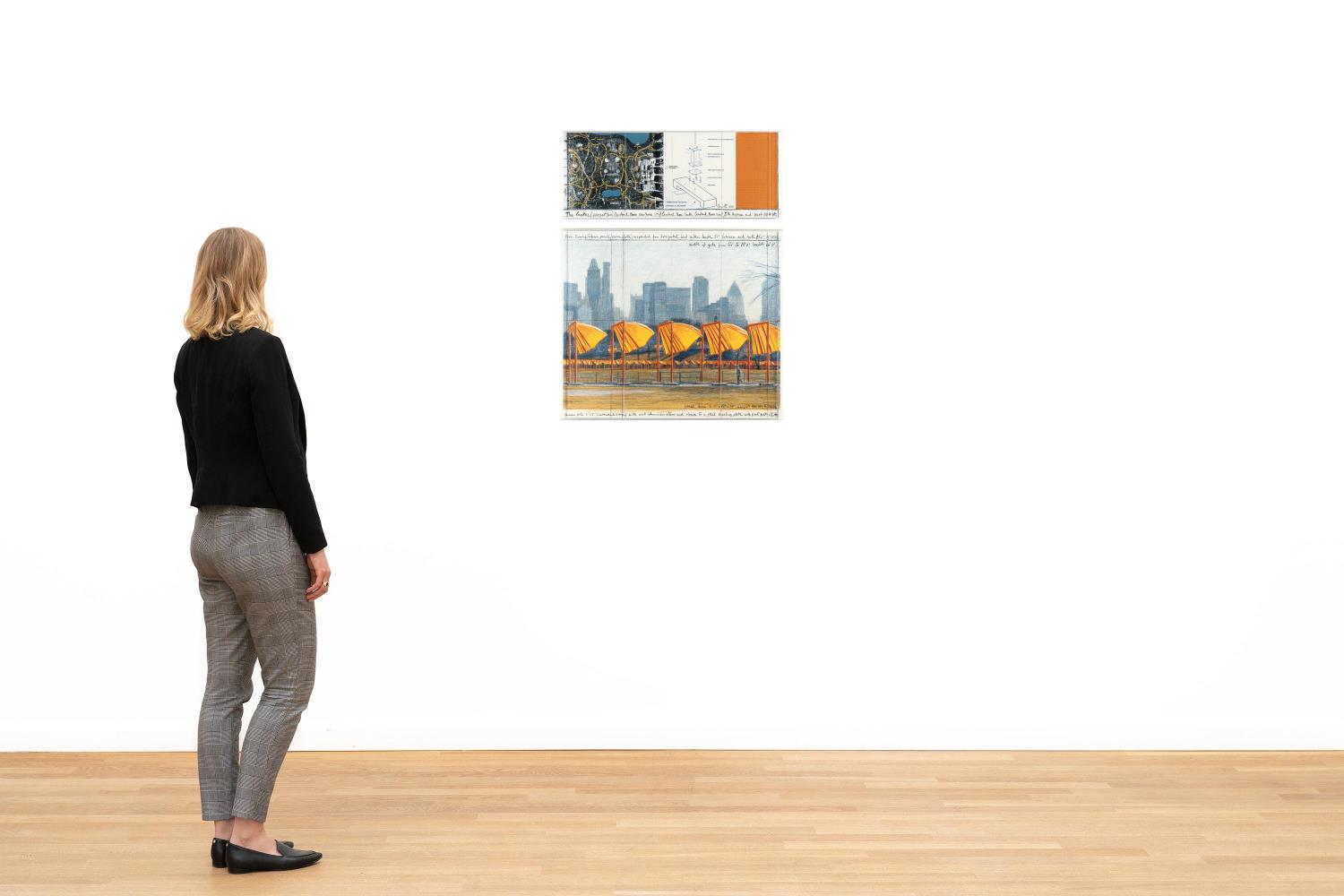
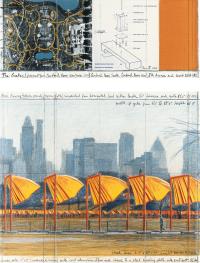
With "The Gates", Christo and Jeanne-Claude realised one of their most poetic and, at the same time, most popular projects in February 2005: for sixteen days, over 7,500 bright orange gates lined the paths of Central Park in New York. The artists had developed the idea as early as the late 1970s, but it was only after decades of discussions with authorities, politicians and the public that the project could be realised. As with all works by Christo and Jeanne-Claude, "The Gates" also required precise technical planning and the involvement of numerous engineers, assistants and specialists.
The installation consists of saffron-coloured fabric panels hanging freely from rectangular steel frames, stretching for a total of around 37 kilometres through the wintry park. The interplay of movement, light and colour creates a striking transformation of the familiar park landscape: the luminous fabrics provide a warm contrast to the bare, wintry landscape and lend the winding paths of Central Park a new, rhythmic structure. Millions of visitors experience the work as a walk-through, constantly changing spatial installation in the midst of New York’s urban daily life.
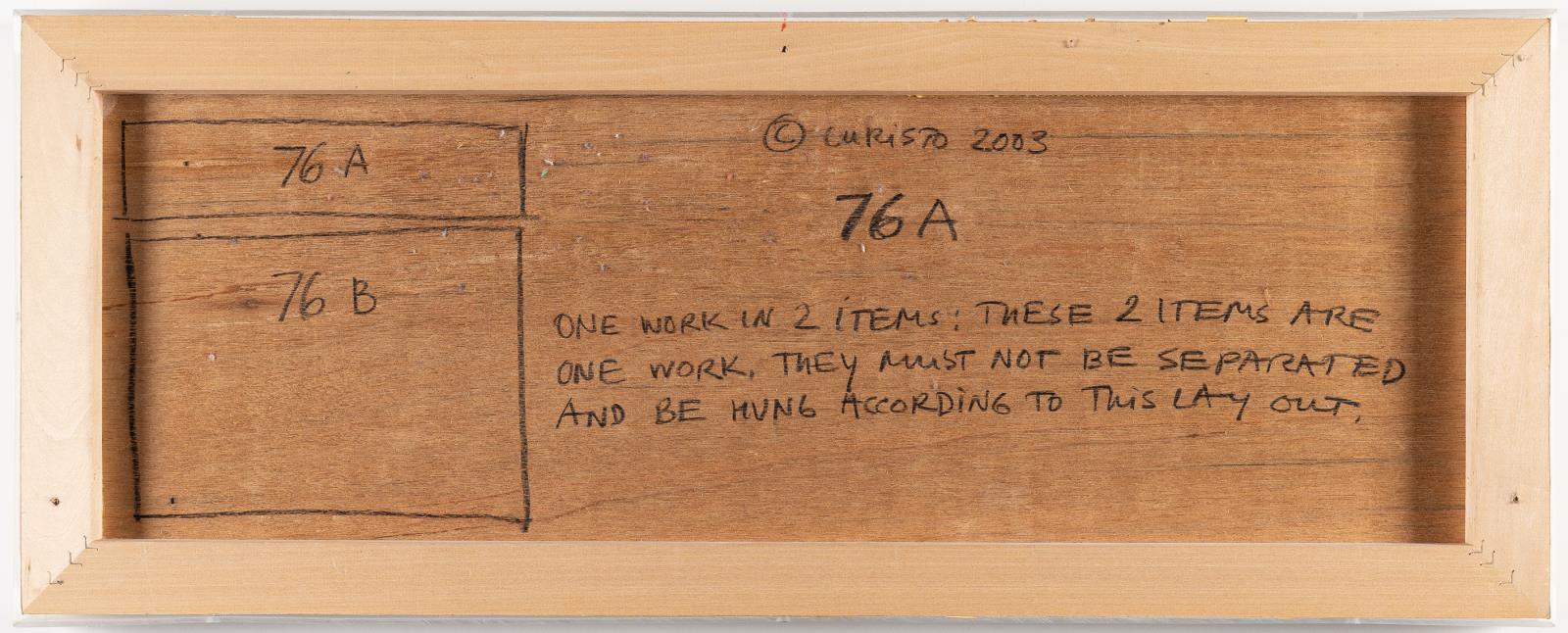
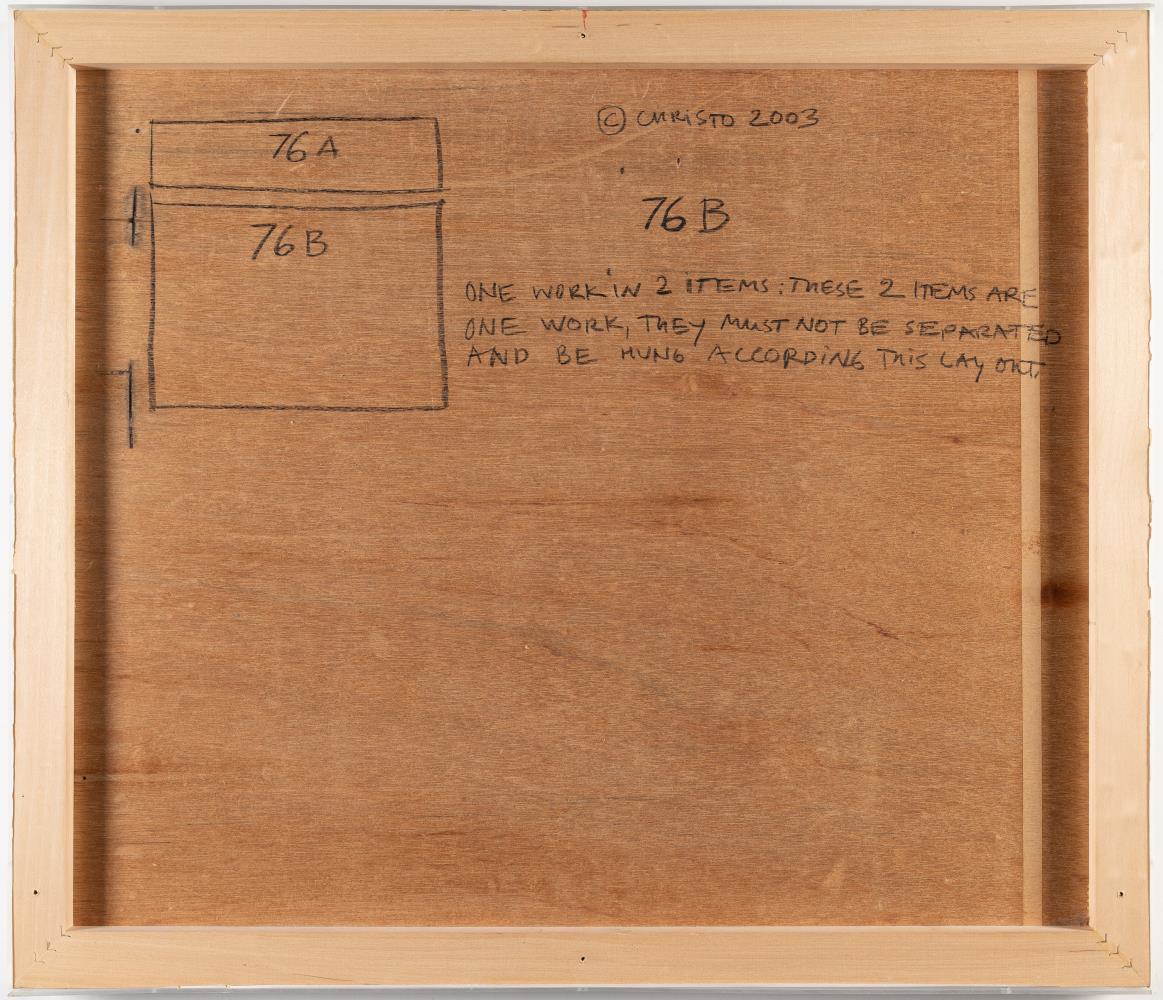
The preparatory drawings and collages for ‘The Gates’ vividly illustrate the vision of the artist couple. A defining feature is the tension between the precise, drawn depiction of the park landscape and the intensely coloured fabric elements, which already exert a powerful spatial and atmospheric effect in the designs. Fabric samples, technical notes and handwritten annotations also make the works extraordinary documents of an artistic process characterised by perseverance, visionary imagination and the pursuit of realising the seemingly impossible.
• The multi-layered composition, with its delicate line work, is exemplary of the working method of the world-famous artist couple
• Preliminary study for one of Christo and Jeanne-Claude’s most significant and high-profile projects, realised in 2005 in Central Park, New York
"Do you know that I don’t have any artworks that exist? They all go away when they’re finished. Only the preparatory drawings and collages remain, giving my works an almost legendary character."
With "The Gates", Christo and Jeanne-Claude realised one of their most poetic and, at the same time, most popular projects in February 2005: for sixteen days, over 7,500 bright orange gates lined the paths of Central Park in New York. The artists had developed the idea as early as the late 1970s, but it was only after decades of discussions with authorities, politicians and the public that the project could be realised. As with all works by Christo and Jeanne-Claude, "The Gates" also required precise technical planning and the involvement of numerous engineers, assistants and specialists.
The installation consists of saffron-coloured fabric panels hanging freely from rectangular steel frames, stretching for a total of around 37 kilometres through the wintry park. The interplay of movement, light and colour creates a striking transformation of the familiar park landscape: the luminous fabrics provide a warm contrast to the bare, wintry landscape and lend the winding paths of Central Park a new, rhythmic structure. Millions of visitors experience the work as a walk-through, constantly changing spatial installation in the midst of New York’s urban daily life.
The preparatory drawings and collages for ‘The Gates’ vividly illustrate the vision of the artist couple. A defining feature is the tension between the precise, drawn depiction of the park landscape and the intensely coloured fabric elements, which already exert a powerful spatial and atmospheric effect in the designs. Fabric samples, technical notes and handwritten annotations also make the works extraordinary documents of an artistic process characterised by perseverance, visionary imagination and the pursuit of realising the seemingly impossible.