Hans Thoma
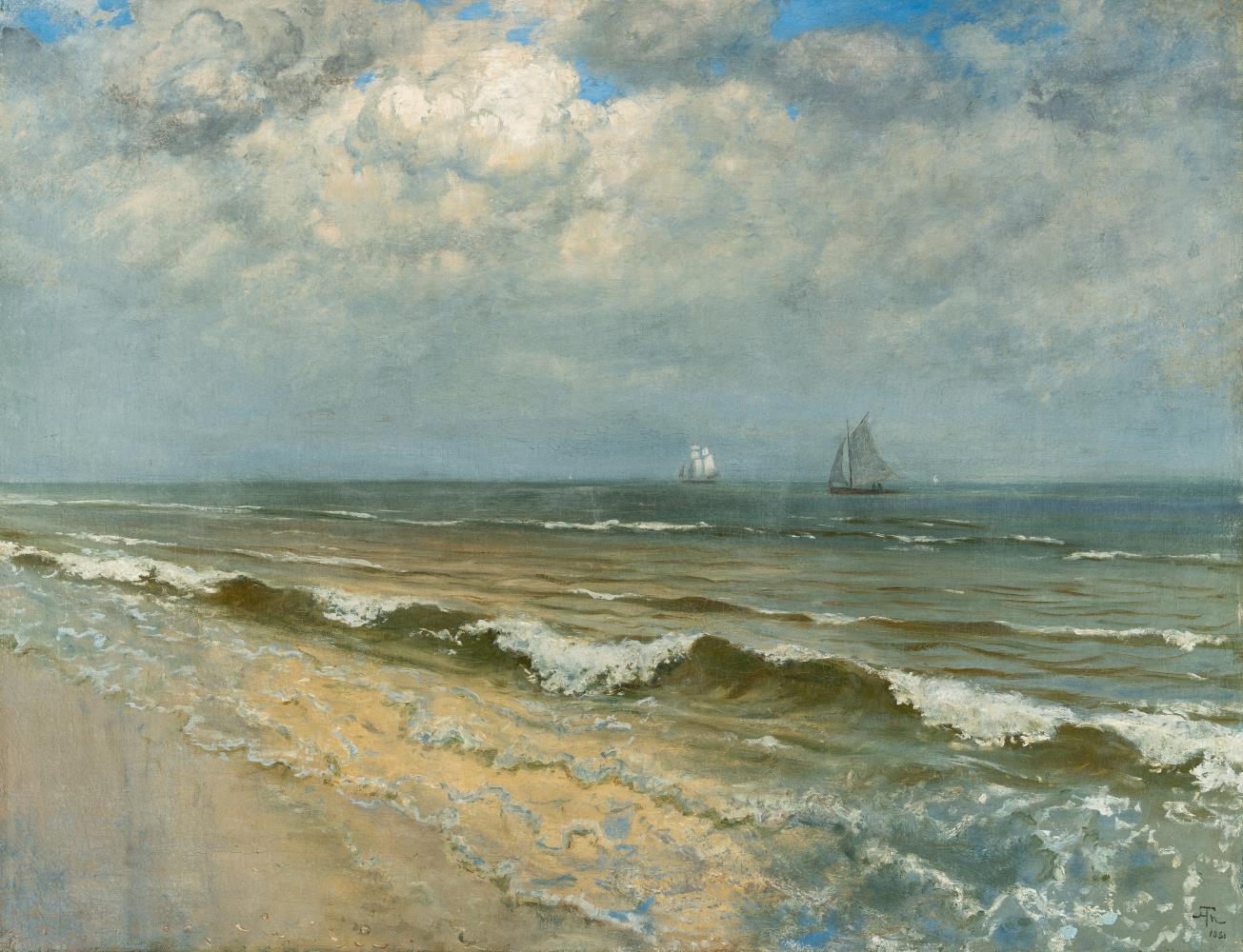
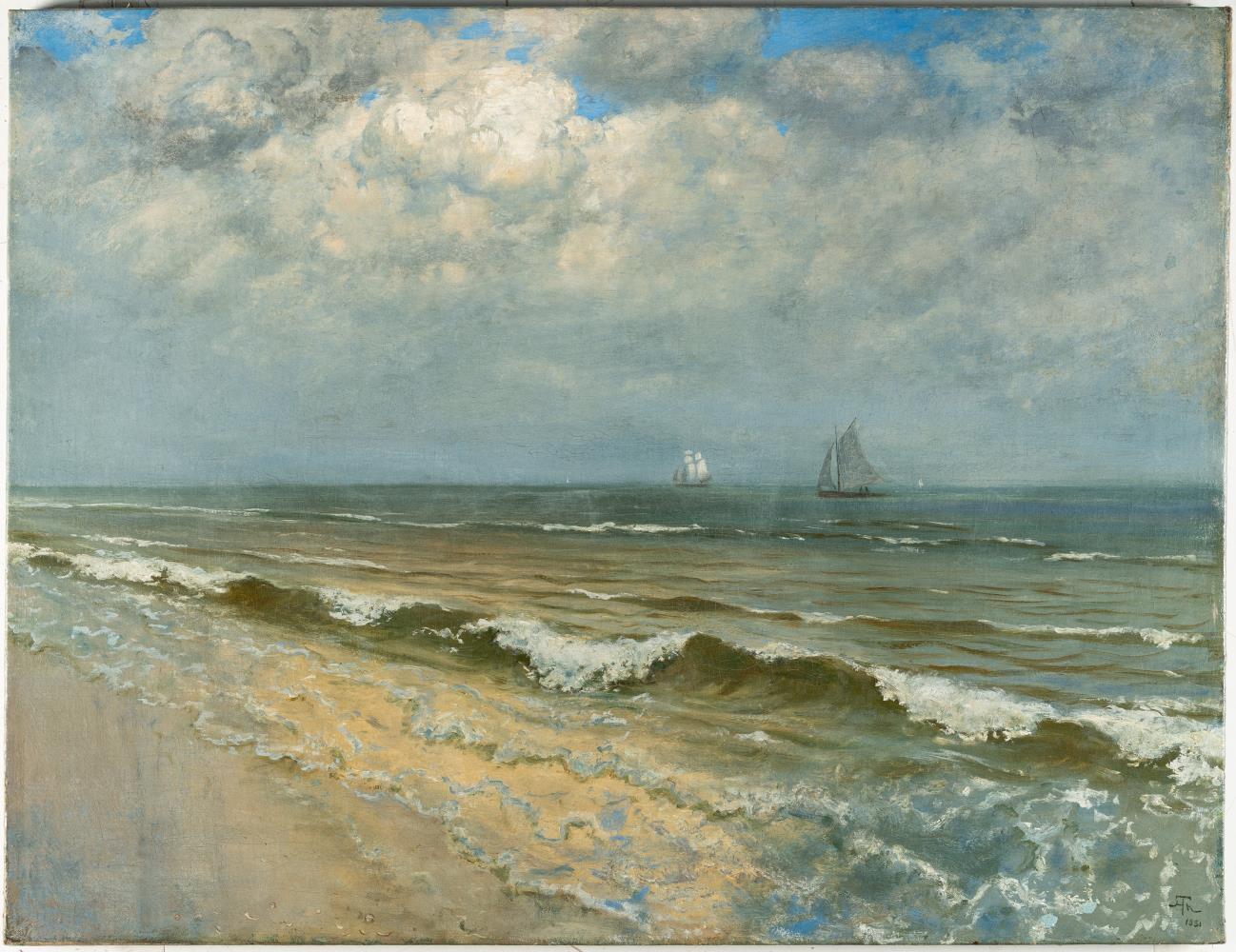
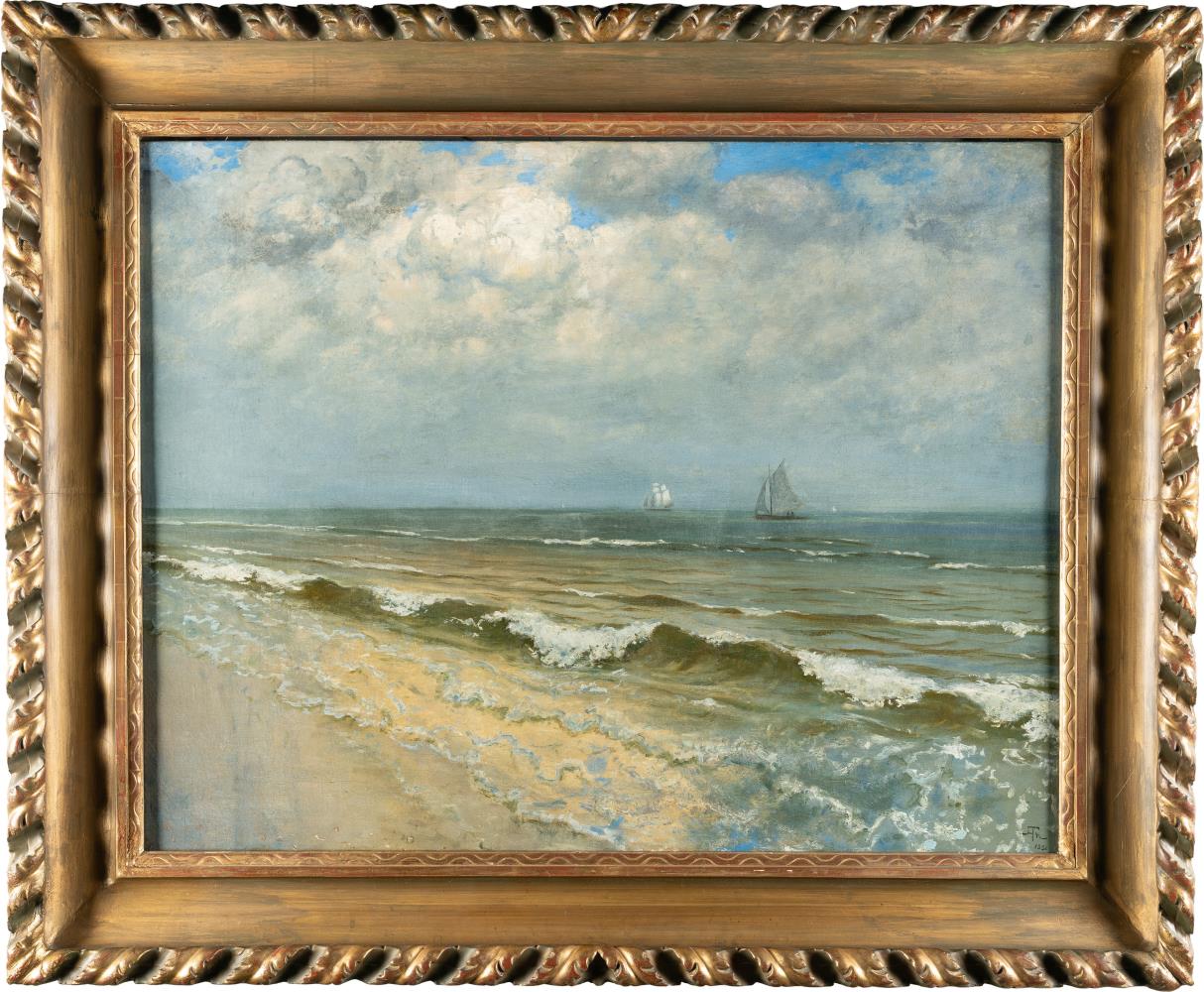
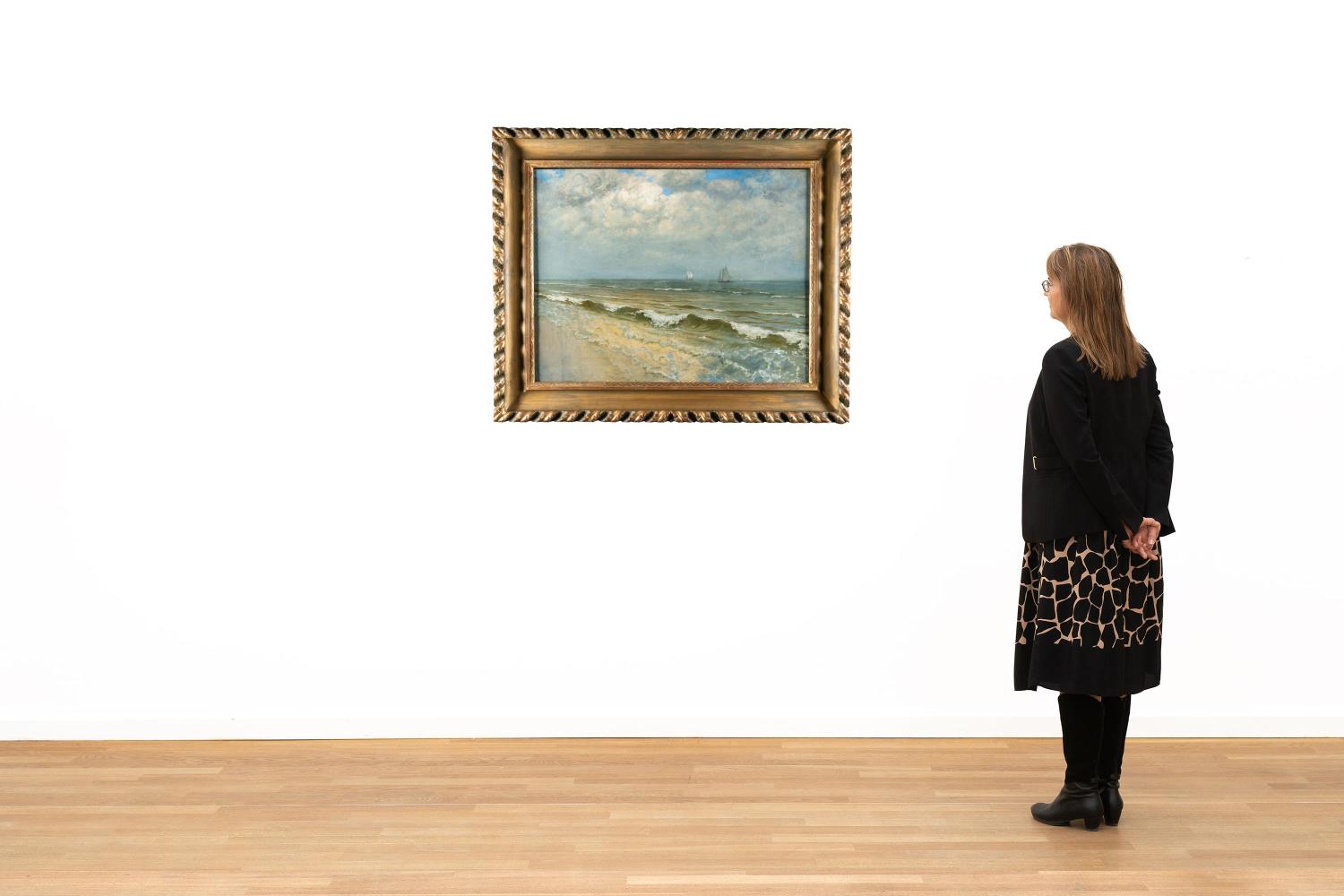
Beach at New Brighton
Artist
Hans Thoma
1839 Bernau - Karlsruhe 1924
Further information
Thode S. 165
Exhibition
A Loan Collection of Works by Hans Thoma, Ausst.-Kat. Liverpool Art Club, Liverpool 1884, Nr. 40 (?);
J. P. Schneiders Kunstsalon, Frankfurt am Main (1899); Thoma. Jubiläums-Ausstellung zu Ehren des siebzigsten Geburtstages des Meisters, Ausst.-Kat. Badischer Kunstverein Karlsruhe, Karlsruhe 1909, S. 8, Nr. 46; Thoma-Ausstellung. Gemälde von Hans Thoma aus deutschem Privatbesitz, ausgestellt 1922 in der National-Galerie. Betrachtungen und Verzeichnis, Berlin 1922, S. 120-121, Nr. 107;
Hans Thoma. Gedächstnisausstellung, Ausst.-Kat. Kunstverein/Städelsches Kunstinstitut, Frankfurt am Main 1925, Nr. 58;
Hans Thoma und seine Malerfreunde, Ausst.-Kat. Kunsthandlung J. P. Schneider jr., Frankfurt am Main, Frankfurt am Main, 1983, Nr. 9, Farbabb.;
Wilhelm Leibl und sein Malerkreis, Ausst.-Kat. Städtische Galerie Rosenheim, hrsg. von Stadt Rosenheim, Kulturamt, Rosenheim 1985, Nr. 150, Abb.;
Hans Thoma – Lebensbilder. Gemäldeausstellung zum 150. Geburtstag, Ausst.-Kat. Augustinermuseum Freiburg im Breisgau, Königstein im Taunus 1989, S. 228-229, Nr. 67, Farbabb.;
Jeannette Falke: Otto Scholderer und seine Frankfurter Künstlerkollegen, in: Otto Scholderer 1834-1902. Die neue Wirklichkeit des Malerischen, Ausst.-Kat. Museum Giersch, Frankfurt am Main, Frankfurt am Main 2002, S. 17, Abb.
J. P. Schneiders Kunstsalon, Frankfurt am Main (1899); Thoma. Jubiläums-Ausstellung zu Ehren des siebzigsten Geburtstages des Meisters, Ausst.-Kat. Badischer Kunstverein Karlsruhe, Karlsruhe 1909, S. 8, Nr. 46; Thoma-Ausstellung. Gemälde von Hans Thoma aus deutschem Privatbesitz, ausgestellt 1922 in der National-Galerie. Betrachtungen und Verzeichnis, Berlin 1922, S. 120-121, Nr. 107;
Hans Thoma. Gedächstnisausstellung, Ausst.-Kat. Kunstverein/Städelsches Kunstinstitut, Frankfurt am Main 1925, Nr. 58;
Hans Thoma und seine Malerfreunde, Ausst.-Kat. Kunsthandlung J. P. Schneider jr., Frankfurt am Main, Frankfurt am Main, 1983, Nr. 9, Farbabb.;
Wilhelm Leibl und sein Malerkreis, Ausst.-Kat. Städtische Galerie Rosenheim, hrsg. von Stadt Rosenheim, Kulturamt, Rosenheim 1985, Nr. 150, Abb.;
Hans Thoma – Lebensbilder. Gemäldeausstellung zum 150. Geburtstag, Ausst.-Kat. Augustinermuseum Freiburg im Breisgau, Königstein im Taunus 1989, S. 228-229, Nr. 67, Farbabb.;
Jeannette Falke: Otto Scholderer und seine Frankfurter Künstlerkollegen, in: Otto Scholderer 1834-1902. Die neue Wirklichkeit des Malerischen, Ausst.-Kat. Museum Giersch, Frankfurt am Main, Frankfurt am Main 2002, S. 17, Abb.
Literature
Anonymous: ‘The Thoma Exhibition in Frankfurt’, in: *Die Kunst für alle. Malerei, Plastik, Graphik, Architektur* 15, 1899/1900, p. 118; Henry Thode: *Hans-Thoma-Gemälde*, 2 vols. with a total of 150 photolithographic plates, Frankfurt am Main 1900, plate 72; Hans Thoma: In the Winter of Life, Jena 1919, p. 76; Hans Thoma. One Hundred Paintings from German Private Collections, ed. by Ludwig Justi, Berlin 1922, plate 61; Josef August Beringer: Hans Thoma – A Portrait of His Life from Letters and Diaries. With 20 illustrations, Leipzig 1929, p. 184; Correspondence between Hans Thoma and Georg Gerland. A Contribution to Upper Rhenish Culture at the End of the 19th Century, ed. by Josef August Beringer on behalf of the Baden Historical Commission, Karlsruhe 1938, pp. 52–53; Hermann Eris Busse: Hans Thoma – Life and Work, Berlin 1935, ill. p. 79; Gottfried Pütz/Robert Rosenfelder: Hans Thoma. Stages in an Artist’s Life, Petersberg 2014, pp. 144–145, no. 68, colour ill.
Provenance
Charles Minoprio (1838–1895), Liverpool (?); Art Dealers J. P. Schneider Jr., Frankfurt am Main; Johann Hector Roessler (1842–1915), Frankfurt am Main (1909); Johann Friedrich Roessler (1870–1937), Frankfurt am Main; donated to the Städel Art Institute, 19 May 1938, Inv. No. 1934 (according to the 1983 exhibition catalogue Hans Thoma and his Painter Friends); Prestel-Voigtländer Art Dealers, Frankfurt am Main (acquired from the aforementioned in 1950); private collection; J.P. Schneider Art Dealers, Frankfurt am Main; private collection, Hesse.
lot_group
1 Paintings
Share


Description
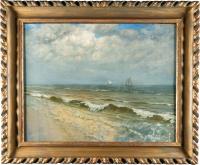
Hans Thoma had moved from Munich to Frankfurt at the end of 1876, where his most important collectors, Otto Eiser and Alexander Gerlach, lived – yet his financial situation remained precarious: ‘I myself sell virtually nothing in Frankfurt and would not know how to make ends meet if I had not found a few friends in England who are happy to buy many paintings for little money,’ he admitted at the beginning of 1881. One of these English friends was Charles Minoprio (1838–1895), a native of Frankfurt who had made his fortune in the cotton trade in Liverpool. Thomas’s old friend Otto Scholderer, who had been living in London since 1871, had established the contact, from which a friendship developed. In 1879, Minoprio had purchased a landscape at the Frankfurt Kunstverein and invited Thoma to Liverpool, where the painter visited him in August. From there, Thoma made several excursions to New Brighton, situated at the mouth of the River Mersey, with its beach: ‘to New Brighton, walking along the beach towards Haylake, in strong winds and with the tide rolling in’, Thoma noted in his diary on 25 August. There he sketched and produced several small-format studies (Thode 1909, pp. 130, 131 and 134), but our painting was not created until two years later in the Frankfurt studio. It is a tranquil picture full of depth, in which sky and water are given equal weight – the waves roll diagonally towards the lower edge of the picture and break into small swells with white, rippling crests on the silvery, gleaming beach, whilst the calm sea grows ever greener towards the horizon. There, two large sailing ships seem to float by, the one further away with gleaming white rigging. Above them, dirty-white clouds pile up, from which the blue sky flashes through isolatedly. Simple and clear in composition, Thoma sensitively captures the gentle play of the waves of the northern sea in subdued colours – in this harmonious, silvery-hazy depiction, Thoma stands in stark contrast to, for example, Gustave Courbet’s contemporary seascapes, in which he brings the immense power of the sea to the fore. Thoma’s painting nevertheless made an impression – when it was presented in an exhibition at J. P. Schneider’s art salon in 1899, a reviewer praised the fact that Thoma presented something new with almost every painting: "Who has ever seen a seascape by Thoma? Certainly not many. Here was one on display, a view of the English coast, and an excellent painting at that, observed with such vitality and executed with such confidence as if this artist had never done anything else at all." By this time, the painting had returned to Frankfurt, having previously been in the possession of Charles Minoprio. In 1884, Minoprio had organised the first Thoma exhibition in England at the Liverpool Art Club, featuring works from his own collection and that of his brother-in-law. No. 40 listed in the small exhibition brochure there – Beach at New Brighton – is likely to be identical to our painting, which, following Minoprio’s death in 1895, returned to Frankfurt via the art dealer J. P. Schneider, like most of the Thoma paintings from his collection. Dr Peter Prange