Wassily Kandinsky
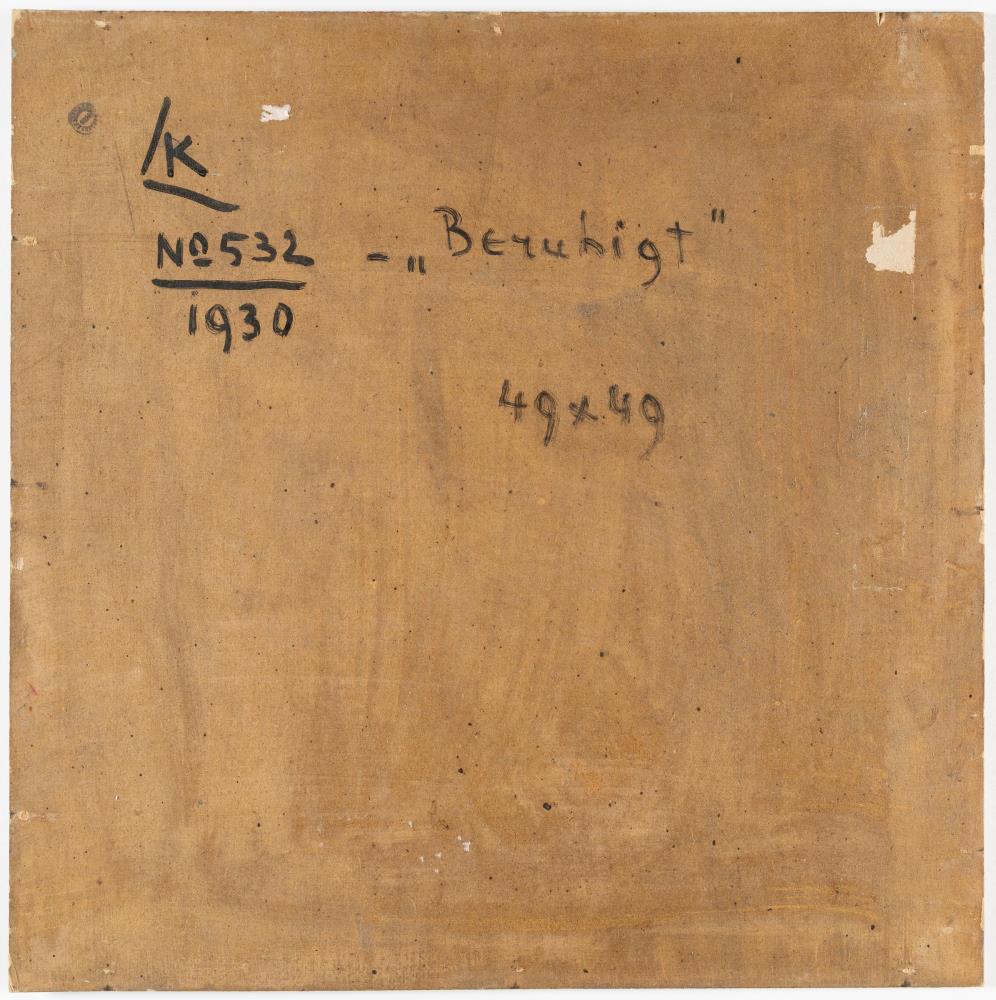
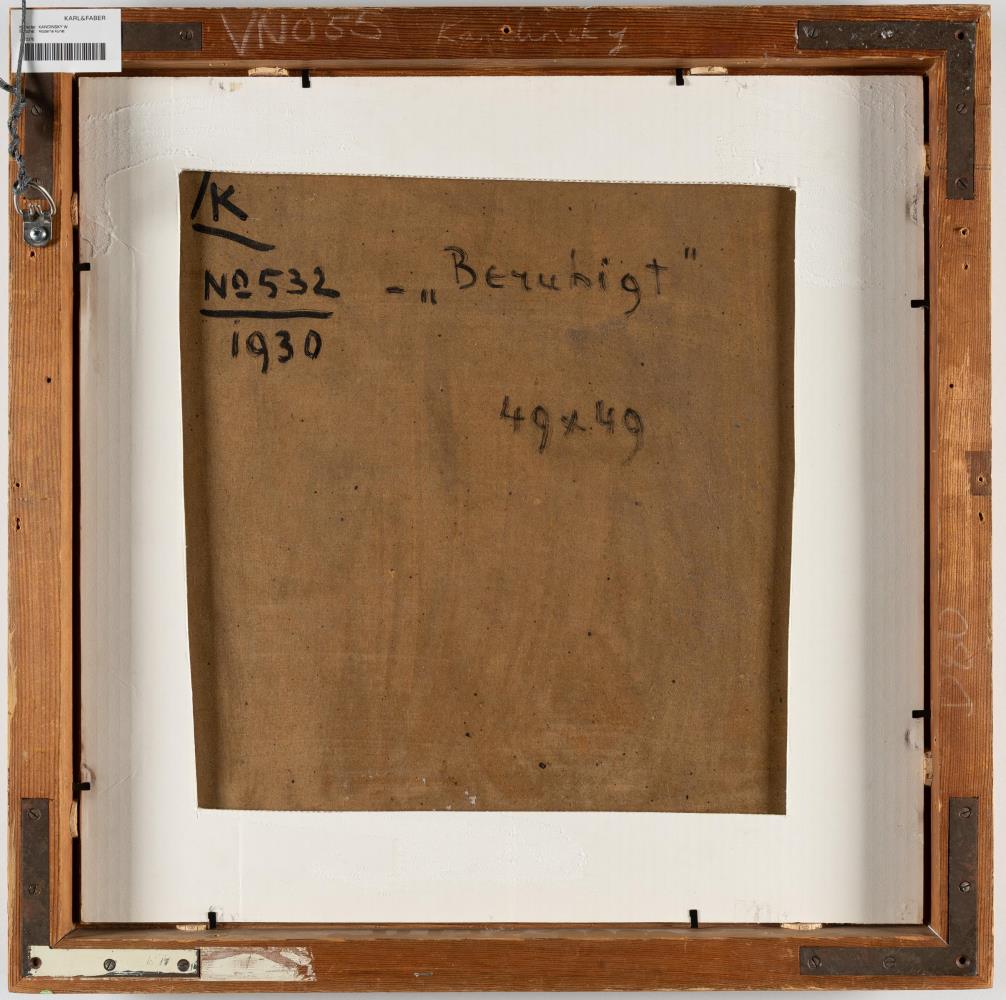
„Beruhigt“
Artist
Wassily Kandinsky
Exhibition
Complete exhibition Wassily Kandinsky, Kunsthalle Bern, 1955, cat. no. 63, no illustration.
Literature
Grohmann, Will, Wassily Kandinsky, Cologne 1958, cat. no. 379, p. 338, b/w illus. p. 381.
Provenance
Nina Kandinsky, Neuilly-sur-Seine;
Louis Clayeux, Paris;
Christie's, New York 7.5.2008, lot 376;
Private collection, Europe.
Louis Clayeux, Paris;
Christie's, New York 7.5.2008, lot 376;
Private collection, Europe.
Share


Description
- Characteristic, abstract work from Kandinsky's time at the Bauhaus
- Excellent example of the design principles of his "cool" period
- Calm, meditative work with vibrant, subtle energy
Kandinsky cools down
During his professorship at the Bauhaus - from 1922 initially in Weimar, from 1925 in Dessau - Wassily Kandinsky developed a reduced, clear formal language, which he described as the "cool" period. During this phase, the artist developed a pictorial language based on geometric abstraction that combined rationality, spirituality and emotional depth. Instead of the dominant diagonals, he increasingly opted for an orthogonal and planimetric arrangement of the pictorial elements. A fluffy application of paint, the interaction of individual and geometric forms, colored and black grounds, warm tones and a mysterious glow lend his compositions rhythmic lightness and depth.
"Calm" as a character work
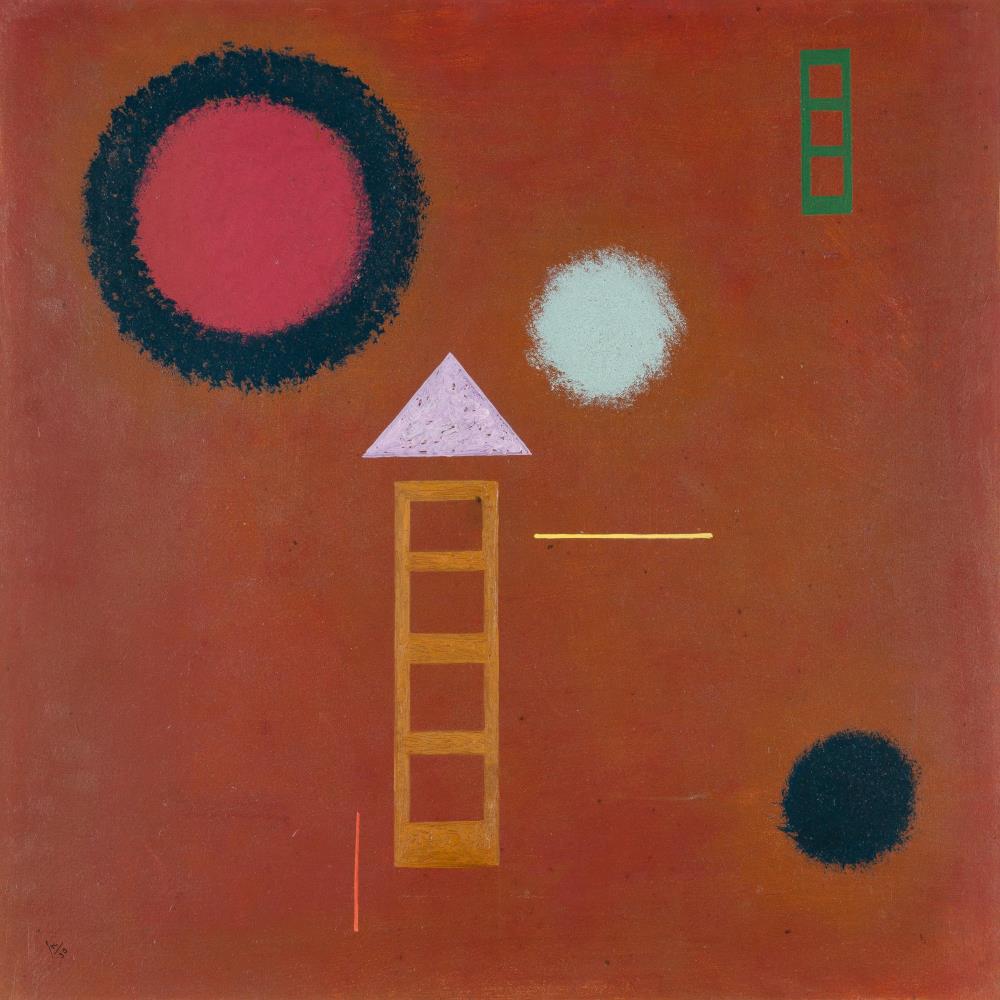
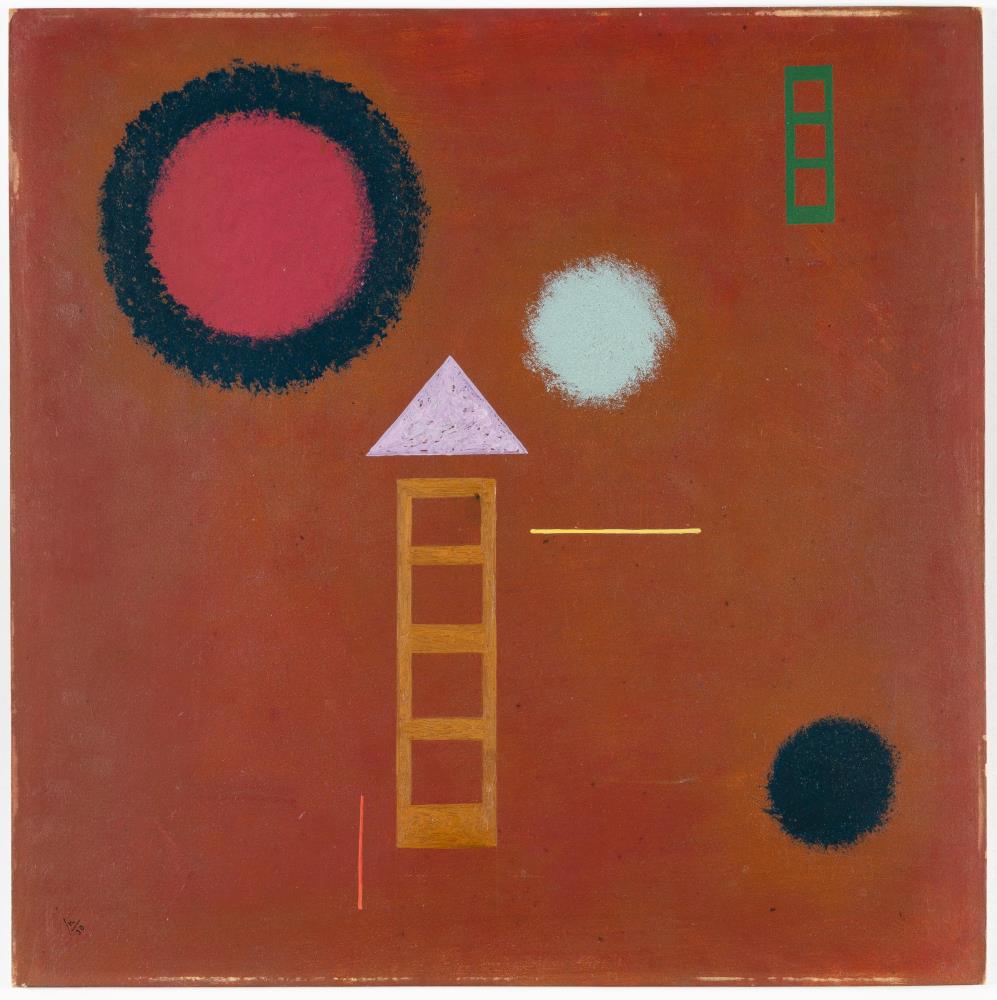
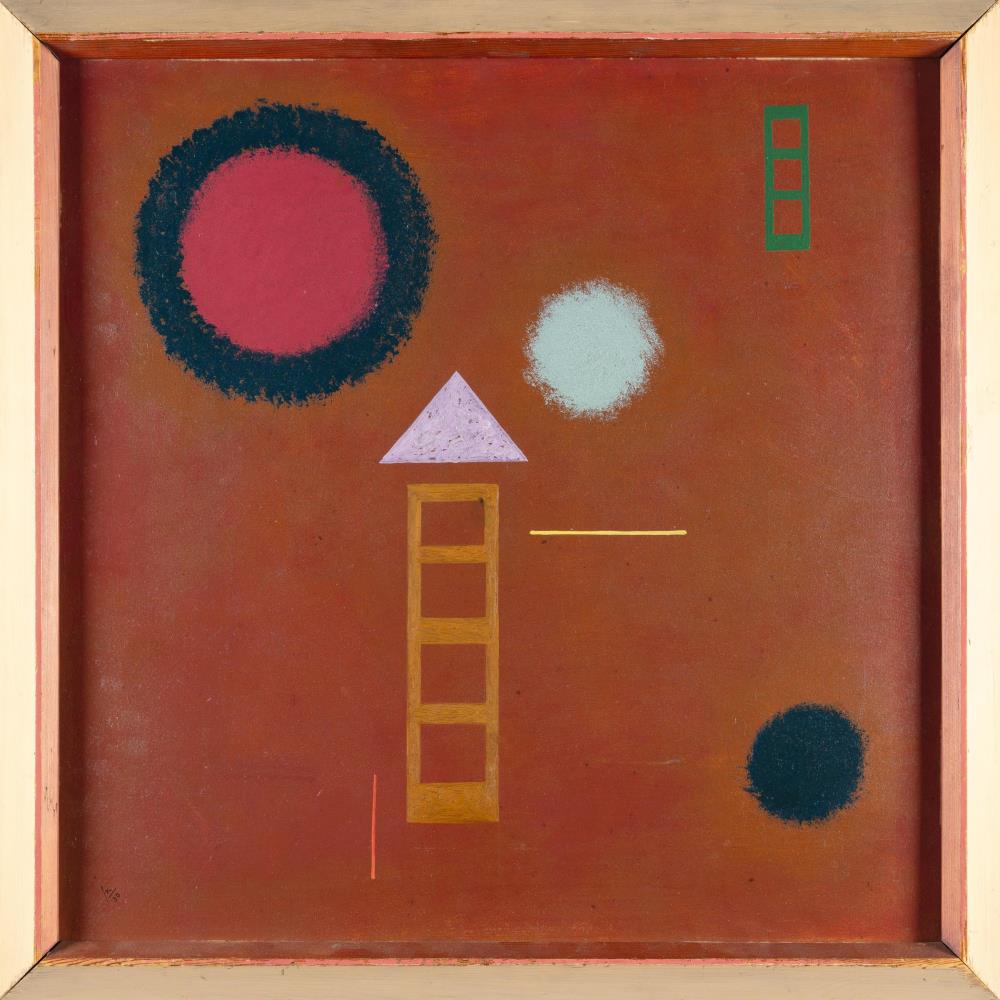
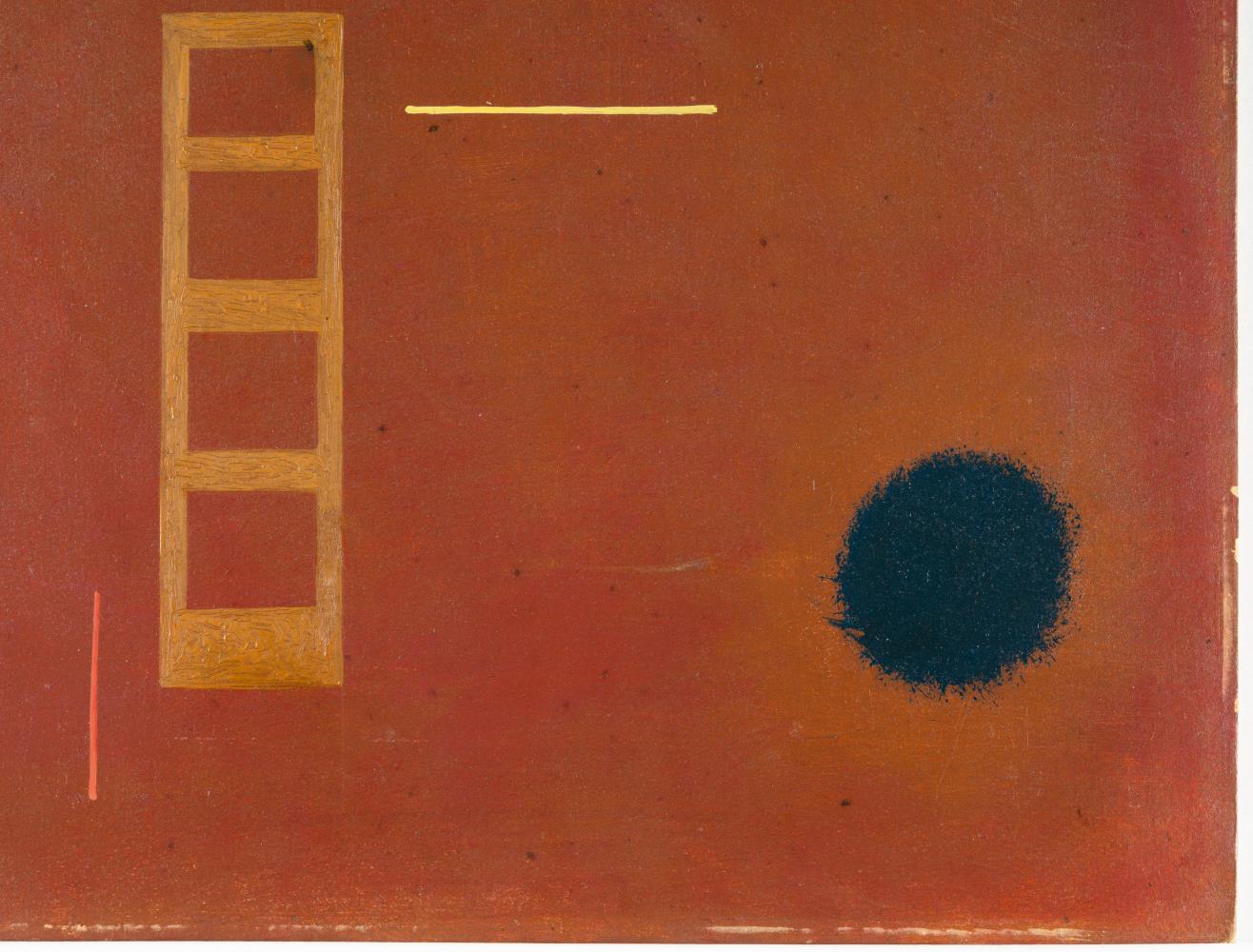
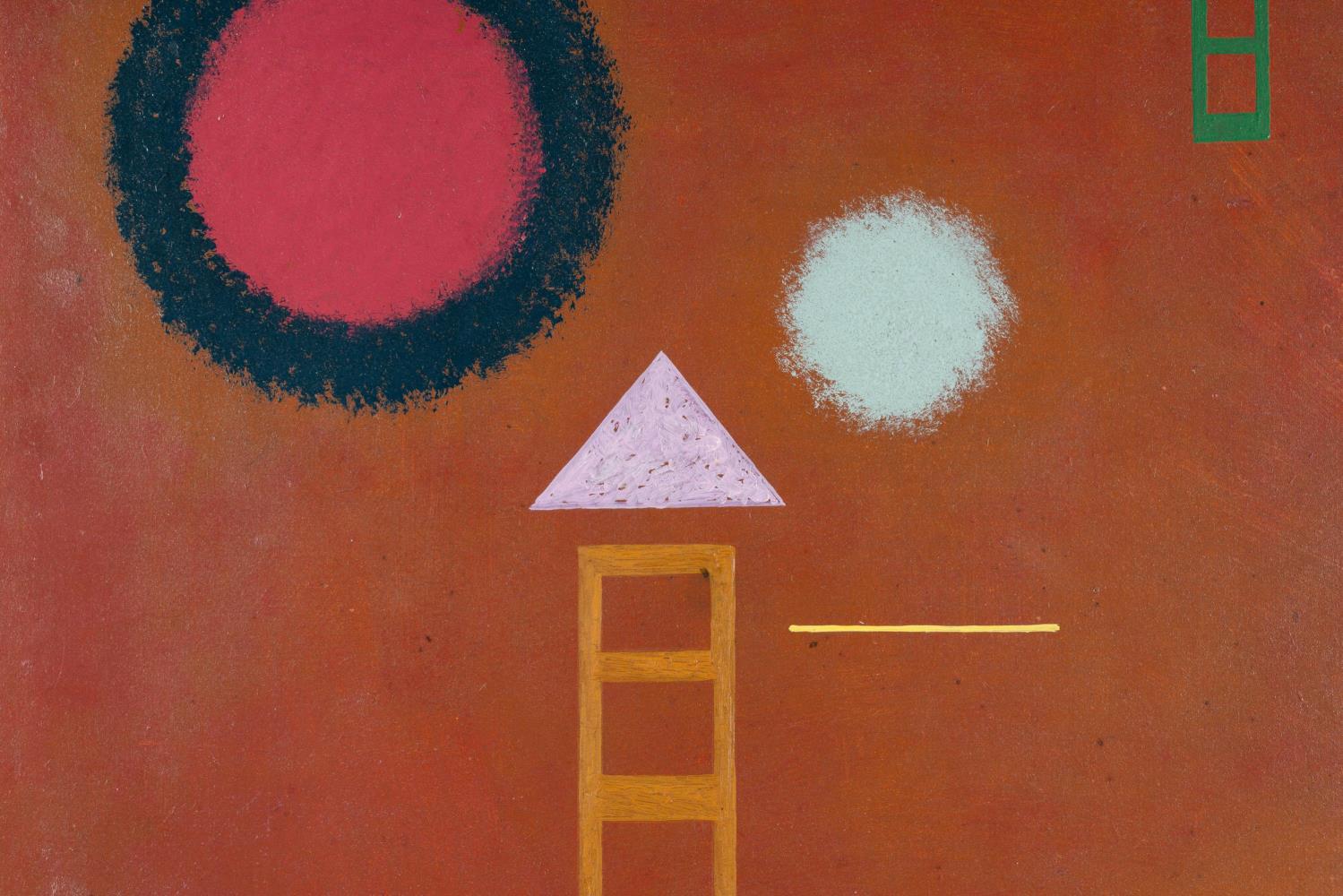
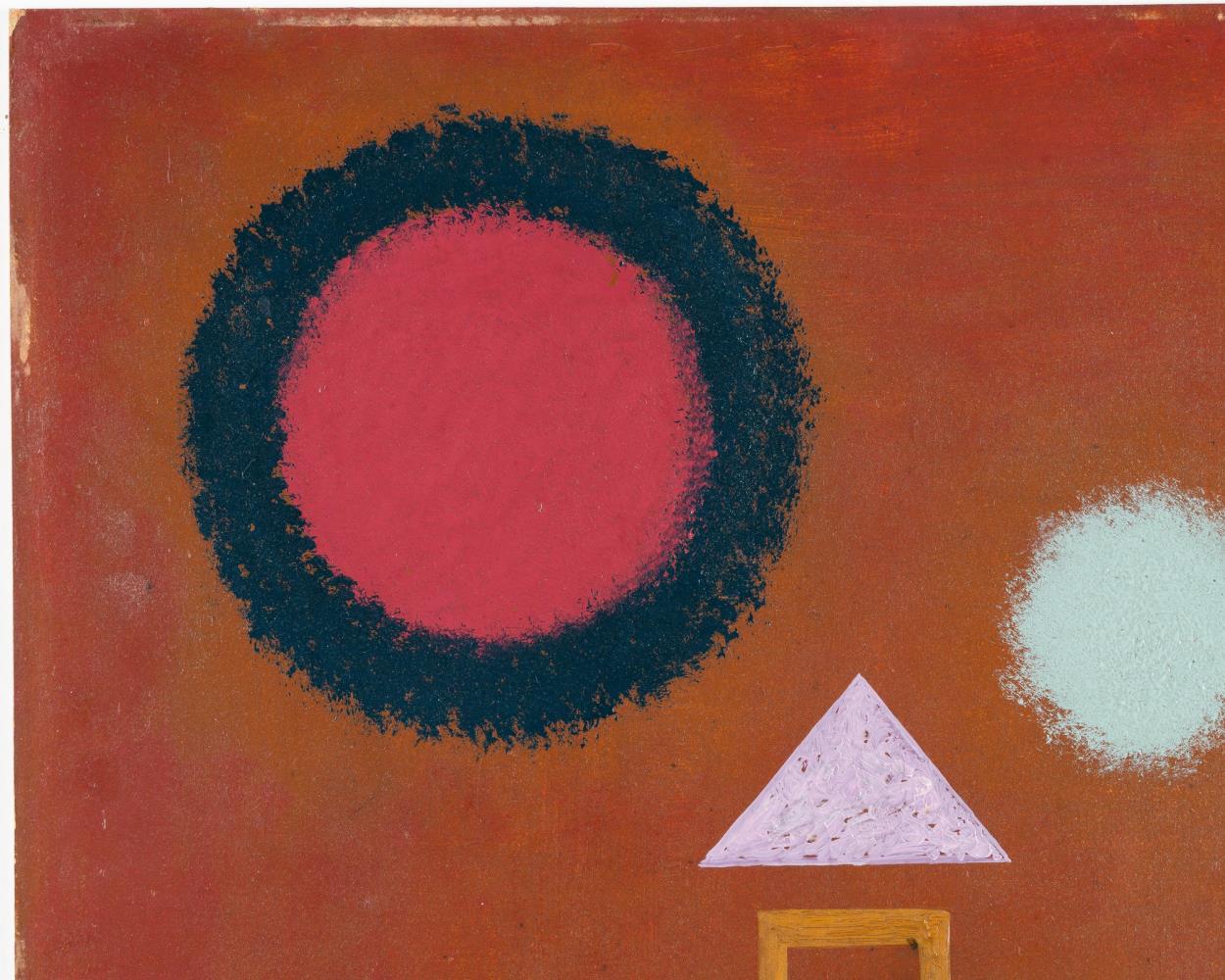
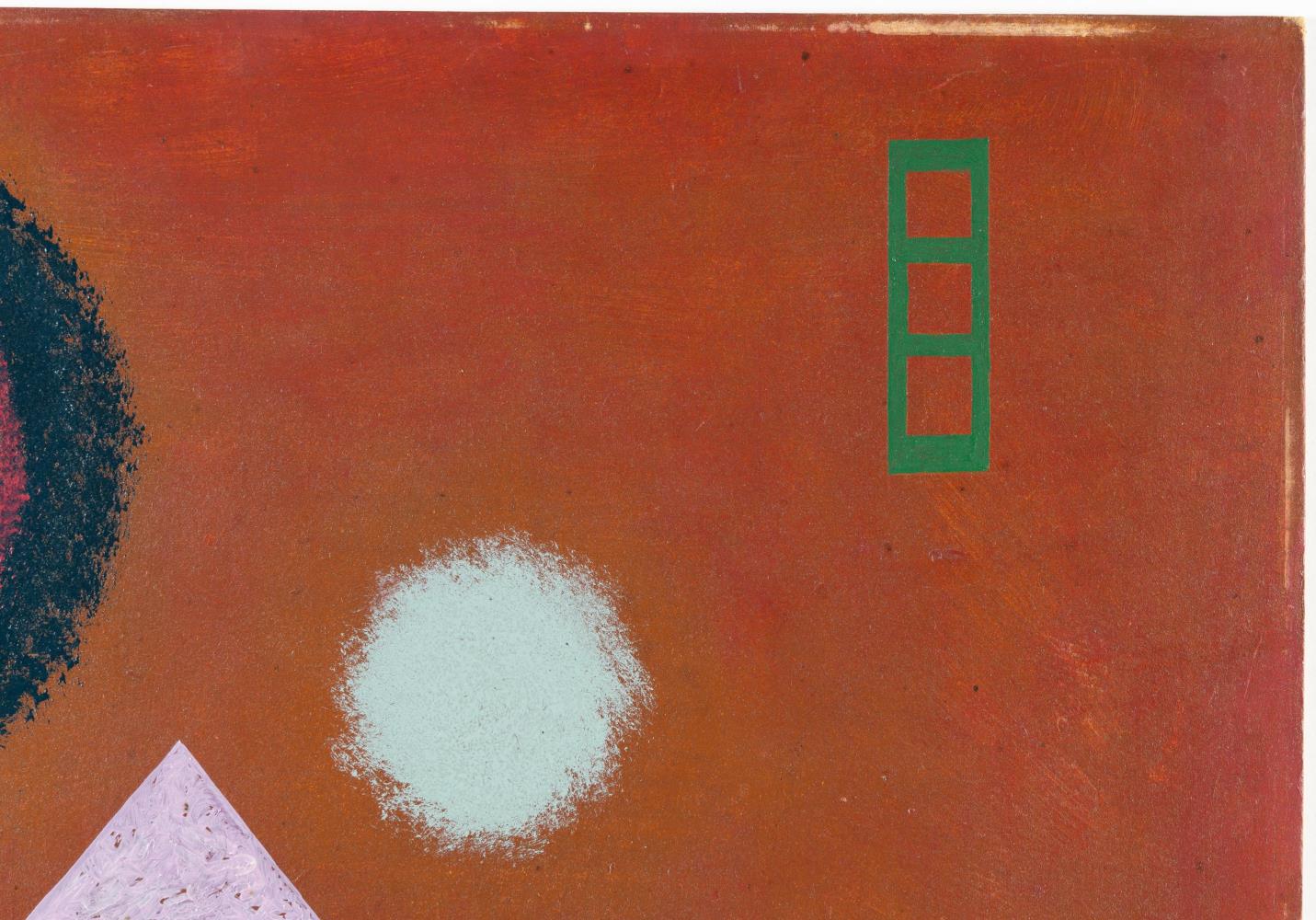
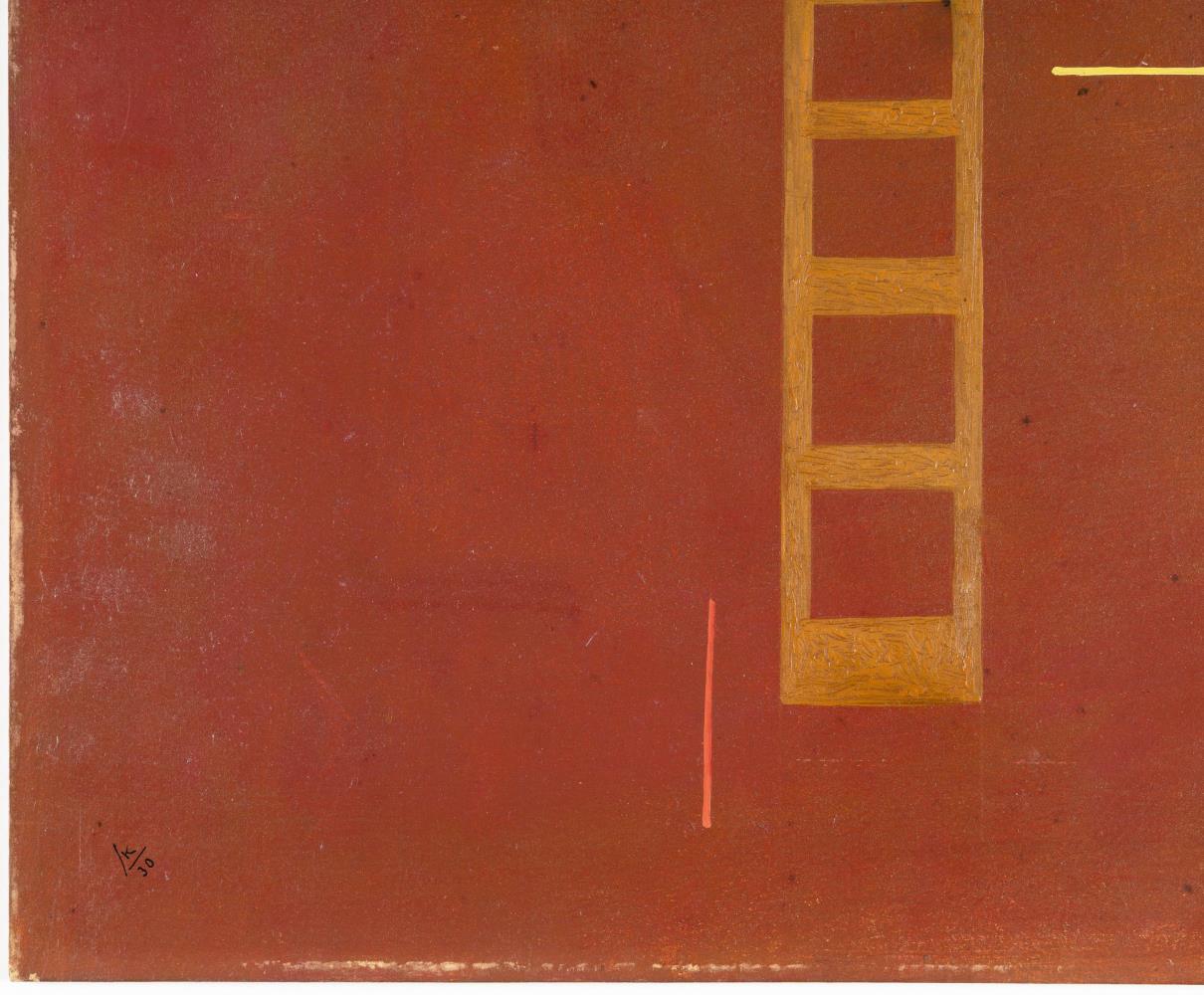
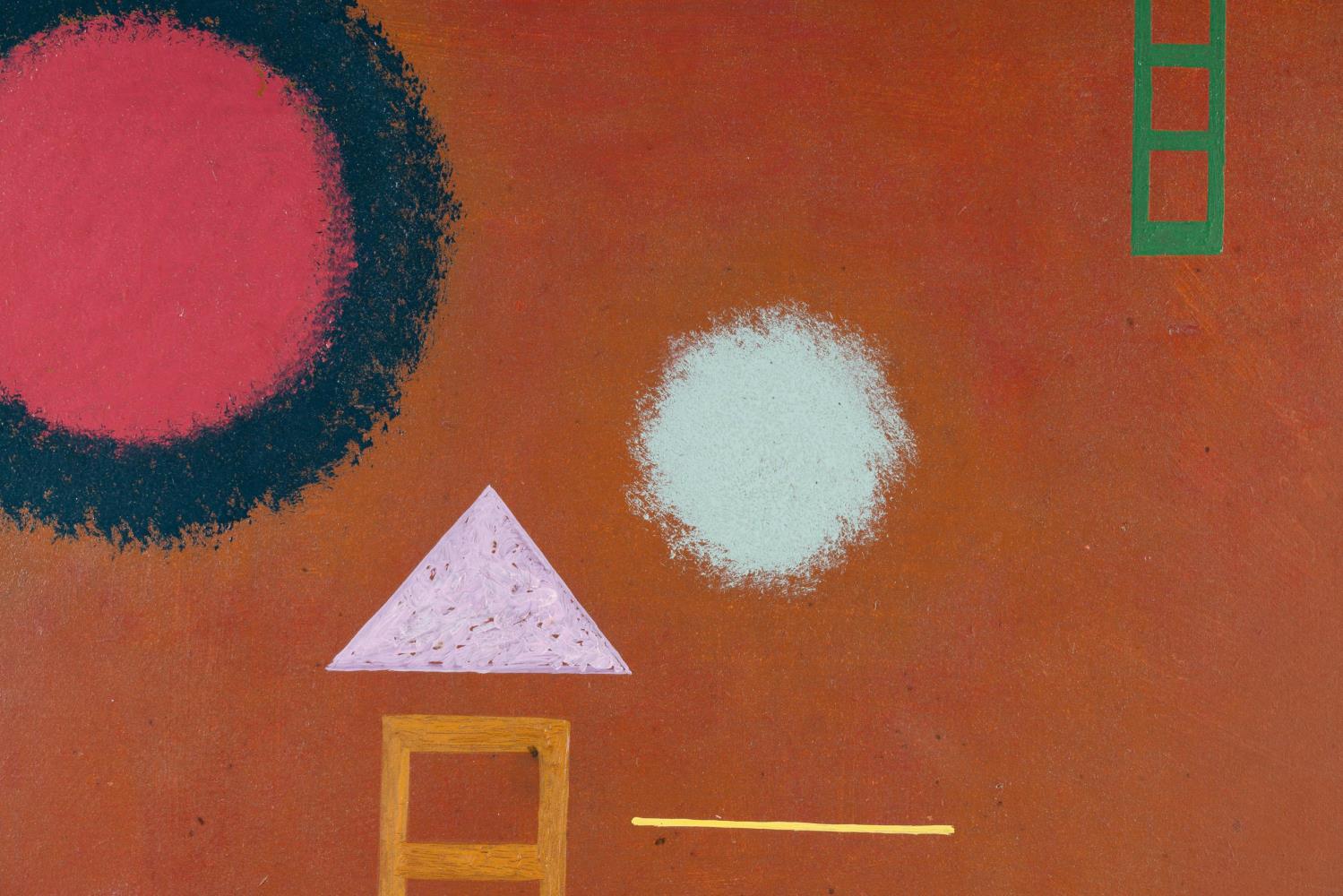
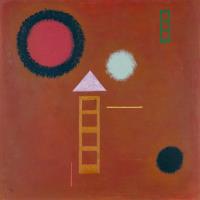
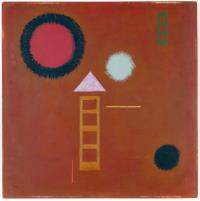
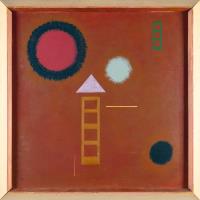
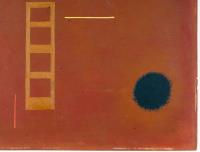
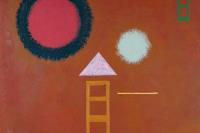
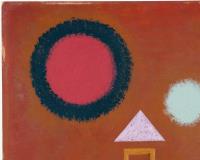
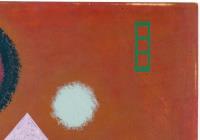
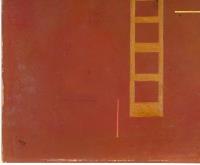
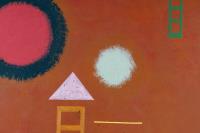
With "Calm", Kandinsky created a characteristic work of the "cool" period in 1930. Precisely placed forms, a balanced color composition and a calm, almost meditative order define the work. Various geometric shapes are spread across a square base without touching or overlapping. At the center of the composition is a light purple isosceles triangle - the visual heart of the picture. It is surrounded by other geometric elements - circles, rectangles and lines. The circular shapes, which are arranged from the upper left edge of the picture to the right edge, appear almost light. The circle, which for Kandinsky embodied the "synthesis of the greatest opposites", plays an important role in his work. He sees in it the union of heaviness and lightness, matter and spirit - a "form of the fourth dimension". This idea of balance and tension, of opposites in harmony, characterizes the formal structure of "Calm".
The use of tertiary colors, in which primary and secondary colors are mixed, has a haunting effect on the viewer. This is particularly evident in the background color, which has a warm brown tone, or the ochre-colored, rectangular formation in the middle of the picture, whereas the black circles are created by mixing all the primary colors.
Due to the strictly constructed, static arrangement of clearly structured forms and the harmonious choice of colors, the title "Calm" appears programmatic. At the same time, it suggests that a more dynamic or at least a more unsettled state previously prevailed. However, the existing calm is not a stillness, but rather a vibrating balance, in which a subtle energy resonates in the dotted edges of the circle and the rippled ductus inside the triangle.
The theorist Kandinsky
In his writings, "On the Spiritual in Art" (1912) or "Point and Line to Surface" (1926), Kandinsky's theoretical thinking on the relationship between color, form and sound is condensed. The artist searches for the "sound of color", which has an effect on the viewer like a musical harmony. The interplay of shapes and colors and their emotional effect fascinated Kandinsky and, as a synesthete, one of his goals was to combine different sensory impressions, such as colors and sounds. In "Calm", this can be seen in the example of the light violet or violet-colored triangle: "The form itself, even if it is completely abstract and resembles a geometric one, has its inner sound, is a spiritual being with characteristics that are identical to this form. A triangle (without specifying whether it is pointed, flat or equilateral) is such an entity with its own spiritual perfume. In connection with other forms, this perfume differentiates itself, acquires additional nuances, but basically remains unchanging, like the scent of the rose, which can never be confused with that of the violet." ("On the Spiritual in Art", 1912)
The Bauhaus network
Kandinsky's years at the Bauhaus were characterized by an intensive exchange with many outstanding international artists, colleagues and students. The college included renowned artists such as Paul Klee, Lyonel Feininger, László Moholy-Nagy, Oskar Schlemmer as well as Josef Albers and Johannes Itten, who also shaped color theory at the Bauhaus. Kandinsky was particularly close friends with Paul Klee for many years, and from 1925 they even lived next door to each other in Walter Gropius' master houses in Dessau. Their relationship was always about an artistic debate that contained many similarities, but also differences and rivalries. Both strove for a spiritualization of art and the autonomy of artistic means.
The outstanding significance of the work is obvious. "Calm" is a manifesto of inner order, of the connection between spirit and color, of systematic precision, visual harmony and spiritual resonance - one that makes Kandinsky's ideal of the "spiritual dimension of art" visible with perfect clarity.
This auction will also feature an exquisite watercolor by Wassily Kandinsky, created in the same year, 1930, during the Bauhaus period in Dessau (lot 566).
Roethel/Benjamin 977.
- Excellent example of the design principles of his "cool" period
- Calm, meditative work with vibrant, subtle energy
Kandinsky cools down
During his professorship at the Bauhaus - from 1922 initially in Weimar, from 1925 in Dessau - Wassily Kandinsky developed a reduced, clear formal language, which he described as the "cool" period. During this phase, the artist developed a pictorial language based on geometric abstraction that combined rationality, spirituality and emotional depth. Instead of the dominant diagonals, he increasingly opted for an orthogonal and planimetric arrangement of the pictorial elements. A fluffy application of paint, the interaction of individual and geometric forms, colored and black grounds, warm tones and a mysterious glow lend his compositions rhythmic lightness and depth.
"Calm" as a character work
With "Calm", Kandinsky created a characteristic work of the "cool" period in 1930. Precisely placed forms, a balanced color composition and a calm, almost meditative order define the work. Various geometric shapes are spread across a square base without touching or overlapping. At the center of the composition is a light purple isosceles triangle - the visual heart of the picture. It is surrounded by other geometric elements - circles, rectangles and lines. The circular shapes, which are arranged from the upper left edge of the picture to the right edge, appear almost light. The circle, which for Kandinsky embodied the "synthesis of the greatest opposites", plays an important role in his work. He sees in it the union of heaviness and lightness, matter and spirit - a "form of the fourth dimension". This idea of balance and tension, of opposites in harmony, characterizes the formal structure of "Calm".
The use of tertiary colors, in which primary and secondary colors are mixed, has a haunting effect on the viewer. This is particularly evident in the background color, which has a warm brown tone, or the ochre-colored, rectangular formation in the middle of the picture, whereas the black circles are created by mixing all the primary colors.
Due to the strictly constructed, static arrangement of clearly structured forms and the harmonious choice of colors, the title "Calm" appears programmatic. At the same time, it suggests that a more dynamic or at least a more unsettled state previously prevailed. However, the existing calm is not a stillness, but rather a vibrating balance, in which a subtle energy resonates in the dotted edges of the circle and the rippled ductus inside the triangle.
The theorist Kandinsky
In his writings, "On the Spiritual in Art" (1912) or "Point and Line to Surface" (1926), Kandinsky's theoretical thinking on the relationship between color, form and sound is condensed. The artist searches for the "sound of color", which has an effect on the viewer like a musical harmony. The interplay of shapes and colors and their emotional effect fascinated Kandinsky and, as a synesthete, one of his goals was to combine different sensory impressions, such as colors and sounds. In "Calm", this can be seen in the example of the light violet or violet-colored triangle: "The form itself, even if it is completely abstract and resembles a geometric one, has its inner sound, is a spiritual being with characteristics that are identical to this form. A triangle (without specifying whether it is pointed, flat or equilateral) is such an entity with its own spiritual perfume. In connection with other forms, this perfume differentiates itself, acquires additional nuances, but basically remains unchanging, like the scent of the rose, which can never be confused with that of the violet." ("On the Spiritual in Art", 1912)
The Bauhaus network
Kandinsky's years at the Bauhaus were characterized by an intensive exchange with many outstanding international artists, colleagues and students. The college included renowned artists such as Paul Klee, Lyonel Feininger, László Moholy-Nagy, Oskar Schlemmer as well as Josef Albers and Johannes Itten, who also shaped color theory at the Bauhaus. Kandinsky was particularly close friends with Paul Klee for many years, and from 1925 they even lived next door to each other in Walter Gropius' master houses in Dessau. Their relationship was always about an artistic debate that contained many similarities, but also differences and rivalries. Both strove for a spiritualization of art and the autonomy of artistic means.
The outstanding significance of the work is obvious. "Calm" is a manifesto of inner order, of the connection between spirit and color, of systematic precision, visual harmony and spiritual resonance - one that makes Kandinsky's ideal of the "spiritual dimension of art" visible with perfect clarity.
This auction will also feature an exquisite watercolor by Wassily Kandinsky, created in the same year, 1930, during the Bauhaus period in Dessau (lot 566).
Roethel/Benjamin 977.