Adolf Erbslöh
Gewitterlandschaft („Desenberg im Gewitter“)
Artist
Adolf Erbslöh
Exhibition
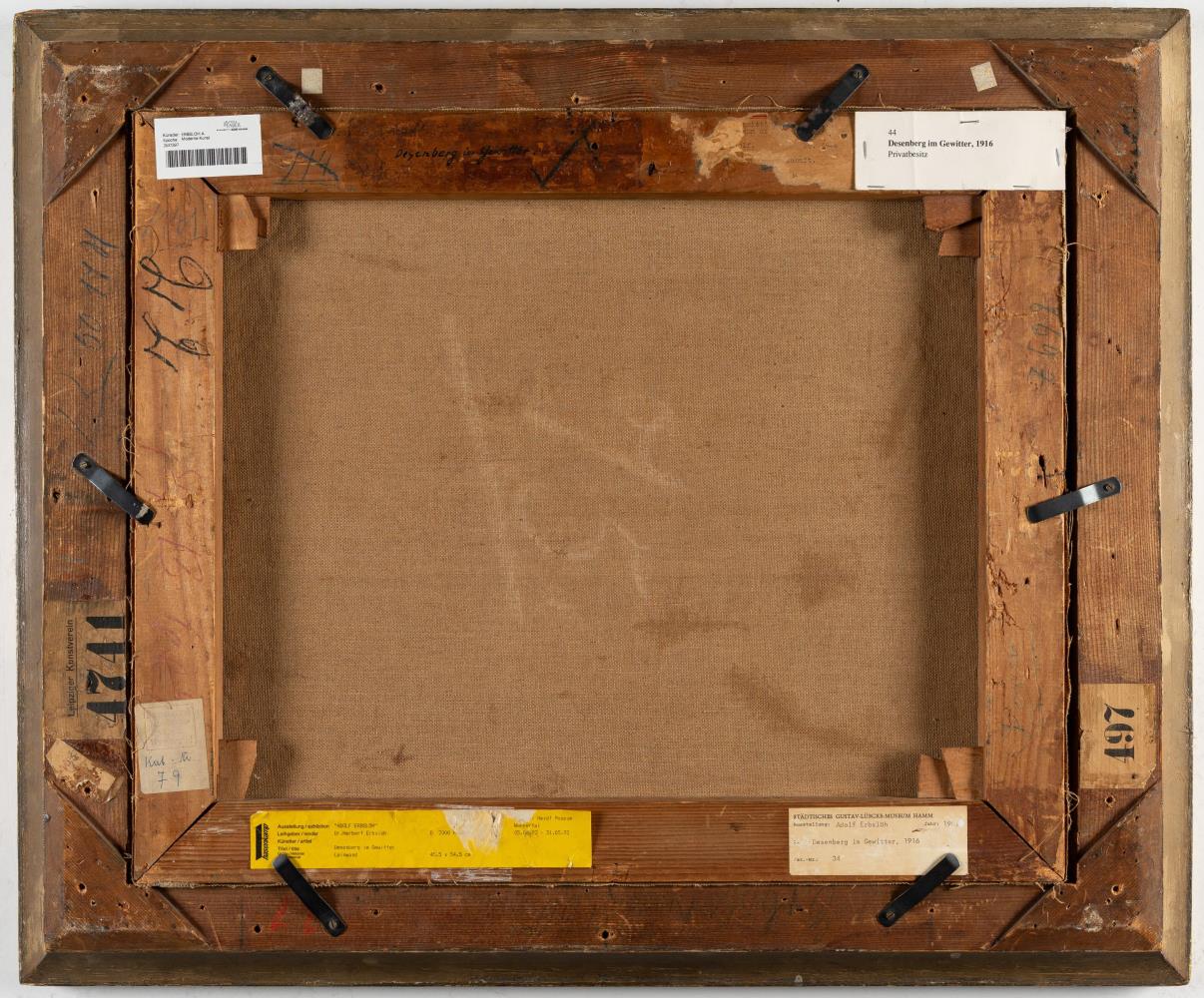
Probably Leipziger Kunstverein, 1918, with the label and the typographic number "4741" on the verso of the frame;
Probably Szczecin Museum, 1922 ;
Adolf Erbslöh (1881-1947), memorial exhibition, Galerie Otto Stangl, Munich/Kunsthalle Bremen, 1955/56, cat. no. 21 (dated 1921 and listed as exhibited in the USA);
Münchener Neue Secession, honorary exhibition on the occasion of the 800th anniversary of the city of Munich, Kunstverein, Munich 1958, cat. no. 66, no illus;
Adolf Erbslöh 1881-1947, Mit einem Katalog der Gemälde, Kunst- und Museumsverein Wuppertal u.a. 1967, cat. no. 79, b/w illus., verso on the stretcher with the label ;
Adolf Erbslöh. Gemälde, Zeichnung, Graphik, Städtisches Gustav-Lübcke-Museum, Hamm 1981, cat. no. 34, col. Fig., verso on the stretcher with the label ;
Adolf Erbslöh. Gemälde, Von der Heydt-Museum, Wuppertal a.o. 1992, cat. no. 44, no illus., verso on stretcher with label and shipping label.
Probably Szczecin Museum, 1922 ;
Adolf Erbslöh (1881-1947), memorial exhibition, Galerie Otto Stangl, Munich/Kunsthalle Bremen, 1955/56, cat. no. 21 (dated 1921 and listed as exhibited in the USA);
Münchener Neue Secession, honorary exhibition on the occasion of the 800th anniversary of the city of Munich, Kunstverein, Munich 1958, cat. no. 66, no illus;
Adolf Erbslöh 1881-1947, Mit einem Katalog der Gemälde, Kunst- und Museumsverein Wuppertal u.a. 1967, cat. no. 79, b/w illus., verso on the stretcher with the label ;
Adolf Erbslöh. Gemälde, Zeichnung, Graphik, Städtisches Gustav-Lübcke-Museum, Hamm 1981, cat. no. 34, col. Fig., verso on the stretcher with the label ;
Adolf Erbslöh. Gemälde, Von der Heydt-Museum, Wuppertal a.o. 1992, cat. no. 44, no illus., verso on stretcher with label and shipping label.
Literature
Wille, Hans, Adolf Erbslöh, Recklinghausen 1982, p. 27f. and p. 71, col. Ill. no. 36.
Provenance
Estate of the artist;
by succession to the present owner, private property, Northern Germany.
by succession to the present owner, private property, Northern Germany.
Share


Description
- Erbslöh's central landscape motif, symbolizing the tension between nature and inner experience
- Typical color palette with flaming contrasts and bright blue-green tones
- Fresh from the market from many years of private ownership
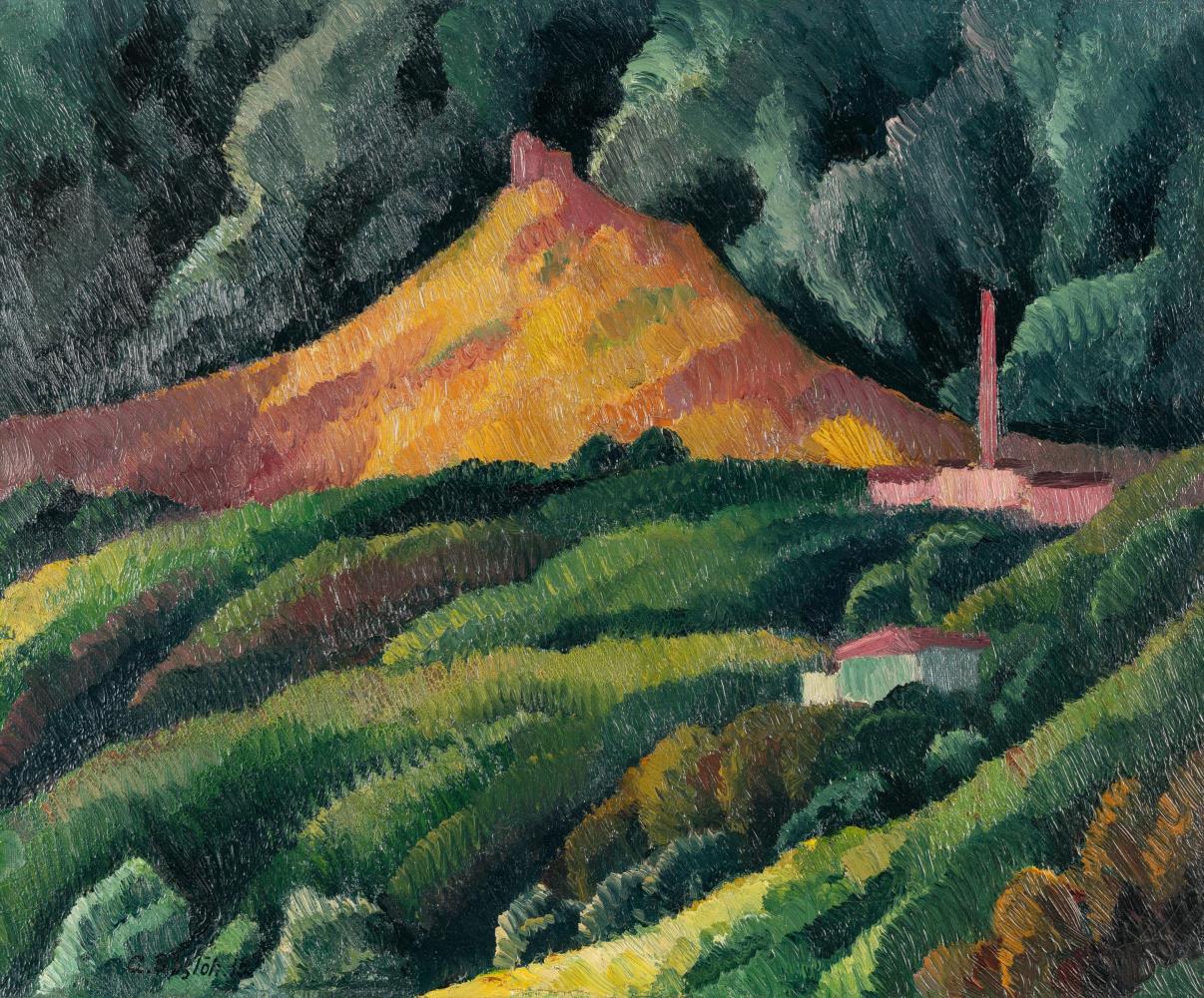
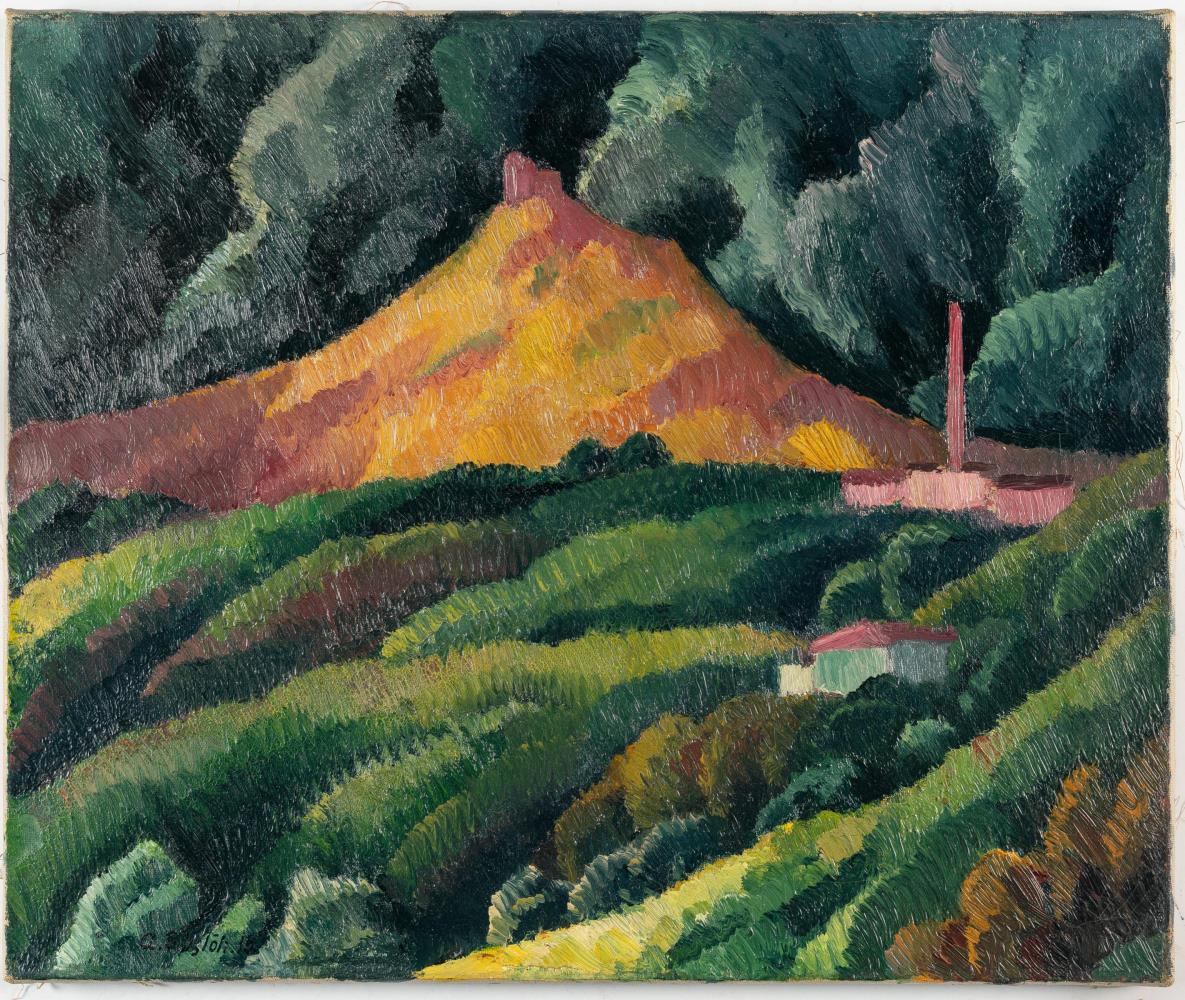
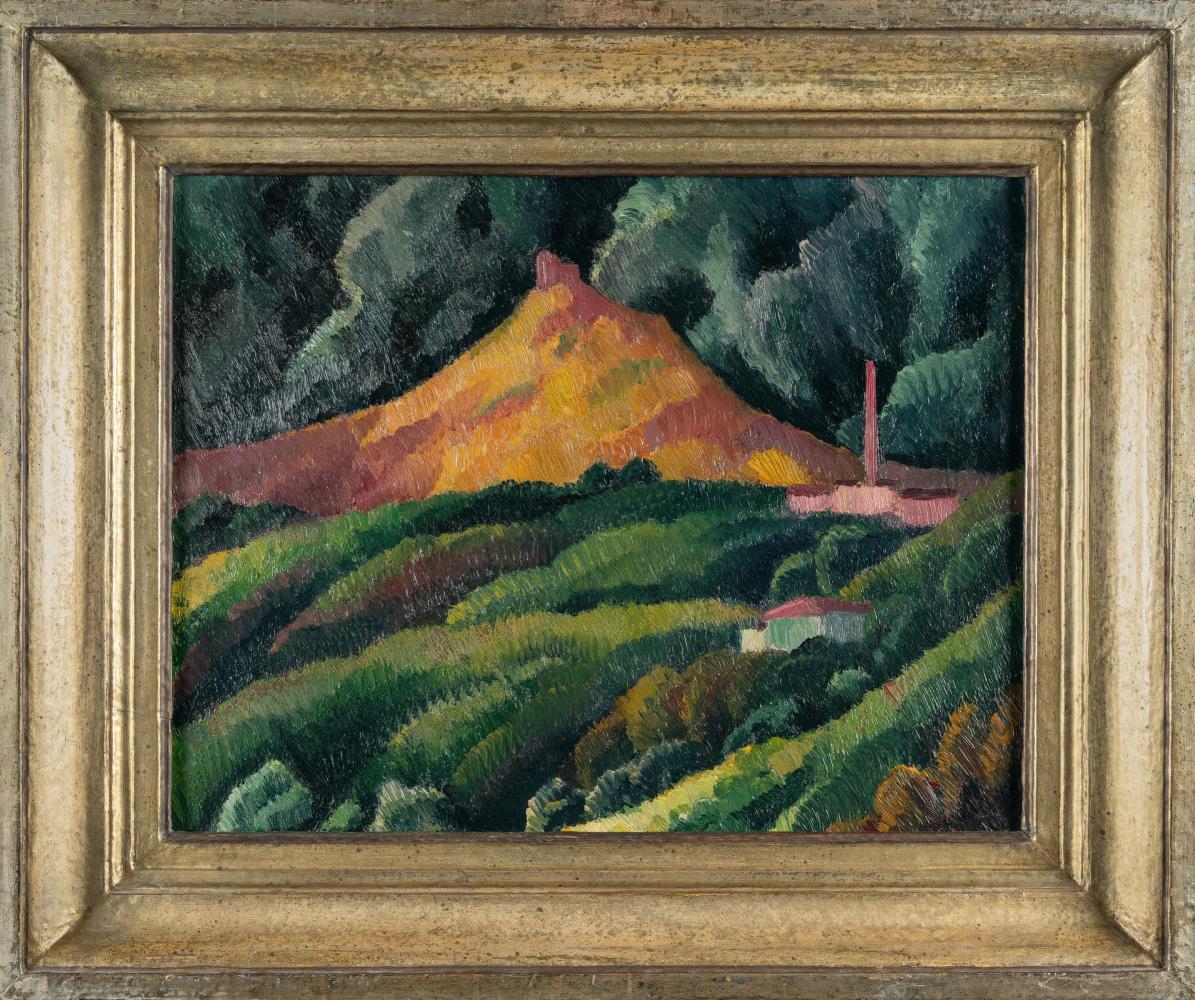
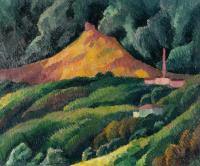
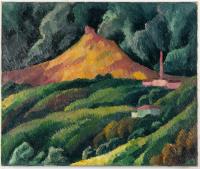
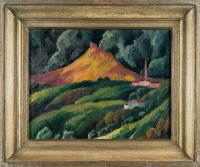
Like a cone of fire, it rises up into the dark stormy sky: the Desenberg near Warburg. Erbslöh discovered this striking inselberg as a haunting motif during his wartime furloughs. The mountain is located a few kilometers from Calenberg Castle, which belongs to Erbslöh's father-in-law Hugo Schuchard. Between 1915 and 1920, this elevation with its castle ruins as the crowning peak became the painter's preferred landscape motif - perhaps his attempt to capture something in bleak times that would endure beyond the war and its consequences. In his entire oeuvre, it remains the only picture in which Erbslöh chooses a lonely mountain in the middle of a vast plain instead of presenting a gently graded mountain landscape. In an almost conceptual way, he plays here with the gap between the real, tangible form of the mountain and the artist's inner, subjective perception.
The dramatically structured foreground and the thunderously towering clouds heighten the monumental effect of the mountain. Bathed in a glowing, almost surreal light, it dominates the threatening sky. The color palette, typical for Erbslöh, consists of lush green, blue and blue-green tones, which appear even more intense through strong contrasts - such as the flaming orange or the pink of the factory. With precisely placed, rapid brushstrokes, he creates a dense, almost tangible atmosphere that literally draws the viewer into the landscape. In this unique depiction of nature, Erbslöh continues to develop his individual style - a mixture of free expression and strictly analytical formal language, which helps him to achieve an unmistakable position in the art world. His play with extreme perspectives and lines of sight remains unique. "My artistic development probably goes from Expressionism through a period of strict, almost rigid pictorial composition influenced by Cubism to a sense of nature," he says, looking back on the evolution of his style. The present work remains strongly rooted in Expressionism.
Erbslöh worked on the Kegelberg until the early 1920s: the lithograph "View of the Desenberg with Clouds and the Factory on the Right" (see Wille, Das Graphische Werk, Karl & Faber, Munich 1982, cat. no. 14) was created in 1923, his last work on this theme.
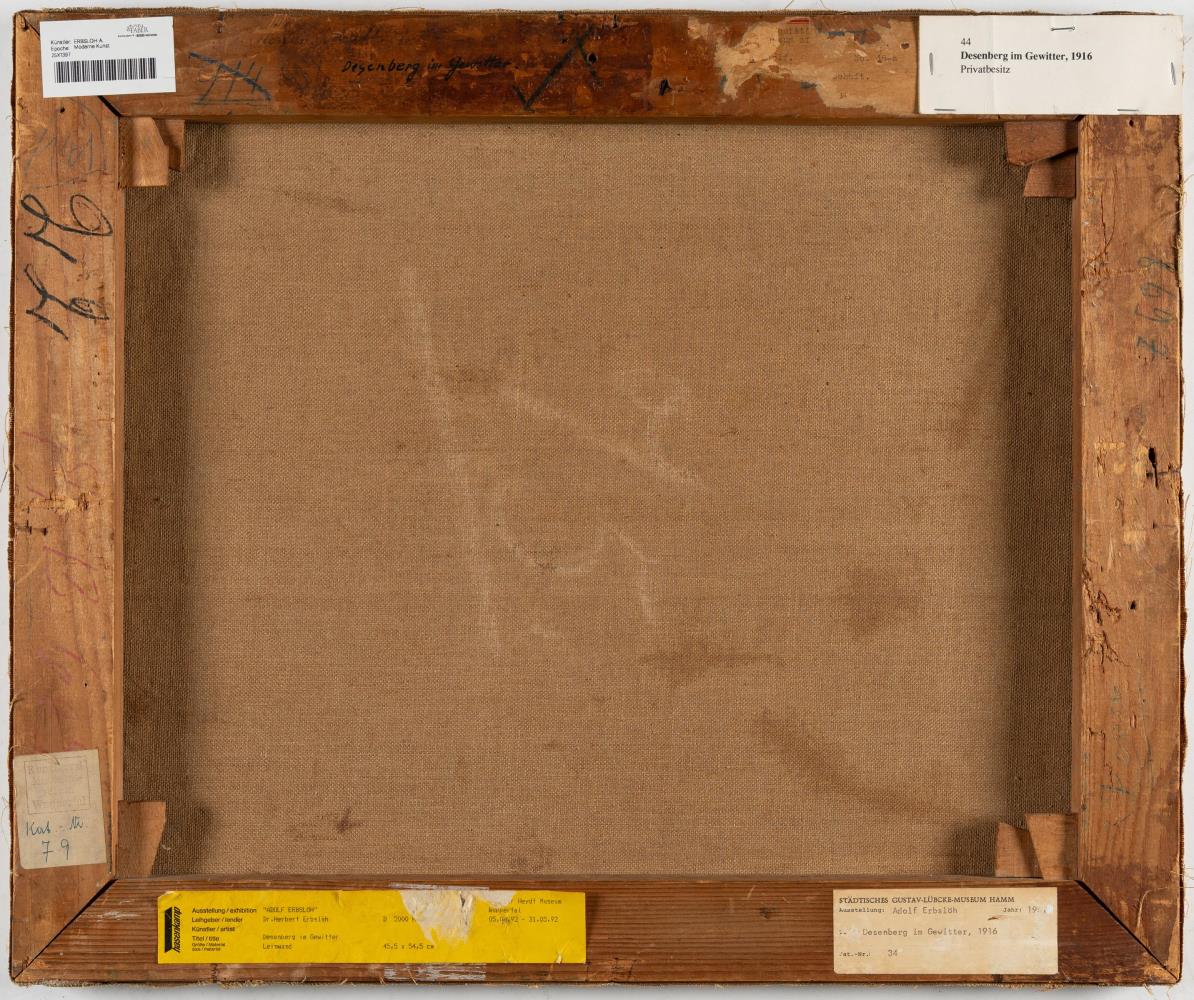
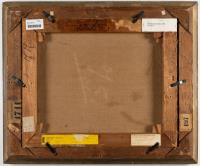
Verso on the stretcher and frame with various handwritten inscriptions and numberings.
Salmen/Billeter 1916/8.
- Typical color palette with flaming contrasts and bright blue-green tones
- Fresh from the market from many years of private ownership
Like a cone of fire, it rises up into the dark stormy sky: the Desenberg near Warburg. Erbslöh discovered this striking inselberg as a haunting motif during his wartime furloughs. The mountain is located a few kilometers from Calenberg Castle, which belongs to Erbslöh's father-in-law Hugo Schuchard. Between 1915 and 1920, this elevation with its castle ruins as the crowning peak became the painter's preferred landscape motif - perhaps his attempt to capture something in bleak times that would endure beyond the war and its consequences. In his entire oeuvre, it remains the only picture in which Erbslöh chooses a lonely mountain in the middle of a vast plain instead of presenting a gently graded mountain landscape. In an almost conceptual way, he plays here with the gap between the real, tangible form of the mountain and the artist's inner, subjective perception.
The dramatically structured foreground and the thunderously towering clouds heighten the monumental effect of the mountain. Bathed in a glowing, almost surreal light, it dominates the threatening sky. The color palette, typical for Erbslöh, consists of lush green, blue and blue-green tones, which appear even more intense through strong contrasts - such as the flaming orange or the pink of the factory. With precisely placed, rapid brushstrokes, he creates a dense, almost tangible atmosphere that literally draws the viewer into the landscape. In this unique depiction of nature, Erbslöh continues to develop his individual style - a mixture of free expression and strictly analytical formal language, which helps him to achieve an unmistakable position in the art world. His play with extreme perspectives and lines of sight remains unique. "My artistic development probably goes from Expressionism through a period of strict, almost rigid pictorial composition influenced by Cubism to a sense of nature," he says, looking back on the evolution of his style. The present work remains strongly rooted in Expressionism.
Erbslöh worked on the Kegelberg until the early 1920s: the lithograph "View of the Desenberg with Clouds and the Factory on the Right" (see Wille, Das Graphische Werk, Karl & Faber, Munich 1982, cat. no. 14) was created in 1923, his last work on this theme.
Verso on the stretcher and frame with various handwritten inscriptions and numberings.
Salmen/Billeter 1916/8.