Egon Schiele
Studie für ein nicht ausgeführtes Gemälde
Artist
Egon Schiele
Exhibition
Egon Schiele, Seibu Museum of Art, Tokyo 1979, cat. no. 33, ill. ;
Egon Schiele: From Pupil to Master, Academy of Fine Arts, Vienna and others 1984-1988, cat. no. 69, ill. ;
Egon Schiele, Pinacoteca Capitolina, Rome/Museo d'Arte Moderne CaPesaro, Venice 1984, cat. no. 112, ill.
Egon Schiele, Mezinárodní kulturní centrum Egona Schieleho, Ceský Krumlov 1993-1997, pp. 146/147 ;
Gallery St. Etienne, New York 2018.
Egon Schiele: From Pupil to Master, Academy of Fine Arts, Vienna and others 1984-1988, cat. no. 69, ill. ;
Egon Schiele, Pinacoteca Capitolina, Rome/Museo d'Arte Moderne CaPesaro, Venice 1984, cat. no. 112, ill.
Egon Schiele, Mezinárodní kulturní centrum Egona Schieleho, Ceský Krumlov 1993-1997, pp. 146/147 ;
Gallery St. Etienne, New York 2018.
Provenance
Serge Sabarsky Collection/Asset, New York, acquired ca. 1983;
Collection/Foundation Vally Sabarsky, New York.
Collection/Foundation Vally Sabarsky, New York.
Share


Description
- Characteristic multi-figure and two-dimensional composition from 1912
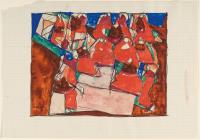
- Schiele explores the possibilities of the watercolor technique in fiery red
- Despite the study-like quality, Egon Schiele's power breaks through
From 1911 onwards, Egon Schiele explored more complex themes and allegories than in previous years. As the new motifs now feature several figures, new compositional solutions are also required. Schiele removed the real world from the motifs, similar to his role model and patron Gustav Klimt. However, unlike Klimt, who surrounded his realistically rendered figures with lavish, decorative frames, Schiele opted for a purely abstract space without any decorative structure in the Expressionist sense. Instead, he breaks down the picture plane into geometric-abstract forms which, as in Klimt's work, are neither fully integrated into the figural components nor completely separate. In Schiele's work, they coexist uneasily.
He develops purely two-dimensional motifs and refrains from creating a realistic volume.
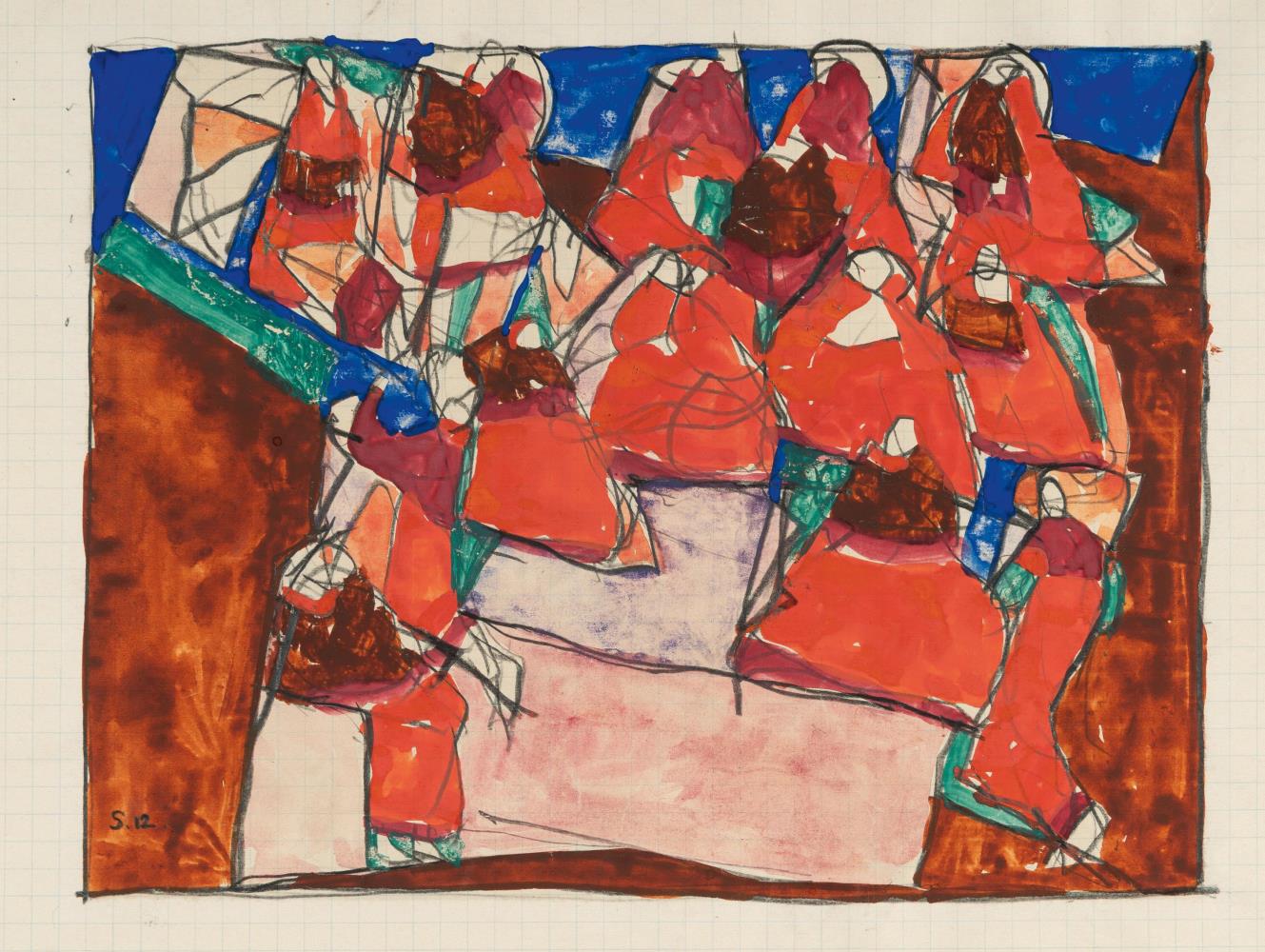
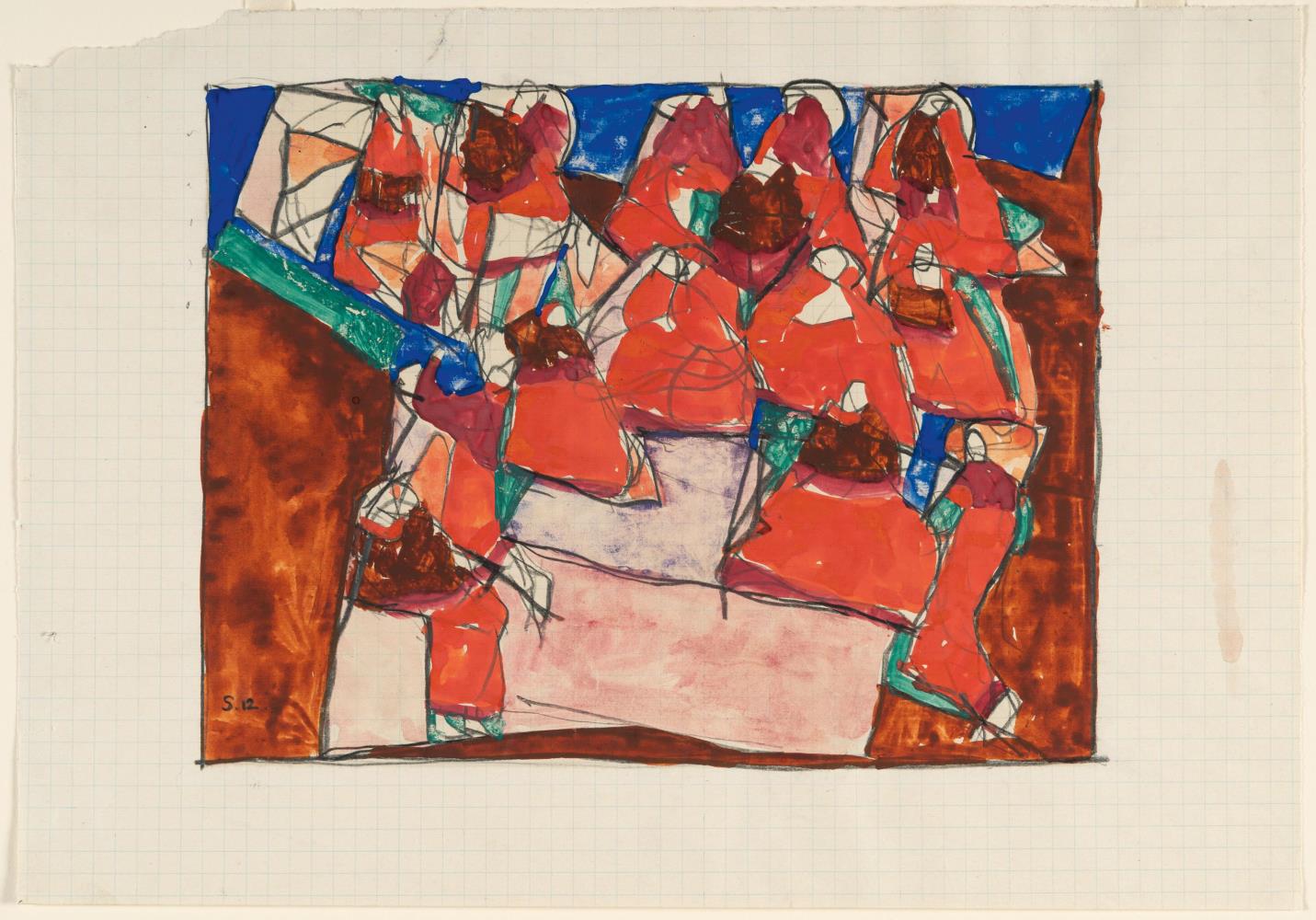
Our work is a study for a painting that probably never existed. Firmly drawn pencil lines outline the contents of a rectangle on a torn-out piece of drawing paper. Schiele captures the scenery, in which numerous people can be made out, in strong red tones. Their movements and actions are just as indeterminate as the surroundings and could be reminiscent of a procession or a gathering. The use of the various properties of water-based paint is striking: where he models the figures with a rich tone, the other surfaces - perhaps open spaces, architecture, staffage - are streaked with streaks, unevenness appears, the watercolor runs, accumulates, evaporates. The surface structure is characterized by the flow of the wet, sometimes already watery paint on the paper and less by brushstrokes. This creates a poetic depth and narrative quality, which seems almost superficial compared to the colorful flatness of the figures.
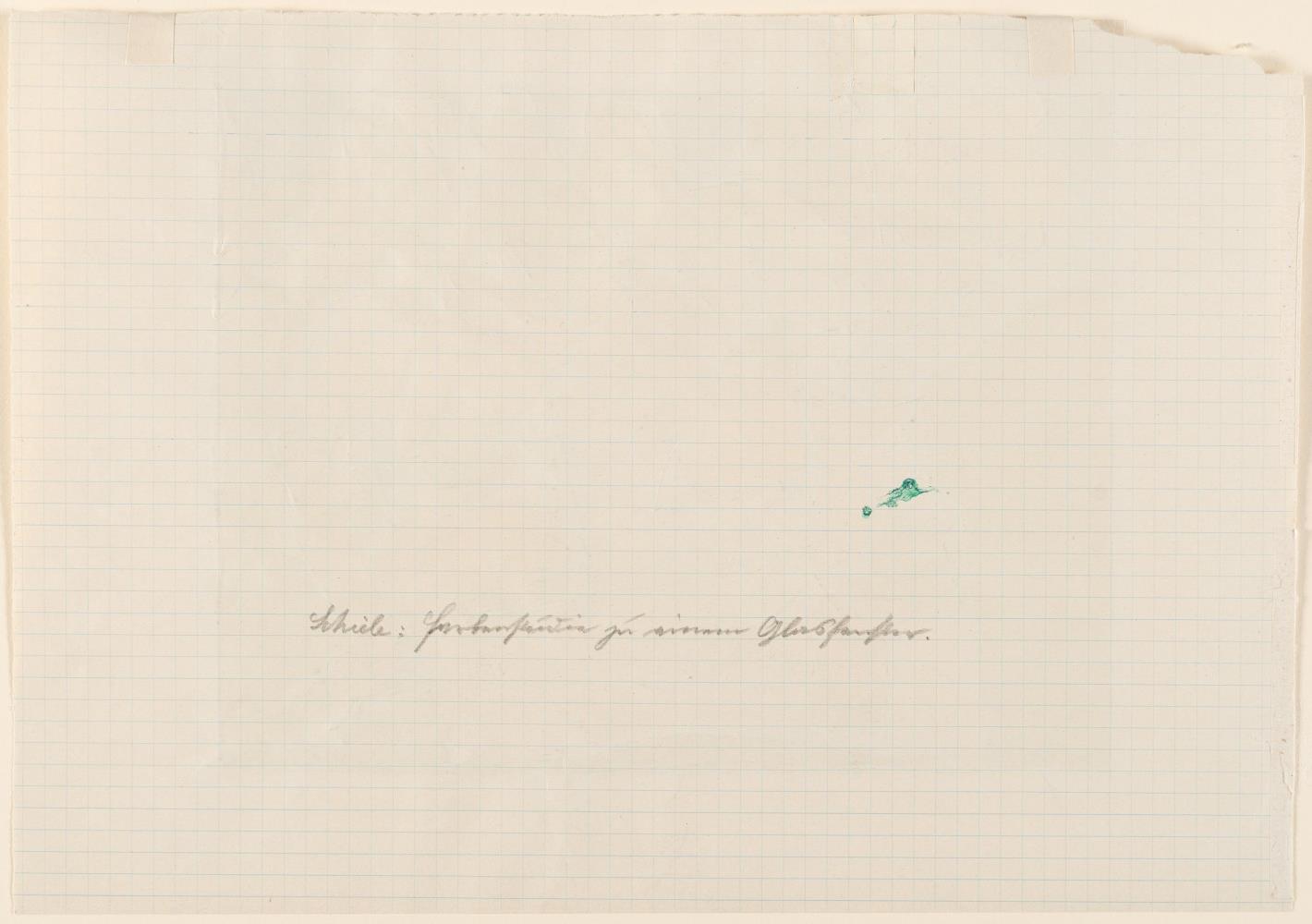
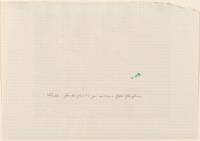
A note on the back of the sheet indicates the possible intention of the sketch. Not (only) a painting would have been designed here, but even a stained glass window! This would be unique in Schiele's oeuvre, as no other such designs or even executed works of architectural art are known.
Handwritten inscription on the verso "Schiele: Color study for a stained glass window".
Kallir D 1193.
- Schiele explores the possibilities of the watercolor technique in fiery red
- Despite the study-like quality, Egon Schiele's power breaks through
From 1911 onwards, Egon Schiele explored more complex themes and allegories than in previous years. As the new motifs now feature several figures, new compositional solutions are also required. Schiele removed the real world from the motifs, similar to his role model and patron Gustav Klimt. However, unlike Klimt, who surrounded his realistically rendered figures with lavish, decorative frames, Schiele opted for a purely abstract space without any decorative structure in the Expressionist sense. Instead, he breaks down the picture plane into geometric-abstract forms which, as in Klimt's work, are neither fully integrated into the figural components nor completely separate. In Schiele's work, they coexist uneasily.
He develops purely two-dimensional motifs and refrains from creating a realistic volume.
Our work is a study for a painting that probably never existed. Firmly drawn pencil lines outline the contents of a rectangle on a torn-out piece of drawing paper. Schiele captures the scenery, in which numerous people can be made out, in strong red tones. Their movements and actions are just as indeterminate as the surroundings and could be reminiscent of a procession or a gathering. The use of the various properties of water-based paint is striking: where he models the figures with a rich tone, the other surfaces - perhaps open spaces, architecture, staffage - are streaked with streaks, unevenness appears, the watercolor runs, accumulates, evaporates. The surface structure is characterized by the flow of the wet, sometimes already watery paint on the paper and less by brushstrokes. This creates a poetic depth and narrative quality, which seems almost superficial compared to the colorful flatness of the figures.
A note on the back of the sheet indicates the possible intention of the sketch. Not (only) a painting would have been designed here, but even a stained glass window! This would be unique in Schiele's oeuvre, as no other such designs or even executed works of architectural art are known.
Handwritten inscription on the verso "Schiele: Color study for a stained glass window".
Kallir D 1193.