Egon Schiele
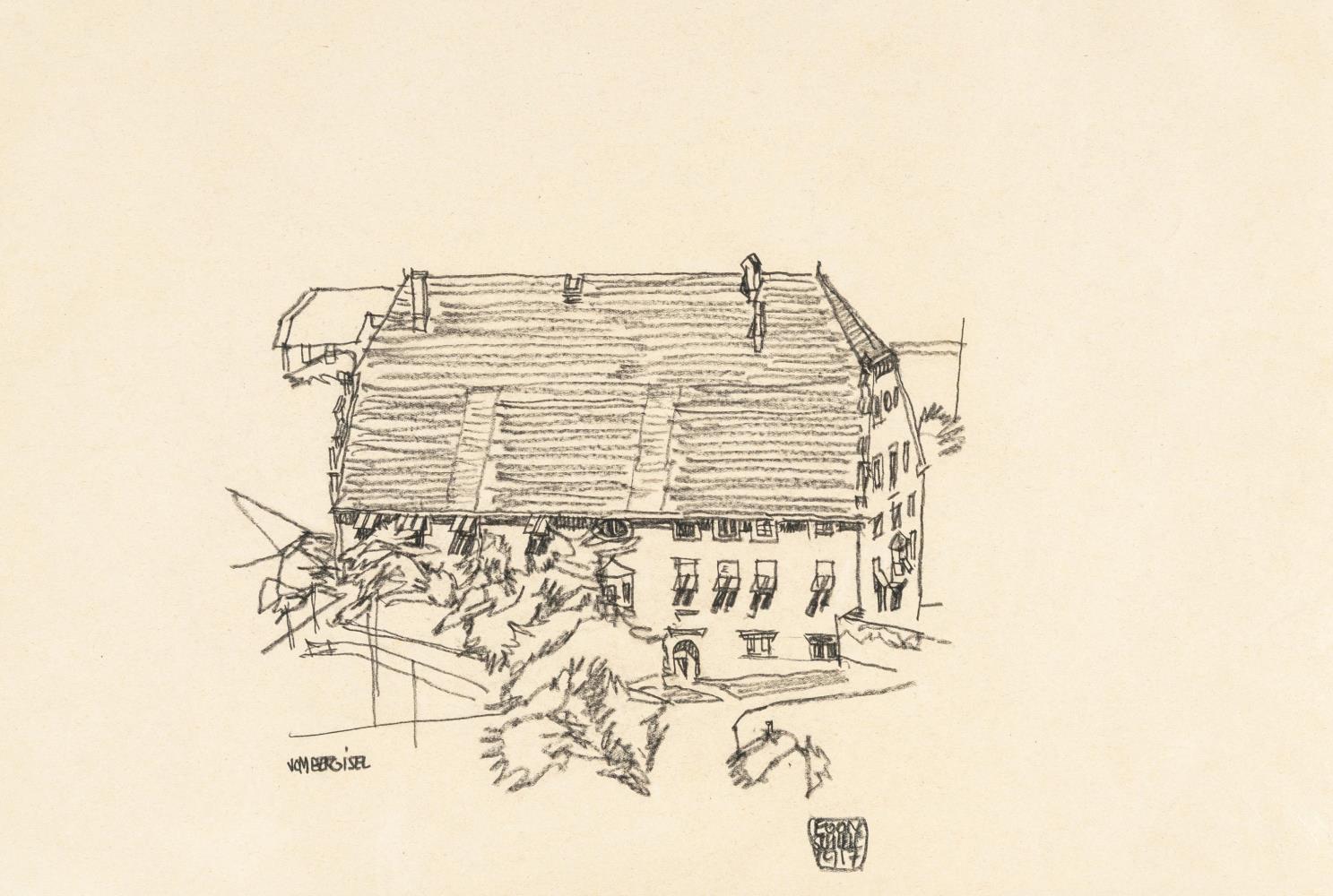
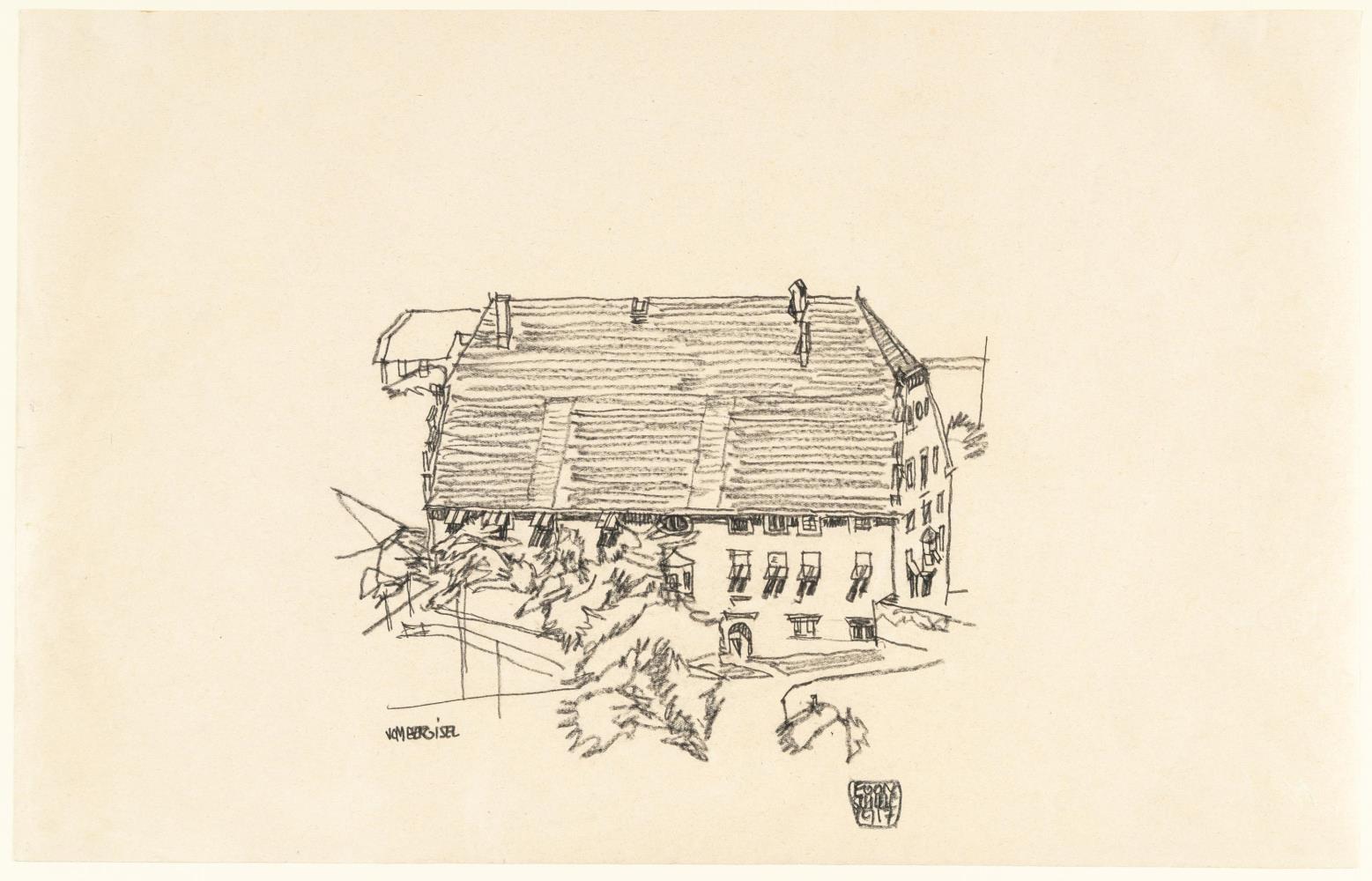
„Vom Berg Isel“ (Bauernhaus am Berg Isel)
Artist
Egon Schiele
Exhibition
Egon Schiele memorial exhibition, Graphische Sammlung Albertina, Vienna 1948, cat. no. 288 ;
Egon Schiele, Neue Galerie, Linz 1949, cat. no. 188 ;
Gustav Klimt, Egon Schiele, James Ensor, Alfred Kubin: Künstler der Jahrhundertwende/Artists at the Turn of the Century, M. Knoedler, Zurich 1983, cat. no. 22 ;
Egon Schiele: 100 Zeichnungen und Aquarelle/disegni e acquarelli/cent œuvres sur papier, Städtische Galerie, Rosenheim et al. 1988-1994, cat. nos. 92 and 83 respectively;
Egon Schiele, Fondation Pierre Gianadda, Martigny 1995, except cat. no. ;
Egon Schiele, National Gallery of Iceland, Reykjavik 1996 ;
Mezinárodní kulturní centrum Egona Schieleho, Ceský Krumlov, permanent loan since August 1997, without cat;
Man Museo d'arte della Provincia di Nuoro, Nuoro 2007/08 ;
German Expressionism 1900-1913: Masterpieces from the Neue Galerie Collection, Neue Galerie Museum, New York 2013 ;
Egon Schiele: Living Landscapes, Neue Galerie Museum, New York 2024/25.
Egon Schiele, Neue Galerie, Linz 1949, cat. no. 188 ;
Gustav Klimt, Egon Schiele, James Ensor, Alfred Kubin: Künstler der Jahrhundertwende/Artists at the Turn of the Century, M. Knoedler, Zurich 1983, cat. no. 22 ;
Egon Schiele: 100 Zeichnungen und Aquarelle/disegni e acquarelli/cent œuvres sur papier, Städtische Galerie, Rosenheim et al. 1988-1994, cat. nos. 92 and 83 respectively;
Egon Schiele, Fondation Pierre Gianadda, Martigny 1995, except cat. no. ;
Egon Schiele, National Gallery of Iceland, Reykjavik 1996 ;
Mezinárodní kulturní centrum Egona Schieleho, Ceský Krumlov, permanent loan since August 1997, without cat;
Man Museo d'arte della Provincia di Nuoro, Nuoro 2007/08 ;
German Expressionism 1900-1913: Masterpieces from the Neue Galerie Collection, Neue Galerie Museum, New York 2013 ;
Egon Schiele: Living Landscapes, Neue Galerie Museum, New York 2024/25.
Provenance
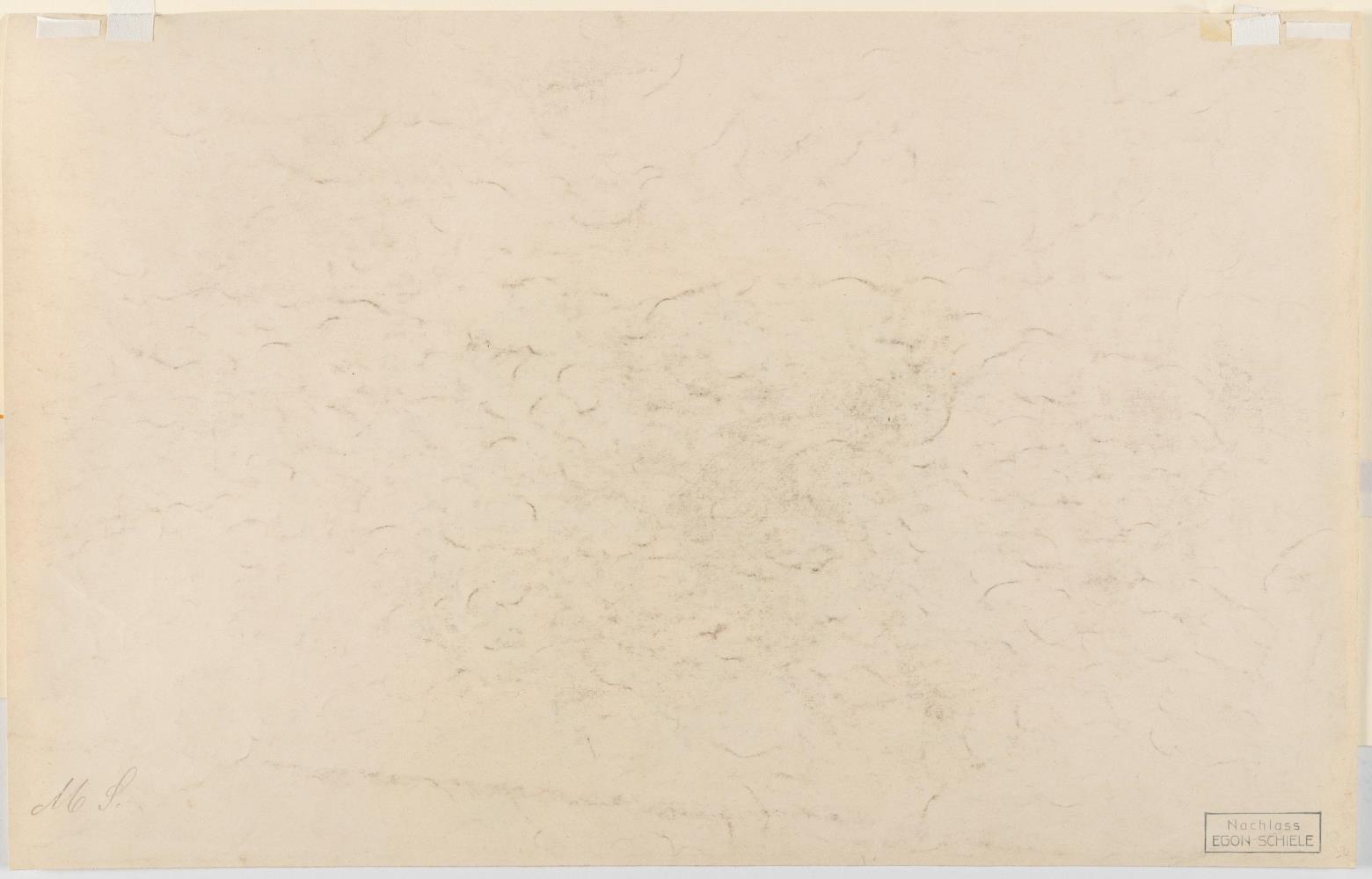
Estate of the artist, stamped on verso;
Melanie Schiele Schuster, Vienna, sister and executor of the artist's estate, inscribed "M.S." in handwriting on verso;
Collection of Professor Dr. Rudolf Leopold, Vienna;
M. Knoedler & Co, New York;
Serge Sabarsky Collection/Asset, New York, acquired from the aforementioned in 1984;
Collection/Foundation Vally Sabarsky, New York.
Melanie Schiele Schuster, Vienna, sister and executor of the artist's estate, inscribed "M.S." in handwriting on verso;
Collection of Professor Dr. Rudolf Leopold, Vienna;
M. Knoedler & Co, New York;
Serge Sabarsky Collection/Asset, New York, acquired from the aforementioned in 1984;
Collection/Foundation Vally Sabarsky, New York.
Share


Description
- Created in 1917 during Schiele's activity as a military draughtsman in Tyrol
- Directly linked to a letter to Edith Schiele: "Now I'm going to draw farmhouses."
- Independent, signed sketch sheet with exemplary architectural clarity
In the summer of 1917, Egon Schiele worked as a military draughtsman in Tyrol. These business trips took him to Innsbruck, the Stubai Valley and Mount Isel. During this stay, he met the art-loving Lieutenant Karl Grünwald, who became an important patron of his later work. In a letter to his wife Edith on June 10, 1917, Schiele wrote from Neustift in the Stubai Valley: "Yesterday Saturday morning I was on the Iselberg [...] Now I am going to draw farmhouses."
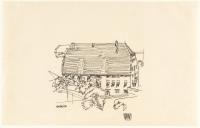
The present sheet "Vom Berg Isel" was created in this context - initially in the sketchbook, but the signature and dating turn it into an independent work. The black, precisely placed lines capture the house with calm concentration. The architecture seems at once firmly anchored in the slope and permeated by an inner rhythm. Schiele's gaze remains analytical, but not sober: the trembling of the line, the slight slant of the forms, the compression of the vegetation - all this lends the building a quiet vitality.
These Tyrolean sheets mark an important formal development in Schiele's oeuvre. Instead of expressive figure studies, he now created reduced but highly differentiated architectural drawings. The landscape becomes a stage for inner order. As Jane Kallir emphasizes, Schiele integrated small figures that move through the composition for the first time in this work phase; they lend the scenery a quiet narrative dimension.
The "Farmhouse on Mount Isel" is exemplary of this late maturation: minimalist, yet rich in detail, calm and yet full of tension. Schiele transforms the view of a simple house into a study of balance, structure and the passing of time.
A rare, quiet sheet created in a phase of external fulfillment of duty and inner clarity, in which Schiele once again redefined his art.
Kallir D 2137.
- Directly linked to a letter to Edith Schiele: "Now I'm going to draw farmhouses."
- Independent, signed sketch sheet with exemplary architectural clarity
In the summer of 1917, Egon Schiele worked as a military draughtsman in Tyrol. These business trips took him to Innsbruck, the Stubai Valley and Mount Isel. During this stay, he met the art-loving Lieutenant Karl Grünwald, who became an important patron of his later work. In a letter to his wife Edith on June 10, 1917, Schiele wrote from Neustift in the Stubai Valley: "Yesterday Saturday morning I was on the Iselberg [...] Now I am going to draw farmhouses."
The present sheet "Vom Berg Isel" was created in this context - initially in the sketchbook, but the signature and dating turn it into an independent work. The black, precisely placed lines capture the house with calm concentration. The architecture seems at once firmly anchored in the slope and permeated by an inner rhythm. Schiele's gaze remains analytical, but not sober: the trembling of the line, the slight slant of the forms, the compression of the vegetation - all this lends the building a quiet vitality.
These Tyrolean sheets mark an important formal development in Schiele's oeuvre. Instead of expressive figure studies, he now created reduced but highly differentiated architectural drawings. The landscape becomes a stage for inner order. As Jane Kallir emphasizes, Schiele integrated small figures that move through the composition for the first time in this work phase; they lend the scenery a quiet narrative dimension.
The "Farmhouse on Mount Isel" is exemplary of this late maturation: minimalist, yet rich in detail, calm and yet full of tension. Schiele transforms the view of a simple house into a study of balance, structure and the passing of time.
A rare, quiet sheet created in a phase of external fulfillment of duty and inner clarity, in which Schiele once again redefined his art.
Kallir D 2137.