Max Liebermann
Schlittschuhläufer im Tiergarten
Artist
Max Liebermann
Literature
Richardson, Holly Prentiss, Landscape in the work of Max Liebermann, vol. II, Diss. Brown University, Ann Arbor 1991, p. 243, no. 693.
Provenance
Marianne Küpper, Wiesbaden (until 1928);
Private collection (possibly Bier collection) 1928-1974;
Christie's, London 5.7.1974, lot 246;
Kunstsalon Franke, Baden-Baden (1990);
Private collection, Southern Germany.
Private collection (possibly Bier collection) 1928-1974;
Christie's, London 5.7.1974, lot 246;
Kunstsalon Franke, Baden-Baden (1990);
Private collection, Southern Germany.
Share


Description
- Masterful combination of light, movement and mood
- Liebermann's ice skating scenes in the Tiergarten are among the most sought-after motifs of his late work
- Typical work of German Impressionism
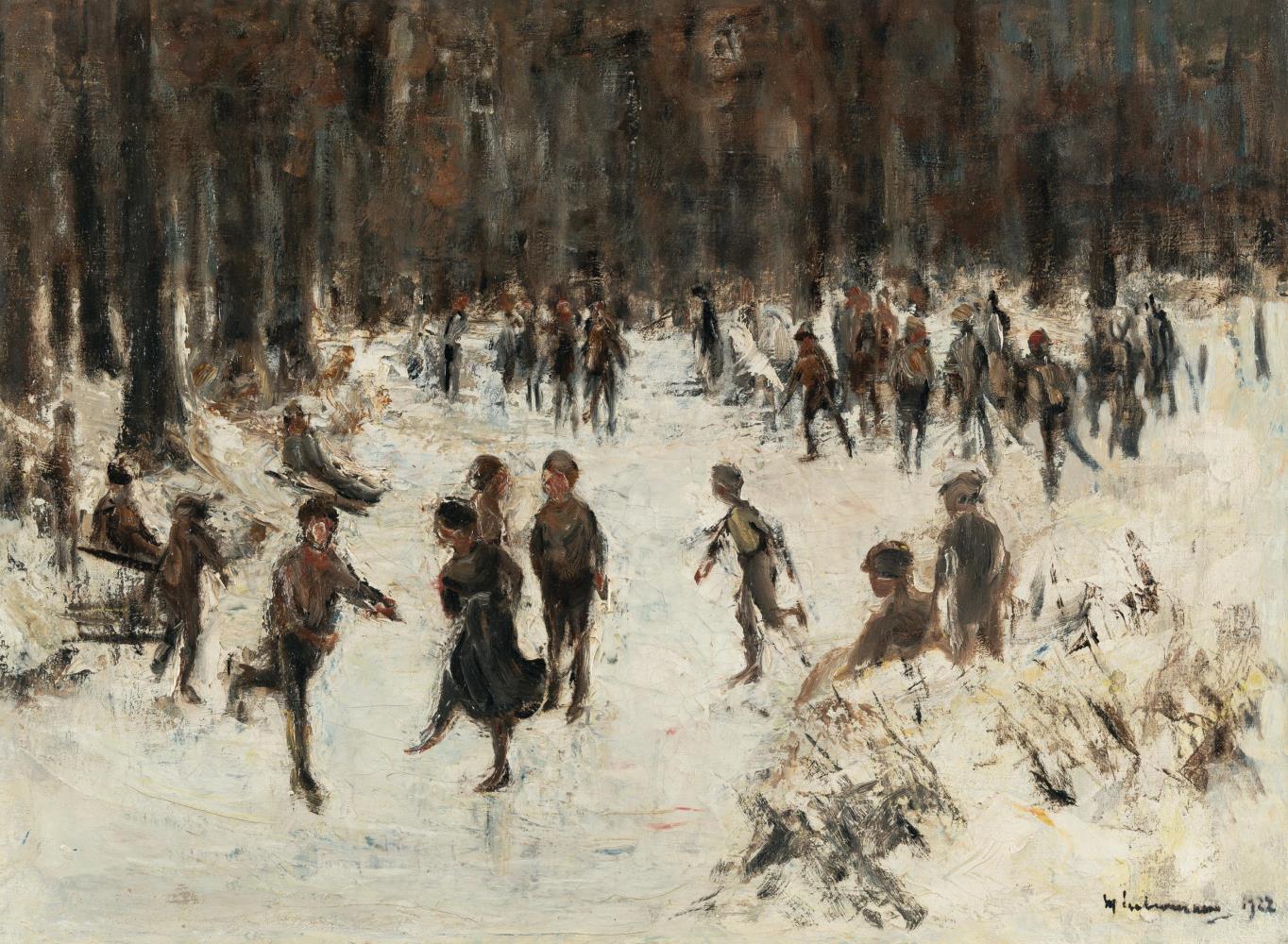
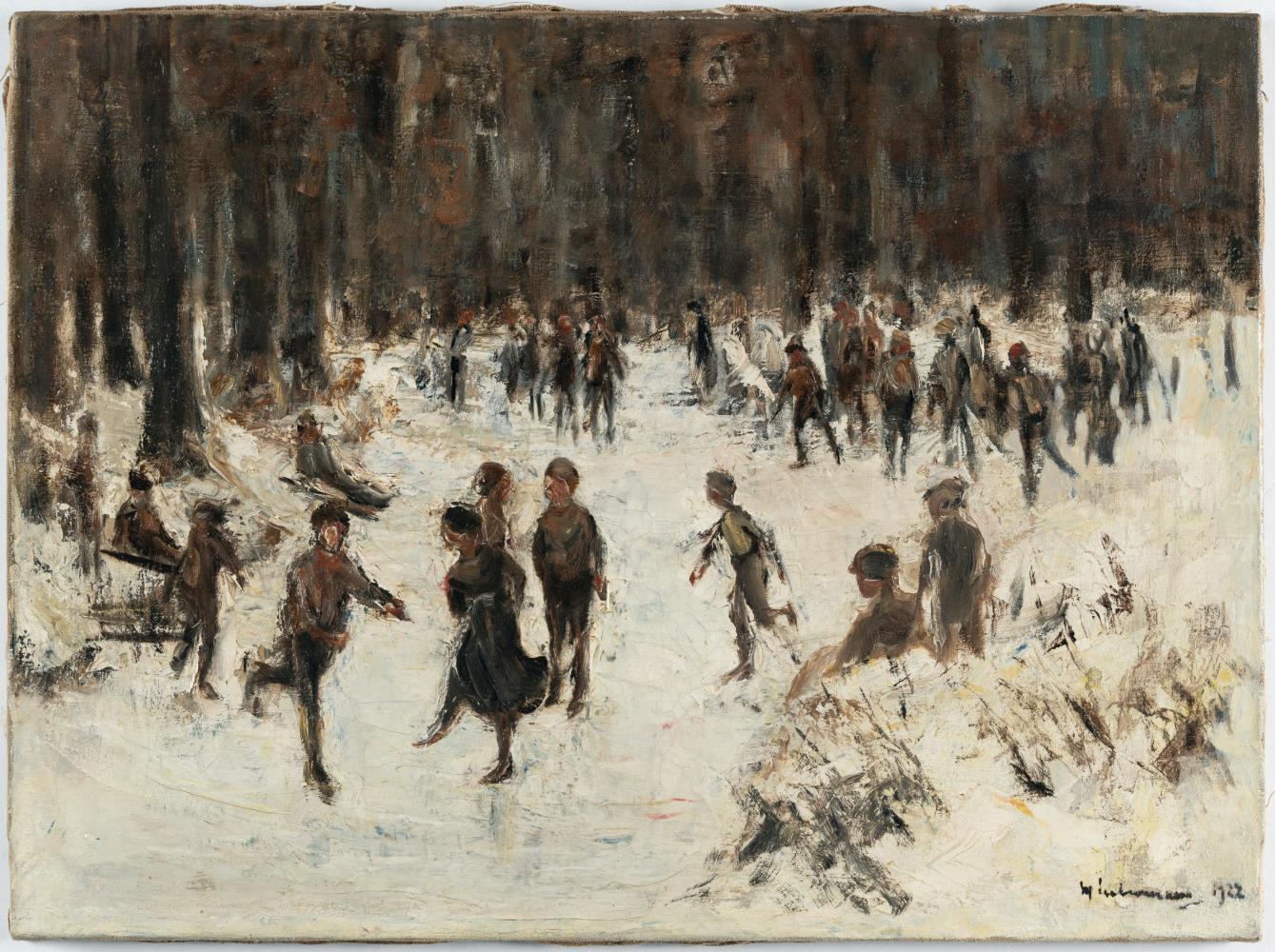
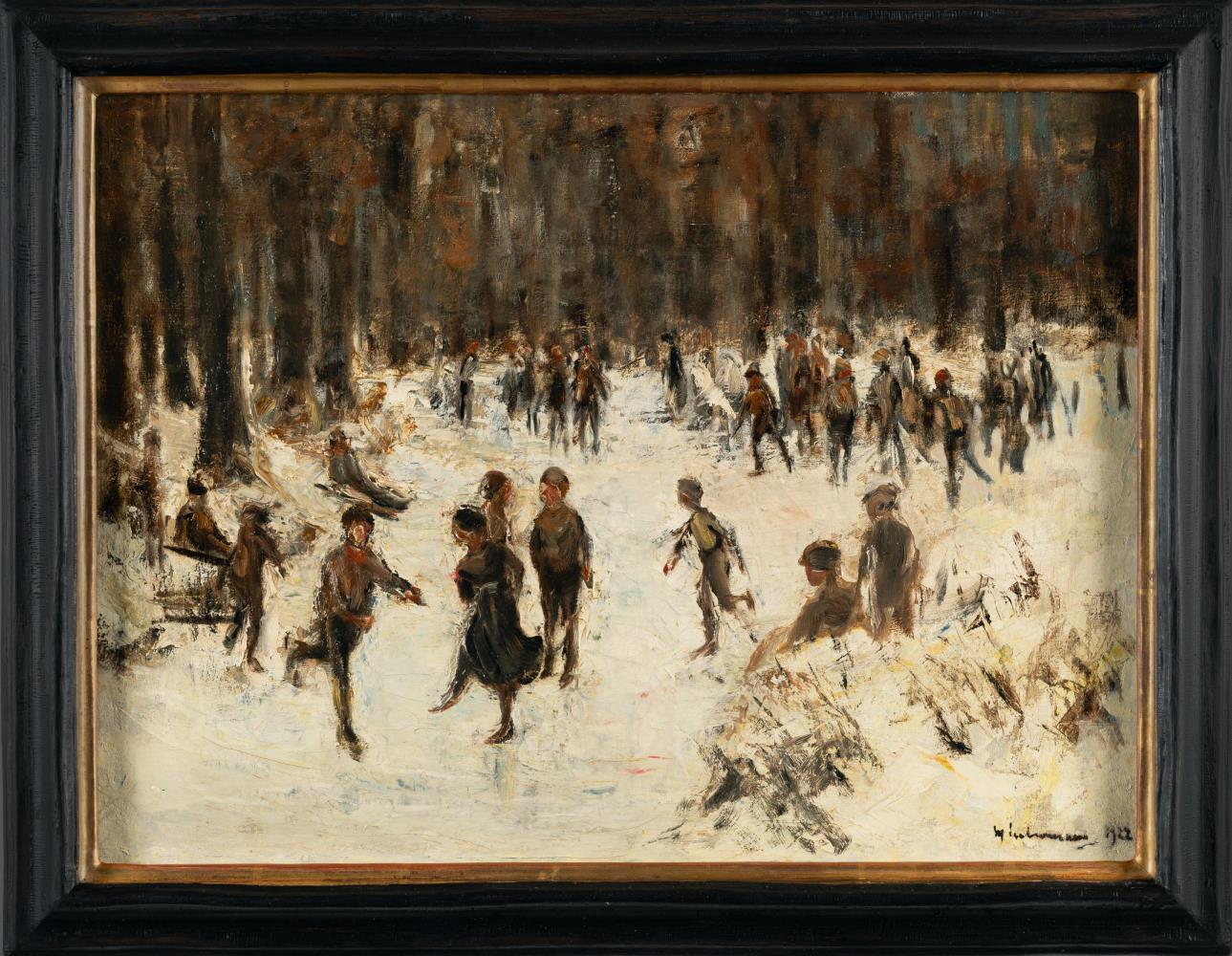
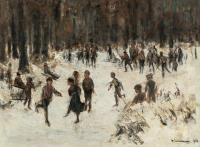
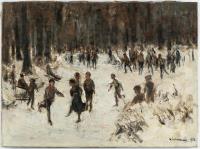
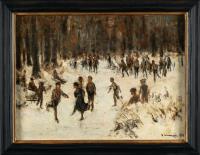
With a sure brush and a fine sense of light and movement, Max Liebermann creates a scene of fleeting joie de vivre in this painting: a lively winter landscape in Berlin's Tiergarten, in which ice skaters glide across the ice of a lake, children play with their sledges in the snow and walkers meet. Tall, dark trees line the edge of the pond. The boundary between water and land is barely discernible in the background. The painting unites all the themes that characterize Liebermann's later work - nature, the observation of everyday bourgeois life and the reduction of form in favour of a vibrant mood of light and colour.
The motif of ice skating in the Tiergarten, which Liebermann took up several times between 1919 and 1924, is one of the most impressive depictions of urban landscapes in his late work. Here the painter, who is said to have been a very good skater himself, no longer presents himself as a sober chronicler, but as a master of the atmospheric. The broad, impasto brushstroke, the bright, refracted light and the almost impressionistically resolved structure of the figures immediately create the impression of movement and cold, of haze and winter sun. While the details in the background become blurred, the scene condenses into a sensually tangible moment - an art that Liebermann brought to perfection in his final creative years.
The Tiergarten, not far from Liebermann's Berlin city palace on Pariser Platz, was a place of constant inspiration for him and the main motif of his late work. In the period after the First World War, when this painting was created, he returned here again and again in the winter months. The Tiergarten offered the painter, who was no longer traveling due to his advanced age, plenty of motifs at any time of year. Thanks to his inexhaustible repertoire of staffage figures, which he varied freely and again and again, no two works were the same. The familiar, peaceful world of the urban park landscape provides a quiet, humane counter-world to the political and social upheaval of the 1920s. The light-heartedness of the skaters reflects the cheerful serenity that Liebermann seeks and finds in his late landscapes.
Eberle 1922/41.
- Liebermann's ice skating scenes in the Tiergarten are among the most sought-after motifs of his late work
- Typical work of German Impressionism
With a sure brush and a fine sense of light and movement, Max Liebermann creates a scene of fleeting joie de vivre in this painting: a lively winter landscape in Berlin's Tiergarten, in which ice skaters glide across the ice of a lake, children play with their sledges in the snow and walkers meet. Tall, dark trees line the edge of the pond. The boundary between water and land is barely discernible in the background. The painting unites all the themes that characterize Liebermann's later work - nature, the observation of everyday bourgeois life and the reduction of form in favour of a vibrant mood of light and colour.
The motif of ice skating in the Tiergarten, which Liebermann took up several times between 1919 and 1924, is one of the most impressive depictions of urban landscapes in his late work. Here the painter, who is said to have been a very good skater himself, no longer presents himself as a sober chronicler, but as a master of the atmospheric. The broad, impasto brushstroke, the bright, refracted light and the almost impressionistically resolved structure of the figures immediately create the impression of movement and cold, of haze and winter sun. While the details in the background become blurred, the scene condenses into a sensually tangible moment - an art that Liebermann brought to perfection in his final creative years.
The Tiergarten, not far from Liebermann's Berlin city palace on Pariser Platz, was a place of constant inspiration for him and the main motif of his late work. In the period after the First World War, when this painting was created, he returned here again and again in the winter months. The Tiergarten offered the painter, who was no longer traveling due to his advanced age, plenty of motifs at any time of year. Thanks to his inexhaustible repertoire of staffage figures, which he varied freely and again and again, no two works were the same. The familiar, peaceful world of the urban park landscape provides a quiet, humane counter-world to the political and social upheaval of the 1920s. The light-heartedness of the skaters reflects the cheerful serenity that Liebermann seeks and finds in his late landscapes.
Eberle 1922/41.