Georg Tappert
Varieté
Artist
Georg Tappert
1880 - Berlin - 1957
Further information
Wietek 218.
Exhibition
Große Berliner Kunstausstellung. Abteilung Novembergruppe, Landesausstellungsgebäude am Lehrter Bahnhof, Berlin 1928, Kat.-Nr. 1022;
Deutsche Kunst der Gegenwart, Kurhaus - Gartensaal und Wintergarten, Baden-Baden 1947;
Georg Tappert. Wiederentdeckung eines Expressionisten, BAT-Haus, Hamburg 1977, Kat.-Nr. 38;
15. Europäische Kunstausstellung. Tendenzen der zwanziger Jahre. Die Novembergruppe. Teil I: Die Maler, Kunstamt Wedding, Walther-Rathenau-Saal und Rathaus Wedding, Berlin 1977, Kat.-Nr. 64, mit Abb. S. 141;
Georg Tappert. Ein Berliner Expressionist, 1880 bis 1957, Berlinische Galerie, Berlin 1980/81, Kat.-Nr. 31 mit Abb.;
Der Potsdamer Platz. Ernst Ludwig Kirchner und der Untergang Preußens, Neue Nationalgalerie, Berlin 2001, Kat.-Nr. 106, mit Abb. S. 235.
Deutsche Kunst der Gegenwart, Kurhaus - Gartensaal und Wintergarten, Baden-Baden 1947;
Georg Tappert. Wiederentdeckung eines Expressionisten, BAT-Haus, Hamburg 1977, Kat.-Nr. 38;
15. Europäische Kunstausstellung. Tendenzen der zwanziger Jahre. Die Novembergruppe. Teil I: Die Maler, Kunstamt Wedding, Walther-Rathenau-Saal und Rathaus Wedding, Berlin 1977, Kat.-Nr. 64, mit Abb. S. 141;
Georg Tappert. Ein Berliner Expressionist, 1880 bis 1957, Berlinische Galerie, Berlin 1980/81, Kat.-Nr. 31 mit Abb.;
Der Potsdamer Platz. Ernst Ludwig Kirchner und der Untergang Preußens, Neue Nationalgalerie, Berlin 2001, Kat.-Nr. 106, mit Abb. S. 235.
Provenance
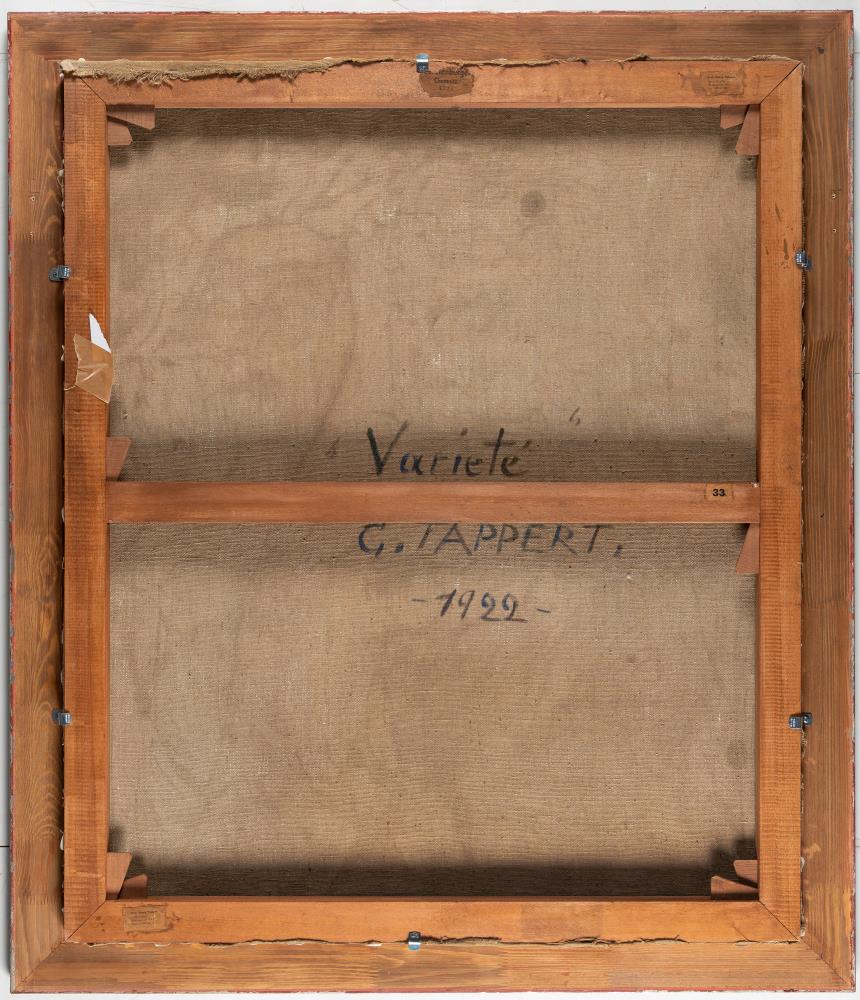
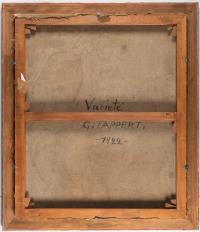
Artist’s studio, Berlin, on the reverse of the stretcher with two address labels;
Gerstenberger Art Dealers, Chemnitz, on the reverse of the stretcher with a label;
Peter Hopf Collection (1937–2004), Berlin;
Grisebach, Berlin 1 December 2006, lot 1650;
Private collection, Europe.
Gerstenberger Art Dealers, Chemnitz, on the reverse of the stretcher with a label;
Peter Hopf Collection (1937–2004), Berlin;
Grisebach, Berlin 1 December 2006, lot 1650;
Private collection, Europe.
Share


Description
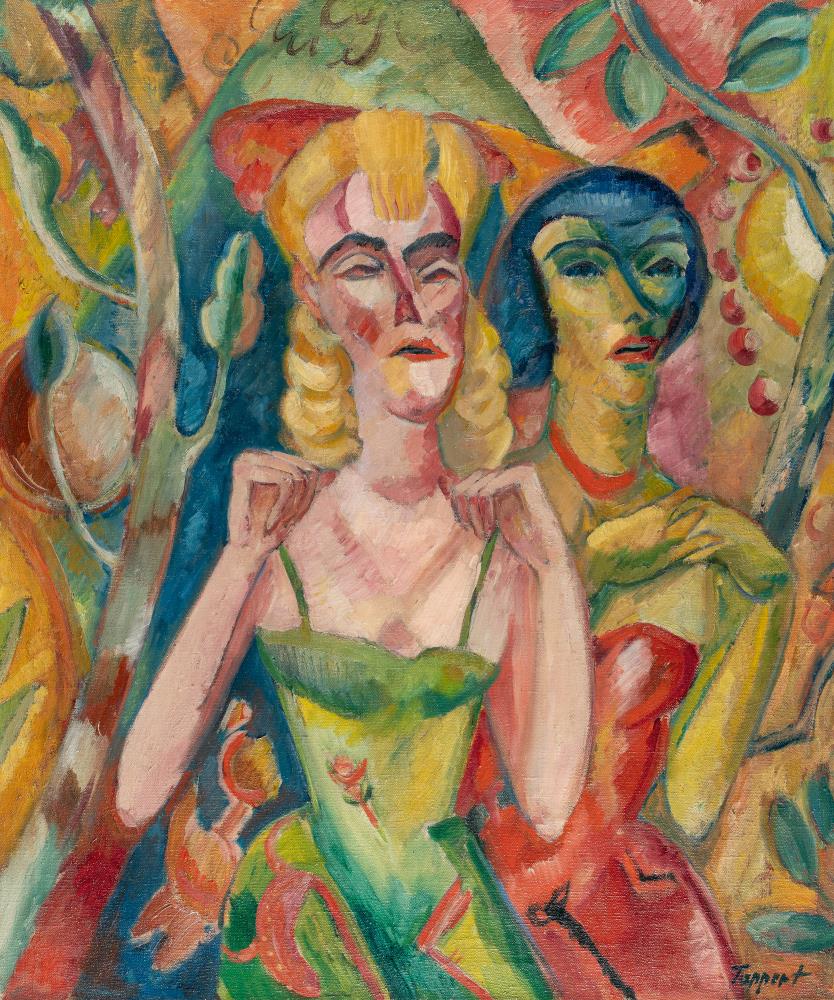
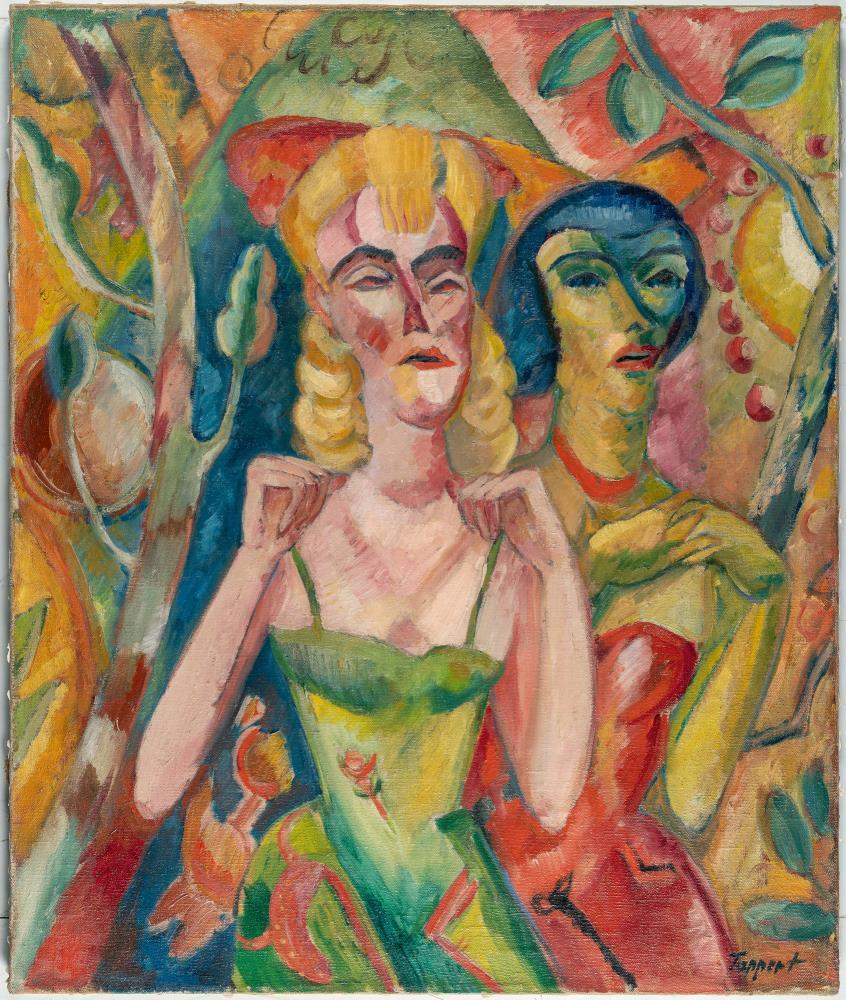
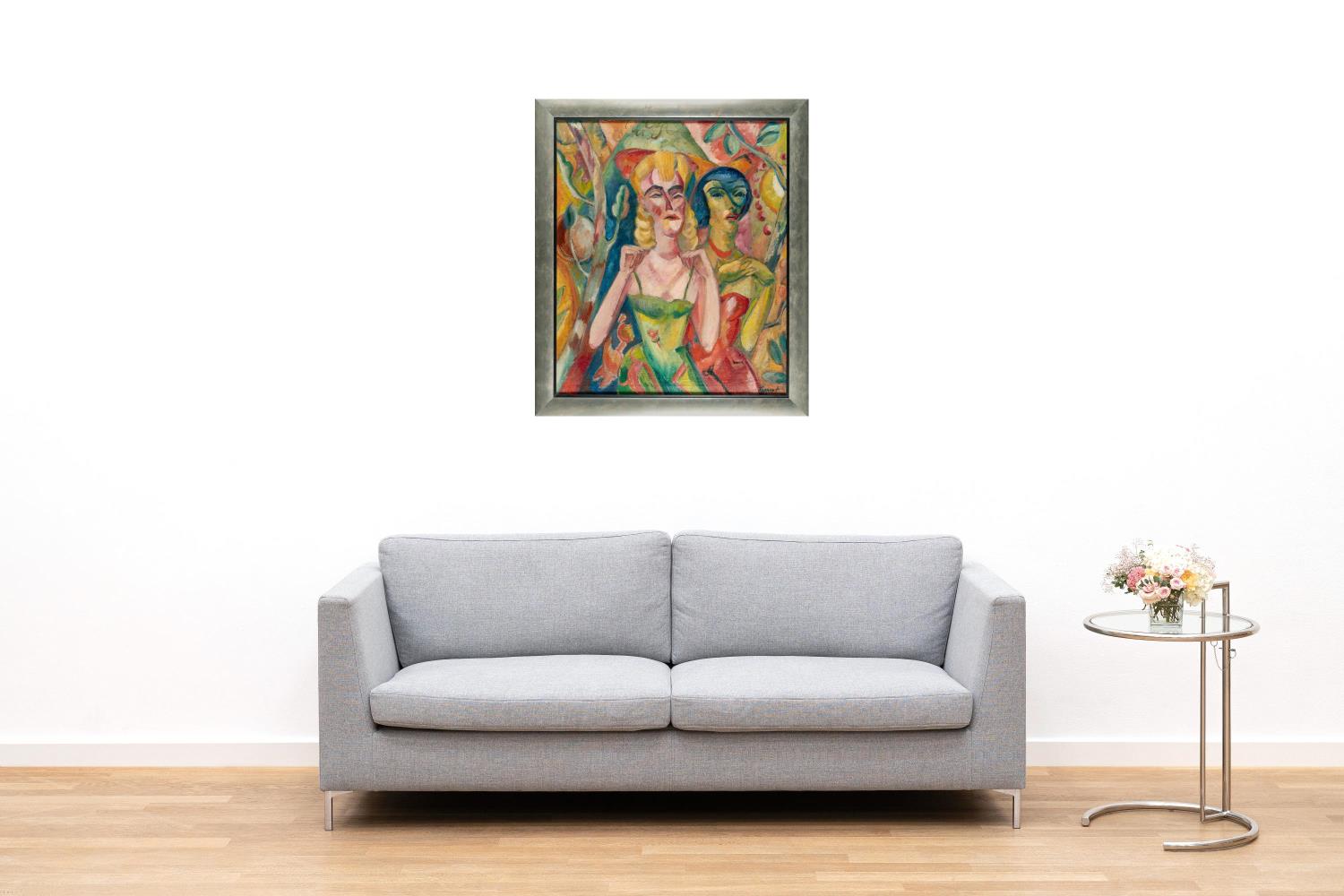
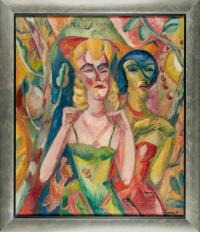
• Painting with a vibrant, colourful palette and strong complementary contrasts
• Women from Berlin’s exotic demi-monde were a frequent subject for the artist in the 1920s and 1930s
• Clear influences of Cubism and Fauvism
The fascination with the glamour of the Golden Twenties remains undiminished to this day. Amidst an extreme tension between social contrasts and the doomed young Weimar Republic, Berlin becomes a metropolis of enormous appeal – a cosmopolitan city in a frenzy, with all its facets. The rich array of entertainment offered by variety theatres, dance bars and cinemas shapes the nights just as much as drugs and prostitution. Large sections of the population live in abject poverty and try to escape their daily lives in the evenings. The Kurfürstendamm becomes a boulevard of splendour and the focal point for pleasure-seeking crowds. Berlin in the 1920s is Europe’s largest industrial centre and, by 1929, already has over four million inhabitants. Berlin is a city that guarantees adventure, a den of iniquity, wicked and dangerous, a magnet and hub for all who wish to have fun, and a hotbed of crime. A city with an upper class as distinct as its underworld, which challenges its inhabitants, simultaneously frightening and fascinating them, and which no cultural figure of the time can ignore.
Georg Tappert, born in Berlin in 1880, was one of the first German artists to discover the metropolis’s world of entertainment as a subject for his art. Having grown up on Friedrichstraße, the city’s entertainment district at the time, he came into contact with fashion and Berlin’s demi-monde from childhood. In his work of the 1920s and 1930s, the artist devoted himself primarily to the women of this exotic milieu, who worked in cafés, variety theatres, night bars and circuses.
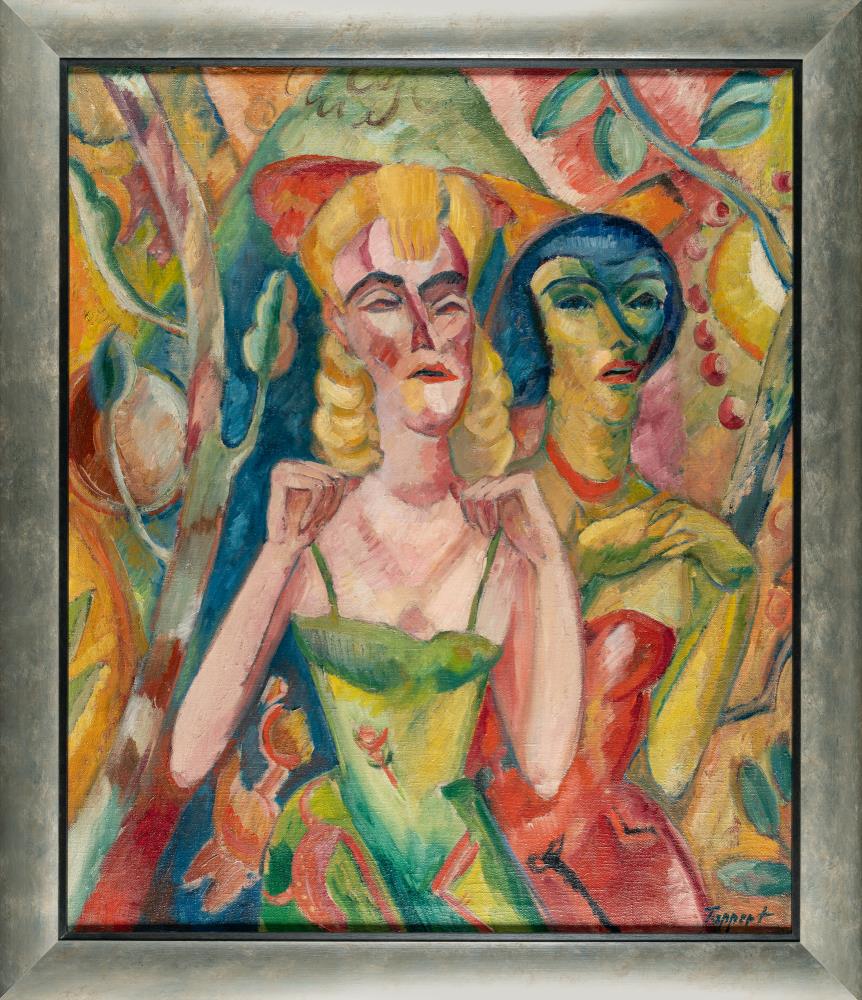
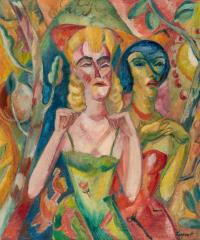
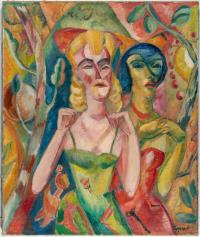
With great empathy, he depicts the people of the metropolis in all their facets, without succumbing to the cool detachment of New Objectivity or the socially critical realism of the time. Encouraged by the revolutionary spirit of the November Group, of which he was a co-founder in 1918, Tappert sought new stylistic devices to enhance expressiveness. Thus, this painting reveals clear influences of Cubism and Futurism, with their fragmentation of forms into faceted sections. Using a brightly coloured palette influenced by Fauvism, Tappert depicts two variety singers, one blonde and one dark-haired, heavily made-up in low-cut evening gowns, with the stage backdrop glowing behind them, adorned with exotic plants.
• Women from Berlin’s exotic demi-monde were a frequent subject for the artist in the 1920s and 1930s
• Clear influences of Cubism and Fauvism
The fascination with the glamour of the Golden Twenties remains undiminished to this day. Amidst an extreme tension between social contrasts and the doomed young Weimar Republic, Berlin becomes a metropolis of enormous appeal – a cosmopolitan city in a frenzy, with all its facets. The rich array of entertainment offered by variety theatres, dance bars and cinemas shapes the nights just as much as drugs and prostitution. Large sections of the population live in abject poverty and try to escape their daily lives in the evenings. The Kurfürstendamm becomes a boulevard of splendour and the focal point for pleasure-seeking crowds. Berlin in the 1920s is Europe’s largest industrial centre and, by 1929, already has over four million inhabitants. Berlin is a city that guarantees adventure, a den of iniquity, wicked and dangerous, a magnet and hub for all who wish to have fun, and a hotbed of crime. A city with an upper class as distinct as its underworld, which challenges its inhabitants, simultaneously frightening and fascinating them, and which no cultural figure of the time can ignore.
Georg Tappert, born in Berlin in 1880, was one of the first German artists to discover the metropolis’s world of entertainment as a subject for his art. Having grown up on Friedrichstraße, the city’s entertainment district at the time, he came into contact with fashion and Berlin’s demi-monde from childhood. In his work of the 1920s and 1930s, the artist devoted himself primarily to the women of this exotic milieu, who worked in cafés, variety theatres, night bars and circuses.
With great empathy, he depicts the people of the metropolis in all their facets, without succumbing to the cool detachment of New Objectivity or the socially critical realism of the time. Encouraged by the revolutionary spirit of the November Group, of which he was a co-founder in 1918, Tappert sought new stylistic devices to enhance expressiveness. Thus, this painting reveals clear influences of Cubism and Futurism, with their fragmentation of forms into faceted sections. Using a brightly coloured palette influenced by Fauvism, Tappert depicts two variety singers, one blonde and one dark-haired, heavily made-up in low-cut evening gowns, with the stage backdrop glowing behind them, adorned with exotic plants.