Pierre-Auguste Renoir
Reclining Nude
Artist
Pierre-Auguste Renoir
1841 Limoges - Cagnes-sur-Mer 1919
Further information
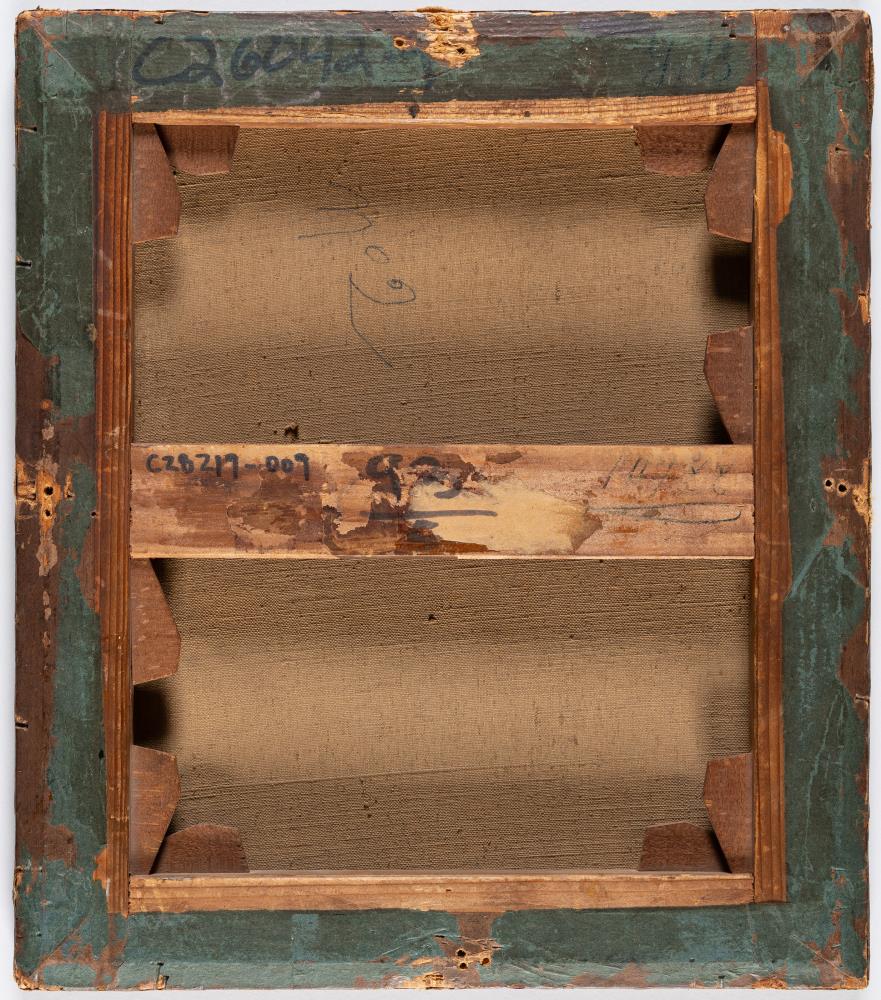
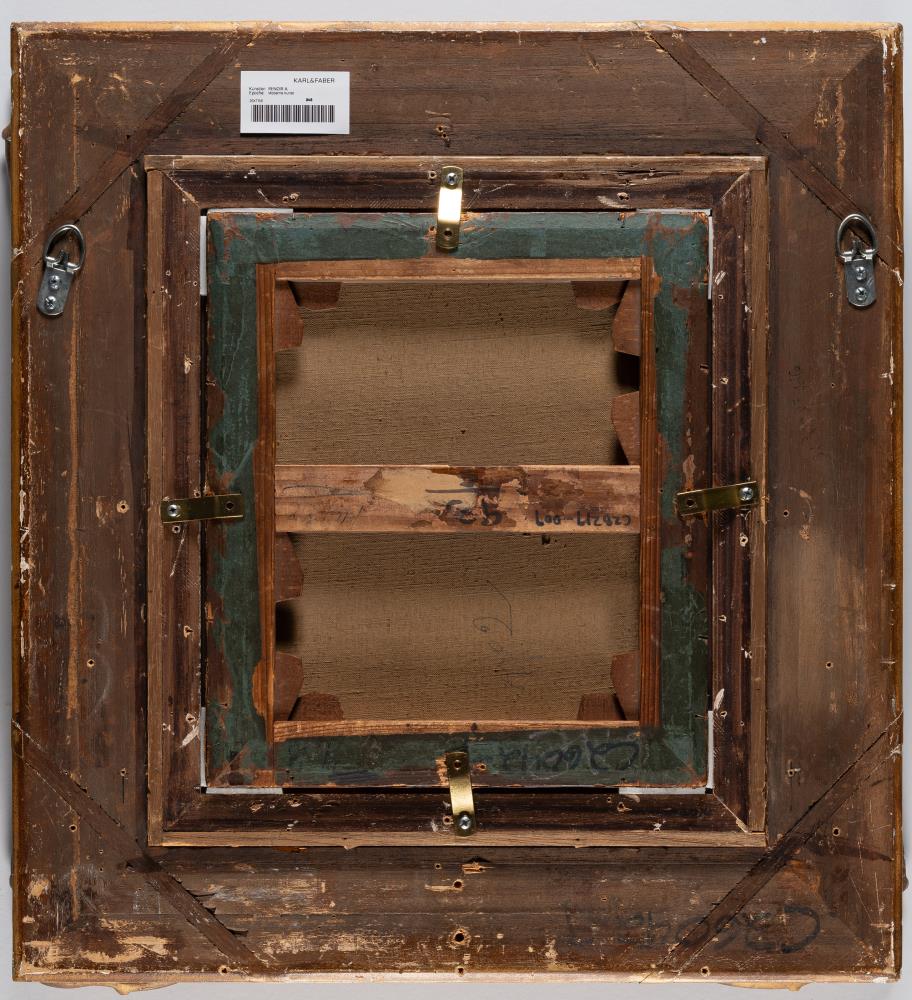
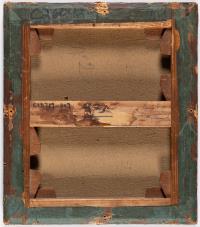
Verso auf der Leinwand mit "N°2" bezeichnet.
Dauberville IV 3507.
Mit einem Zertifikat vom Wildenstein Plattner Institute, Paris, vom 10.4.2018. Das Werk wird in das in Vorbereitung befindliche digitale Werkverzeichnis der Werke von Pierre-Auguste Renoir aufgenommen.
Dauberville IV 3507.
Mit einem Zertifikat vom Wildenstein Plattner Institute, Paris, vom 10.4.2018. Das Werk wird in das in Vorbereitung befindliche digitale Werkverzeichnis der Werke von Pierre-Auguste Renoir aufgenommen.
Exhibition
Bliss, Nahmad Projects, London 2016;
William J. Glackens and Pierre-Auguste Renoir: Affinities and Distinctions, NSU Art Museum, Fort Lauderdale/Hunter Museum of American Art, Chattanooga 2018/19, Kat.-Nr. 22, Abb., S. 81.
William J. Glackens and Pierre-Auguste Renoir: Affinities and Distinctions, NSU Art Museum, Fort Lauderdale/Hunter Museum of American Art, Chattanooga 2018/19, Kat.-Nr. 22, Abb., S. 81.
Provenance
Private collection of Georges Urion, Paris, acquired directly from the artist;
Galerie Georges Petit, Paris 30/31 May 1927, Lot 19;
M. Sevadjian Collection, Paris, acquired from the aforementioned;
Drouot, Paris 13–14 April 1932, Lot 204;
Fontjian Collection, Paris, acquired from the aforementioned;
Hôtel Rameau, Versailles, 6 June 1973, Lot 111;
Sotheby’s, London, 29 November 1976, Lot 55;
Sotheby’s, New York, 12 May 1987, Lot 263;
Drouot-Richelieu, Paris, 23 November 1987, Lot 85;
Drouot, Paris, 17 June 1989, Lot 61;
Ader-Picard-Tajan, Paris 20 March 1990, Lot 57;
Private collection, Monaco, acquired from the aforementioned;
Drouot-Richelieu, Paris 29 April 2011, Lot 192;
Private collection, Monaco, acquired from the aforementioned.
Galerie Georges Petit, Paris 30/31 May 1927, Lot 19;
M. Sevadjian Collection, Paris, acquired from the aforementioned;
Drouot, Paris 13–14 April 1932, Lot 204;
Fontjian Collection, Paris, acquired from the aforementioned;
Hôtel Rameau, Versailles, 6 June 1973, Lot 111;
Sotheby’s, London, 29 November 1976, Lot 55;
Sotheby’s, New York, 12 May 1987, Lot 263;
Drouot-Richelieu, Paris, 23 November 1987, Lot 85;
Drouot, Paris, 17 June 1989, Lot 61;
Ader-Picard-Tajan, Paris 20 March 1990, Lot 57;
Private collection, Monaco, acquired from the aforementioned;
Drouot-Richelieu, Paris 29 April 2011, Lot 192;
Private collection, Monaco, acquired from the aforementioned.
Share


Description
• Sensual, idealised female figure from Renoir’s late work – a timeless ideal of beauty in a masterful colour composition
• Classic odalisque motif with subtle eroticism and a refined treatment of form and colour
• First-rate provenance: including the collections of Georges Urion and Hatchik Sevadjian, two well-known Parisian art collectors of the 1920s and 1930s
Pierre-Auguste Renoir is one of the best-known and most popular artists of French Impressionism. A central theme of his work is the depiction of women, whom he regards as the epitome of beauty and artistic inspiration. Accordingly, female figures and portraits occupy a significant place in his oeuvre. In his early works, Renoir captures a soft, light-filled femininity using delicate, pastel hues. Towards the end of the 19th century, however, his style changed: the individual facial features and physical presence of his models increasingly receded into the background. From around 1900, he developed an idealised type of woman, characterised less by personality than by a universal conception of beauty.
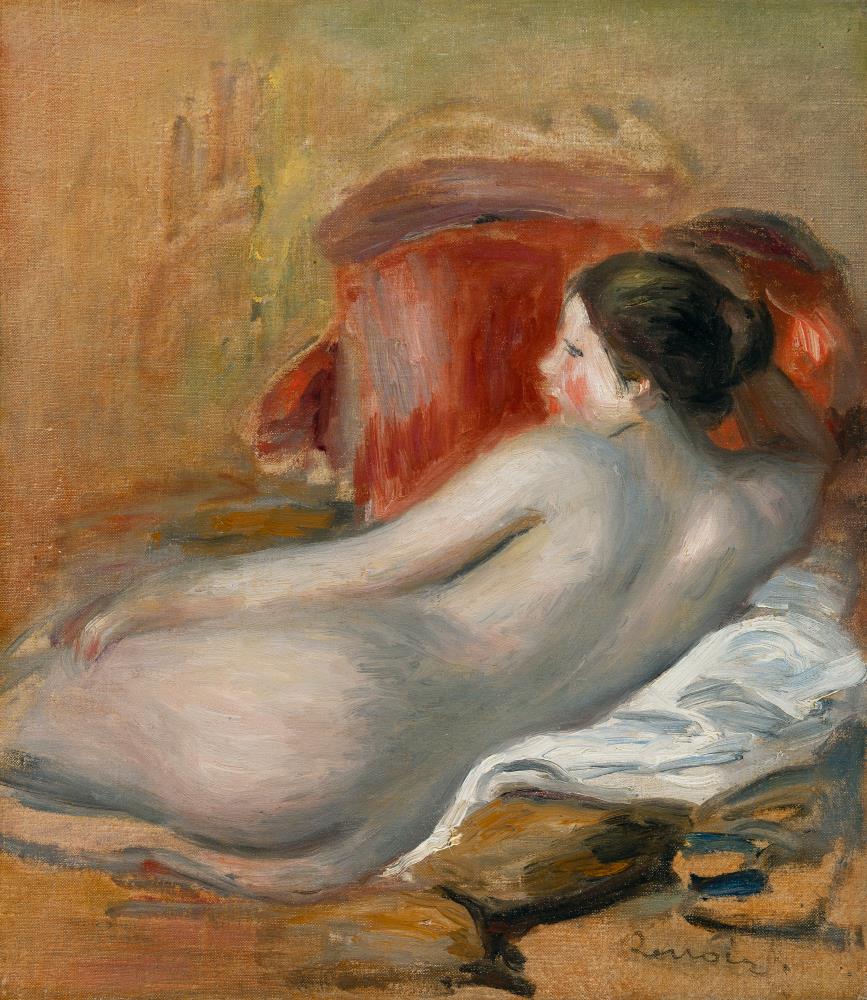
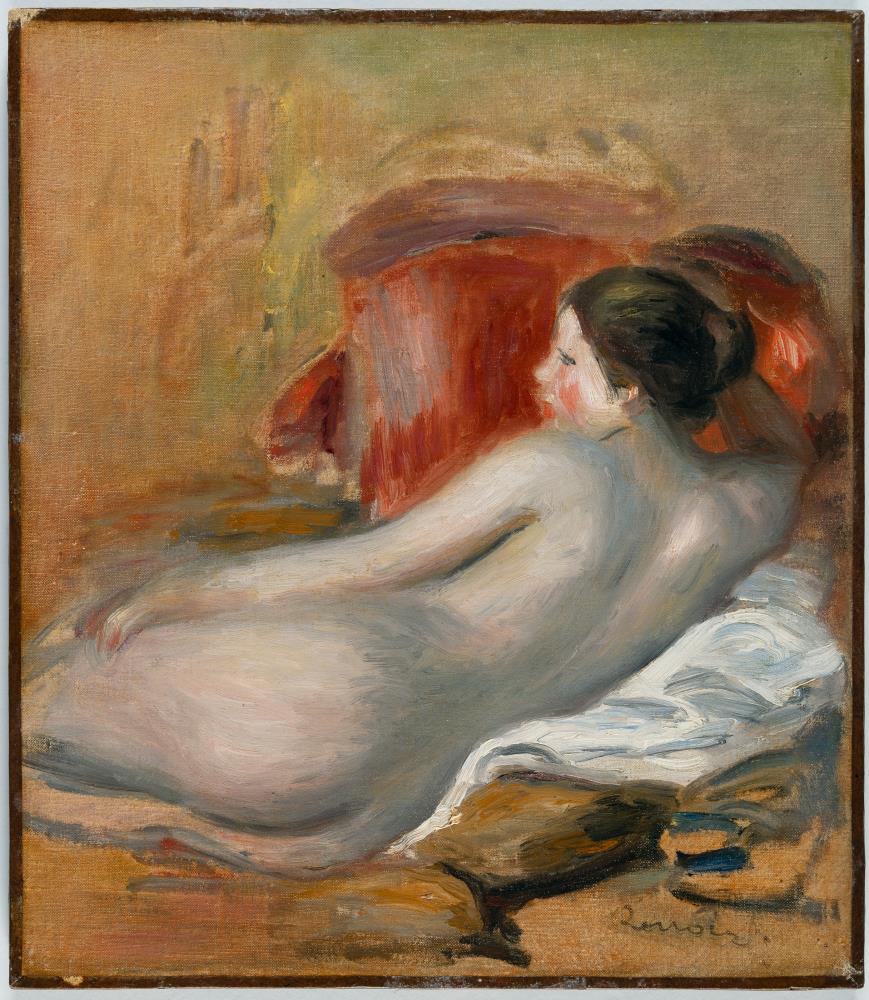
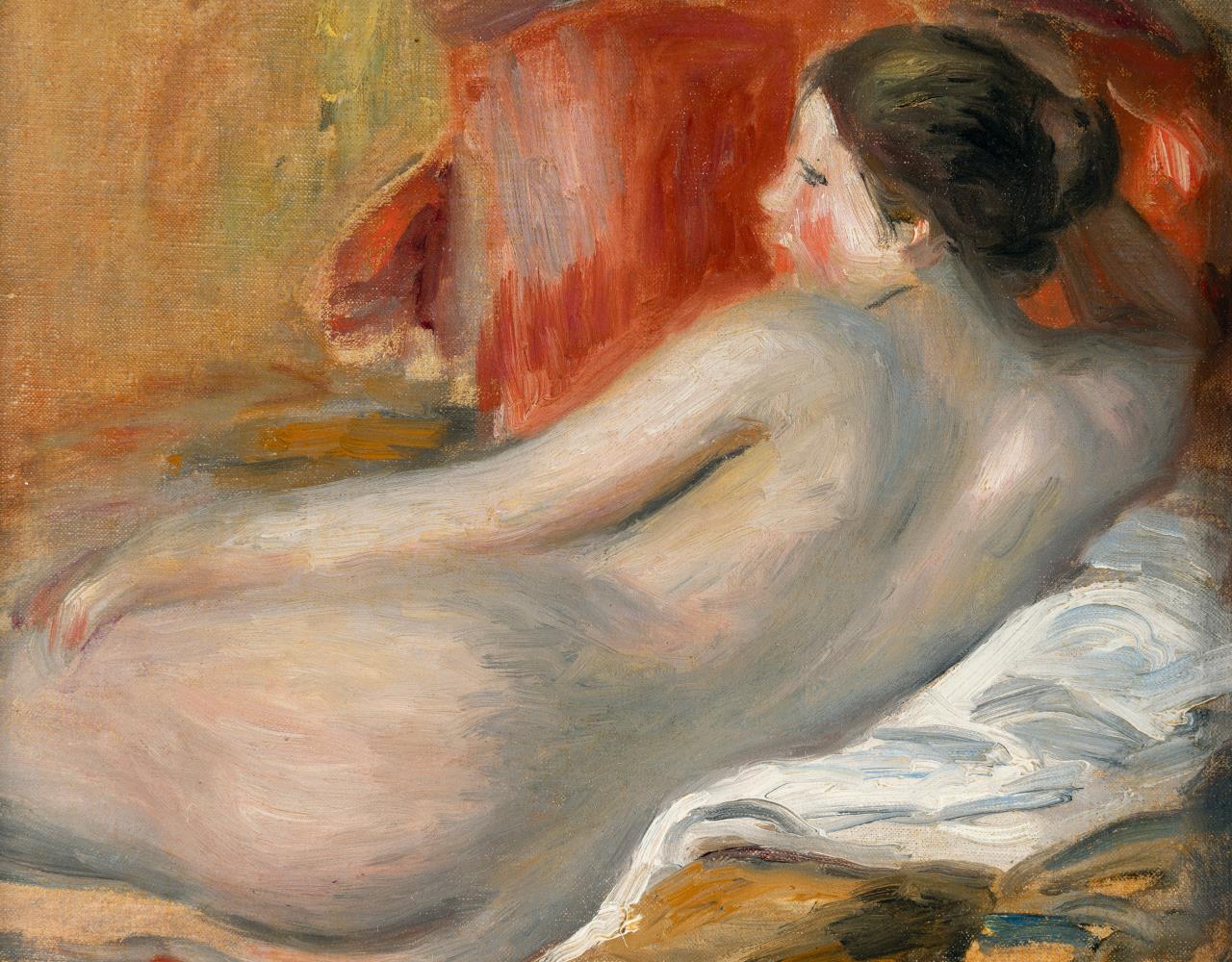
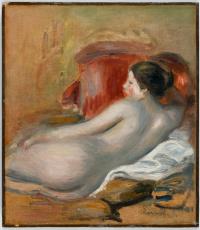
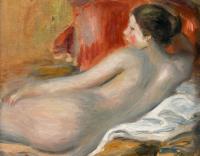
The reclining nude figure shown here takes up the motif of the odalisque – an eroticised pictorial theme that was widespread in the 19th century. Much like depictions of Venus, this figure represents the idealisation of an unattainable femininity. For the ageing artist, whose health was failing, this motif must have held particular significance. Unlike Jean-Auguste-Dominique Ingres’s famous ‘Grand Odalisque’, Renoir’s model does not seek eye contact with the viewer. Instead, she turns her back on him. Leaning on one arm, she appears to be listening to someone outside the picture plane.
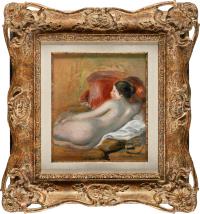
In terms of colour, the painting thrives on the contrast between the cool tones of the skin and the warm orange-red of the armchair in the background. The soft curves of the body are mirrored in the curved form of the armchair’s backrest, creating a harmonious, self-contained composition. Despite an apparently spontaneous, sketch-like application of paint, Renoir succeeds in portraying the female body in a manner that is both sensitive and striking. The figure appears at once present and distant, self-aware yet imbued with a certain innocence.
Over the course of its history, the painting has been held in several important collections. Among its former owners was the Parisian art collector Georges Urion (1865–1954), owner of the Pygmalion department store. Parts of his collection were auctioned on 30 and 31 May 1927 at the Galerie Georges Petit in Paris, including works by Renoir, Degas, Boudin and Marquet. At this auction, the Armenian art dealer Hatchik Sevadjian (also Svadjian) acquired the painting.
Sevadjian was born in Istanbul in 1884. His father, a goldsmith at the Sultan’s court, moved with the family to Antwerp in 1897 and settled in Paris as an art dealer in 1902. Hatchik Sevadjian followed in his footsteps and became a respected dealer. He specialised in antiquities from Greek, Roman, Egyptian and Indian cultures, as well as works by 19th-century French painters, including Delacroix, Renoir, Monet and Cézanne. The majority of his collection was auctioned at the Drouot auction house in Paris in 1932.
• Classic odalisque motif with subtle eroticism and a refined treatment of form and colour
• First-rate provenance: including the collections of Georges Urion and Hatchik Sevadjian, two well-known Parisian art collectors of the 1920s and 1930s
Pierre-Auguste Renoir is one of the best-known and most popular artists of French Impressionism. A central theme of his work is the depiction of women, whom he regards as the epitome of beauty and artistic inspiration. Accordingly, female figures and portraits occupy a significant place in his oeuvre. In his early works, Renoir captures a soft, light-filled femininity using delicate, pastel hues. Towards the end of the 19th century, however, his style changed: the individual facial features and physical presence of his models increasingly receded into the background. From around 1900, he developed an idealised type of woman, characterised less by personality than by a universal conception of beauty.
The reclining nude figure shown here takes up the motif of the odalisque – an eroticised pictorial theme that was widespread in the 19th century. Much like depictions of Venus, this figure represents the idealisation of an unattainable femininity. For the ageing artist, whose health was failing, this motif must have held particular significance. Unlike Jean-Auguste-Dominique Ingres’s famous ‘Grand Odalisque’, Renoir’s model does not seek eye contact with the viewer. Instead, she turns her back on him. Leaning on one arm, she appears to be listening to someone outside the picture plane.
In terms of colour, the painting thrives on the contrast between the cool tones of the skin and the warm orange-red of the armchair in the background. The soft curves of the body are mirrored in the curved form of the armchair’s backrest, creating a harmonious, self-contained composition. Despite an apparently spontaneous, sketch-like application of paint, Renoir succeeds in portraying the female body in a manner that is both sensitive and striking. The figure appears at once present and distant, self-aware yet imbued with a certain innocence.
Over the course of its history, the painting has been held in several important collections. Among its former owners was the Parisian art collector Georges Urion (1865–1954), owner of the Pygmalion department store. Parts of his collection were auctioned on 30 and 31 May 1927 at the Galerie Georges Petit in Paris, including works by Renoir, Degas, Boudin and Marquet. At this auction, the Armenian art dealer Hatchik Sevadjian (also Svadjian) acquired the painting.
Sevadjian was born in Istanbul in 1884. His father, a goldsmith at the Sultan’s court, moved with the family to Antwerp in 1897 and settled in Paris as an art dealer in 1902. Hatchik Sevadjian followed in his footsteps and became a respected dealer. He specialised in antiquities from Greek, Roman, Egyptian and Indian cultures, as well as works by 19th-century French painters, including Delacroix, Renoir, Monet and Cézanne. The majority of his collection was auctioned at the Drouot auction house in Paris in 1932.