Paula Modersohn-Becker
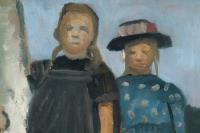
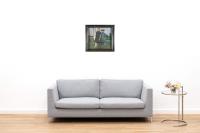
Two girls standing by a birch trunk
Artist
Paula Modersohn-Becker
1876 Dresden - Worpswede 1907
Further information
Busch/Werner 282.
Exhibition
Gedächtnis-Ausstellung Paula Modersohn-Becker. 108 Gemälde, 60 Zeichnungen, 10 Radierungen, Bremer Kunsthalle, 1920, Journal der Bremer Kunsthalle, Nr. 688;
Paula Modersohn-Becker und die Kunst in Paris um 1900. von Cézanne bis Picasso, Kunsthalle Bremen, 2007/08, außer Kat.;
Paula Modersohn-Becker 1876-1907. Gemälde, Zeichnungen, Graphisches Kabinett, Kunsthandel Wolfgang Werner, Bremen 2007/08, Kat.-Nr. 5, farb. Abb.;
Paula Modersohn-Becker. Pionierin der Moderne, Kunsthalle Krems, 2010, farb. Abb. S. 112;
Paula Modersohn-Becker, Louisiana Museum of Modern Art, Humlebæk 2014/15, Kat.-Nr. 24, farb. Abb. S. 163;
Paula Modersohn-Becker. Berlin - Worpswede - Paris, Museo Comunale d'Arte Moderna, Ascona 2015, Kat.-Nr. 22, farb. Abb.;
Emil Nolde trifft Paula Modersohn-Becker, Museen Böttcherstraße/Paula Modersohn-Becker Museum, Bremen 2016/17, Kat.-Nr. 32, farb. Abb. S. 96;
Paula Modersohn-Becker. Der Weg in die Moderne, Bucerius-Kunstforum, Hamburg 2017, Kat.-Nr. 16, farb. Abb. S. 95;
Von Worpswede aus: Paula Modersohn-Becker und Otto Modersohn, Stiftung Ahlers pro Arte, Herford 2018, o. Kat.
Paula Modersohn-Becker und die Kunst in Paris um 1900. von Cézanne bis Picasso, Kunsthalle Bremen, 2007/08, außer Kat.;
Paula Modersohn-Becker 1876-1907. Gemälde, Zeichnungen, Graphisches Kabinett, Kunsthandel Wolfgang Werner, Bremen 2007/08, Kat.-Nr. 5, farb. Abb.;
Paula Modersohn-Becker. Pionierin der Moderne, Kunsthalle Krems, 2010, farb. Abb. S. 112;
Paula Modersohn-Becker, Louisiana Museum of Modern Art, Humlebæk 2014/15, Kat.-Nr. 24, farb. Abb. S. 163;
Paula Modersohn-Becker. Berlin - Worpswede - Paris, Museo Comunale d'Arte Moderna, Ascona 2015, Kat.-Nr. 22, farb. Abb.;
Emil Nolde trifft Paula Modersohn-Becker, Museen Böttcherstraße/Paula Modersohn-Becker Museum, Bremen 2016/17, Kat.-Nr. 32, farb. Abb. S. 96;
Paula Modersohn-Becker. Der Weg in die Moderne, Bucerius-Kunstforum, Hamburg 2017, Kat.-Nr. 16, farb. Abb. S. 95;
Von Worpswede aus: Paula Modersohn-Becker und Otto Modersohn, Stiftung Ahlers pro Arte, Herford 2018, o. Kat.
Literature
Galerie Aenne Abels, Cologne, catalogue, October 1955, ill.
Provenance
The artist’s estate;
Otto Modersohn, Worpswede, 1921;
Philine Vogeler, Worpswede, 1921;
Kirchhoff Collection, Wiesbaden (?);
Aenne Abels Gallery, Cologne, 1954;
Graphisches Kabinett, Kunsthandel Wolfgang Werner, Bremen;
Private collection, Germany, acquired from the aforementioned in 1956.
Otto Modersohn, Worpswede, 1921;
Philine Vogeler, Worpswede, 1921;
Kirchhoff Collection, Wiesbaden (?);
Aenne Abels Gallery, Cologne, 1954;
Graphisches Kabinett, Kunsthandel Wolfgang Werner, Bremen;
Private collection, Germany, acquired from the aforementioned in 1956.
Share


Description
• To mark this year’s 150th anniversary of the artist’s birth, a tribute featuring numerous exhibitions, including in Bremen and Dresden
• Typical atmosphere and motifs of the young artist
• Painting from the estate of Otto Modersohn
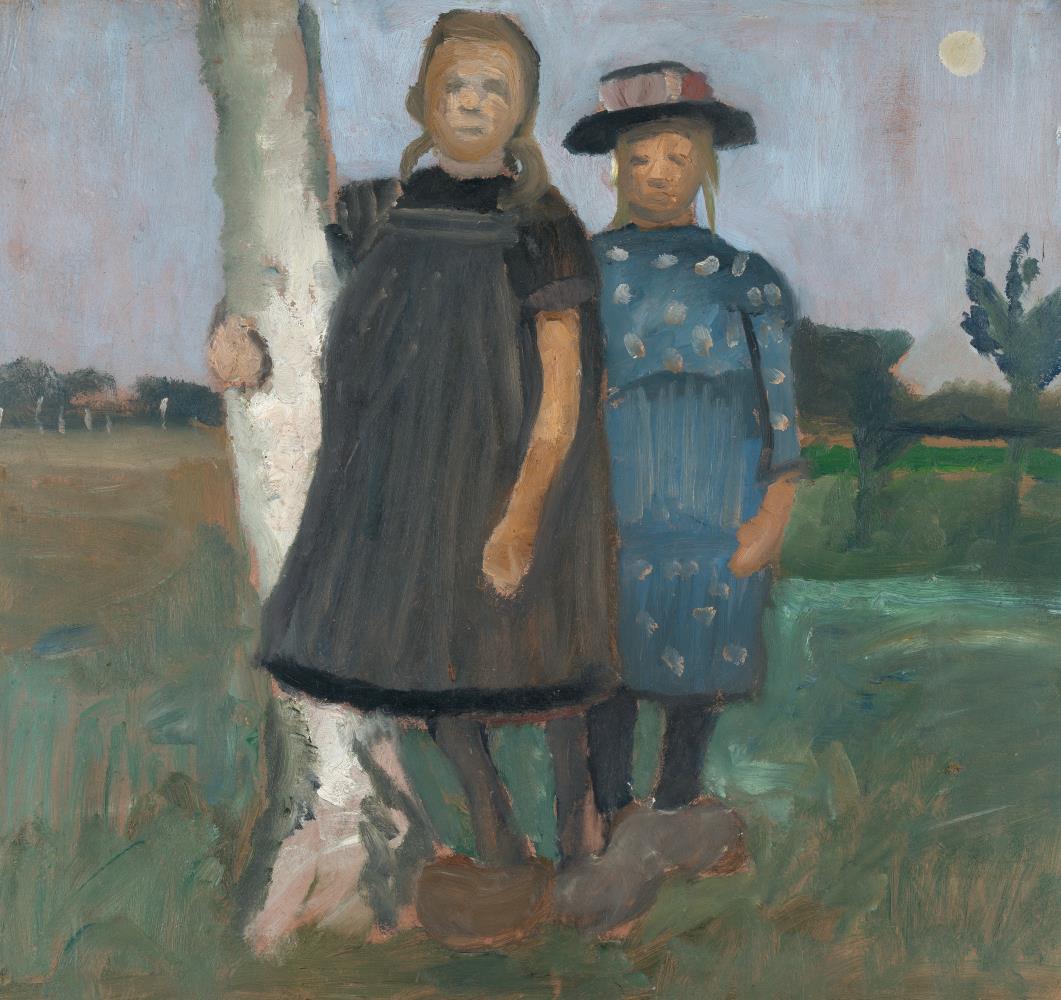
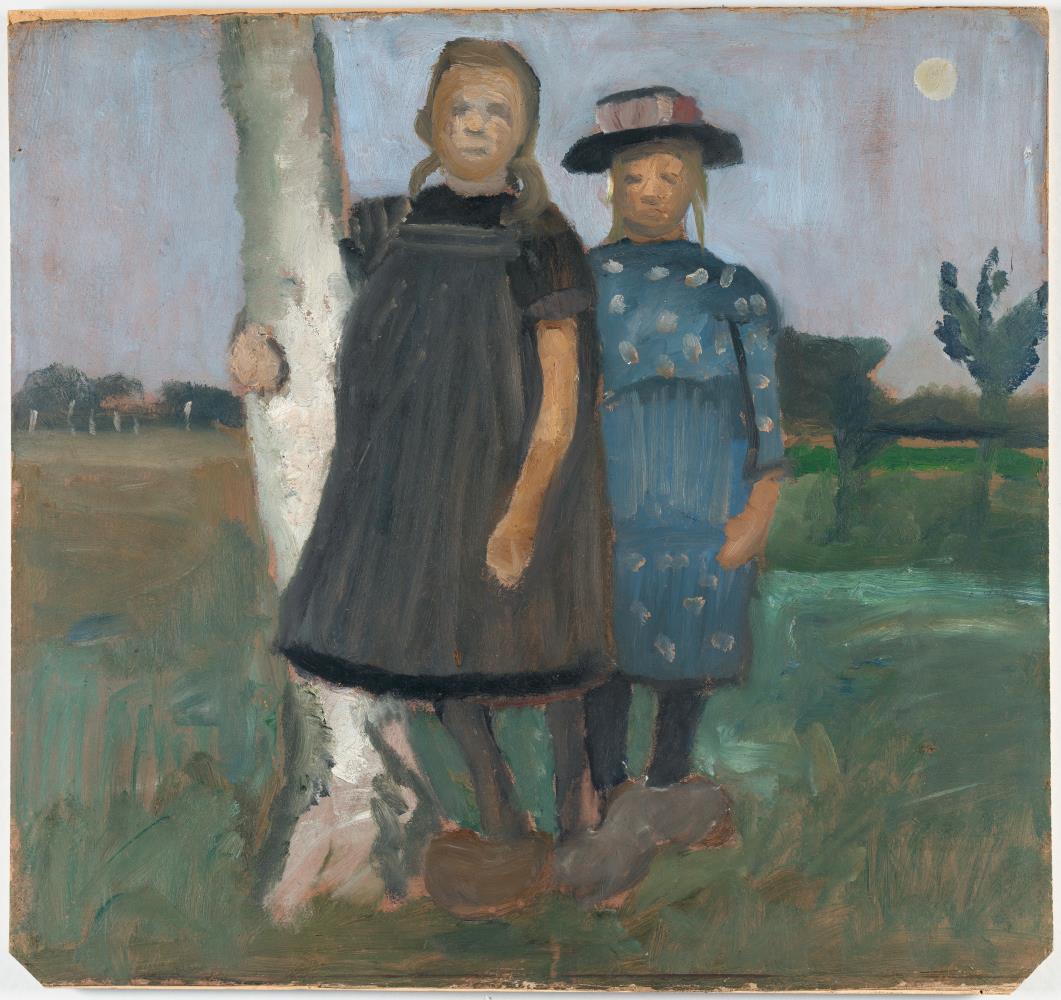
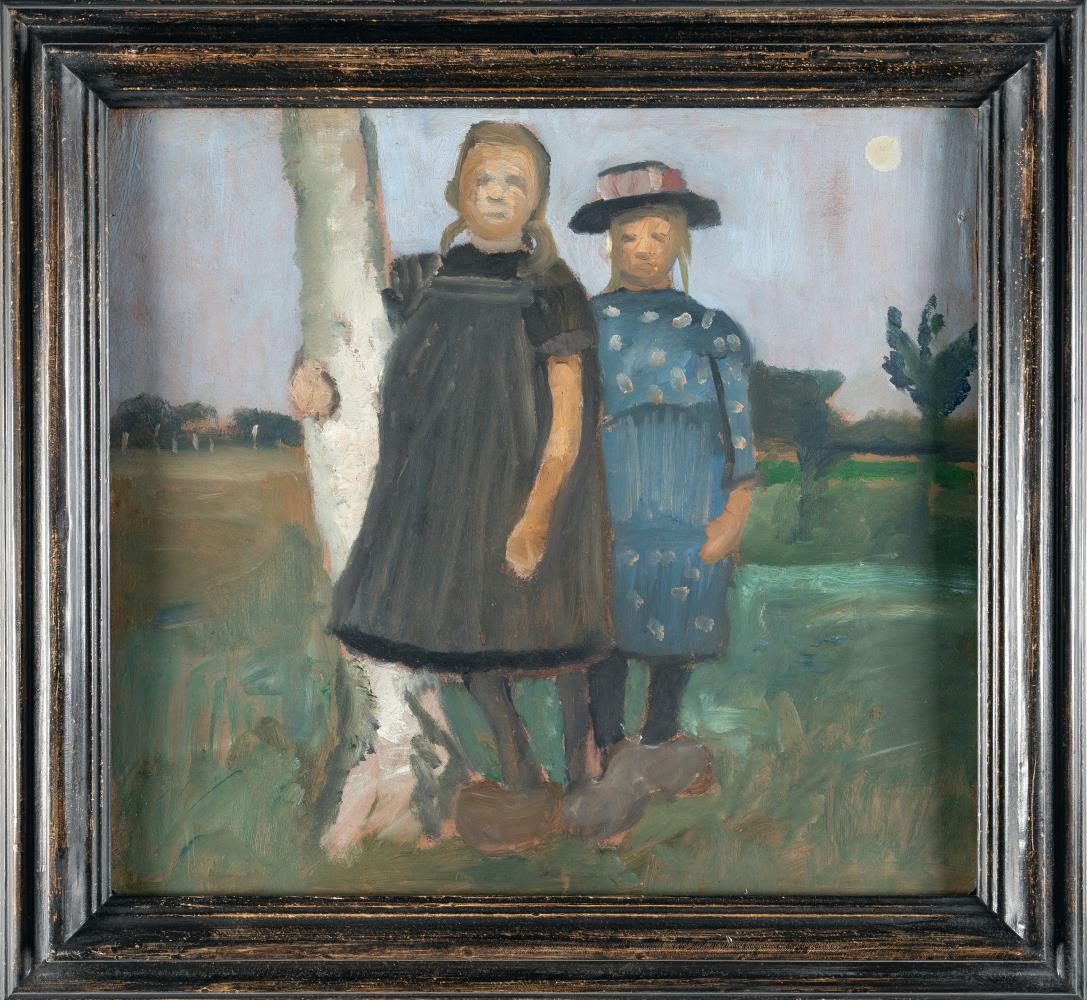
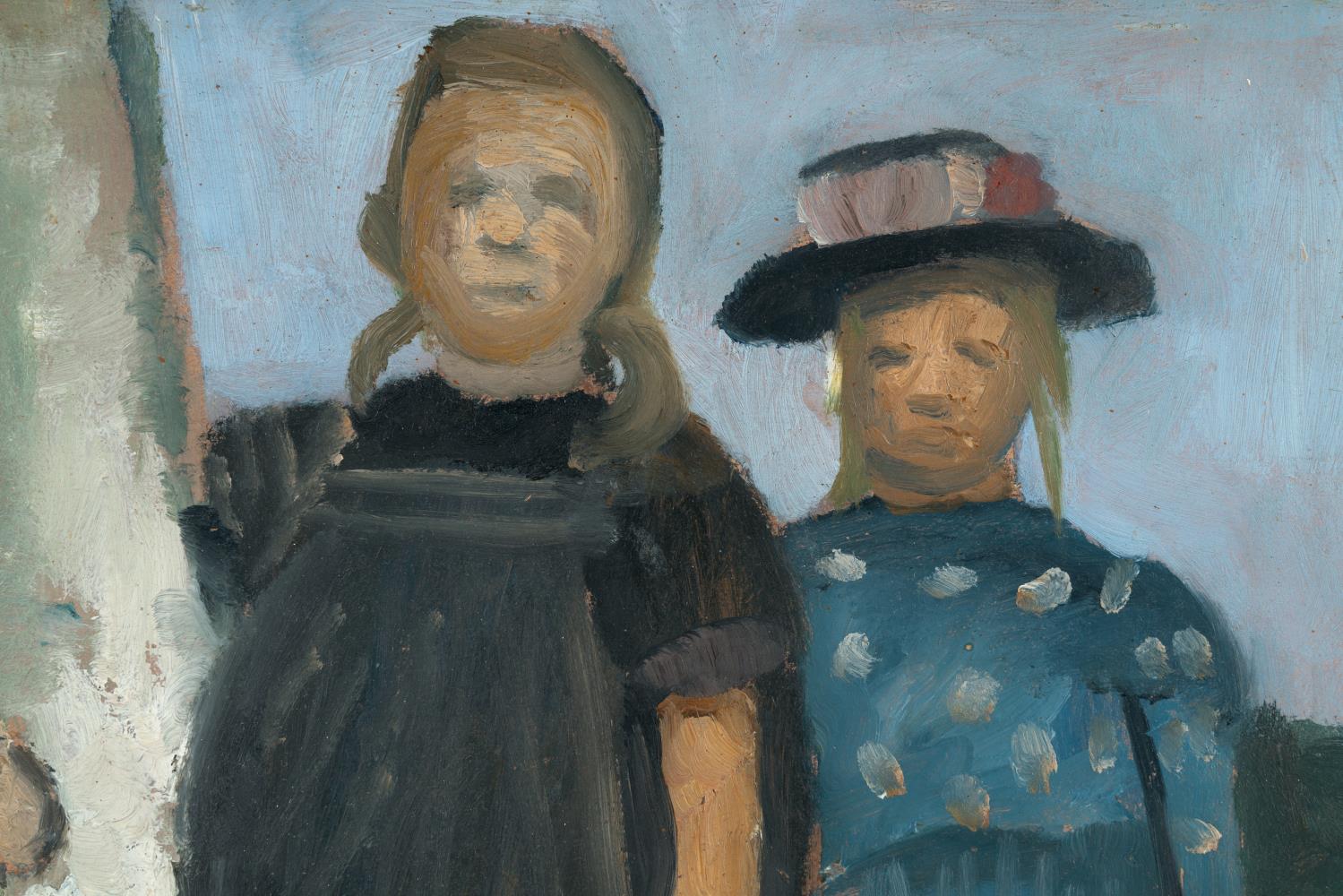
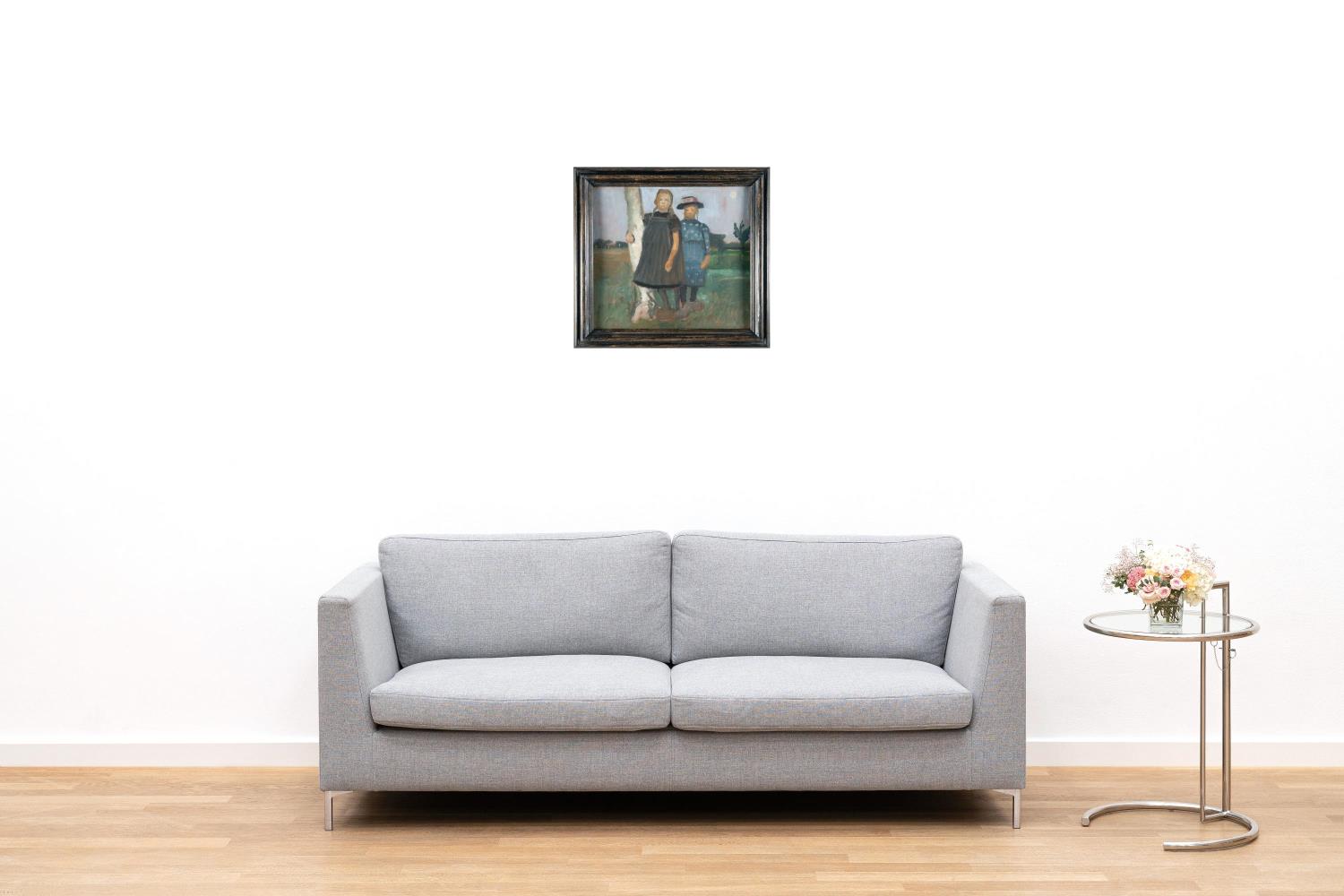
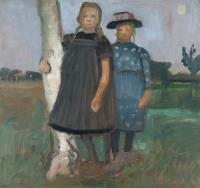
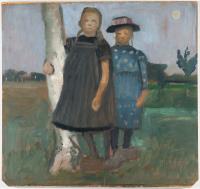
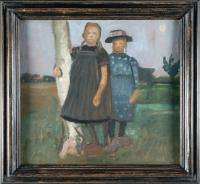
It has turned to evening. Amidst the Worpswede landscape of fields, structured by rows of trees and a small swath of colour, two girls lean against a birch tree. The sun shines wearily – or is it perhaps the rising moon? The two girls, too, radiate a sense of the day’s fulfilment. With swift brushstrokes, Modersohn-Becker sketches out the scene: whilst we perceive vastness and emptiness, what is depicted is limited more to a sense of the scene than to clear recognition. Like a memory, details blur and become indistinct. Thus, the faces are reduced to core facial features, making recognition (today) impossible.
Paula Modersohn-Becker’s stepdaughter Elsbeth Modersohn, her husband’s child from his first marriage, is unlikely to be depicted here. Elsbeth is often the subject of the paintings during the early years of their marriage, which were few in number to begin with. Here, however, a child of only three years old is not shown, as comparisons with other paintings from the period suggest. Perhaps the two girls depicted here are from the colony or the village. Perhaps they are chance encounters, quickly sketched or merely captured in memory and then rendered in tempera in the studio? Or is it a planned composition, with the young models paid for the unique opportunity to explore the artist’s studio? Either way, the motif of children of various ages recurs frequently in this period – Paula Modersohn-Becker explores here youth, mother/child relationships, growing up and the vulnerability of the fleeting moment.
Paula Modersohn-Becker’s style is unmistakable here. The skilful use of colour and the blurring prevent her painting from appearing too melancholic. They are a wistful capture of everyday magic: soon the day will be over, the sun will have set, the moon will have risen. Soon the girls will no longer be girls. Soon Paula Modersohn-Becker will move on.
To mark the painter’s 150th birthday on 8 February 2026, we will look back on this pioneering artist and honour her with numerous exhibitions.
• Typical atmosphere and motifs of the young artist
• Painting from the estate of Otto Modersohn
It has turned to evening. Amidst the Worpswede landscape of fields, structured by rows of trees and a small swath of colour, two girls lean against a birch tree. The sun shines wearily – or is it perhaps the rising moon? The two girls, too, radiate a sense of the day’s fulfilment. With swift brushstrokes, Modersohn-Becker sketches out the scene: whilst we perceive vastness and emptiness, what is depicted is limited more to a sense of the scene than to clear recognition. Like a memory, details blur and become indistinct. Thus, the faces are reduced to core facial features, making recognition (today) impossible.
Paula Modersohn-Becker’s stepdaughter Elsbeth Modersohn, her husband’s child from his first marriage, is unlikely to be depicted here. Elsbeth is often the subject of the paintings during the early years of their marriage, which were few in number to begin with. Here, however, a child of only three years old is not shown, as comparisons with other paintings from the period suggest. Perhaps the two girls depicted here are from the colony or the village. Perhaps they are chance encounters, quickly sketched or merely captured in memory and then rendered in tempera in the studio? Or is it a planned composition, with the young models paid for the unique opportunity to explore the artist’s studio? Either way, the motif of children of various ages recurs frequently in this period – Paula Modersohn-Becker explores here youth, mother/child relationships, growing up and the vulnerability of the fleeting moment.
Paula Modersohn-Becker’s style is unmistakable here. The skilful use of colour and the blurring prevent her painting from appearing too melancholic. They are a wistful capture of everyday magic: soon the day will be over, the sun will have set, the moon will have risen. Soon the girls will no longer be girls. Soon Paula Modersohn-Becker will move on.
To mark the painter’s 150th birthday on 8 February 2026, we will look back on this pioneering artist and honour her with numerous exhibitions.