Egon Schiele
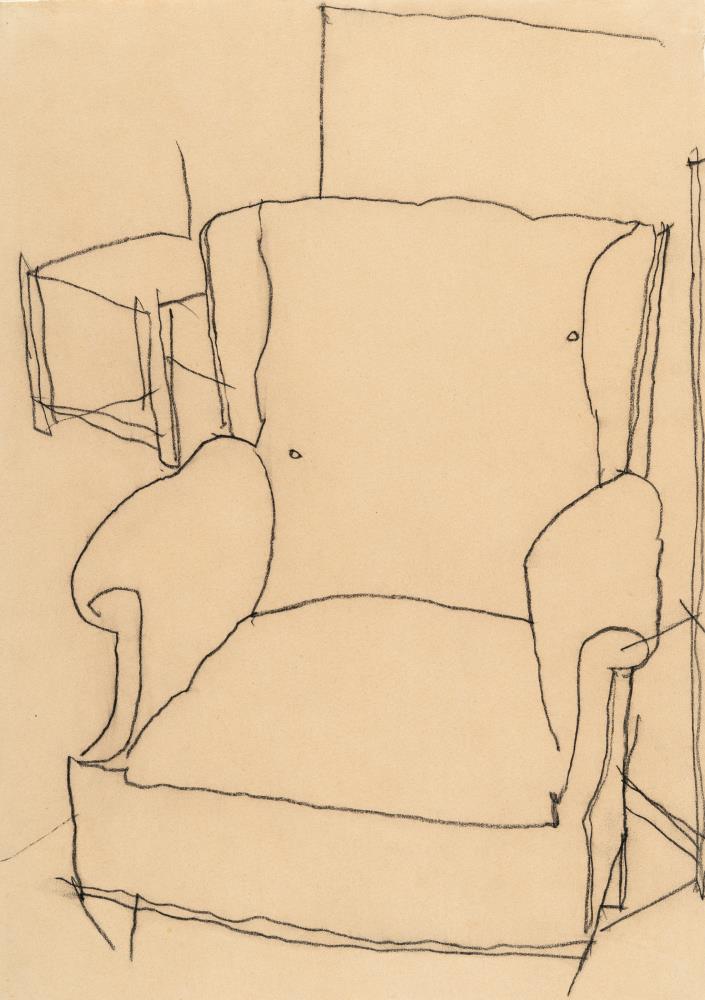
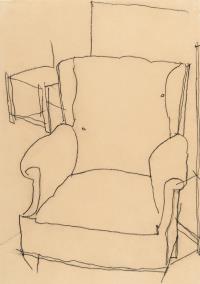
The armchair of Dr Hugo Koller
Artist
Egon Schiele
1890 Tulln/Donau - Wien 1918
Further information
Kallir D 2495.
Ausstellung (Auswahl):
Experiment Weltuntergang: Wien um 1900, Kunsthalle, Hamburg 1981, Kat.-Nr. 228;
Egon Schiele in der Österreichischen Galerie in Wien. 147. Wechselausstellung, Oberes Belvedere, Wien 1990, Kat.-Nr. 15b;
Galerie St. Etienne, New York 2018/19.
Ausstellung (Auswahl):
Experiment Weltuntergang: Wien um 1900, Kunsthalle, Hamburg 1981, Kat.-Nr. 228;
Egon Schiele in der Österreichischen Galerie in Wien. 147. Wechselausstellung, Oberes Belvedere, Wien 1990, Kat.-Nr. 15b;
Galerie St. Etienne, New York 2018/19.
Provenance
Family of Dr Hugo Koller, Vienna/Oberwaltersdorf;
Silvia Koller, Oberwaltersdorf;
Dorotheum, Vienna 26 March 1965, Lot 317;
Sotheby’s, London 2 December 1992, Lot 137;
Serge Sabarsky Gallery, New York, acquired from the aforementioned;
Collection/Estate of Serge Sabarsky, New York;
Collection/Vally Sabarsky Foundation, New York.
Silvia Koller, Oberwaltersdorf;
Dorotheum, Vienna 26 March 1965, Lot 317;
Sotheby’s, London 2 December 1992, Lot 137;
Serge Sabarsky Gallery, New York, acquired from the aforementioned;
Collection/Estate of Serge Sabarsky, New York;
Collection/Vally Sabarsky Foundation, New York.
Share


Description
• Sketch for the portrait of Dr Koller, which forms part of the collection of the Belvedere in Vienna
• The armchair becomes a vehicle of expression beyond mere decoration
• Koller was a physician, humanities scholar and industrialist – his passion lay in art
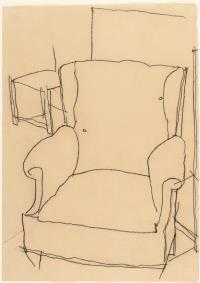
Austrians may wonder: an armchair? Where? Surely Schiele is sketching an armchair here? Whilst the artist himself would certainly have agreed with this term, it provokes incomprehension in Germany. An armchair is to Austrians what a chair is to Germans.
Whatever one may call it, let us sit down and wonder across national borders: Why is Schiele showing us a humble, albeit undoubtedly extremely comfortable, piece of seating furniture?
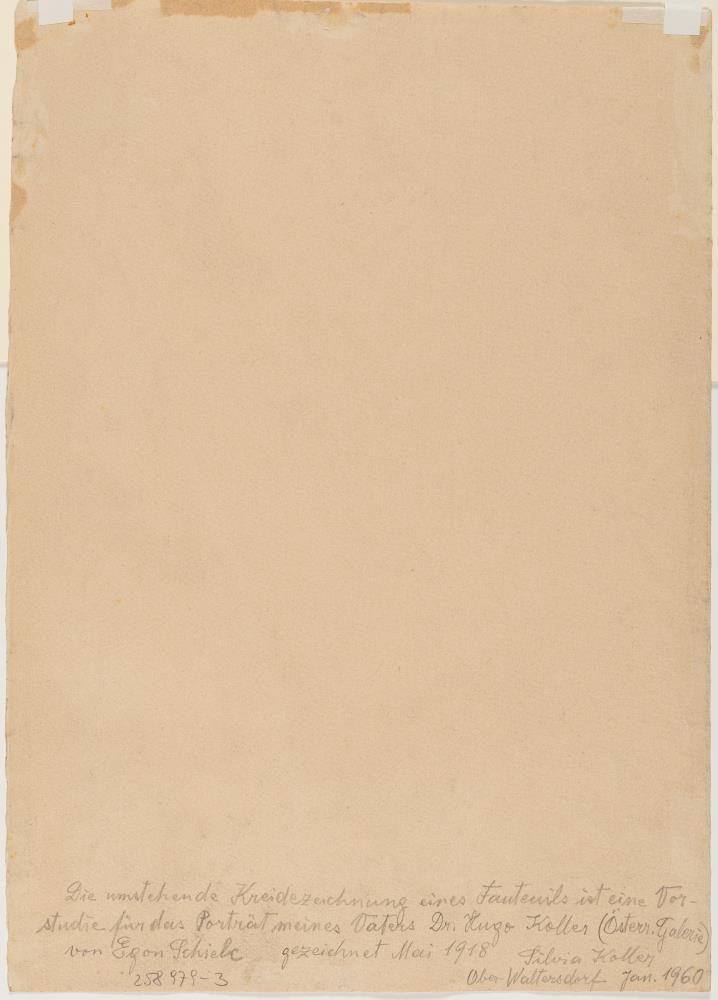
The sketch by Egon Schiele offered here was part of the preparatory process for the painting of Dr Dr Hugo Koller, which is now in the Belvedere collection in Vienna (Inv. No. 4296). Koller holds two doctorates, one in medicine and one in the humanities. After initially pursuing an academic career, he joined his father-in-law’s business in 1897 and eventually became an industrialist. He was a great admirer of Anton Bruckner’s music and was friends with artists from the Secession and the Wiener Werkstätte. Later, he supported and championed numerous artists. Together with his partner, the artist Broncia Pineles, he instilled a love of art in his children, so that his daughter Silvia Koller later became a painter and his son married the sculptor Anna Mahler.
In 1913, Dr Hugo Koller took over the management of his father-in-law’s factory, who had since passed away. The family lived near Vienna at the Oberwaltersdorf estate, where they welcomed young artists. Among them in 1918 was the young Egon Schiele. He positioned the sitter in the oil painting within his library, thereby creating not merely a pleasing backdrop but a character portrait. Amidst an untidy library, a haphazardly stacked collection of countless books! They are piled high, have fallen open and slipped to the floor, are crammed into corners, and even the sitter had no time to put the open book back on the shelf from his lap for the portrait. Koller is a bibliophile par excellence; his collection numbers several thousand books.
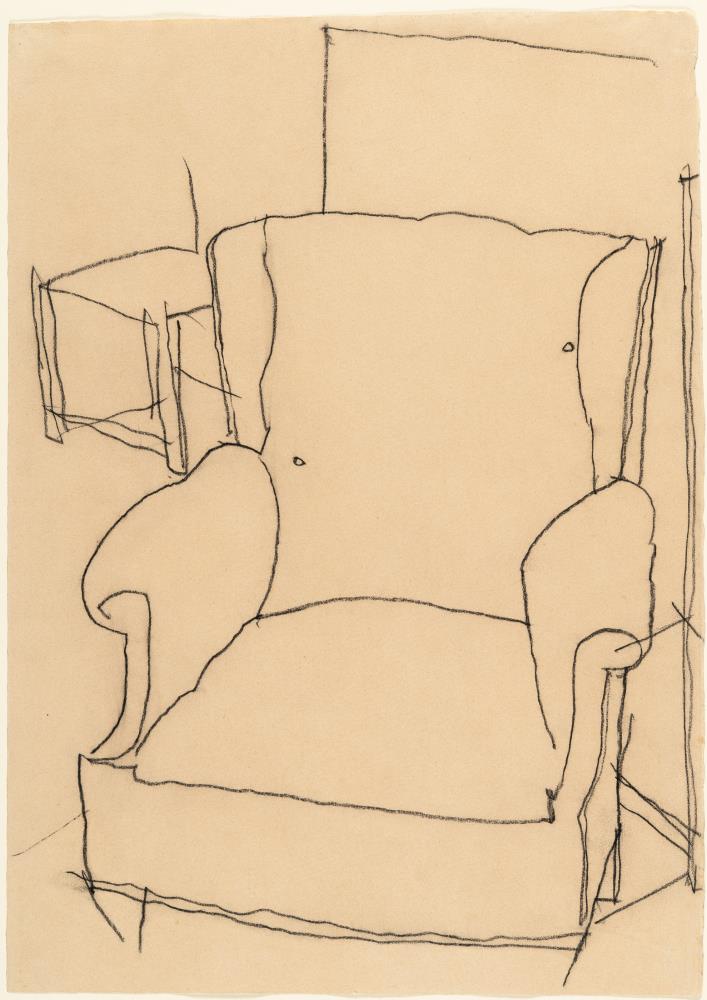
Now the armchair: is it merely an armchair? A piece of seating furniture, simply because one is needed? A piece of scenery? Not at all! Just as the books receive special attention in the work, so too is the armchair of interest to the meticulous Schiele. It is not without reason that he devotes separate sketches to the piece of furniture, bringing out its character – and thus once again emphasising the intellectual side of the client, absorbed in his collection, his thoughts and his innovations.
• The armchair becomes a vehicle of expression beyond mere decoration
• Koller was a physician, humanities scholar and industrialist – his passion lay in art
Austrians may wonder: an armchair? Where? Surely Schiele is sketching an armchair here? Whilst the artist himself would certainly have agreed with this term, it provokes incomprehension in Germany. An armchair is to Austrians what a chair is to Germans.
Whatever one may call it, let us sit down and wonder across national borders: Why is Schiele showing us a humble, albeit undoubtedly extremely comfortable, piece of seating furniture?
The sketch by Egon Schiele offered here was part of the preparatory process for the painting of Dr Dr Hugo Koller, which is now in the Belvedere collection in Vienna (Inv. No. 4296). Koller holds two doctorates, one in medicine and one in the humanities. After initially pursuing an academic career, he joined his father-in-law’s business in 1897 and eventually became an industrialist. He was a great admirer of Anton Bruckner’s music and was friends with artists from the Secession and the Wiener Werkstätte. Later, he supported and championed numerous artists. Together with his partner, the artist Broncia Pineles, he instilled a love of art in his children, so that his daughter Silvia Koller later became a painter and his son married the sculptor Anna Mahler.
In 1913, Dr Hugo Koller took over the management of his father-in-law’s factory, who had since passed away. The family lived near Vienna at the Oberwaltersdorf estate, where they welcomed young artists. Among them in 1918 was the young Egon Schiele. He positioned the sitter in the oil painting within his library, thereby creating not merely a pleasing backdrop but a character portrait. Amidst an untidy library, a haphazardly stacked collection of countless books! They are piled high, have fallen open and slipped to the floor, are crammed into corners, and even the sitter had no time to put the open book back on the shelf from his lap for the portrait. Koller is a bibliophile par excellence; his collection numbers several thousand books.
Now the armchair: is it merely an armchair? A piece of seating furniture, simply because one is needed? A piece of scenery? Not at all! Just as the books receive special attention in the work, so too is the armchair of interest to the meticulous Schiele. It is not without reason that he devotes separate sketches to the piece of furniture, bringing out its character – and thus once again emphasising the intellectual side of the client, absorbed in his collection, his thoughts and his innovations.