Ernst Ludwig Kirchner
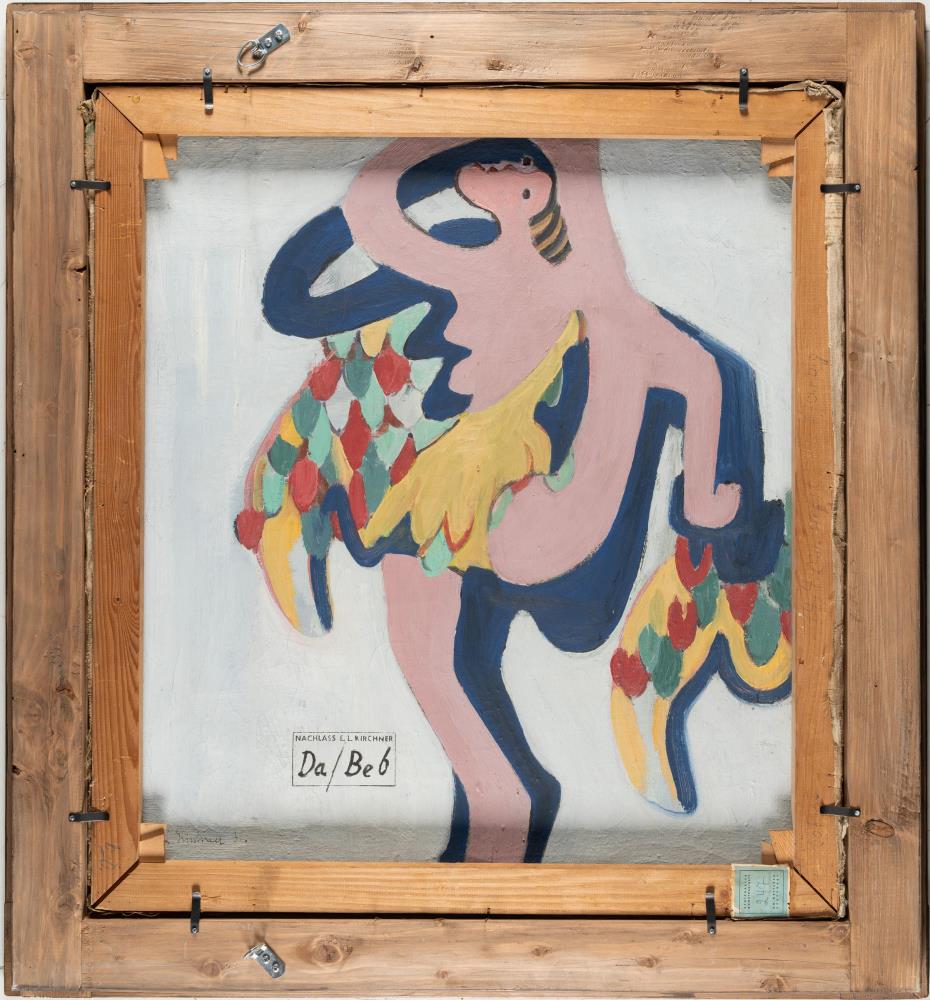
Recto: Landschaft mit weißblühenden Bäumen – Verso: Akrobatische Tänzerin
Artist
Ernst Ludwig Kirchner
Ausstellung
Ernst Ludwig Kirchner, Kunsthalle Bern, 1933, Kat.-Nr. 100 (Akrobatische Tänzerin) ; Ernst Ludwig Kirchner, Kunsthalle, Basel 1937, Kat.-Nr. 238 ; E. L. Kirchner. Gemälde, Aquarelle, Zeichnungen und Druckgraphik, Kunstverein Hamburg und Frankfurt am Main 1969/70, Kat.-Nr. 10.
Literature
Kirchner Archiv: Fotoalbum Nr. I des Künstlers, Foto-Nr. 195; Ketterer, Roman Norbert, Dialoge. Bildende Kunst. Kunsthandel, Stuttgart 1988, Abb. S. 429; Delfs, Hans, Ernst Ludwig Kirchner - Der Gesamte Briefwechsel "Die absolute Wahrheit, so wie ich sie fühle", Zürich, 2010, Nr. 507, 516 und Nr. 2796, 3440, 3443; Herold, Inge, Lorenz, Ulrike und Sadowsky, Thorsten (Hrsg.) und Henze, Wolfgang, Der doppelte Kirchner. Die zwei Seiten der Leinwand, Ausstellungskatalog, Kunsthalle Mannheim/Kirchner Museum Davos, 2015, S. 146, Nr. D10.
Provenance
Nachlass des Künstlers, verso auf der Leinwand mit dem Basler Nachlassstempel, Lugt 1570 b, dort mit der handschriftlichen Registriernummer „Da/Be6“; Stuttgarter Kunstkabinett Roman Norbert Ketterer, 20.5.1960, Los 247, verso auf dem Rahmen mit dem Etikett; Privatsammlung, Süddeutschland.
Share


Description
- Double-sided painting from the artist's estate, combining two central creative phases of Kirchner's work
- Unique testimony to Kirchner's stylistic and thematic development over more than two decades
- Offered on the art market for the first time in more than 60 years
Two creative phases on one canvas
This extraordinary double-sided painting by Ernst Ludwig Kirchner unites two central creative phases of the artist in one work - the early Expressionist phase around 1909 and the late period at the beginning of the 1930s, which was characterized by stylistic clarity. It is exemplary of Kirchner's artistic development and impressively documents his transformation from an impulsive experimenter of color and form to a reflective designer of individual, formally condensed expression.
Early landscape and spontaneous conception of nature
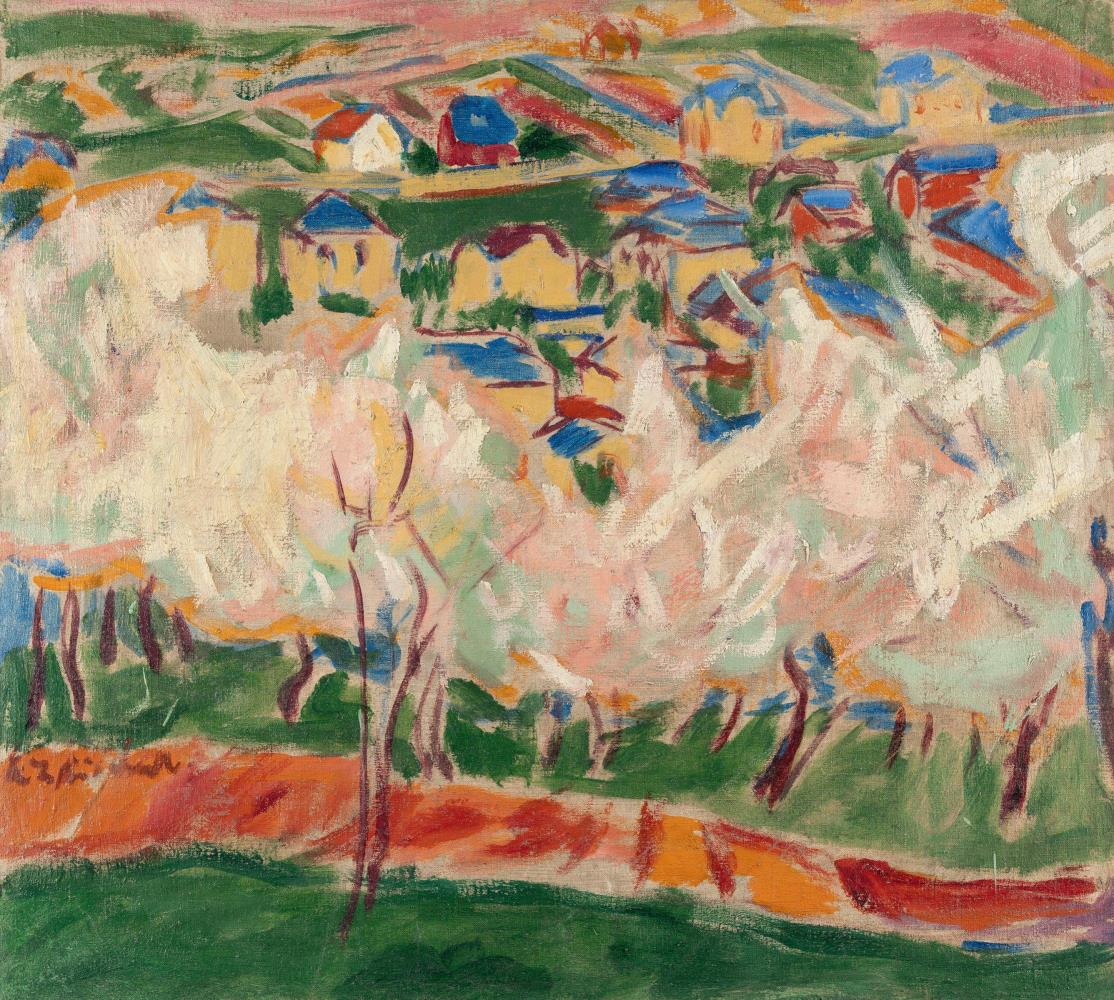
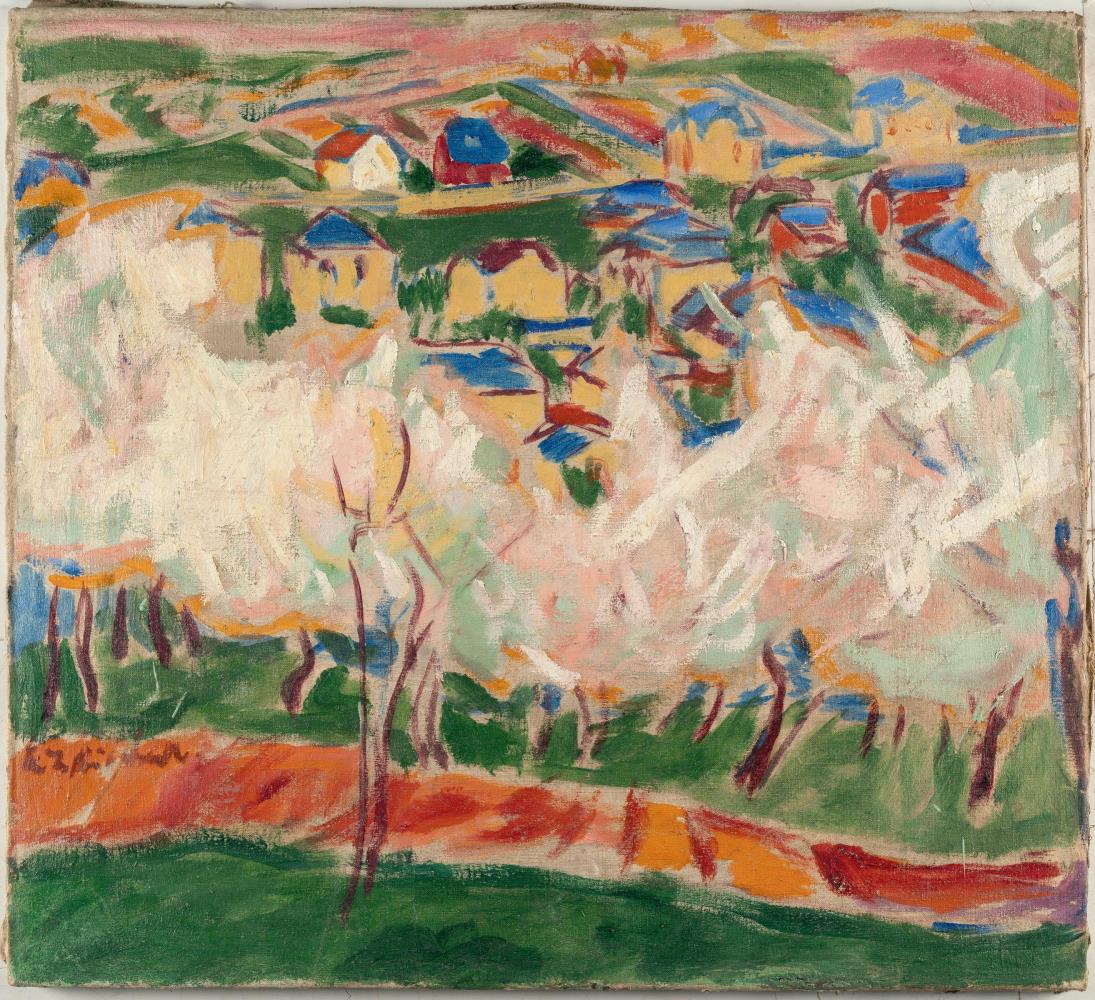
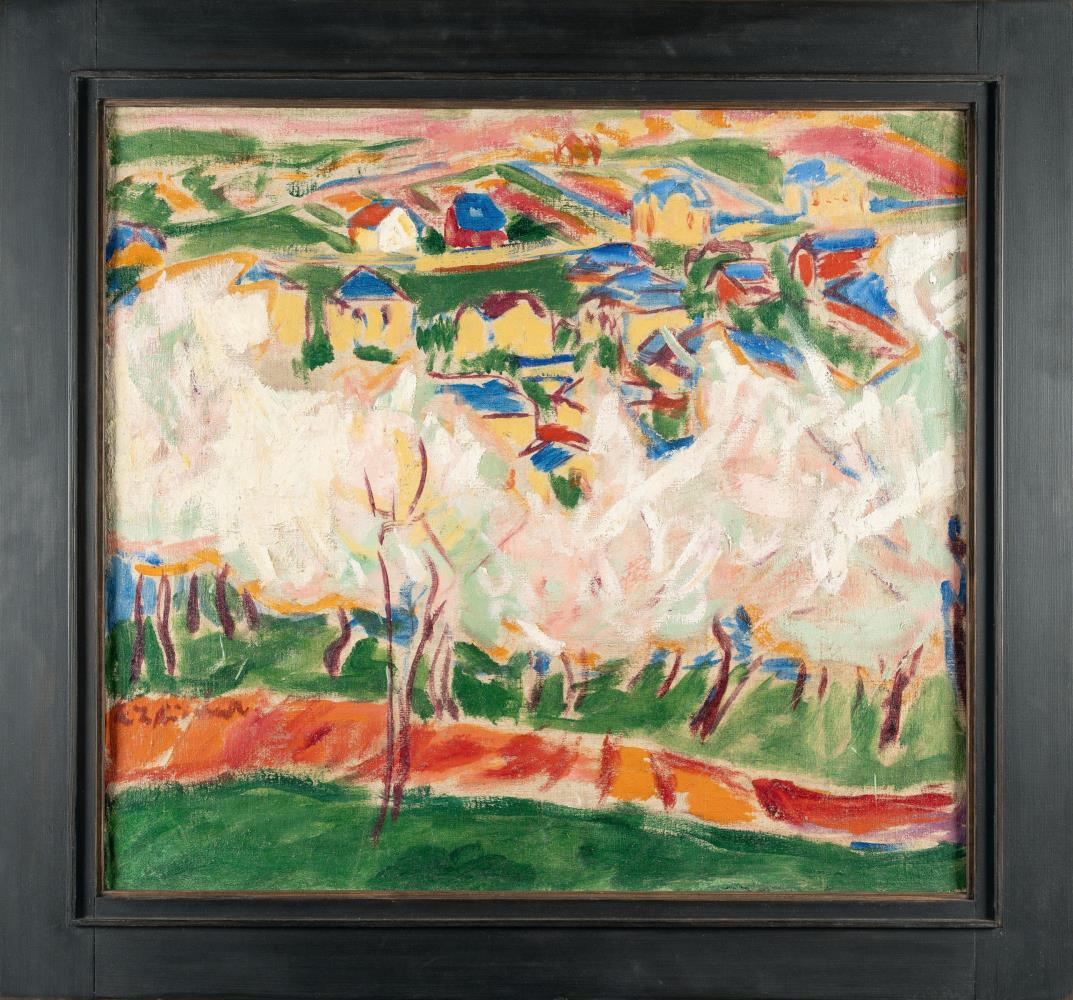
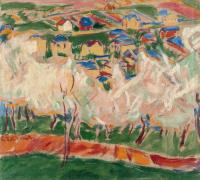
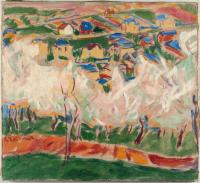
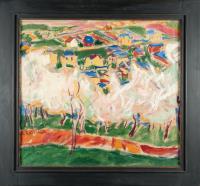
The front, Landscape with White Blossoming Trees, was created during the Dresden period, four years after Kirchner joined forces with Erich Heckel, Karl Schmidt-Rottluff and Fritz Bleyl to form the artist group "Brücke". During this phase, Kirchner developed a free, spontaneous style of painting that translated the immediate experience of nature into a rhythmic composition of lines, surfaces and colors. The spring landscape shows a vibrant interplay of lush green and pastel pink as well as strong red and brown tones, accentuated with bright blue areas of color. The work reveals Kirchner's early mastery of color and form. The depiction is closely related to the artist's striving for a direct, unmediated perception of nature, which characterized the work of the Dresden "Brücke" artists in the years around 1909.
Wolfgang Henze writes about this landscape painting: "A painting from the larger group of blossoming trees from 1909. For this group of paintings, the experience of Collioure landscapes by Henri Matisse in his exhibition at Cassirer in Berlin in January 1909 was repeatedly mentioned. However, it is unclear which of the three landscapes shown there could have inspired Kirchner. There are certainly similarities with Matisse's Collioure landscapes, but the most obvious one, the relationship of the trunks and branches to the foliage in Kirchner's view of trees, has been evident since 1905. They structure the picture as in Matisse's work (and also in Mondrian's from 1908)."
Acrobatic dancer - expression of formal clarity in the late work
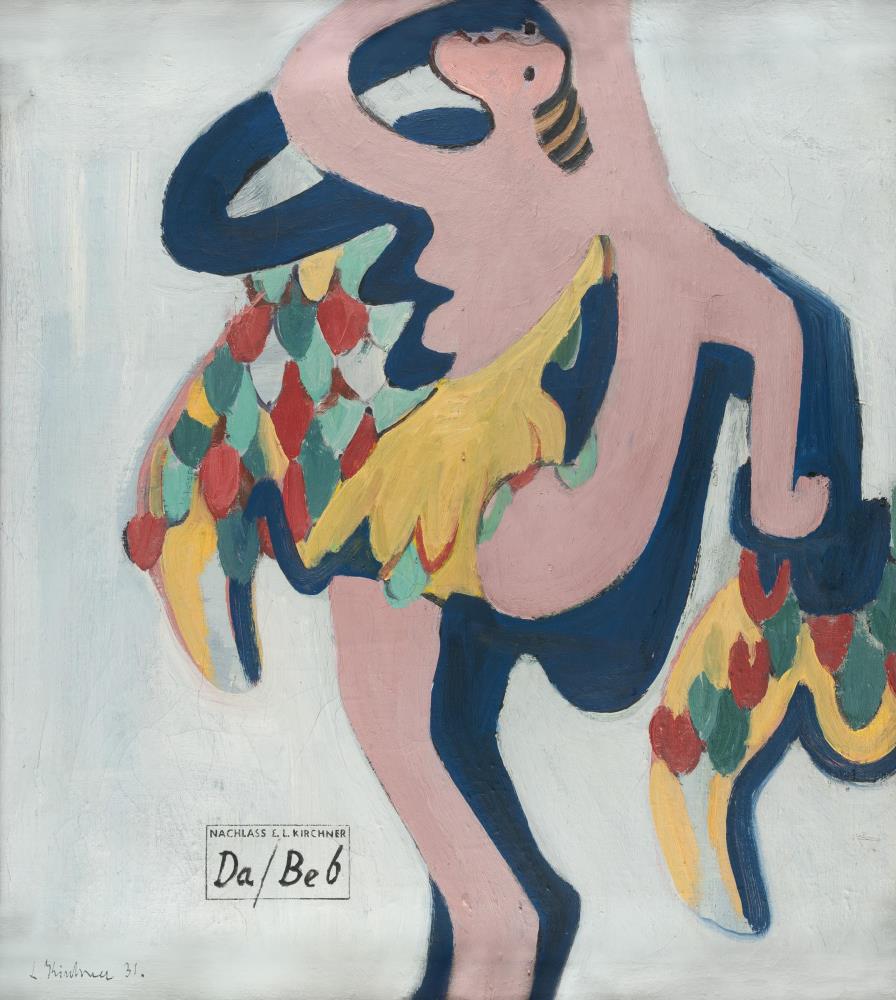
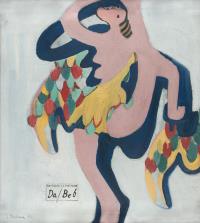
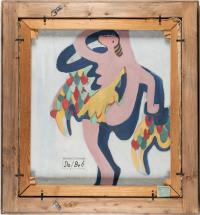
The theme of the reverse, the dancer, plays a central role in Kirchner's work from the early Dresden years to the 1930s. In the early depictions of the "Brücke" period, dance stands for movement, vitality and the expression of modern joie de vivre. In the Davos years, the significance of the motif changed. The dance loses its spontaneous, urban character and becomes a symbol of inner order and rhythmic harmony. The movements of the figures are increasingly formalized and transformed into clear line and surface structures.
Our acrobatic dancer fits into this context. Created in 1931, it shows a highly simplified figure whose posture and distribution of color create a constructive rhythm of movement. Kirchner reduced the depiction to essential forms and colors, giving the figure a timeless, almost abstract quality. The Acrobatic Dancer is thus exemplary of Kirchner's late pictorial language, in which the human body becomes an expression of formal clarity and spiritual balance.
Comparable works such as "Springende Tänzerin, Gret Palucca" from 1931 or "Farbentanz I" from 1932 (both in the Museum Folkwang, Essen) show a stylistic proximity and prove the central importance of the dance motif in the artist's late work.
Double-sided paintings - significance in Kirchner's oeuvre
Kirchner used double-sided canvases in various creative phases, particularly between 1905 and the early 1930s. He created such works for both practical and artistic reasons. On the one hand, Kirchner reacted to a shortage of materials, particularly in economically difficult years or during his time in Davos, where he often reused older canvases. Secondly, the works painted on both sides reflect Kirchner's continuous exploration of form, color and composition: one canvas often contains very different themes, motifs and stylistic stages of development. The present painting is part of this group of works, which occupies a special place in Kirchner's oeuvre. It documents not only his economical use of materials, but above all the thematic and formal range of his work. The direct contrast between the expressive depiction of nature in the early years and the abstract figure composition of the 1930s illustrates the transition from spontaneous immediacy to conscious formal construction. Comparable double-sided works can be found today in important public collections, including the Kirchner Museum in Davos, the Pinakothek der Moderne in Munich and the Brücke Museum in Berlin.
The original Basel estate stamp on the recto was probably removed before 1960 and affixed on the verso.
Gordon 66 and 66v.
- Unique testimony to Kirchner's stylistic and thematic development over more than two decades
- Offered on the art market for the first time in more than 60 years
Two creative phases on one canvas
This extraordinary double-sided painting by Ernst Ludwig Kirchner unites two central creative phases of the artist in one work - the early Expressionist phase around 1909 and the late period at the beginning of the 1930s, which was characterized by stylistic clarity. It is exemplary of Kirchner's artistic development and impressively documents his transformation from an impulsive experimenter of color and form to a reflective designer of individual, formally condensed expression.
Early landscape and spontaneous conception of nature
The front, Landscape with White Blossoming Trees, was created during the Dresden period, four years after Kirchner joined forces with Erich Heckel, Karl Schmidt-Rottluff and Fritz Bleyl to form the artist group "Brücke". During this phase, Kirchner developed a free, spontaneous style of painting that translated the immediate experience of nature into a rhythmic composition of lines, surfaces and colors. The spring landscape shows a vibrant interplay of lush green and pastel pink as well as strong red and brown tones, accentuated with bright blue areas of color. The work reveals Kirchner's early mastery of color and form. The depiction is closely related to the artist's striving for a direct, unmediated perception of nature, which characterized the work of the Dresden "Brücke" artists in the years around 1909.
Wolfgang Henze writes about this landscape painting: "A painting from the larger group of blossoming trees from 1909. For this group of paintings, the experience of Collioure landscapes by Henri Matisse in his exhibition at Cassirer in Berlin in January 1909 was repeatedly mentioned. However, it is unclear which of the three landscapes shown there could have inspired Kirchner. There are certainly similarities with Matisse's Collioure landscapes, but the most obvious one, the relationship of the trunks and branches to the foliage in Kirchner's view of trees, has been evident since 1905. They structure the picture as in Matisse's work (and also in Mondrian's from 1908)."
Acrobatic dancer - expression of formal clarity in the late work
The theme of the reverse, the dancer, plays a central role in Kirchner's work from the early Dresden years to the 1930s. In the early depictions of the "Brücke" period, dance stands for movement, vitality and the expression of modern joie de vivre. In the Davos years, the significance of the motif changed. The dance loses its spontaneous, urban character and becomes a symbol of inner order and rhythmic harmony. The movements of the figures are increasingly formalized and transformed into clear line and surface structures.
Our acrobatic dancer fits into this context. Created in 1931, it shows a highly simplified figure whose posture and distribution of color create a constructive rhythm of movement. Kirchner reduced the depiction to essential forms and colors, giving the figure a timeless, almost abstract quality. The Acrobatic Dancer is thus exemplary of Kirchner's late pictorial language, in which the human body becomes an expression of formal clarity and spiritual balance.
Comparable works such as "Springende Tänzerin, Gret Palucca" from 1931 or "Farbentanz I" from 1932 (both in the Museum Folkwang, Essen) show a stylistic proximity and prove the central importance of the dance motif in the artist's late work.
Double-sided paintings - significance in Kirchner's oeuvre
Kirchner used double-sided canvases in various creative phases, particularly between 1905 and the early 1930s. He created such works for both practical and artistic reasons. On the one hand, Kirchner reacted to a shortage of materials, particularly in economically difficult years or during his time in Davos, where he often reused older canvases. Secondly, the works painted on both sides reflect Kirchner's continuous exploration of form, color and composition: one canvas often contains very different themes, motifs and stylistic stages of development. The present painting is part of this group of works, which occupies a special place in Kirchner's oeuvre. It documents not only his economical use of materials, but above all the thematic and formal range of his work. The direct contrast between the expressive depiction of nature in the early years and the abstract figure composition of the 1930s illustrates the transition from spontaneous immediacy to conscious formal construction. Comparable double-sided works can be found today in important public collections, including the Kirchner Museum in Davos, the Pinakothek der Moderne in Munich and the Brücke Museum in Berlin.
The original Basel estate stamp on the recto was probably removed before 1960 and affixed on the verso.
Gordon 66 and 66v.