Ernst Wilhelm Nay
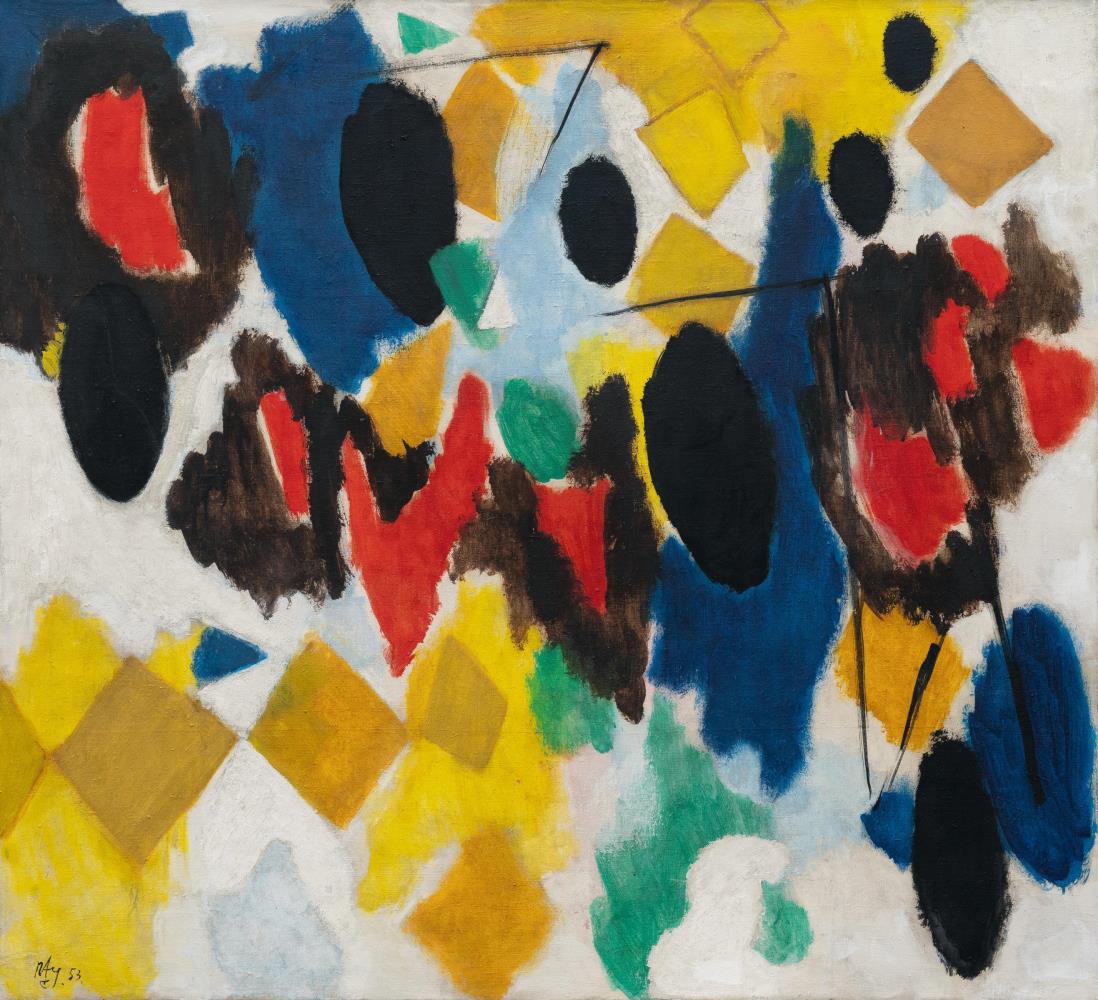
„Licht und Dunkel“
Artist
Ernst Wilhelm Nay
Ausstellung
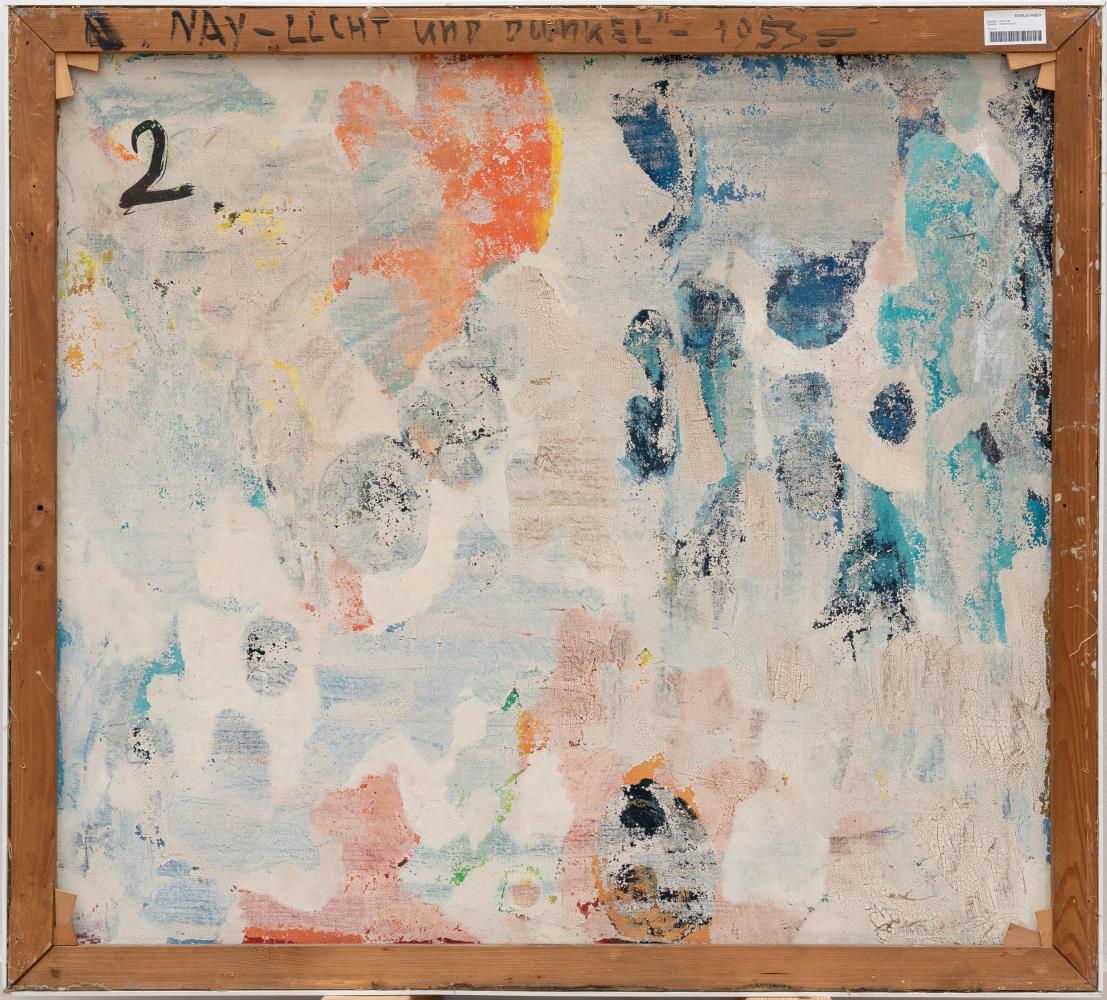
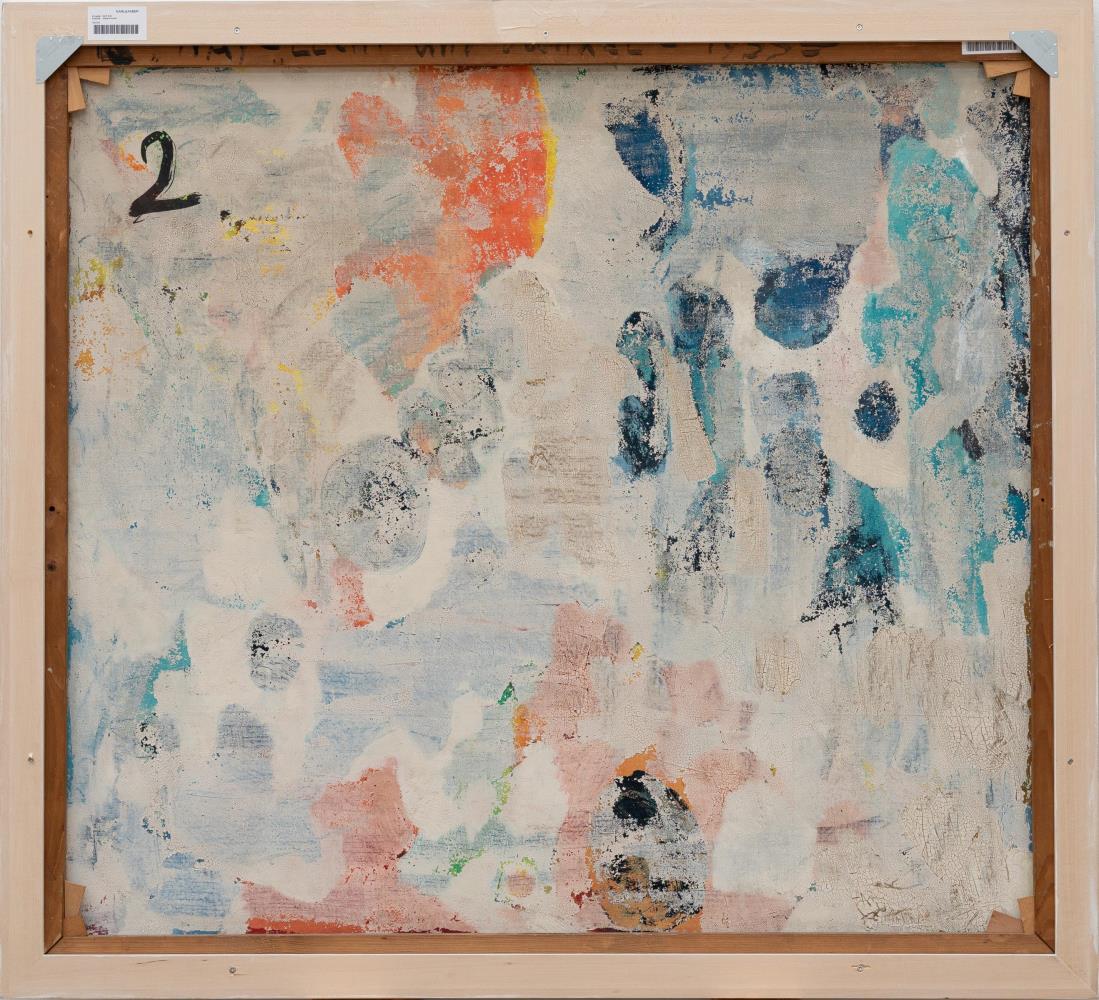
E. W. Nay, Galerie Springer, Berlin 1954, Kat.-Nr. 2.
Provenance
Elly Nay, Berlin; Galerie Springer, Berlin; Privatbesitz, Berlin, von Vorgenannter erworben; Grisebach, Berlin 23.11.1990, Los 84; Privatsammlung, Nordrhein-Westfalen, bei Vorgenannter erworben; Privatsammlung, Schweiz.
***under reserve
Add to favourites Download PDFShare


Description
- The pictures after 1950 made Nay famous throughout Europe after the period of international isolation
- From his time in Cologne, influenced by the wild music scene there
- Nay's "rhythmic painting", which contains almost audible compositional patterns
The changes in Nay's artistic work are closely linked to his personal life and specific experiences. In the fall of 1951, the artist moved from Hofheim am Taunus to Cologne and found an extremely inspiring spirit of optimism in the Rhenish metropolis, which was still marked by significant war damage. Nay attended numerous concerts and became acquainted not only with the classics of modern music by Schönberg, Webern, Bartok, Stravinsky and Hindemith, but also with the musical avant-garde and jazz. At this time, Cologne became the center of "New Music" with composers and musicians such as Karlheinz Stockhausen, Herbert Eimert, Pierre Boulez and Luigi Nono. Music history was written in those years in the "Studio for Electronic Music", newly founded by WDR in 1951. Nay frequented this artistically extremely fertile environment and was significantly inspired by the music.
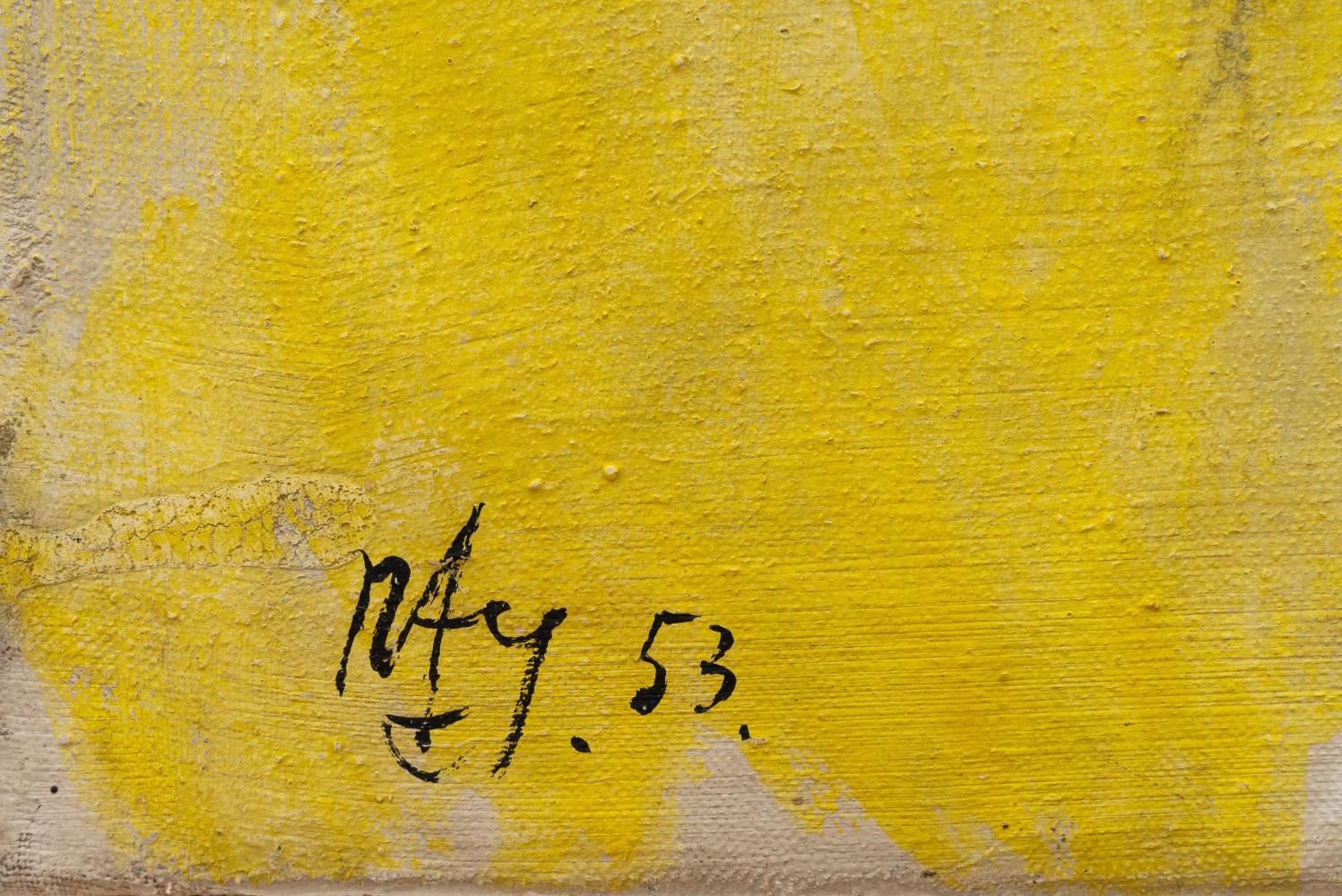
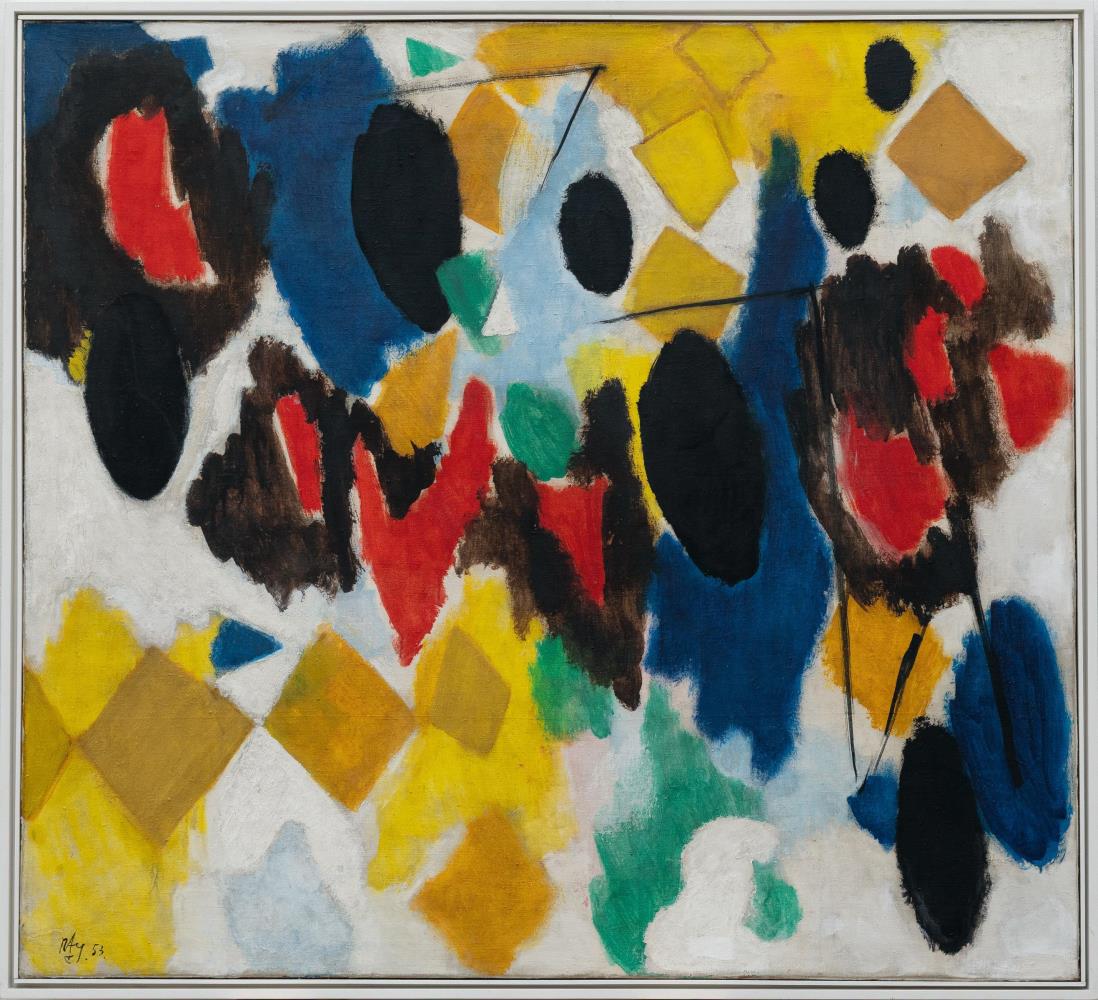
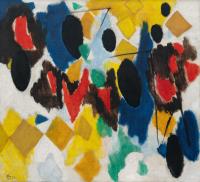
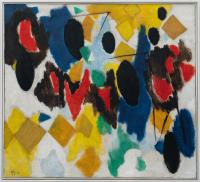
"Light and Darkness" from 1953 is one of Nay's "rhythmic paintings". Here the artist models colors like music, the sense of the picture arises from the application of color, gestures become visible in the brushstroke. The painting is almost synaesthetically audible: harmonies and leaps emerge, then a dissonance tears the surface apart. Staccato follows piano follows fortissimo ...
It was during this period that Nay made his decisive artistic breakthrough and gained recognition not only in Germany but also internationally. His first trips to nearby European countries confirmed Nay in his artistic path and "opened his eyes to a new European culture that was developing after the war." (Elisabeth Nay-Scheibler, in: WVZ vol. II, p. 6)
Scheibler 689 (with deviating measurements).
- From his time in Cologne, influenced by the wild music scene there
- Nay's "rhythmic painting", which contains almost audible compositional patterns
The changes in Nay's artistic work are closely linked to his personal life and specific experiences. In the fall of 1951, the artist moved from Hofheim am Taunus to Cologne and found an extremely inspiring spirit of optimism in the Rhenish metropolis, which was still marked by significant war damage. Nay attended numerous concerts and became acquainted not only with the classics of modern music by Schönberg, Webern, Bartok, Stravinsky and Hindemith, but also with the musical avant-garde and jazz. At this time, Cologne became the center of "New Music" with composers and musicians such as Karlheinz Stockhausen, Herbert Eimert, Pierre Boulez and Luigi Nono. Music history was written in those years in the "Studio for Electronic Music", newly founded by WDR in 1951. Nay frequented this artistically extremely fertile environment and was significantly inspired by the music.
"Light and Darkness" from 1953 is one of Nay's "rhythmic paintings". Here the artist models colors like music, the sense of the picture arises from the application of color, gestures become visible in the brushstroke. The painting is almost synaesthetically audible: harmonies and leaps emerge, then a dissonance tears the surface apart. Staccato follows piano follows fortissimo ...
It was during this period that Nay made his decisive artistic breakthrough and gained recognition not only in Germany but also internationally. His first trips to nearby European countries confirmed Nay in his artistic path and "opened his eyes to a new European culture that was developing after the war." (Elisabeth Nay-Scheibler, in: WVZ vol. II, p. 6)
Scheibler 689 (with deviating measurements).