Antoni Tàpies
Polvo de terciopelo y tiza
Artist
Antoni Tàpies
Provenance
Galerie Maeght, Barcelona,Galerie Dolors Junyent, Barcelona; Privatsammlung; Sammlung, Österreich.
Share


Description
- Characteristic work by the most important Spanish painter of the Informel
- Of outstanding material aesthetics
- The Fundació Antoni Tàpies in Barcelona has its own museum dedicated to the artist, and his works can be found in all of Spain's major museum collections
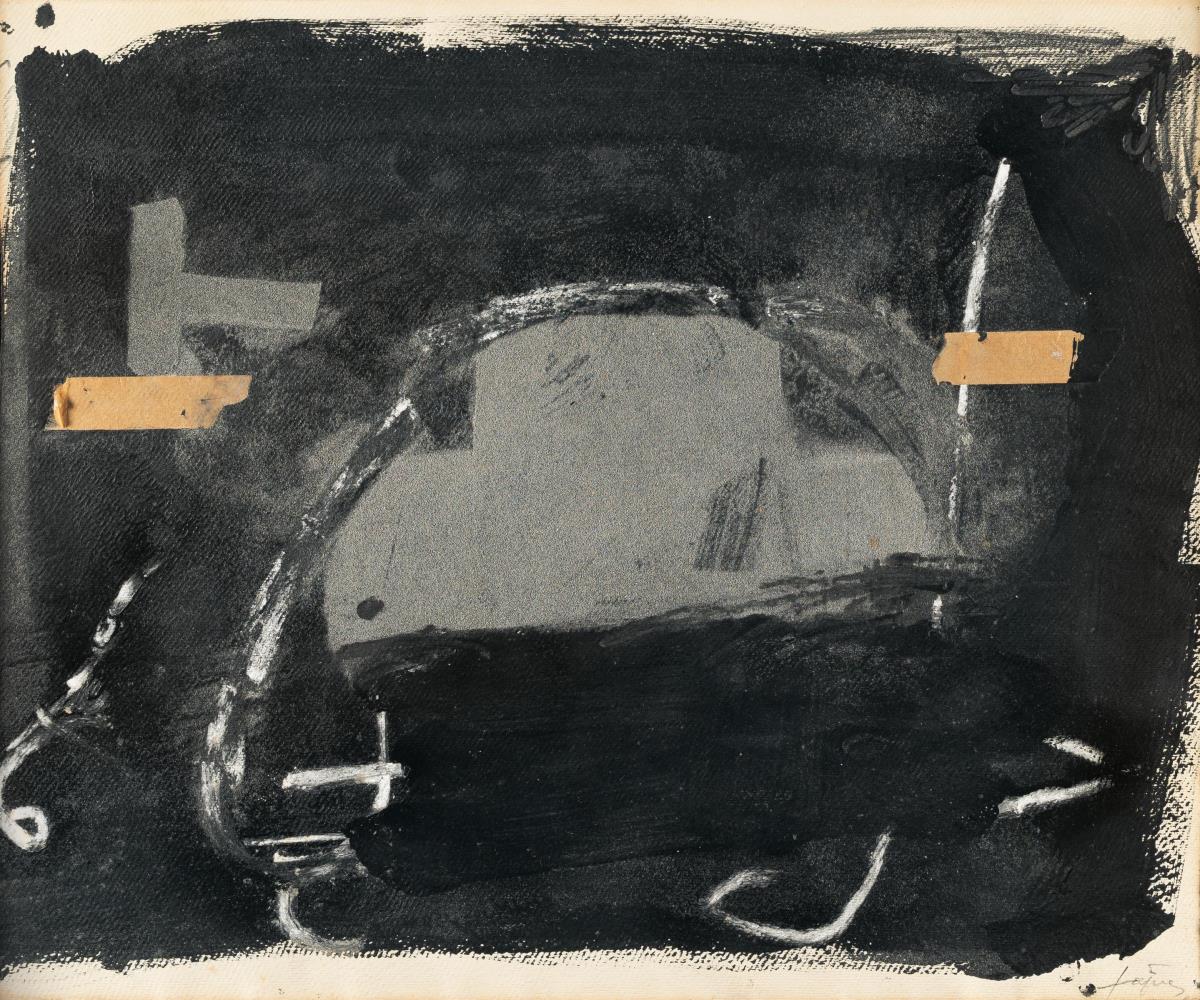
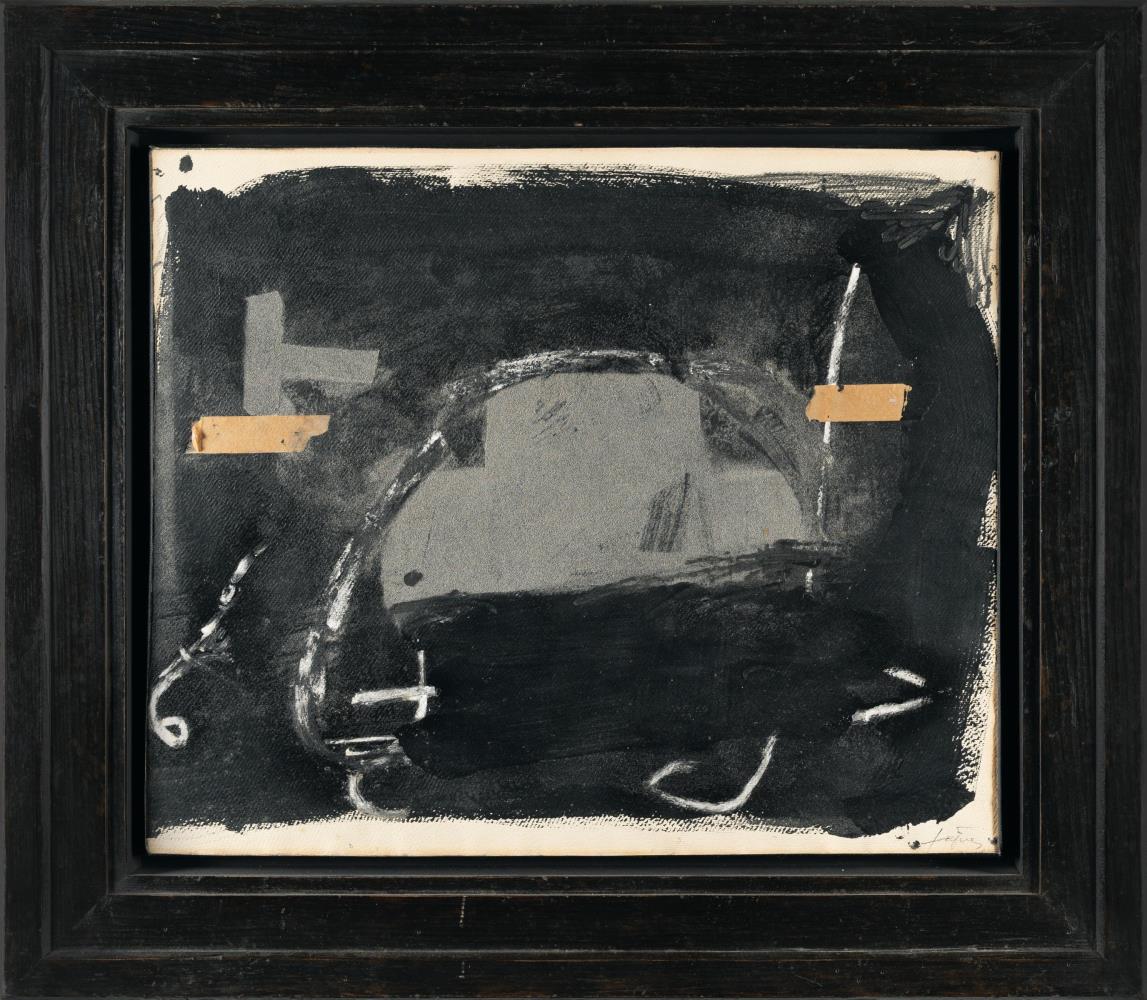
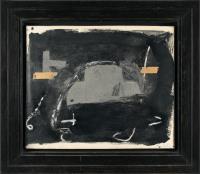
Antoni Tàpies has been creating his epochal material works since the early 1950s. It almost seems as if the Catalan artist only found a pictorial language that suited him from this point onwards. The Catalan title "Polvo de terciopelo y tiza" - which translates as "velvet and chalk dust" - is a typical example of the artist's sensual approach to materials in his work. In quick, dynamic work processes, Tàpies places silvery-grey forms, white chalk marks and two pieces of adhesive tape in exactly the right place in a sculptural black field. The composition appears random, but is precisely thought out. The title of the painting already suggests that the artist does not intend to make a concrete statement. It is rather the presence of materiality that becomes the primary criterion for the statement and expressiveness of the picture. The rich surface structures become the actual pictorial event. Despite this strong focus on the materiality of the paintings, Tàpies' artistic intention is always oriented towards spiritual values. Her basic attitude is characterized by a deep seriousness that reflects Mediterranean mysticism and the Spanish penchant for the cryptic.
Agusti 3146.
With a certificate of authenticity from Miquel Tàpies, Fundació Antoni Tàpies, Barcelona, with the number "T-2353" dated 30.11.2001.
- Of outstanding material aesthetics
- The Fundació Antoni Tàpies in Barcelona has its own museum dedicated to the artist, and his works can be found in all of Spain's major museum collections
Antoni Tàpies has been creating his epochal material works since the early 1950s. It almost seems as if the Catalan artist only found a pictorial language that suited him from this point onwards. The Catalan title "Polvo de terciopelo y tiza" - which translates as "velvet and chalk dust" - is a typical example of the artist's sensual approach to materials in his work. In quick, dynamic work processes, Tàpies places silvery-grey forms, white chalk marks and two pieces of adhesive tape in exactly the right place in a sculptural black field. The composition appears random, but is precisely thought out. The title of the painting already suggests that the artist does not intend to make a concrete statement. It is rather the presence of materiality that becomes the primary criterion for the statement and expressiveness of the picture. The rich surface structures become the actual pictorial event. Despite this strong focus on the materiality of the paintings, Tàpies' artistic intention is always oriented towards spiritual values. Her basic attitude is characterized by a deep seriousness that reflects Mediterranean mysticism and the Spanish penchant for the cryptic.
Agusti 3146.
With a certificate of authenticity from Miquel Tàpies, Fundació Antoni Tàpies, Barcelona, with the number "T-2353" dated 30.11.2001.