Gerhard Richter
FAZ-Übermalung
Artist
Gerhard Richter
Ausstellung
Gerhard Richter, BHF-Bank Aktiengesellschaft, Frankfurt/Main 2012, o. Kat.
Provenance
Galerie Fred Jahn, München; Privatsammlung, Deutschland, 2002 bei Vorgenannter erworben.
Share


Description
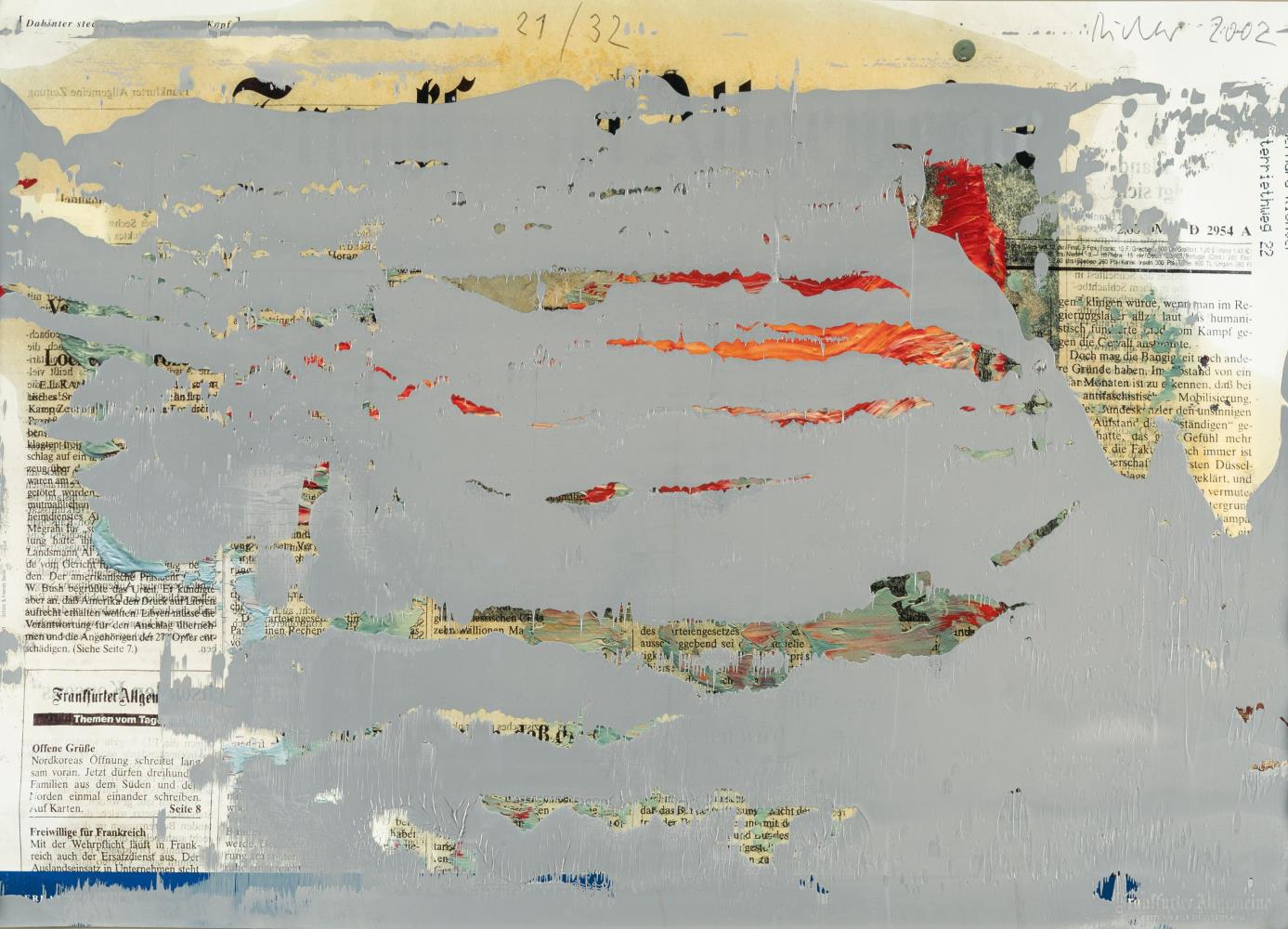
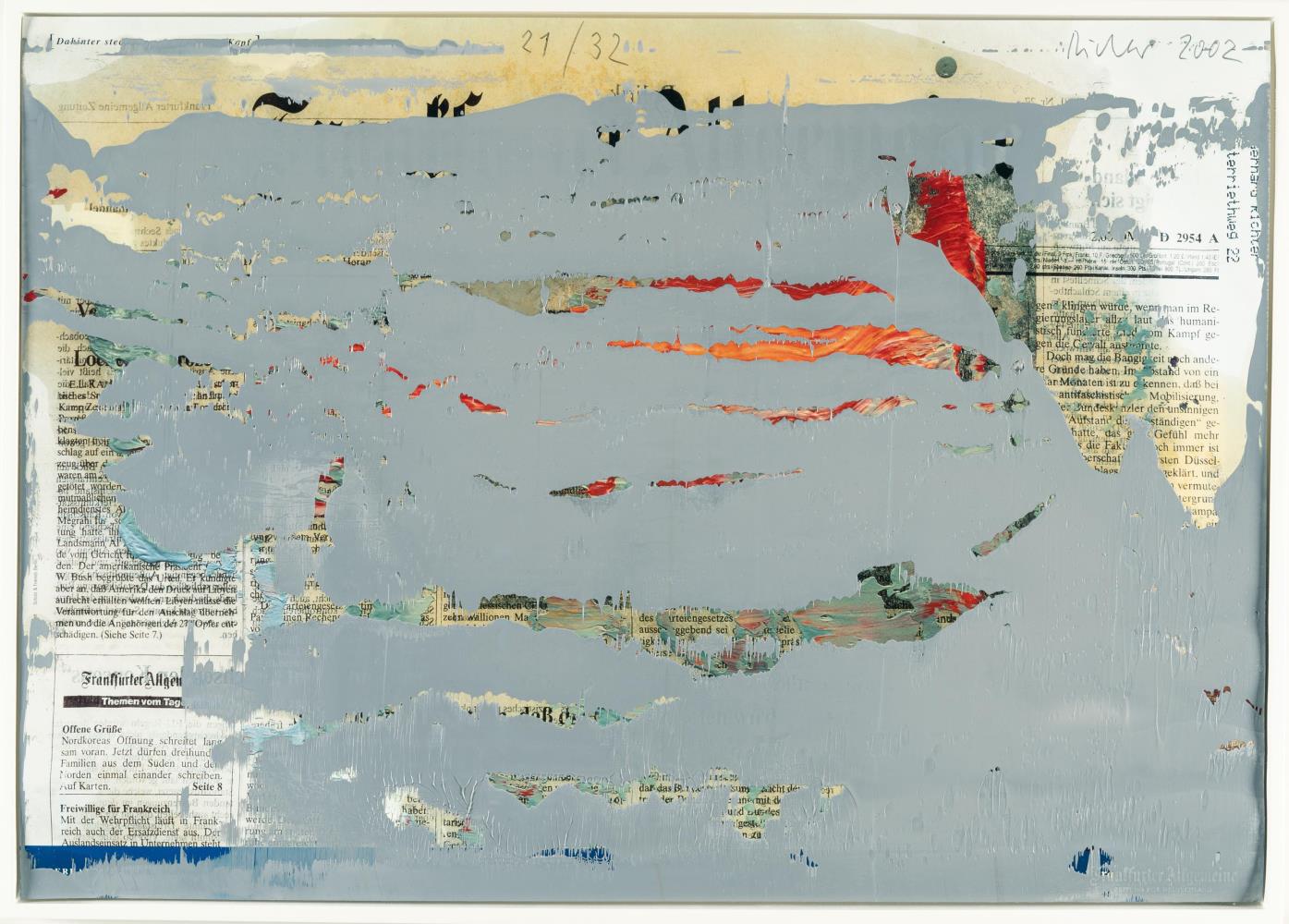
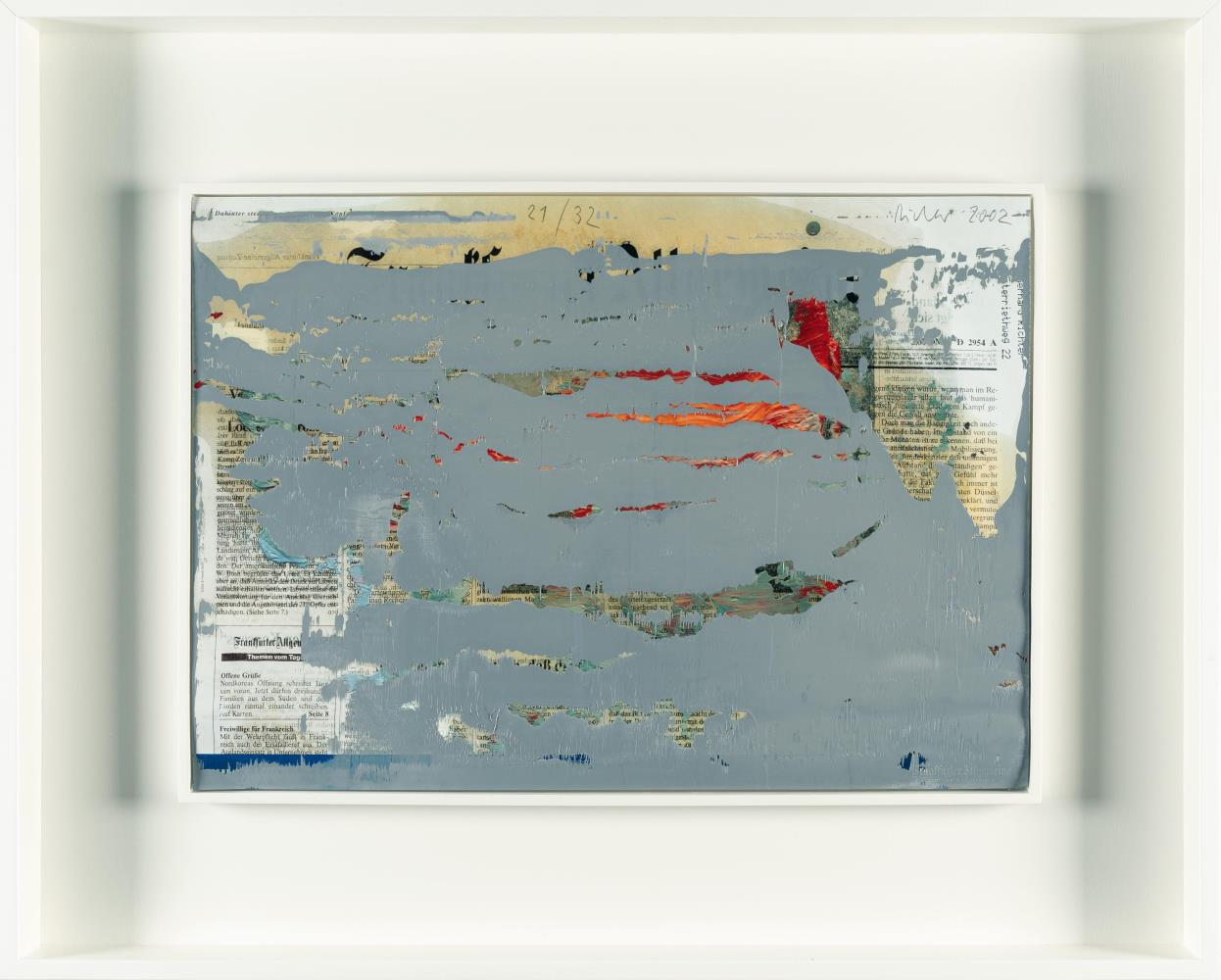
- His overpaintings of prints reach their peak with the series of 32 overpainted unique pieces for the "FAZ"
- Gerhard Richter is one of the most influential painters of our time
- The Fondation Louis Vuitton in Paris is currently dedicating an extensive retrospective to Gerhard Richter (October 2025 to March 2026)
Gerhard Richter is one of the most famous painters of our time. His works hang in the world's most important museums, and he occupies a prominent position both in the art world and on the market. What makes his work special is his openness to all the possibilities of painting. From the very beginning, Richter has resisted any kind of definition: he juxtaposes the abstract with the figurative, combines photorealism with computer-generated pictorial ideas and thus constantly expands the view of what painting can be.
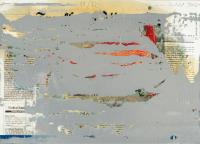
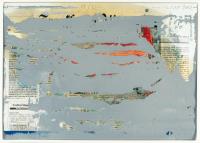
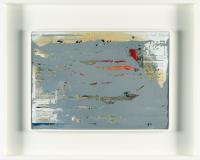
Richter has often worked abstractly since the early 1980s. He applies several layers of paint and then draws over the surface with a squeegee - a process in which chance and control meet. Between 1989 and 2002, he created a series of works in which he painted over prints with oil paint. This principle is particularly impressive in the reworked "FAZ" from 2002, in which the daily newspaper - an everyday, mass-produced printed medium - becomes a picture surface. Richter painted over 32 copies individually with oil paints in white, blue-green, red and orange. This resulted in unique works in which the colors cover the printed layers, allowing them to shine through and merge into a new, vibrant whole.
Butin 122.
- Gerhard Richter is one of the most influential painters of our time
- The Fondation Louis Vuitton in Paris is currently dedicating an extensive retrospective to Gerhard Richter (October 2025 to March 2026)
Gerhard Richter is one of the most famous painters of our time. His works hang in the world's most important museums, and he occupies a prominent position both in the art world and on the market. What makes his work special is his openness to all the possibilities of painting. From the very beginning, Richter has resisted any kind of definition: he juxtaposes the abstract with the figurative, combines photorealism with computer-generated pictorial ideas and thus constantly expands the view of what painting can be.
Richter has often worked abstractly since the early 1980s. He applies several layers of paint and then draws over the surface with a squeegee - a process in which chance and control meet. Between 1989 and 2002, he created a series of works in which he painted over prints with oil paint. This principle is particularly impressive in the reworked "FAZ" from 2002, in which the daily newspaper - an everyday, mass-produced printed medium - becomes a picture surface. Richter painted over 32 copies individually with oil paints in white, blue-green, red and orange. This resulted in unique works in which the colors cover the printed layers, allowing them to shine through and merge into a new, vibrant whole.
Butin 122.