Fernand Léger
La Ville
Artist
Fernand Léger
Provenance
Serge Sabarsky Collection, New York;
Private collection;
Private collection, Europe.
Private collection;
Private collection, Europe.
Share


Description
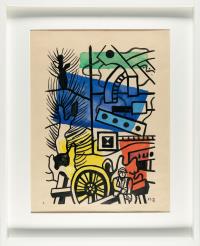
- Significant gouache from the late period (1953), characterized by Léger's exploration of mural painting and architecture
- Powerful color tones and clear lines, exemplary of Léger's influence on the upcoming Pop Art generation
- Expressive composition in the context of his mural projects
Fernand Léger, born in Argentan in 1881, is one of the most important French modernist painters alongside Henri Matisse and Georges Braque. In the last years of his life, he developed a painting of impressive clarity and vitality, in which his exploration of architecture, murals and public space is condensed.
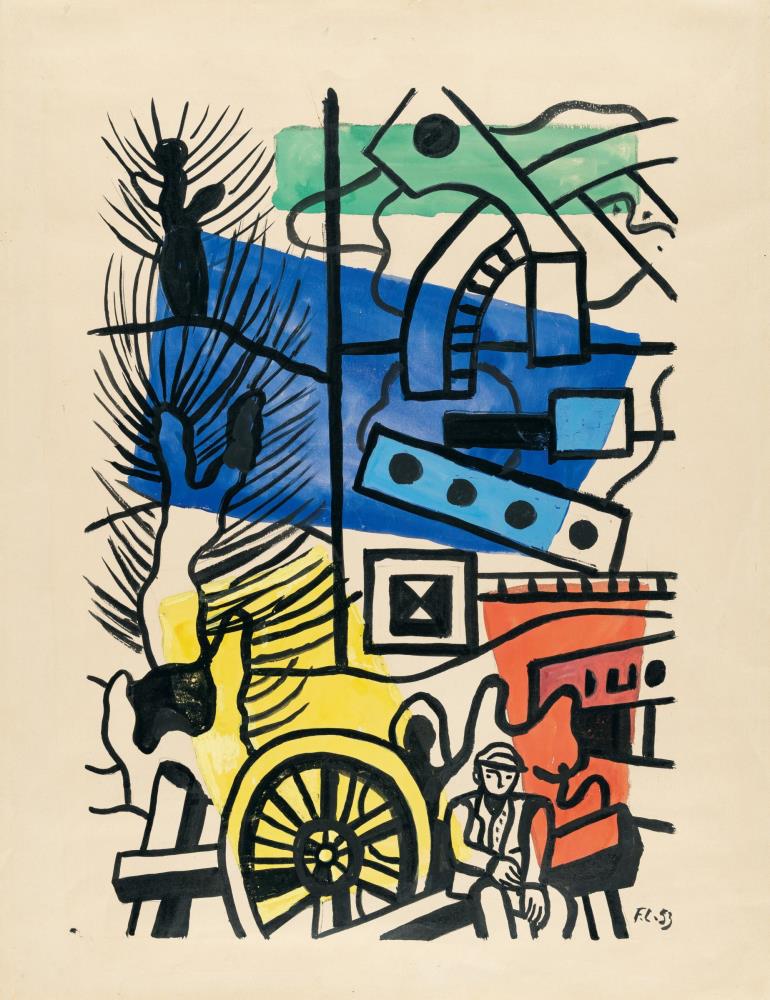
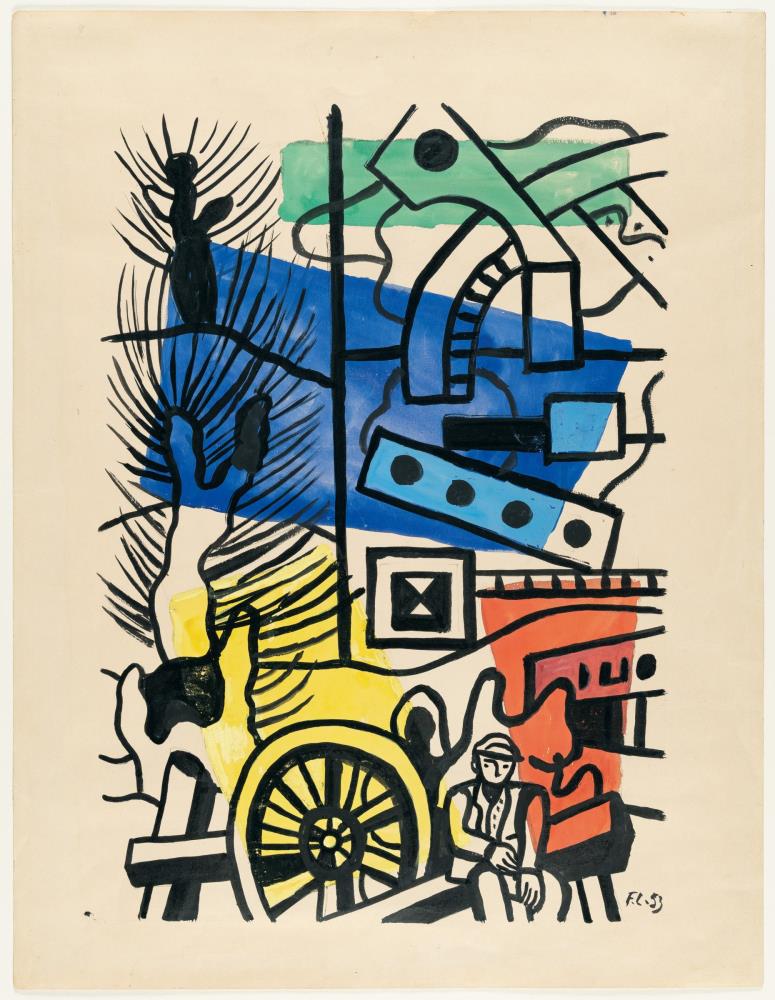
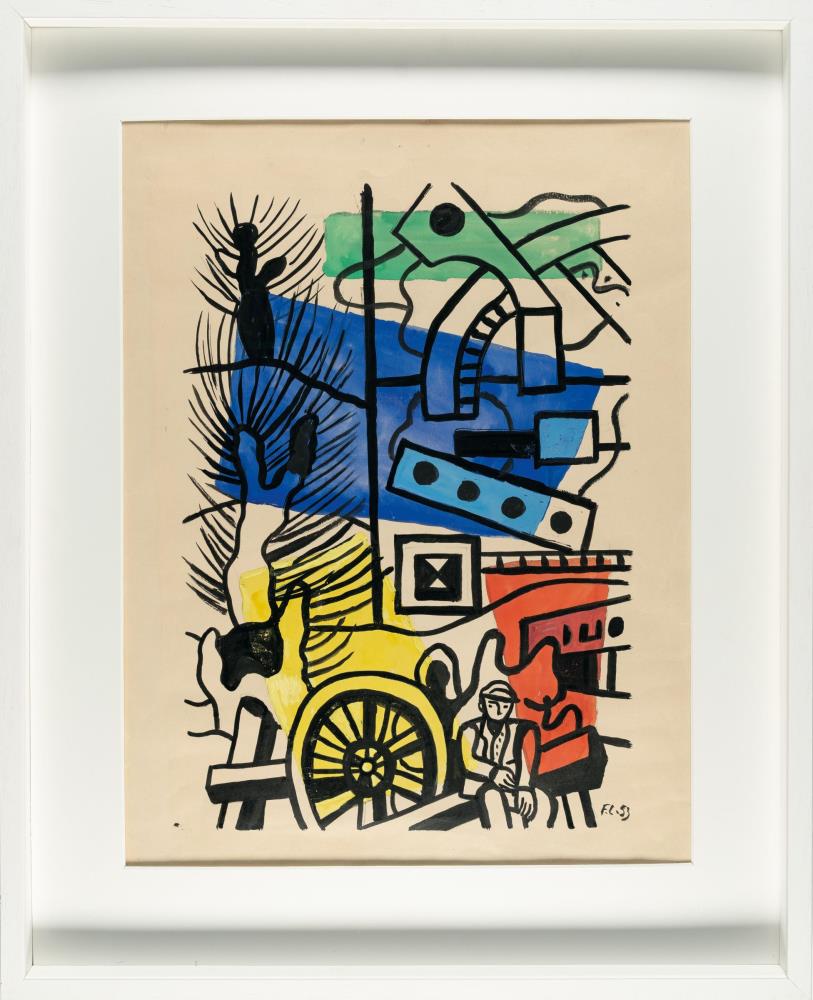
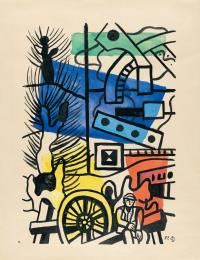
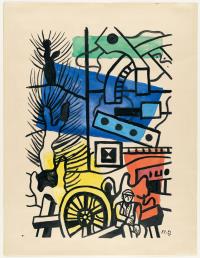
This gouache from 1953 shows Léger's late pictorial language in concentrated form. With powerful primary colors: Blue, red, yellow and green and dynamic black contours, he composes a mesh of figures, architectural fragments and technical forms. Movement and structure, surface and space are in an exciting balance. Color becomes the carrier of the composition, line the connecting framework. Léger perfected this principle in his murals of the 1940s and 50s.
This connection becomes particularly clear in comparison with a design (ca. 1942) by Léger for a mural in the private home of Mr. and Mrs. Wallace Harrison in the USA. There, too, the artist combines figurative and architectural motifs to create a rhythmic unity of form and color. But while the mural aims to create a monumental effect in the room, the present gouache has its own, more intimate energy. It translates the mural into the personal. In this way, Léger creates an autonomous composition that emerges from the confrontation with the large format, but remains deliberately focused on the sheet.
In this combination of rigor and spontaneity, architecture and humanity, Léger's late synthesis of the arts is evident. His clear, colorful language, shaped by his experience in the USA, already points beyond post-war art - towards Pop Art, for which Léger became a pioneer.
A work of rare unity and luminosity. An impressive testimony to that late phase in which Léger merged painting, space and movement into a new visual unity.
With an expertise by Irus Hansma, Paris, dated 19.4.2023. The work will be included in the forthcoming catalog raisonné of works on paper.
- Powerful color tones and clear lines, exemplary of Léger's influence on the upcoming Pop Art generation
- Expressive composition in the context of his mural projects
Fernand Léger, born in Argentan in 1881, is one of the most important French modernist painters alongside Henri Matisse and Georges Braque. In the last years of his life, he developed a painting of impressive clarity and vitality, in which his exploration of architecture, murals and public space is condensed.
This gouache from 1953 shows Léger's late pictorial language in concentrated form. With powerful primary colors: Blue, red, yellow and green and dynamic black contours, he composes a mesh of figures, architectural fragments and technical forms. Movement and structure, surface and space are in an exciting balance. Color becomes the carrier of the composition, line the connecting framework. Léger perfected this principle in his murals of the 1940s and 50s.
This connection becomes particularly clear in comparison with a design (ca. 1942) by Léger for a mural in the private home of Mr. and Mrs. Wallace Harrison in the USA. There, too, the artist combines figurative and architectural motifs to create a rhythmic unity of form and color. But while the mural aims to create a monumental effect in the room, the present gouache has its own, more intimate energy. It translates the mural into the personal. In this way, Léger creates an autonomous composition that emerges from the confrontation with the large format, but remains deliberately focused on the sheet.
In this combination of rigor and spontaneity, architecture and humanity, Léger's late synthesis of the arts is evident. His clear, colorful language, shaped by his experience in the USA, already points beyond post-war art - towards Pop Art, for which Léger became a pioneer.
A work of rare unity and luminosity. An impressive testimony to that late phase in which Léger merged painting, space and movement into a new visual unity.
With an expertise by Irus Hansma, Paris, dated 19.4.2023. The work will be included in the forthcoming catalog raisonné of works on paper.