El Lissitzky
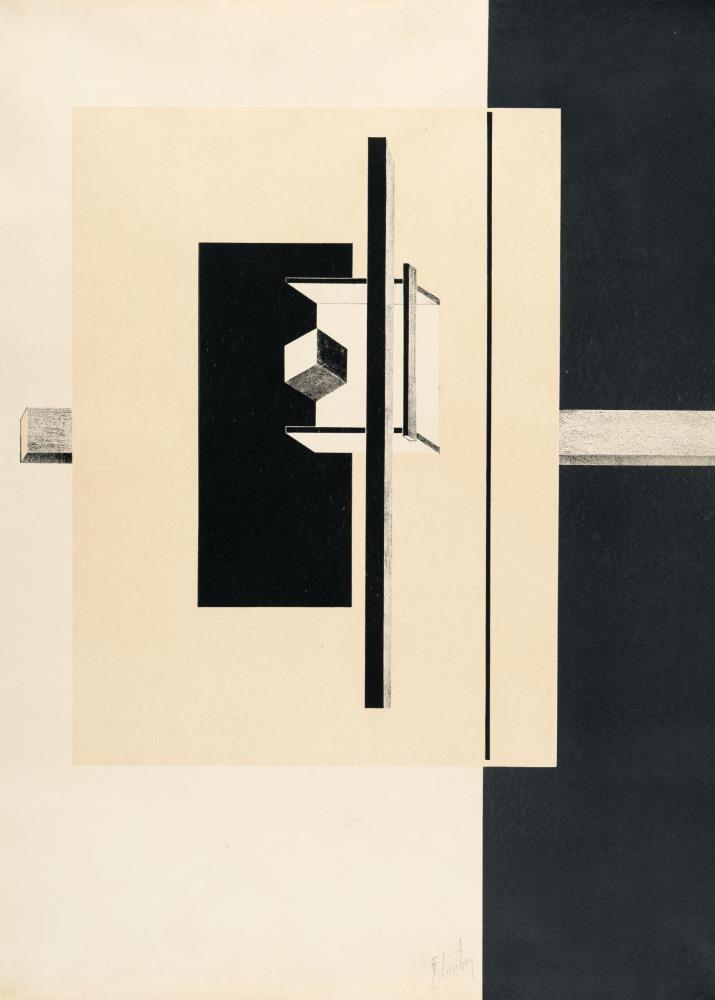
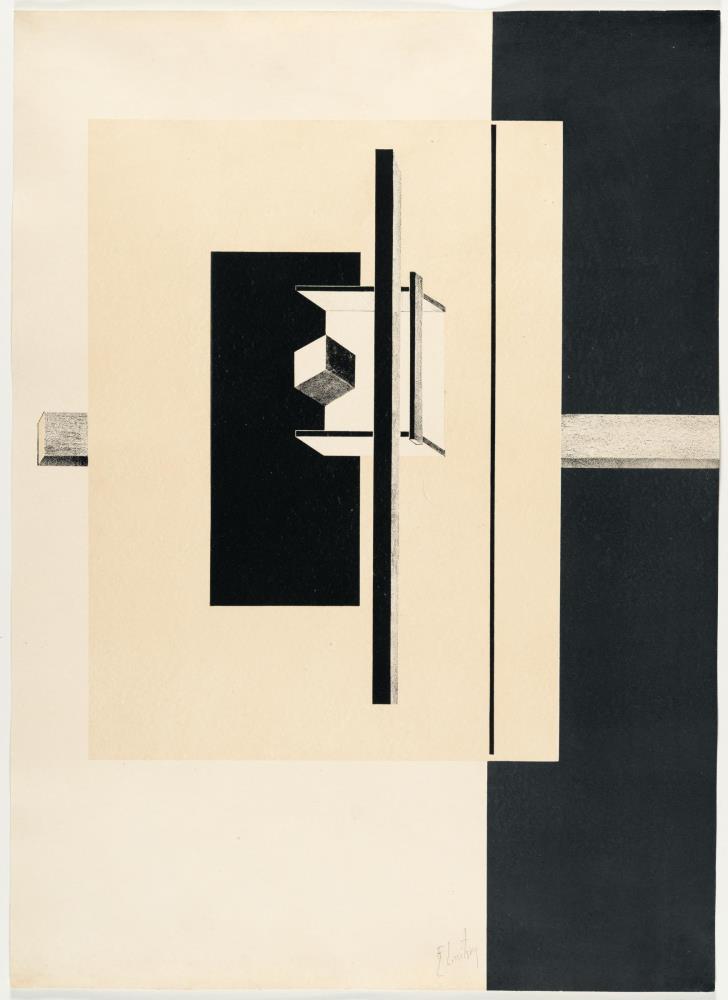
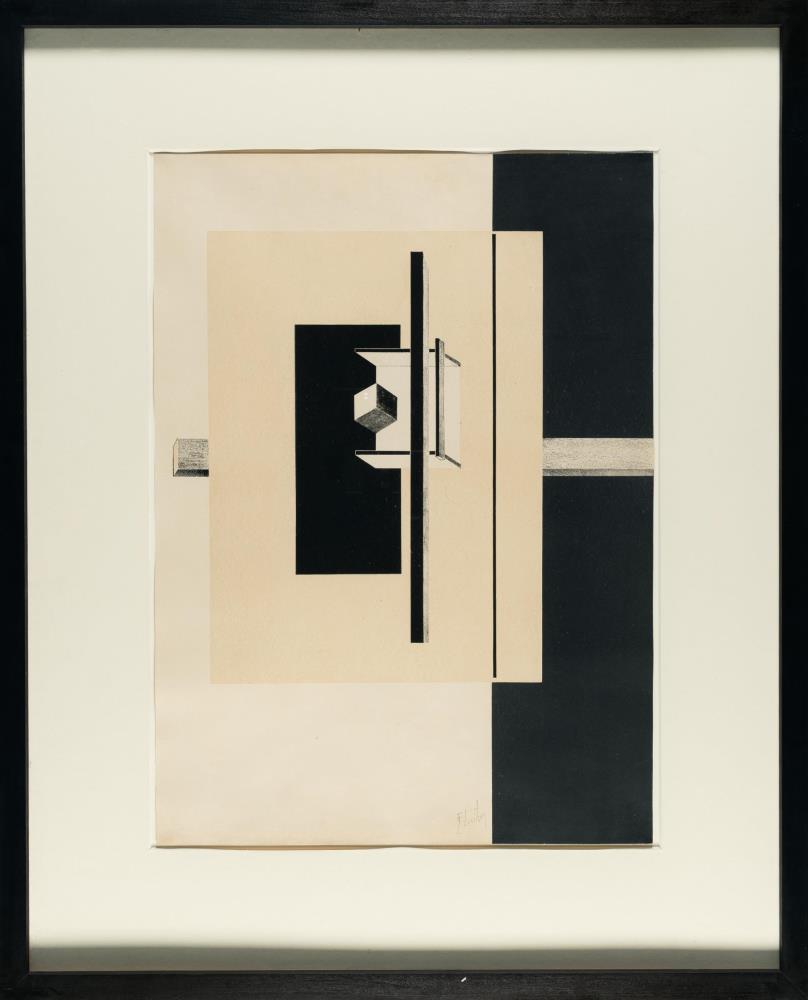
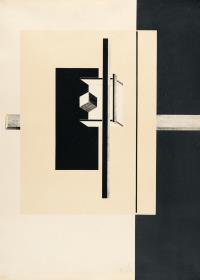
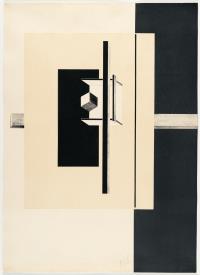
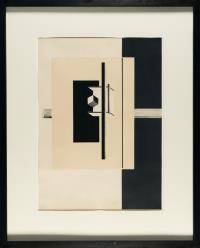
Ohne Titel (Proun)

Artist
El Lissitzky
Ausstellung
Die 20er Jahre in Osteuropa, Galerie Gmurzynska, Cologne 1975, ill. p. 103 ;
El Lissitzky, Galerie Gmurzynska, Cologne 1976, cat. nos. 47-52 (portfolio), ill. p. 115 ;
Mondrian and De Stijl, Galerie Gmurzynska, Zurich 1979, ill. p. 165 ;
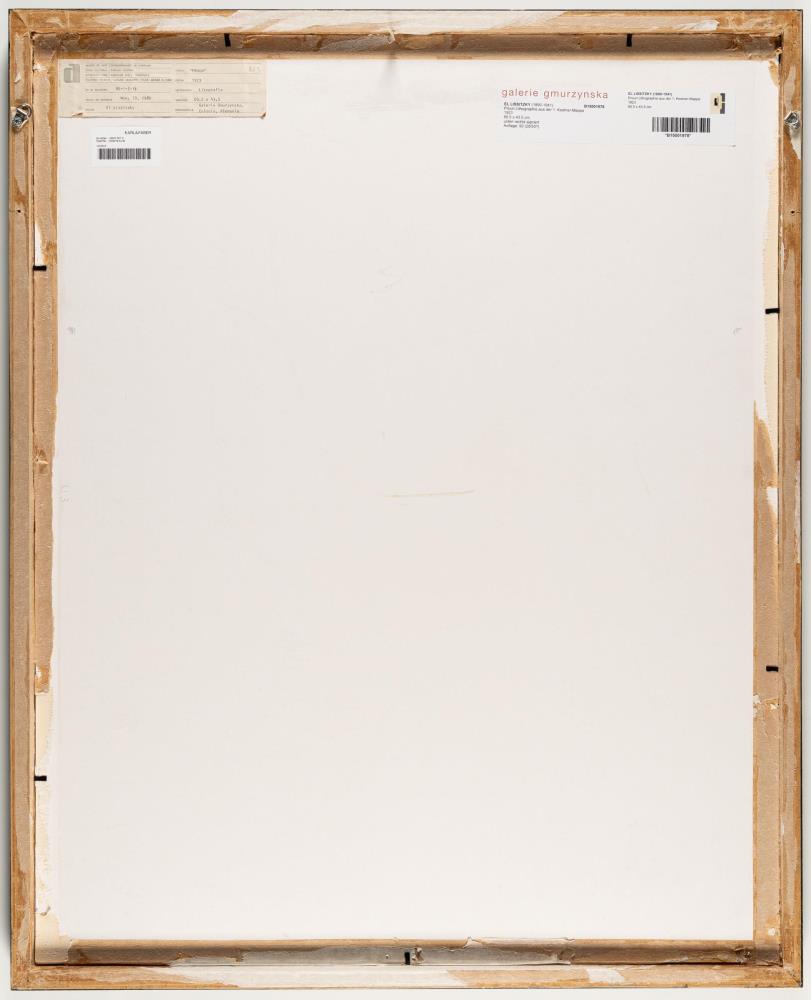
El Espiritu Dada 1915-1925, Museo de Arte Contemporaneo, Caracas 1980, p. 184, ill. p. 84, with the label on the reverse of the frame.
El Lissitzky, Galerie Gmurzynska, Cologne 1976, cat. nos. 47-52 (portfolio), ill. p. 115 ;
Mondrian and De Stijl, Galerie Gmurzynska, Zurich 1979, ill. p. 165 ;
El Espiritu Dada 1915-1925, Museo de Arte Contemporaneo, Caracas 1980, p. 184, ill. p. 84, with the label on the reverse of the frame.
Provenance
Gallery Gmurzynska, Cologne;
Private collection, Switzerland.
Private collection, Switzerland.
Share


Description
- From the PROUN folder of the Kestner-Gesellschaft, Hanover
- El Lissitzky postulates three-dimensionality in the two-dimensional
- Revolutionary art that takes Constructivism and Suprematism further
Representing the three-dimensional in a two-dimensional surface - artists have been confronting this difficulty since the "invention" of perspective in the European Renaissance. Since then, efforts have been made to extract depth from the surface using refined techniques, lines of sight and other stylistic devices. It is obvious that this endeavor can never be completely successful; surface remains surface.
At the beginning of the 20th century, artists such as El Lissitzky, whose understanding of art was steeped in Suprematism, made it clear that there was another way. For them, there is no need for any kind of technical refinement; they postulate three-dimensionality. Space is what it is, even on the surface.
El Lissitzky now constructs this three-dimensional space in the two-dimensional by means of geometric figures. This is how the PROUN series of works was created. The acronym stands for "Project for the Assertion of the New" in Russian. Lissitzky invented it at the end of 1920 and discussed it in a theoretical lecture the following year. PROUN was on the way to the new, to Suprematism in three-dimensionality. He, a trained architect and wanderer between cultures, wanted to create a new art. Three-dimensionality is created through the composition of geometries with and against each other. However, Lissitzky does not arrange them in such a way that visual human pattern recognition could create illusions of depth, but rather the pure individuality of the elements and their effect with and against each other should open up the three-dimensional space.
The lithographs come from a portfolio that El Lissitzky is publishing with the Kestner-Gesellschaft in Hanover. The portfolio will be published as a PROUN portfolio. The entire series of PROUN works is generally documented by the artist himself. However: Just as El Lissitzky goes against the conventions of three-dimensionality and postulates them without further ado, his naming and numbering also appear arbitrary. These do not necessarily follow a recognizable scheme, are sometimes lettered, sometimes apparently randomized.
From the 6-part portfolio "El Lissitzky Proun", 1st Kestner portfolio.
Published in 1923 by Dr. Eckart von Sydow, Kestner-Gesellschaft, Hanover, published by the bookshop Ludwig Ey, Hanover. The designs for the works were created in Moscow and Berlin in the years 1919-23.
Nisbet 110g; Söhn HDO 71301-7.
- El Lissitzky postulates three-dimensionality in the two-dimensional
- Revolutionary art that takes Constructivism and Suprematism further
Representing the three-dimensional in a two-dimensional surface - artists have been confronting this difficulty since the "invention" of perspective in the European Renaissance. Since then, efforts have been made to extract depth from the surface using refined techniques, lines of sight and other stylistic devices. It is obvious that this endeavor can never be completely successful; surface remains surface.
At the beginning of the 20th century, artists such as El Lissitzky, whose understanding of art was steeped in Suprematism, made it clear that there was another way. For them, there is no need for any kind of technical refinement; they postulate three-dimensionality. Space is what it is, even on the surface.
El Lissitzky now constructs this three-dimensional space in the two-dimensional by means of geometric figures. This is how the PROUN series of works was created. The acronym stands for "Project for the Assertion of the New" in Russian. Lissitzky invented it at the end of 1920 and discussed it in a theoretical lecture the following year. PROUN was on the way to the new, to Suprematism in three-dimensionality. He, a trained architect and wanderer between cultures, wanted to create a new art. Three-dimensionality is created through the composition of geometries with and against each other. However, Lissitzky does not arrange them in such a way that visual human pattern recognition could create illusions of depth, but rather the pure individuality of the elements and their effect with and against each other should open up the three-dimensional space.
The lithographs come from a portfolio that El Lissitzky is publishing with the Kestner-Gesellschaft in Hanover. The portfolio will be published as a PROUN portfolio. The entire series of PROUN works is generally documented by the artist himself. However: Just as El Lissitzky goes against the conventions of three-dimensionality and postulates them without further ado, his naming and numbering also appear arbitrary. These do not necessarily follow a recognizable scheme, are sometimes lettered, sometimes apparently randomized.
From the 6-part portfolio "El Lissitzky Proun", 1st Kestner portfolio.
Published in 1923 by Dr. Eckart von Sydow, Kestner-Gesellschaft, Hanover, published by the bookshop Ludwig Ey, Hanover. The designs for the works were created in Moscow and Berlin in the years 1919-23.
Nisbet 110g; Söhn HDO 71301-7.