Adolf Erbslöh
„Dingelsdorf am Bodensee“
Artist
Adolf Erbslöh
Exhibition
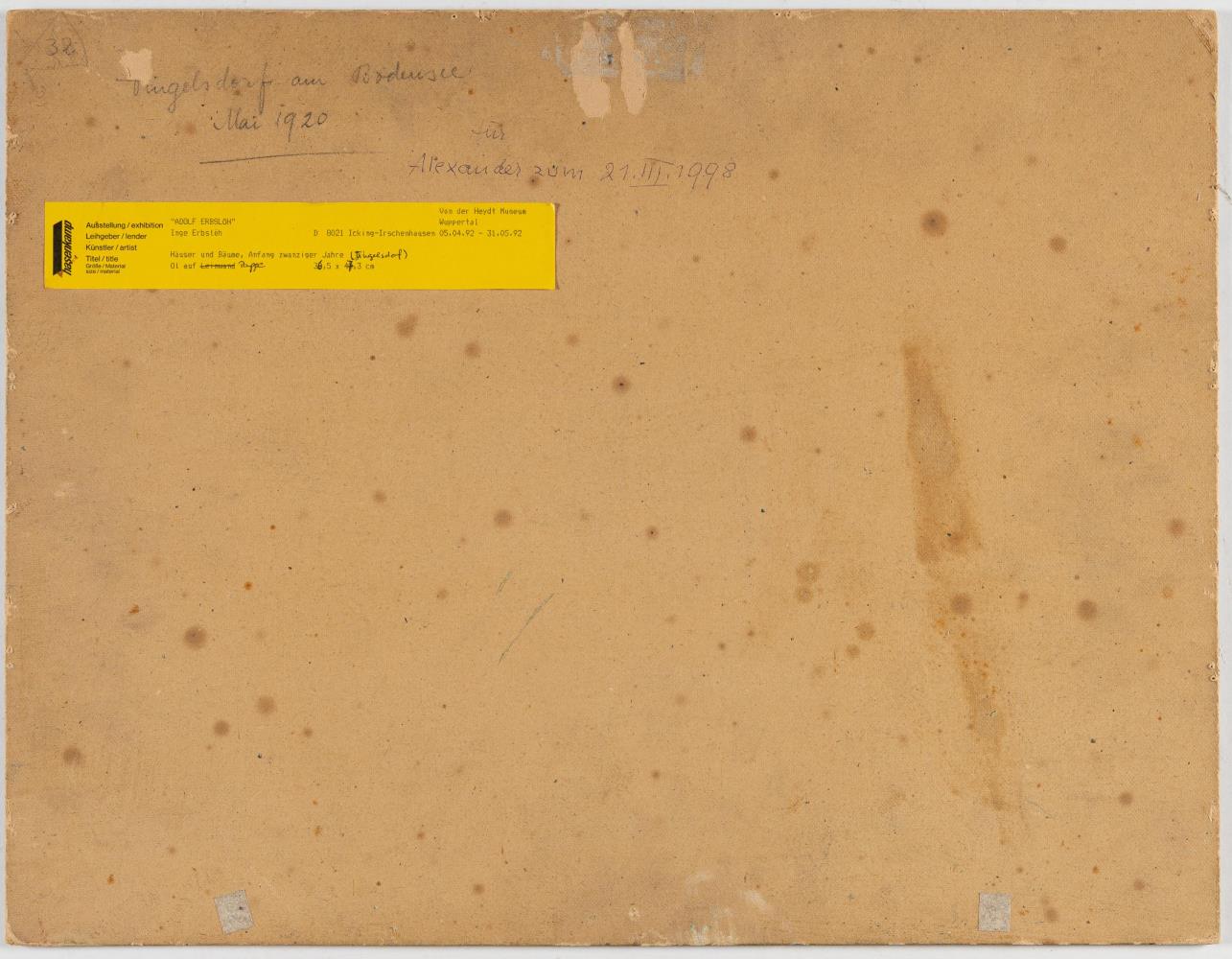
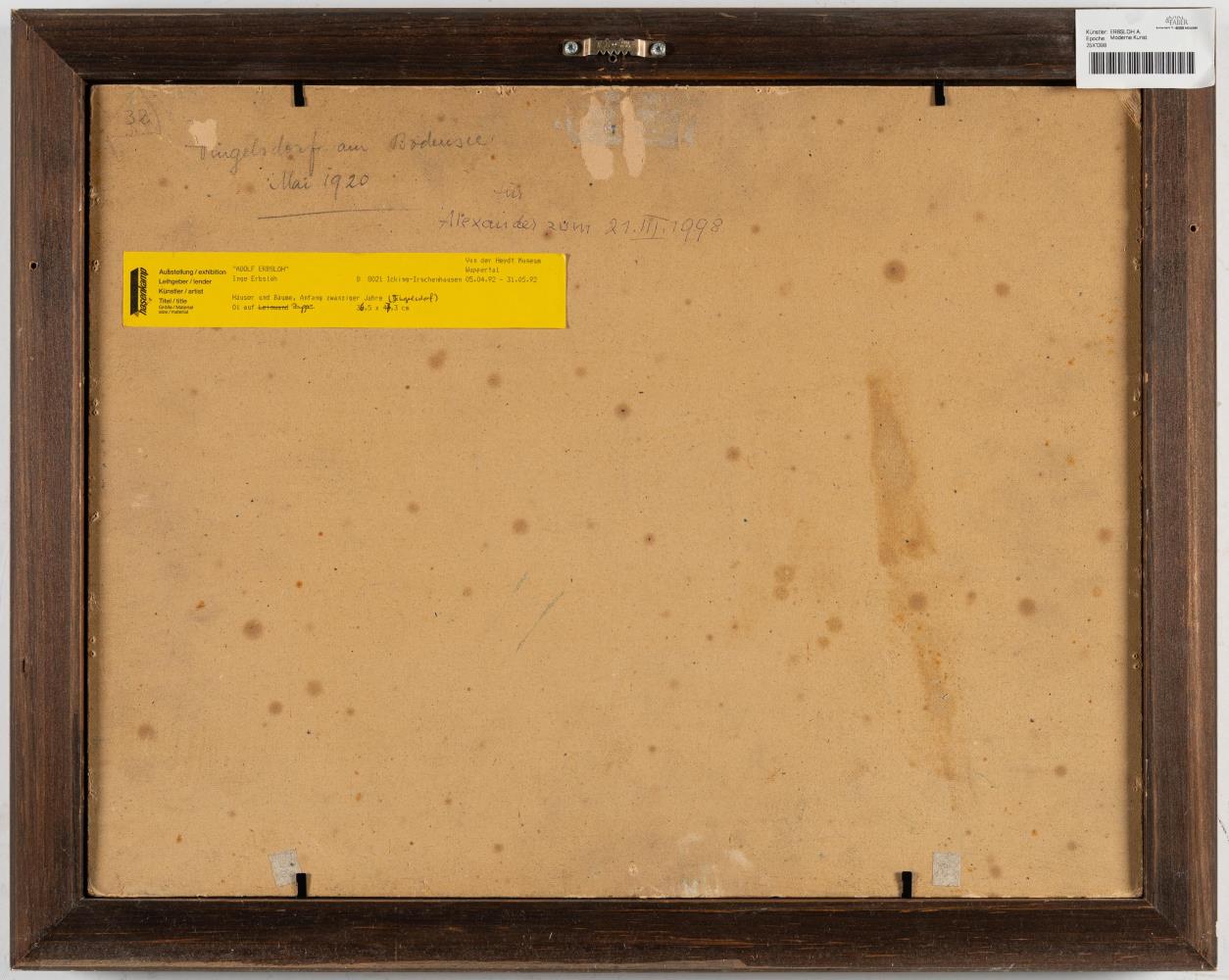
Adolf Erbslöh. Painting, Von der Heydt-Museum, Wuppertal a.o. 1992, except cat., verso with corresponding shipping label.
Literature
Adolf Erbslöh 1881-1947, With a catalog of the paintings, Kunst- und Museumsverein Wuppertal u.a. 1967, no. 121, no illus.
Provenance
Estate of the artist, by succession to the present owner, private property, Northern Germany.
Share


Description
- "Crystalline" composition from 1920 - a major work of Erbslöh's structural landscape painting
- A confrontation with the New Objectivity, at the same time characterized by quiet emotionality and painterly balance
- Fresh to the market from many years of private ownership
Adolf Erbslöh, born in New York in 1881 and raised in Wuppertal, is one of the most important representatives of German modernism. As a co-founder of the "Neue Künstlervereinigung München", he played a decisive role in shaping early Expressionism from 1909 and belonged to the circle around Kandinsky, Münter and Jawlensky, who led art into a new, spiritual dimension. After the charged years of expressionism, Erbslöh found his way to a calmer, structurally thought-out formal language at the beginning of the 1920s - in confrontation with the tendencies of New Objectivity, but without wanting to clearly assign himself to a style. He always remained an independent seeker who reconciled emotion and order.
At the beginning of the 1920s, Erbslöh undertook several journeys in search of new landscapes and motifs that corresponded to his inner reorientation.
"In the early 1920s, Adolf Erbslöh mainly painted landscape scenes. These are characterized by a strict pictorial tectonics. The mountains, treetops, roofs and house facades are reduced to pyramidally interlaced surfaces with light and shadow zones."
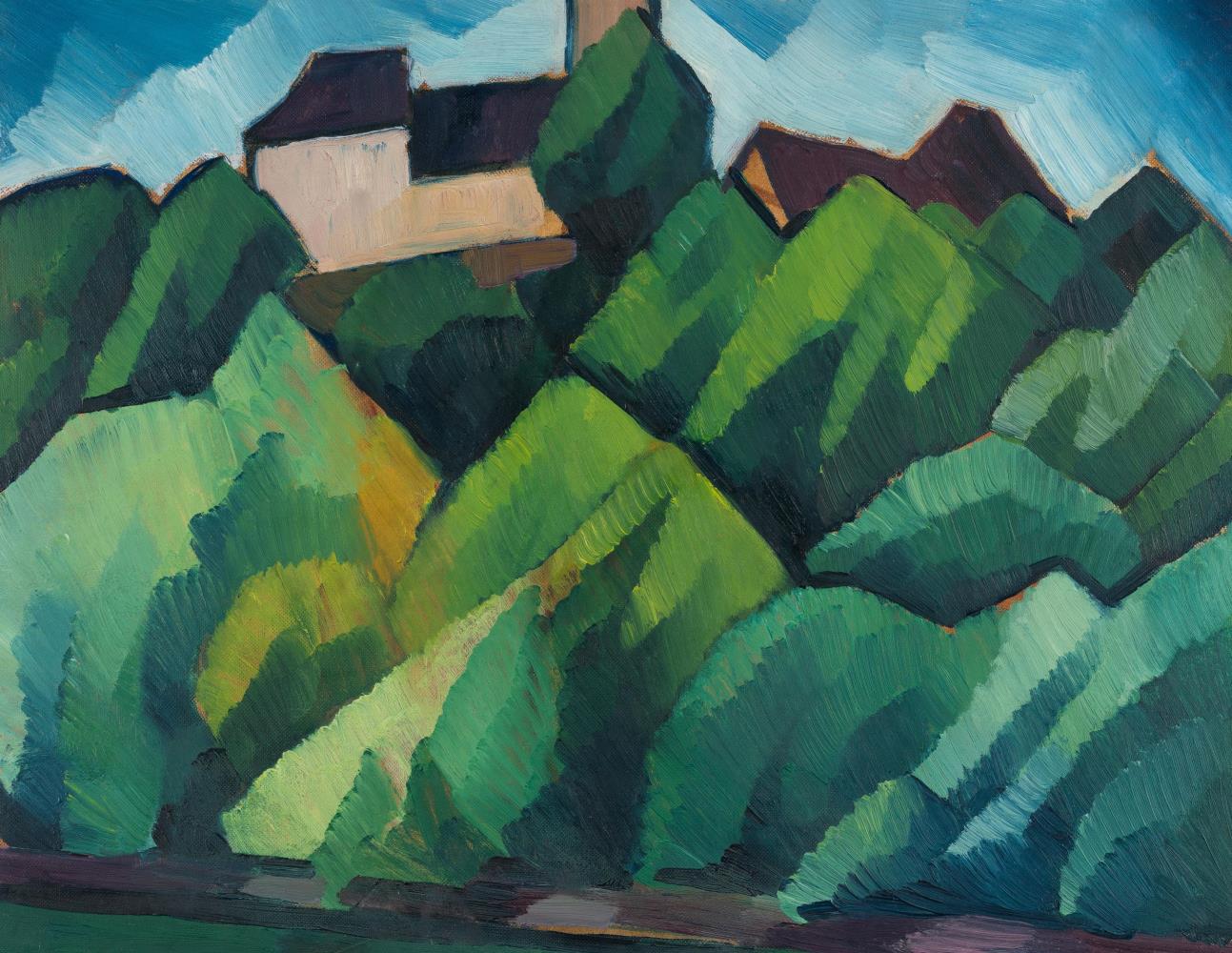
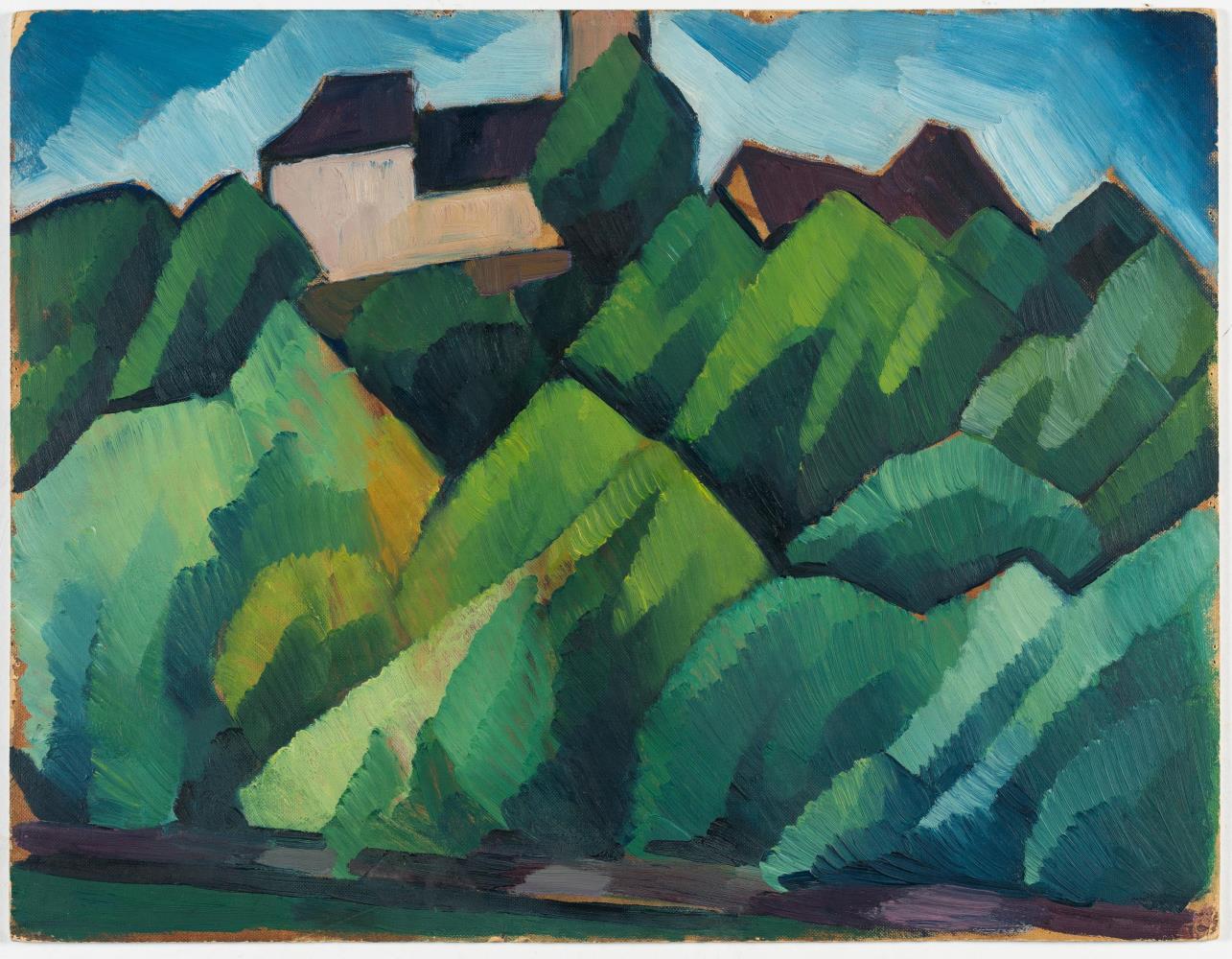
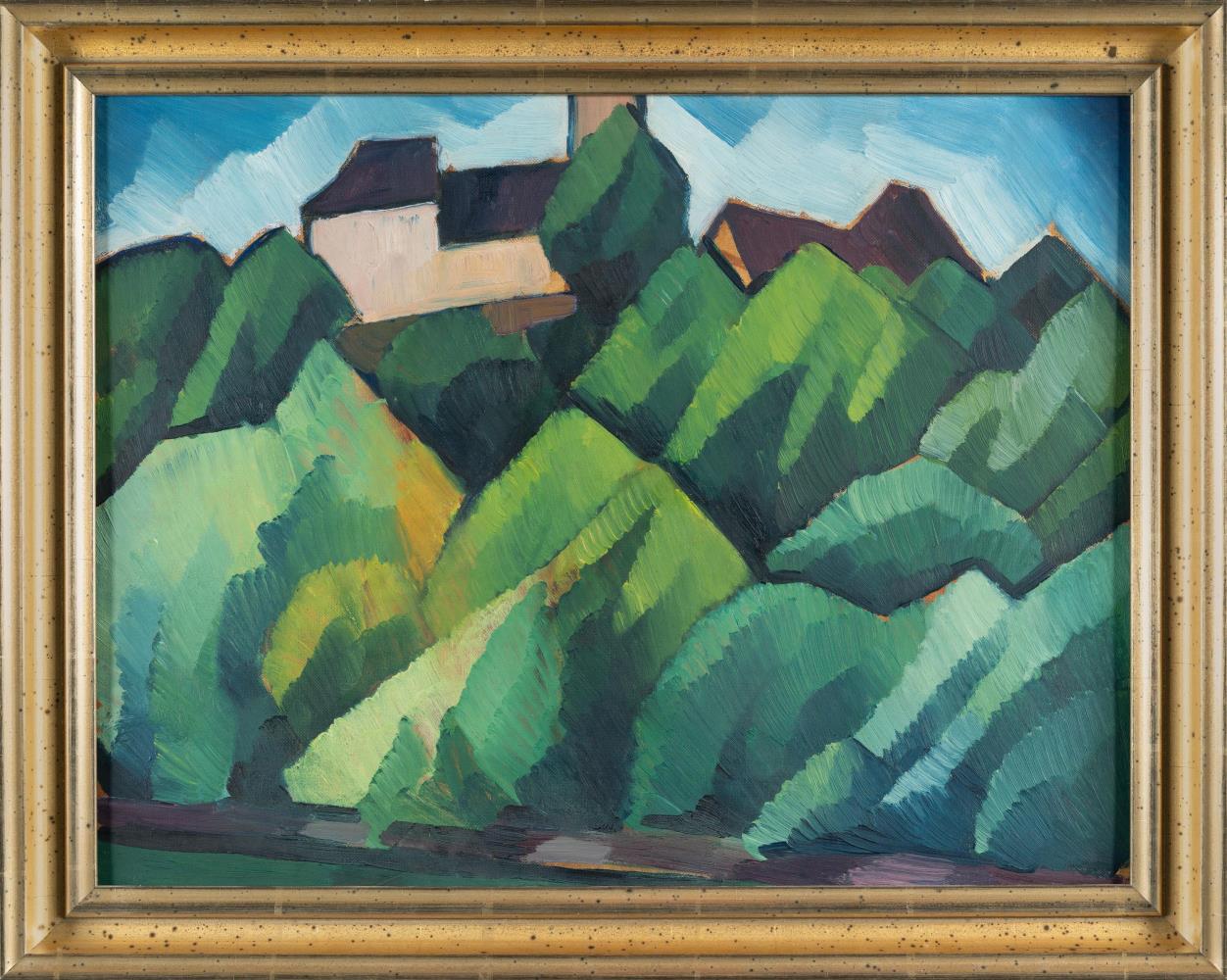
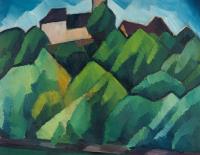
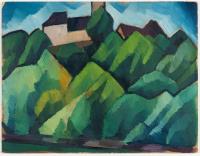
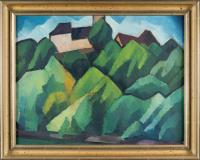
The present work "Dingelsdorf am Bodensee" belongs to this important group of works, which are referred to as "crystalline pictures". Here, Erbslöh condenses the landscape into a structure of precisely balanced surfaces and geometric forms. The embankment with shrubs and trees rises up in graduated shades of green, with the village of Dingelsdorf resting on its back - compact, clearly defined, almost monumental in its stillness. The narrow sky above the raised horizon line makes the picture appear closed, as if the world has calmed down for a moment.
In terms of color, a fine spectrum of green tones dominates, interspersed with warm, earthy accents that charge the work with subtle liveliness. The brushwork is calm and controlled, the surfaces are rhythmically structured - almost like the facets of a crystal. Erbslöh transforms nature into structure - color becomes surface, surface becomes form, and form speaks calm. Erbslöh is no longer concerned with the spontaneous excitement of color, but with the inner harmony, the silent architecture of nature.
This work shows the transition from the expressive gesture to a new concentration and clarity. Erbslöh no longer paints the landscape as a mirror of the moment, but as a lasting order - as a balance of sensation and construction. For him, nature becomes a metaphor for spiritual calm and harmonious structure.
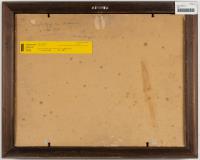
With handwritten dedication on the verso from 1998.
Salmen/Billeter 1920/5.
- A confrontation with the New Objectivity, at the same time characterized by quiet emotionality and painterly balance
- Fresh to the market from many years of private ownership
Adolf Erbslöh, born in New York in 1881 and raised in Wuppertal, is one of the most important representatives of German modernism. As a co-founder of the "Neue Künstlervereinigung München", he played a decisive role in shaping early Expressionism from 1909 and belonged to the circle around Kandinsky, Münter and Jawlensky, who led art into a new, spiritual dimension. After the charged years of expressionism, Erbslöh found his way to a calmer, structurally thought-out formal language at the beginning of the 1920s - in confrontation with the tendencies of New Objectivity, but without wanting to clearly assign himself to a style. He always remained an independent seeker who reconciled emotion and order.
At the beginning of the 1920s, Erbslöh undertook several journeys in search of new landscapes and motifs that corresponded to his inner reorientation.
"In the early 1920s, Adolf Erbslöh mainly painted landscape scenes. These are characterized by a strict pictorial tectonics. The mountains, treetops, roofs and house facades are reduced to pyramidally interlaced surfaces with light and shadow zones."
The present work "Dingelsdorf am Bodensee" belongs to this important group of works, which are referred to as "crystalline pictures". Here, Erbslöh condenses the landscape into a structure of precisely balanced surfaces and geometric forms. The embankment with shrubs and trees rises up in graduated shades of green, with the village of Dingelsdorf resting on its back - compact, clearly defined, almost monumental in its stillness. The narrow sky above the raised horizon line makes the picture appear closed, as if the world has calmed down for a moment.
In terms of color, a fine spectrum of green tones dominates, interspersed with warm, earthy accents that charge the work with subtle liveliness. The brushwork is calm and controlled, the surfaces are rhythmically structured - almost like the facets of a crystal. Erbslöh transforms nature into structure - color becomes surface, surface becomes form, and form speaks calm. Erbslöh is no longer concerned with the spontaneous excitement of color, but with the inner harmony, the silent architecture of nature.
This work shows the transition from the expressive gesture to a new concentration and clarity. Erbslöh no longer paints the landscape as a mirror of the moment, but as a lasting order - as a balance of sensation and construction. For him, nature becomes a metaphor for spiritual calm and harmonious structure.
With handwritten dedication on the verso from 1998.
Salmen/Billeter 1920/5.