Max Liebermann
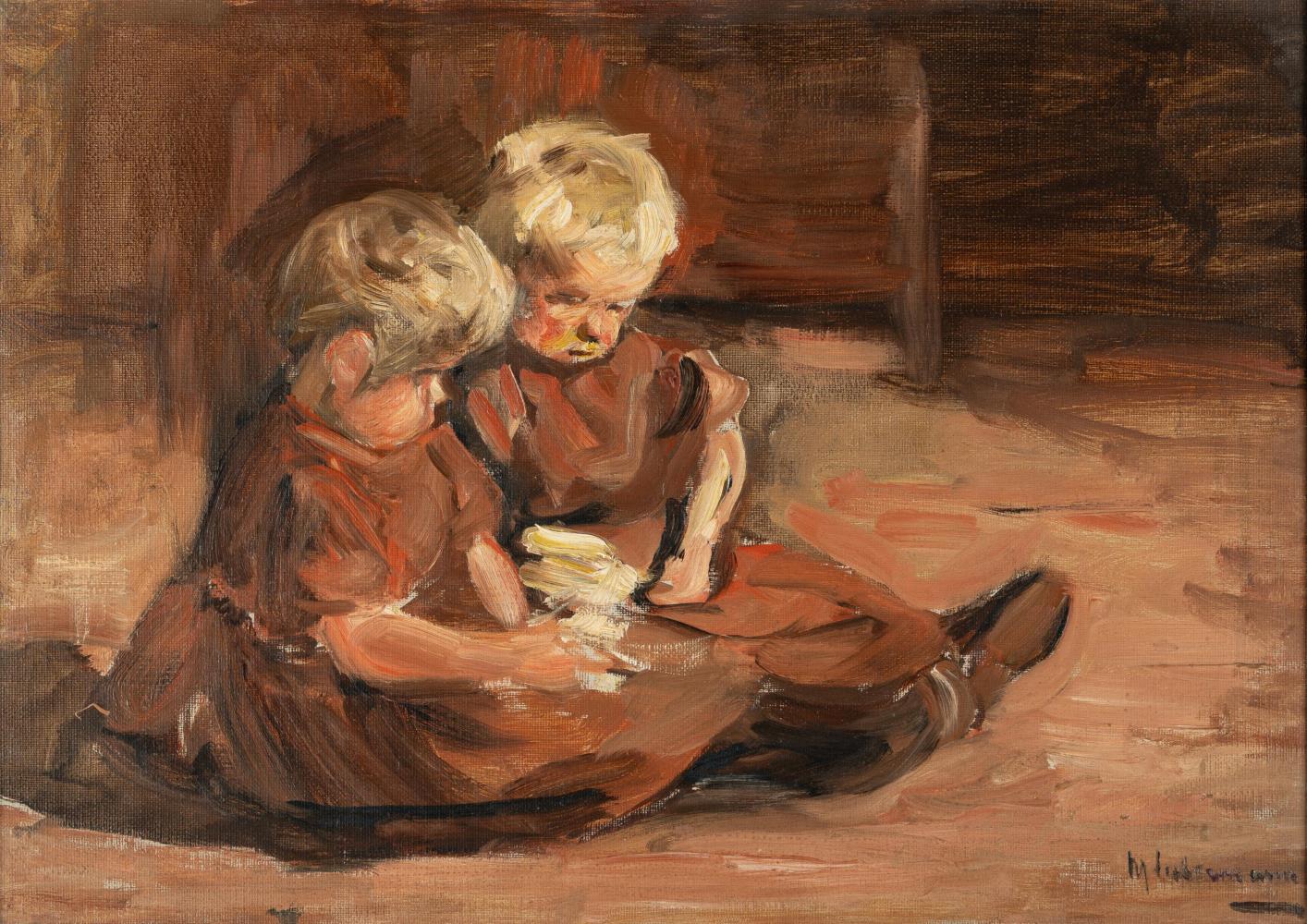
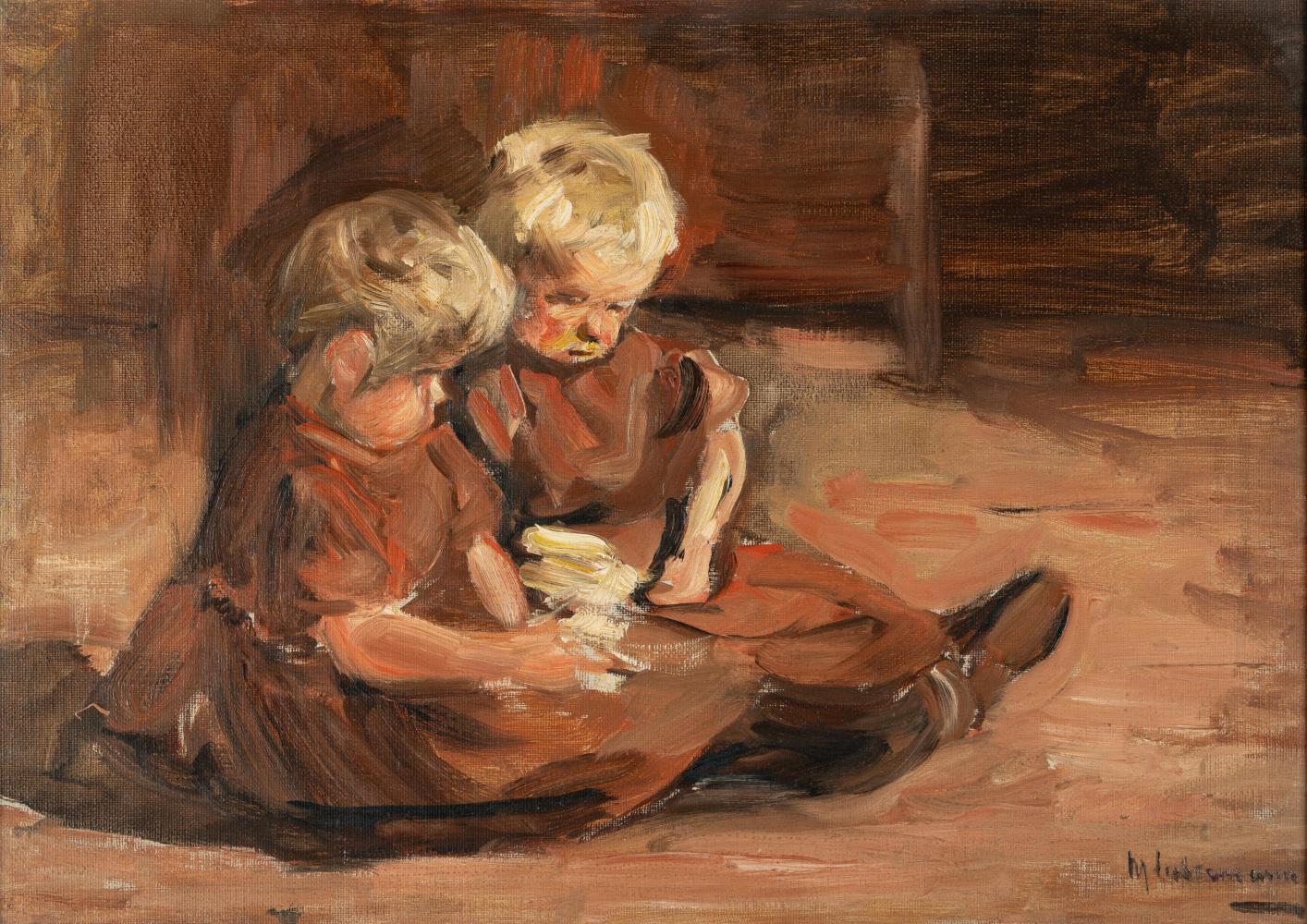
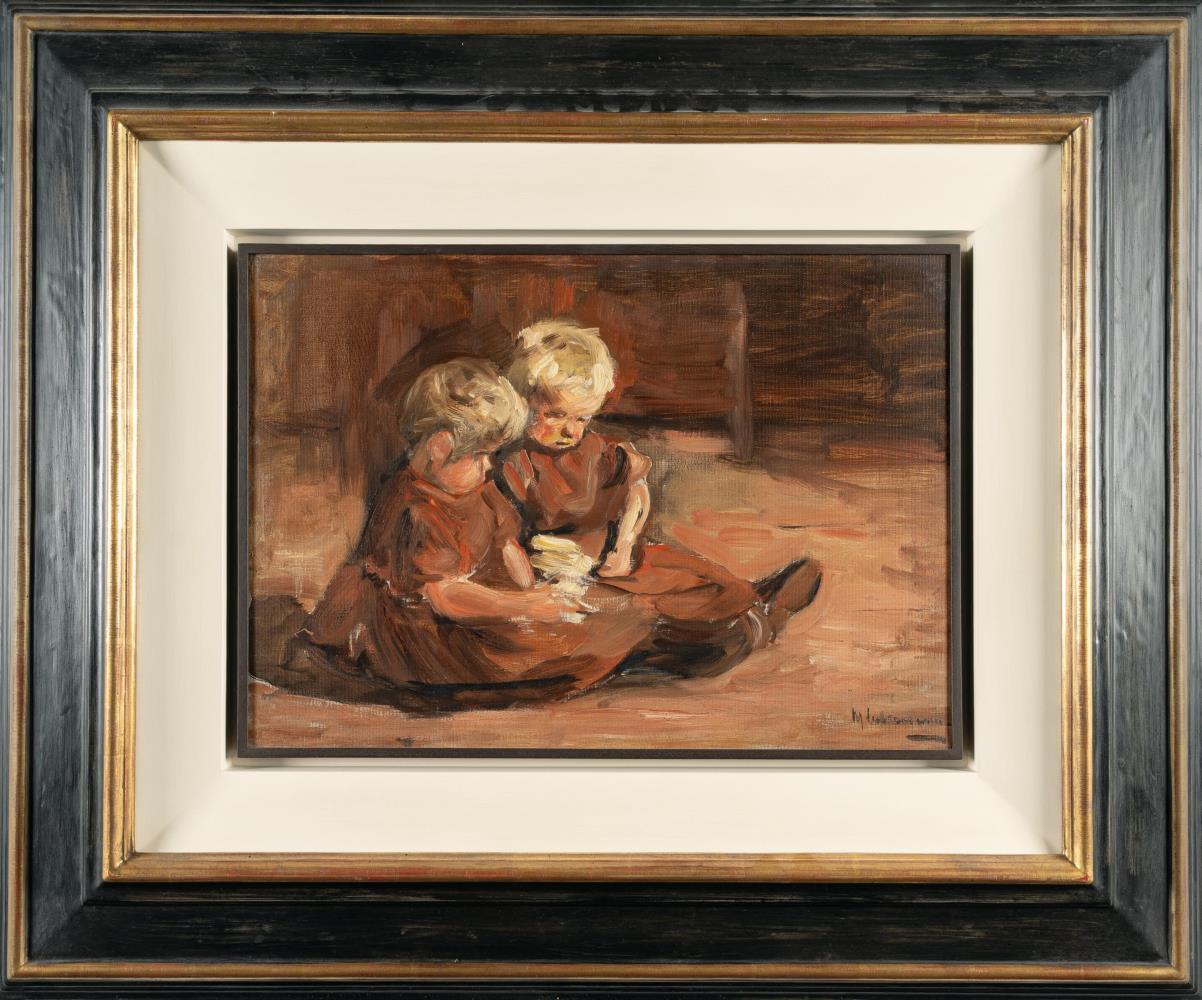
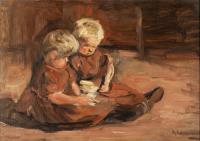
Spielende Kinder in einer Scheune
Artist
Max Liebermann
Exhibition
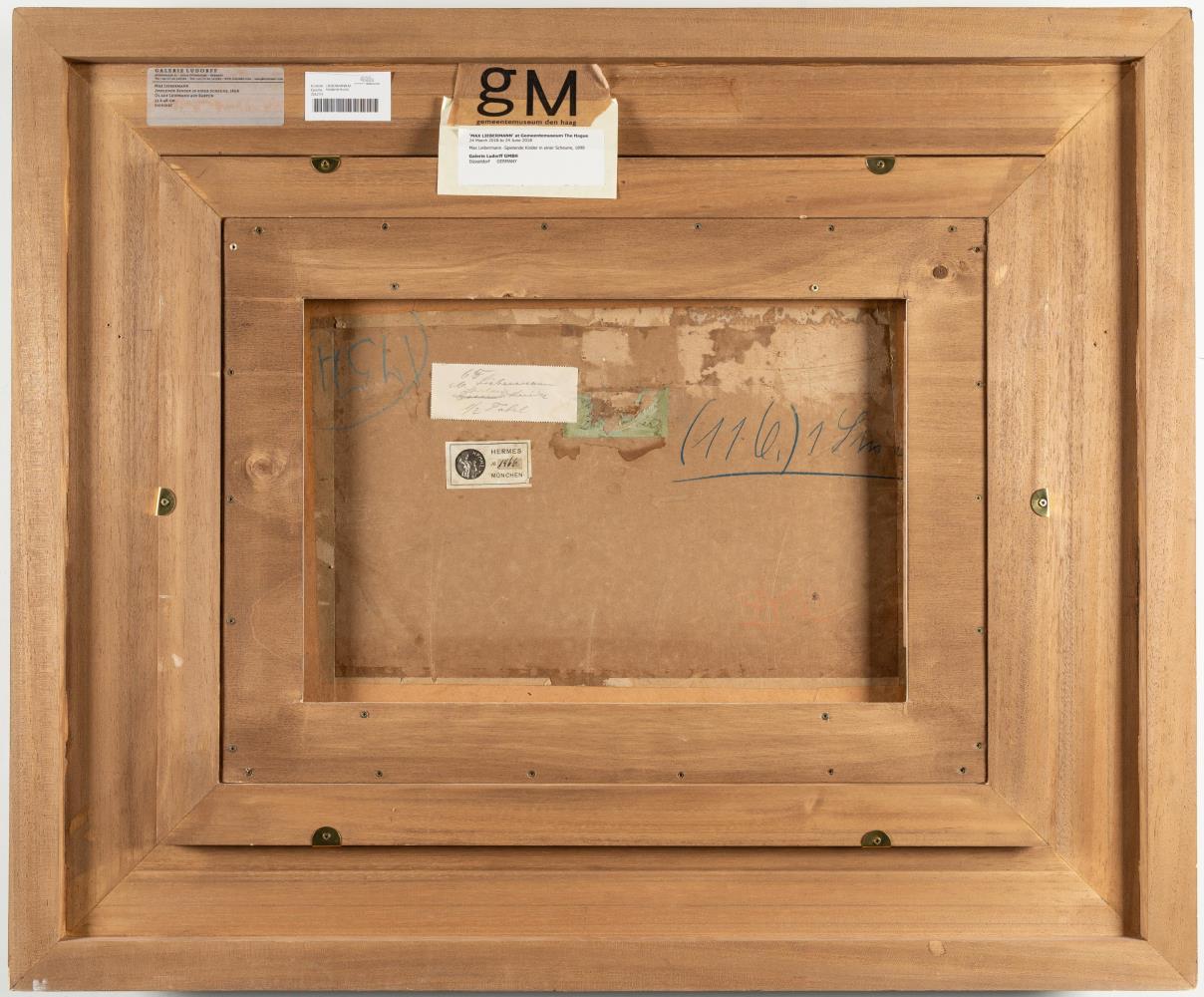
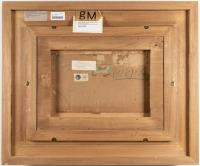
Albert Welti - Max Liebermann, Kunsthalle Bern, 1937, no. 154 ;Max Liebermann. Impressions of Summer, Gemeentemuseum, The Hague 2018, with the label on the reverse of the frame.
Literature
Berliner Illustrierte Zeitung, Vol. VIII, 1899, 25.6.1899, p. 5 (photo of Liebermann's studio).
Provenance
Studio of the artist;Private collection of Dr. Isidor Deutsch (1861-1922), Munich;Private collection Sophie Deutsch (1883 - 1952, née Süß-Schülein), Munich and from 1931 Basel, through succession (widow of the aforementioned);(Auction Hugo Helbig, Munich, 12.5.1931, lot 84, not sold);Galerie Fischer, Lucerne, 29.8.-1.9.1934, lot 1735;Private collection, Basel (1937);Private collection, Geneva;Private collection, North Rhine-Westphalia.
Share


Description
- Important example from Liebermann's mature Impressionist creative phase
- Work from the small but important group of children's scenes
- Harmonious combination of realistic observation and impressionistic painting style
The oil study shown here was created in 1898, during a central phase of Max Liebermann's oeuvre in which he was intensively occupied with depictions of rural life and simple everyday life.
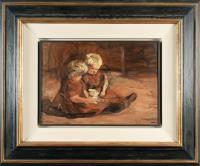
Two small children with blond tresses and red chubby cheeks sit on the ground in the dusky light of a barn, absorbed in their play. With quick, loose brushstrokes and a color palette of earthy reds and browns, Liebermann creates a finely tuned composition that conveys intimacy and calm. The light, which falls gently into the interior, models the figures and the space, lending the scene a peaceful atmosphere.
The work fits stylistically and thematically into a series of depictions of children that Liebermann painted in Holland and northern Germany from the 1880s onwards. Children's scenes like this are among the comparatively rare motifs in his oeuvre and show his special talent for observing the informal and natural in human behavior.
Children Playing in a Barn marks a transition from a more narrative realism to a freer, more impressionistic style of painting. The reduction to just a few figures, the concentration on light and atmosphere and the warm, tonal colors make the work a characteristic example of Liebermann's art at the turn of the century. Here, precise observation is combined with a painterly freedom that allows the moment to be experienced.
Liebermann later used this oil study for the design of the letter A in his book "An ABC in Pictures", which was published in 1908. The two children are leafing through a book.
Eberle 1898/9
- Work from the small but important group of children's scenes
- Harmonious combination of realistic observation and impressionistic painting style
The oil study shown here was created in 1898, during a central phase of Max Liebermann's oeuvre in which he was intensively occupied with depictions of rural life and simple everyday life.
Two small children with blond tresses and red chubby cheeks sit on the ground in the dusky light of a barn, absorbed in their play. With quick, loose brushstrokes and a color palette of earthy reds and browns, Liebermann creates a finely tuned composition that conveys intimacy and calm. The light, which falls gently into the interior, models the figures and the space, lending the scene a peaceful atmosphere.
The work fits stylistically and thematically into a series of depictions of children that Liebermann painted in Holland and northern Germany from the 1880s onwards. Children's scenes like this are among the comparatively rare motifs in his oeuvre and show his special talent for observing the informal and natural in human behavior.
Children Playing in a Barn marks a transition from a more narrative realism to a freer, more impressionistic style of painting. The reduction to just a few figures, the concentration on light and atmosphere and the warm, tonal colors make the work a characteristic example of Liebermann's art at the turn of the century. Here, precise observation is combined with a painterly freedom that allows the moment to be experienced.
Liebermann later used this oil study for the design of the letter A in his book "An ABC in Pictures", which was published in 1908. The two children are leafing through a book.
Eberle 1898/9